

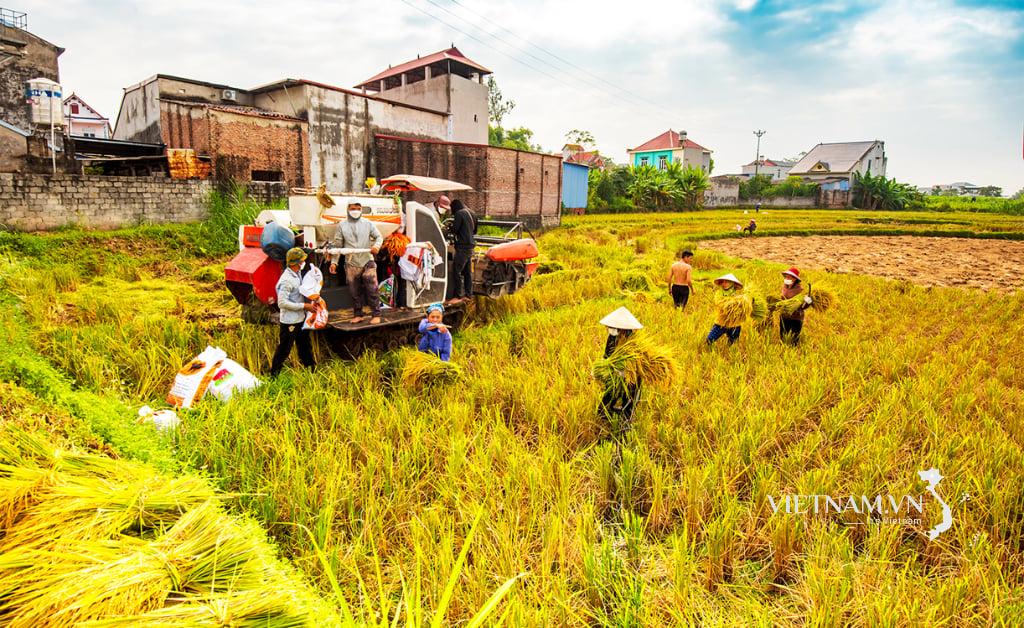
As a poor household in Ba Na village, Mrs. Phan Thi Nhot's family received support in the form of 1 hectare of upland rice paddies and 2.6 sao (approximately 0.26 hectares) of rice paddies for a single crop. According to Mrs. Nhot, the land in this area is barren, and irrigation depends on rainfall, so only one rice crop can be grown per year, resulting in low yields and unstable income. In 2012, the Ia Jloi irrigation project was completed, opening up opportunities for increased production for the villagers. The irrigation canal system brought cool water to each rice paddies, enabling the people of Ba Na village to switch from one rice crop to two crops per year, no longer worrying about food shortages as before.
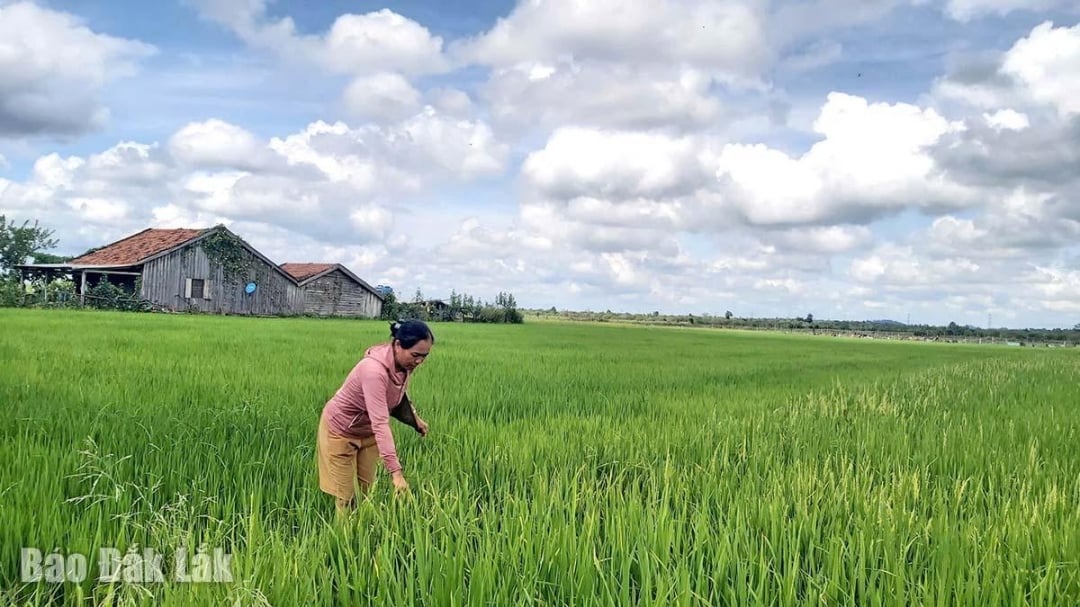 |
| The lush, double-cropping rice fields have contributed to changing the lives of the people in Ba Na hamlet, Ea Rok commune. |
"From a particularly disadvantaged village, thanks to sustainable livelihood support, the people of Ba Na village have gradually risen out of poverty and stabilized their lives," - Vice Chairman of Ea Rok Commune People's Committee |
Not only Mrs. Nhot's family, but many households in Ba Na village have also risen out of poverty thanks to government support policies. Among them is the family of Ms. Dam Thi Men, a Tay ethnic minority. Starting with 1 sao (approximately 1000 square meters) of residential land and 1 hectare of cultivated land provided by the government, after many years of diligent farming, saving, and opening a general store, Ms. Men's family has been able to buy an additional 3 hectares of land for production.
When it was first established in 2002, Ba Na village had 54 households, and today it has increased to 126 households with 9 ethnic groups living together. Thanks to the policies, investment resources of the Party and State, and the involvement of the Party committee and local authorities, households in the village have received support in terms of seedlings, livestock, land for housing and production, and assistance in building houses, creating a comprehensive transformation of the village's appearance. According to Phan Thi Nguyet, Secretary of the Ba Na Village Party Branch: Thanks to the investment resources of Program 1719 and other support policies, Ba Na village has gradually transformed, from its appearance to the lives of its people. To date, Ba Na village has over 100 hectares of double-cropping rice land and 25 hectares of tobacco cultivation, bringing about significant economic benefits.
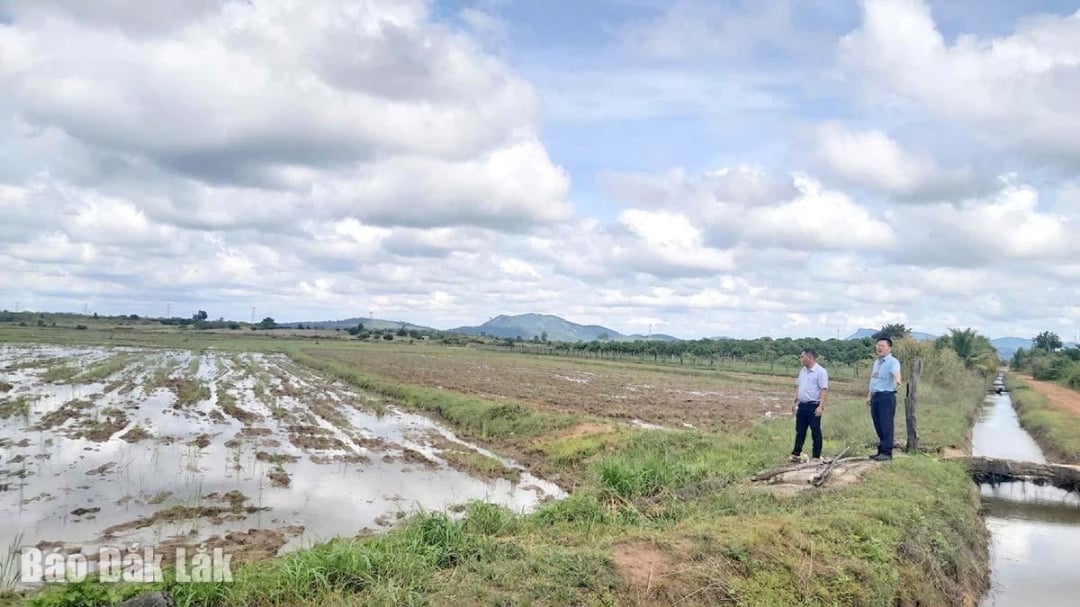 |
| Policies supporting agricultural land and investing in irrigation canal systems have contributed to stabilizing the lives of people in Ba Na hamlet, Ea Rok commune. |
According to Trinh Van Cuong, Vice Chairman of the People's Committee of Ea Rok commune, the policy of supporting the development of ethnic minority and mountainous areas has awakened the spirit of self-reliance among the people. The people have changed their production mindset, learned to plan seasons, and switched to suitable crops to increase their income.
Source: https://baodaklak.vn/xa-hoi/202511/doi-thay-o-buon-ba-na-1c70096/





































![[Workers' Month 2026] Spreading love on the Vinh - Dong Hoi frontline: Nearly 1 billion VND spent on caring for the lives of workers.](https://vphoto.vietnam.vn/thumb/402x226/vietnam/resource/IMAGE/2026/05/20/1779237885217_img_8650.jpeg)




































Comment (0)