

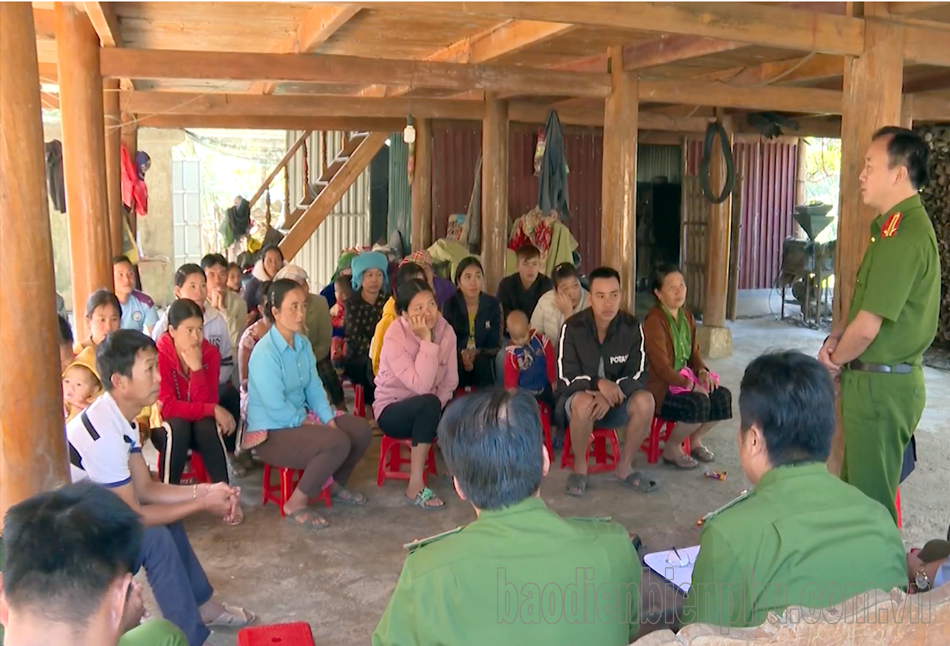
Our province is home to 19 ethnic groups, including some very small groups such as the Cong, Si La, and Phu La, who live concentrated in mountainous areas. Their lives are difficult, and their educational levels are uneven. This leads to social problems and law violations occurring in some areas due to a lack of legal knowledge.
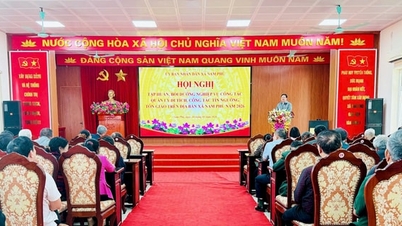
Recognizing that bringing legal knowledge to ethnic minorities and people in mountainous areas is one of the important tasks, over the years the Provincial Council for Coordination of Legal Education and Dissemination has advised the Provincial People's Committee to issue guiding documents and implement them. Based on that, various levels and sectors have paid attention to implementing many programs and projects on legal education and dissemination, or integrating them into their implementation, such as: the National Target Program on drug prevention and control and crime prevention and control; The projects include: “Propagating and disseminating laws on preventing and combating corruption”; “Minimizing child marriage and consanguineous marriage in ethnic minority areas during the period 2015-2025”; and “Strengthening legal education and dissemination to raise legal awareness among youth.” Legal education and dissemination work in the province has been reformed in form and improved in quality. Annually, the Provincial Council for Legal Education and Dissemination conducts on-site surveys to assess information needs, forms of legal education and dissemination, and mobilization efforts to select key areas, develop, and replicate model projects. Many effective and innovative models in legal education and dissemination have been implemented and replicated, such as: the commune-level Information and Communication Committee model; the “one question a day, one law a week” model; the “self-governing clan, peaceful village” model; and legal education and dissemination models under the Women's Union at all levels. Raising awareness, reducing consanguineous marriages; women participating in protecting border lines and markers… The Council for Legal Education and Dissemination, and functional agencies at all levels have organized many legal knowledge contests and encouraged people from all walks of life to participate; they have also organized direct legal education and dissemination sessions for ethnic minorities. Many units have effectively carried out the dissemination of legal knowledge to the people, such as: the Provincial Border Guard; the Provincial Police; the Women's Union; the Provincial Youth Union...
Typically, from 2022 to the present, the provincial border guard force, in coordination with local Party committees, authorities, and relevant forces, has organized various forms of concentrated and individual propaganda through loudspeakers in border villages and communes, via the "Border Guard Loudspeaker" program, and through cultural and artistic performances to disseminate information on the National Border Law; the Vietnam Border Guard Law; the Law on Beliefs and Religions; the Law on Forest Protection and Development, etc. This has been combined with mobilizing the people to raise their vigilance, actively participate in the fight against crime, and not abet criminals. This has resulted in 1,886 sessions reaching nearly 88,000 people; and persuading 1,950 households, nearly 6,200 people, not to migrate or illegally enter and exit the country. Through these efforts, the border guard force has contributed to raising awareness among the people in border areas, fostering their trust in the Party's leadership and the country's reform process. Enhancing revolutionary vigilance and countering the "peaceful evolution" plots of hostile forces; gradually eradicating poverty and improving the material and spiritual lives of the people in the border areas of the province; and consolidating a strong grassroots political system in border communes.
In implementing the Law on Dissemination and Education of Legal Knowledge, agencies, units, and localities have fully and correctly recognized the position, role, and importance of the work of disseminating and educating about legal knowledge. They have identified this as a part of political and ideological education , the first step in law enforcement, and the responsibility of the entire political system. In particular, effectively leveraging the role of grassroots speakers, propagandists, village elders, community leaders, and influential individuals in disseminating information has significantly contributed to changing perceptions, altering behaviors, and enhancing the self-awareness of ethnic minority communities in complying with the Party's guidelines and the State's policies and laws.
Source link
![[Image] A night of light, many layers of message](https://vphoto.vietnam.vn/thumb/1200x675/vietnam/resource/IMAGE/2026/03/10/1773158812907_hoa-nhac9-jpg.webp)






































































































Comment (0)