

This is a reform that has been underway since the ruling coalition of the Social Democratic Party (SPD), the Green Party, and the neoliberal Liberal Democratic Party (FDP) took office in the fall of 2021.
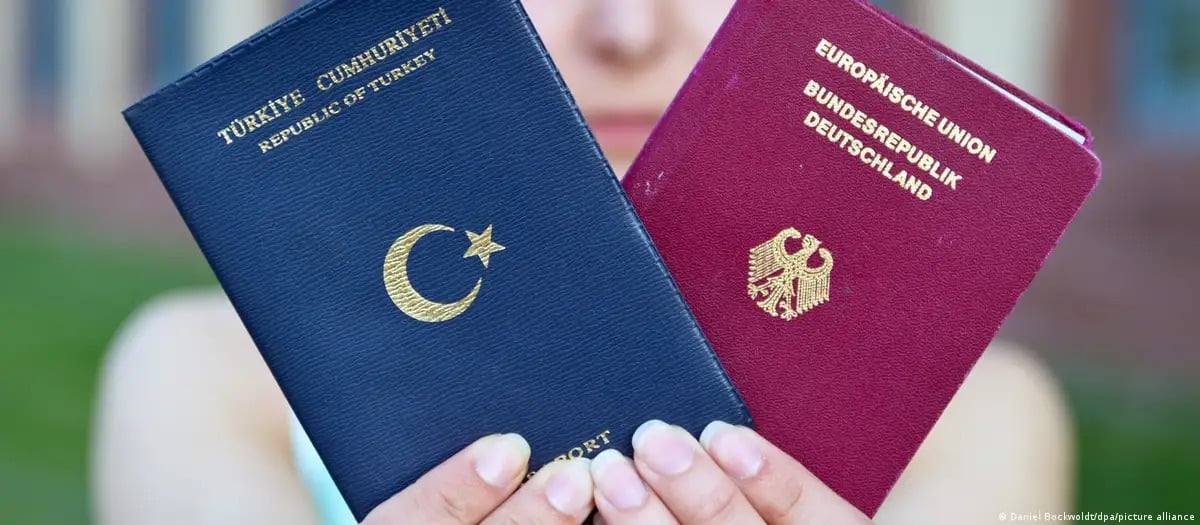
Many immigrants will now be able to obtain citizenship while retaining their original citizenship. Photo: dpa
Immigrants legally residing in Germany will be allowed to apply for citizenship after 5 years, instead of the current 8 years; if they demonstrate exceptional achievements, this period could be reduced to just 3 years.
Children born in Germany whose father or mother has lived legally in the country for five years or more automatically acquire German citizenship. Immigrants over 67 years old will be able to take a German language test orally instead of in writing.
Those who live entirely on state support will not be eligible for German citizenship. German citizenship will be denied to those who commit anti-Semitic, racist, xenophobic, or other blasphemous acts deemed "incompatible with a commitment to the fundamental liberal democratic order."
According to the German Federal Ministry of the Interior , approximately 14% of the population does not possess a German passport – that's over 12 million people. Five million of them have lived in Germany for at least 10 years. In 2022, 168,545 people applied for German citizenship, lower than the EU average.
Until now, dual citizenship has only been possible in Germany for EU and Swiss citizens whose country of origin does not allow them to renounce their citizenship, children of parents with German or other nationalities, refugees facing persecution in their home country, and Israelis. Syrians who come to Germany as refugees and are considered to have integrated well can also quickly be granted German citizenship.
These reforms will bring Germany on par with other European countries. Within the EU, Sweden had the highest naturalization rate in 2020, with 8.6% of all foreigners living there being naturalized. In Germany, this rate was 1.1%.
According to the German Federal Statistical Office, there are approximately 2.9 million people with more than one nationality currently living in Germany, representing about 3.5% of the population. However, the actual number may be higher as it has recorded an increase.
Citizen Yesilkaya-Yurtbay said that Germany would be a different country if reforms had been implemented sooner. She explained: “People would be more empathetic towards Germany if that had happened. I’m sure people would be more interested in politics and more active in society if this opportunity had been available 20 or 30 years ago.”
Mai Anh (according to DW)
Source



![[Image] Close-up view of the interchange connecting the two expressways and Long Thanh Airport.](https://vphoto.vietnam.vn/thumb/1200x675/vietnam/resource/IMAGE/2026/05/25/1779703378210_ndo_br_z7863716673926-224453a31600126cce10622af6290afd-4549-jpg.webp)

![[Image] Hanoi's urban life under the challenge of a "scorching hot" environment](https://vphoto.vietnam.vn/thumb/1200x675/vietnam/resource/IMAGE/2026/05/25/1779706979265_nang-nong-t5-2026-minh-duy-7-4636-jpg.webp)






























































































Comment (0)