

- Those who "keep the flame" of the new rural development
- Making breakthroughs in building new rural areas and achieving sustainable poverty reduction.
- Building new rural areas: "In line with the Party's will and with the people's hearts"
Developing sustainable livelihoods
Currently, the province has 43 out of 55 communes meeting the standards for New Rural Development, 3 communes meeting the standards for advanced New Rural Development, and 1 commune meeting the standards for model New Rural Development. Many criteria have achieved high scores, over 80%, such as irrigation, electricity, housing, labor, health, education , national defense and security, and information and communication. Along with building New Rural Development, the province has also paid special attention to poverty reduction through many comprehensive solutions. By the end of 2025, the province will have 3,456 poor households, accounting for 0.63%, a decrease of 1,015 households compared to the previous year; and 7,489 near-poor households, accounting for 1.37%, a decrease of 612 households.
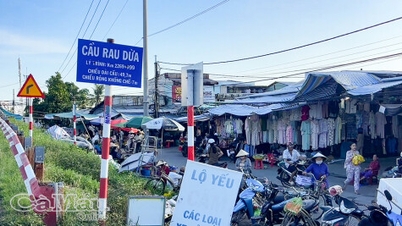
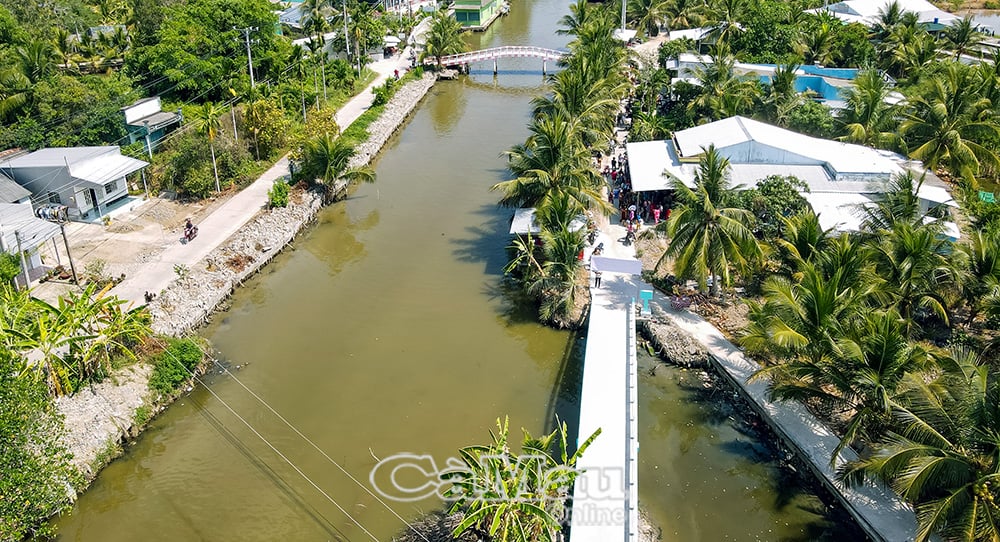 Rural transportation infrastructure is becoming increasingly improved. (Photo: Huu Tho)
However, despite the achievements, the process of building new rural areas in Ca Mau still faces many difficulties and challenges. Rural transportation infrastructure in many areas is not yet synchronized; agricultural production remains small-scale and lacks value chain linkages. Especially with its vast territory, intricate river system, and frequent impacts from climate change, erosion, and saltwater intrusion, the need for sustainable rural development is more urgent than ever.
Based on this reality, Ca Mau has determined that it must strongly shift its development mindset: from "infrastructure investment" to "improving the quality of life"; from "the State doing the work" to "the people taking ownership"; and from "purely agricultural production" to "multi-value rural economy ". In this journey, developing sustainable livelihoods is considered a crucial foundation for poverty reduction, income improvement, and retaining people's attachment to their homeland.
As the only model new rural commune in the province, Vinh Thanh is demonstrating a suitable direction in building sustainable rural areas. The criteria for a model new rural commune are implemented flexibly, in accordance with the local conditions, with agricultural production identified as the key sector.
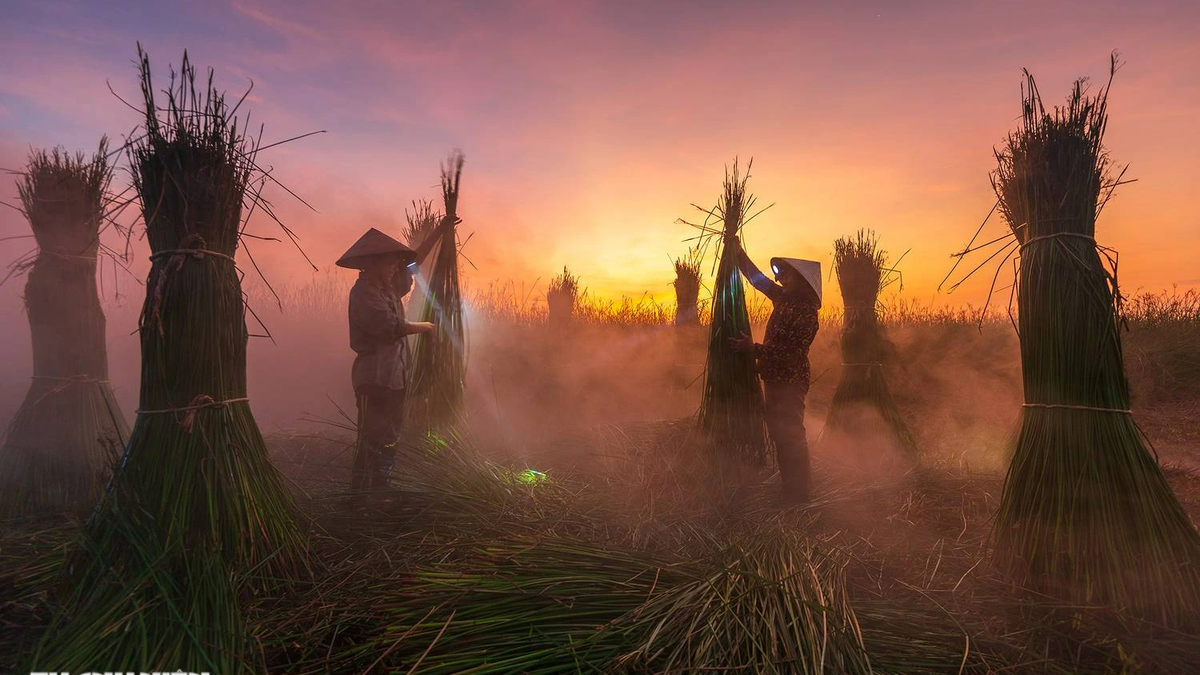
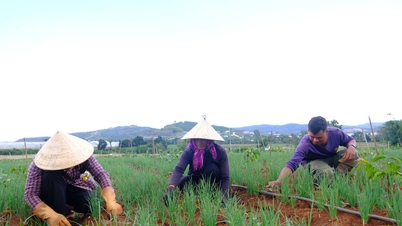
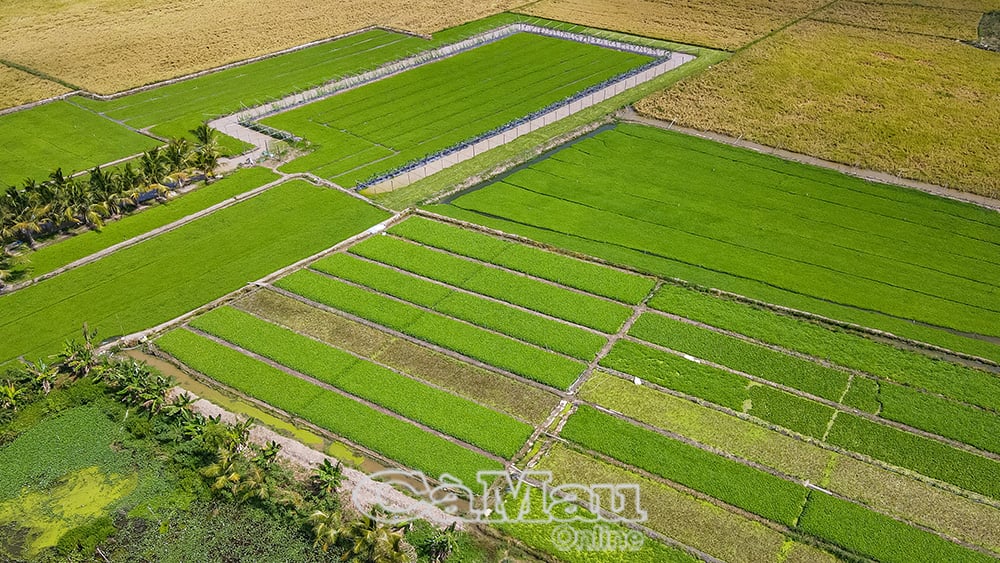 The model of growing water spinach in Vinh Thanh commune creates a stable livelihood for many households. (Photo: Huu Tho)
Mr. Ngo Nguyen Phong, Secretary of the Party Committee of Vinh Thanh commune, said that to build a sustainable and livable rural area, the commune is orienting its development towards organic and clean agriculture; gradually applying digital technology and science and technology to production to ensure traceability, enhance value, and build brands for local products. Along with that, it is investing in improving infrastructure such as electricity, roads, schools, and health stations; building smart hamlets, applying security cameras and digital technology in environmental management, and ensuring security and order.
"Building new rural areas is not just about investing in infrastructure, but also about building sincere and compassionate people in the rural areas," Mr. Ngo Nguyen Phong emphasized.
Maximizing the value of local resources.
At a seminar on sustainable rural development and livable rural areas, Comrade Le Minh Hoan, former Vice Chairman of the National Assembly, suggested that Ca Mau should leverage its indigenous resources as a foundation for sustainable rural economic development.
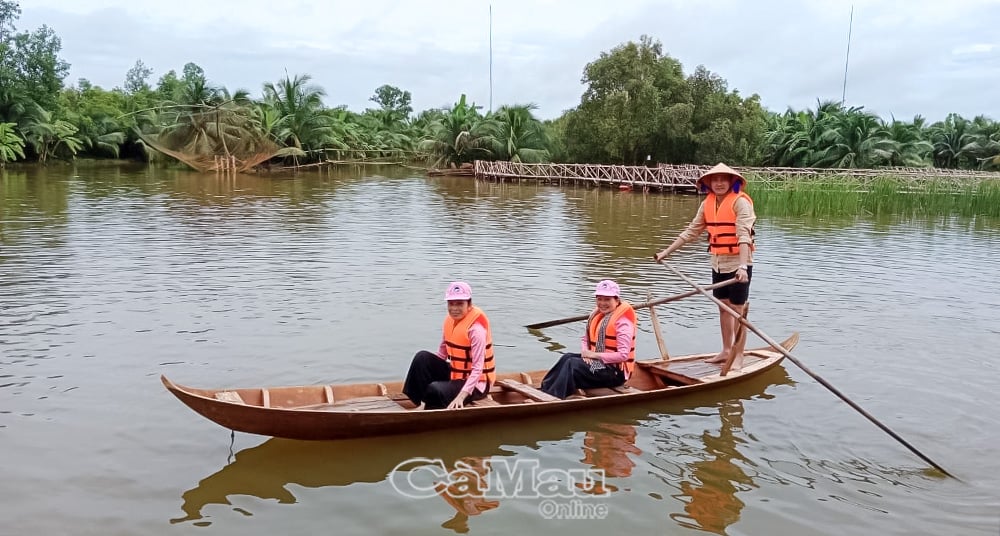 Tourists experience paddling a traditional three-leaf boat at the Ca Mau ECO Ecotourism Area, Da Bac commune.
According to Comrade Le Minh Hoan, building livable rural areas is not just about investing in infrastructure, but also about creating sustainable livelihoods, preserving resources, protecting the ecological environment, and fostering trust so that people are attached to their homeland. He also emphasized the collaborative role of the State, businesses, and the community in building new rural areas; building cohesive rural communities, and preserving traditional culture.
Also at the seminar, Mr. Le Van Su, Vice Chairman of the Provincial People's Committee, emphasized: To build a livable rural area, people must first have stable livelihoods. Therefore, the province is aiming to develop a multi-value agricultural economy, not only relying on traditional agriculture but also developing OCOP products associated with local culture, ecotourism, and unique local resources, especially in the U Minh Ha area. The province also determined to continue consolidating and improving the quality of operations of cooperatives and cooperative groups; viewing cooperatives as centers for linking production and consumption, connecting farmers with businesses and markets, helping people avoid producing in isolation.
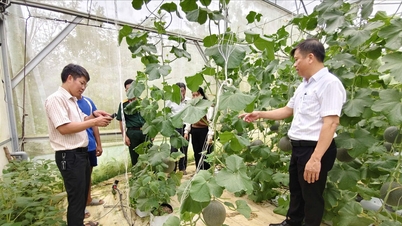
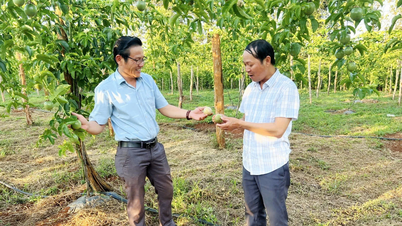
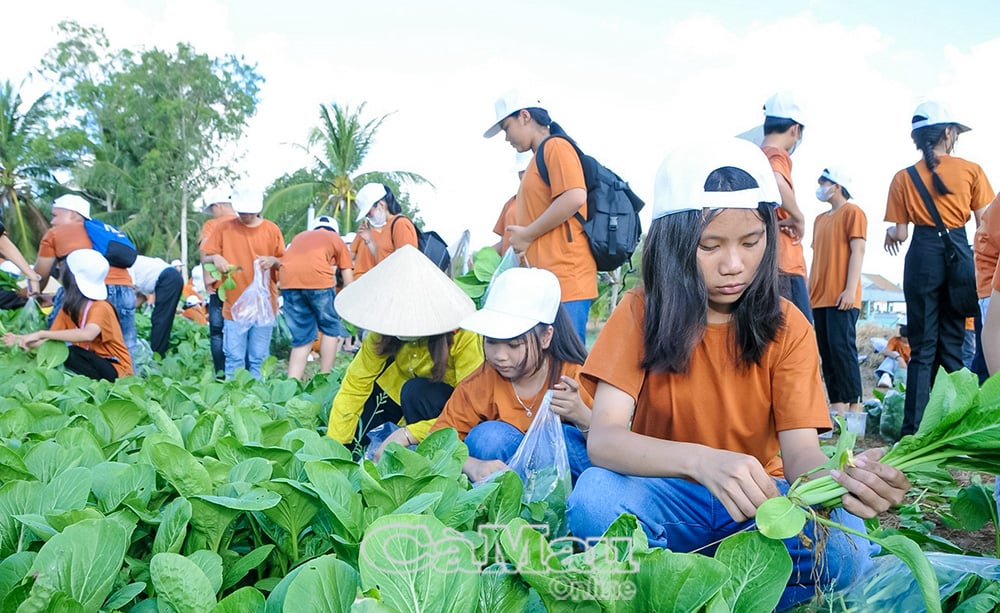 Tourists experience the process of growing safe vegetables at the clean vegetable production area of farmers in Hiep Thanh ward. (Photo: Huu Tho)
In the context of climate change increasingly impacting the Mekong Delta region, including Ca Mau, building sustainable and livable rural areas is not only a development goal but also an essential requirement to ensure livelihoods, reduce poverty sustainably, preserve resources, and improve the quality of life for the people. Through approaches tailored to local realities and with the consensus of the people, many rural areas in Ca Mau are gradually transforming towards a greener and more sustainable direction; becoming places where people want to live long-term, not only to live but also to develop.
Huyen Trang
Source: https://baocamau.vn/de-co-nhung-vung-que-dang-song-a129361.html











































































Comment (0)