

The main message given by Ho Chi Minh City leaders to the Department of Internal Affairs when developing policies to attract talent is that the city's leadership has tasked the Department of Internal Affairs with both welcoming new recruits and identifying outstanding individuals within the system for training and rewarding.
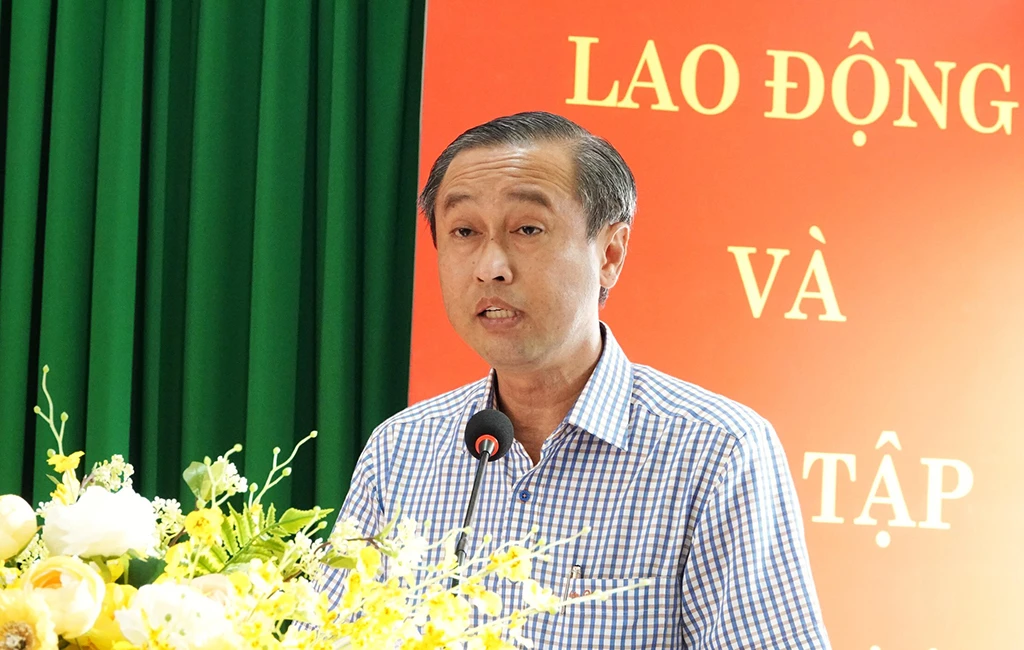
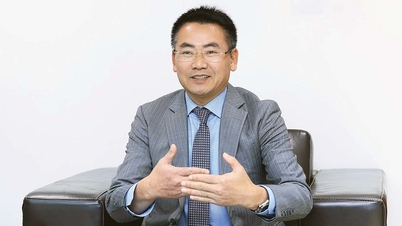
Regarding this issue, Mr. Huynh Thanh Nhan (pictured) , Director of the Department of Internal Affairs of Ho Chi Minh City, shared that he has received many suggestions questioning why talented individuals are not identified and rewarded locally, instead of being allowed to leave their jobs and then having to attract them from outside into the public sector.
After more than 5 years of implementing Government Decree 140/2017, Ho Chi Minh City has failed to attract any outstanding graduates or young scientists . Why is that, sir?
In my opinion, this could be due to both objective and subjective reasons. Firstly, the criteria set out in Decree 140/2017 to attract graduates are very high. The number of graduates with the required achievements is very small, and even those who do are attracted to work in the private sector with very high benefits.
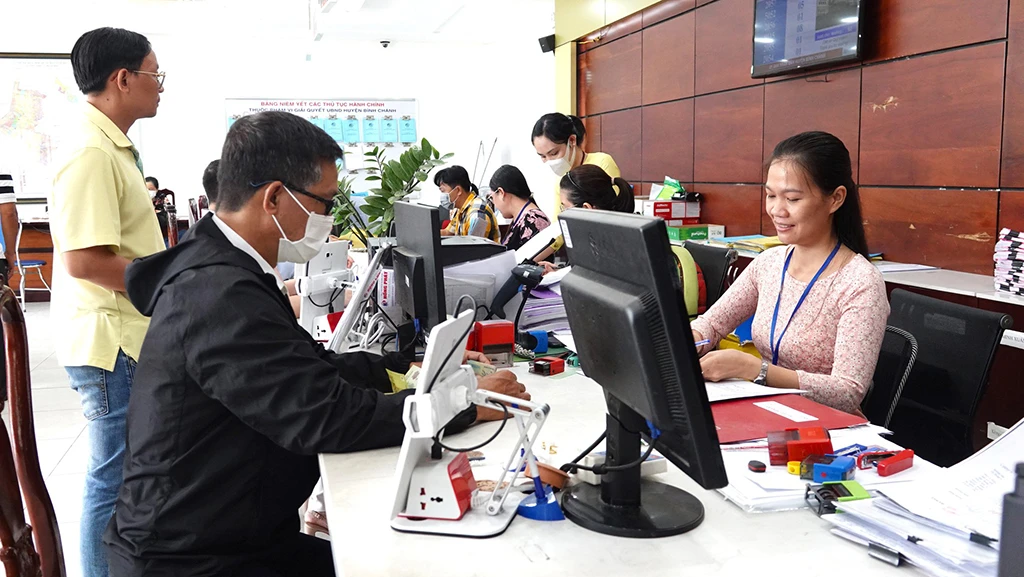
Ho Chi Minh City will offer more incentives to outstanding officials and civil servants working within the system.
From a subjective perspective, agencies and units in Ho Chi Minh City have not been bold enough to register their needs for attracting outstanding graduates and young scientists due to concerns about limited recruitment sources. At the same time, the remuneration and benefits for these individuals are higher than the average for civil servants and public employees, potentially leading to comparisons, lack of cooperation, and a loss of motivation. Therefore, Ho Chi Minh City has not been able to recruit from this source in the past five years.
Is it because it's difficult to find talented people that Ho Chi Minh City has lowered its criteria and broadened the target group?
To attract and recruit more outstanding students and young scientists, we have proposed expanding the selection criteria compared to the initial regulations of Decree 140, while also emphasizing the assessment of public service capacity and applying a performance-based incentive policy. For example, those who perform exceptionally well will receive 100% of the support, while those who perform well will receive 80%, and no support will be provided for those who only complete the task or less.
In reality, many officials and civil servants, even though they do not fully meet all the standards and conditions according to Decree 140, have achieved outstanding academic and work accomplishments, made significant contributions, and produced many valuable products and projects that bring great benefits to their agencies, units, and the city.
However, these individuals have not been considered, nor have they received the attention and support policies to encourage, motivate, and develop their abilities. Therefore, it is necessary to broaden the scope and diversify the recruitment standards and conditions to both increase the number of recruits and attract truly valuable intellectual resources to work within the political system.
Ho Chi Minh City is paying salaries of 120 million VND to attract and retain talented individuals.
At a recent workshop organized by the Department of Internal Affairs, some argued that if recruitment criteria are only slightly higher than those for civil servants and public employees, will it be possible to find talented individuals?
We identified three target groups to attract, ensuring they align with the city's current situation and conditions. Group 1 includes outstanding graduates, young scientific staff, and talented young scientists as defined in Decree 140. Group 2 comprises individuals lacking only one or two criteria for outstanding graduates, young scientific staff, and talented young scientists. Group 3 consists of officials, civil servants, and employees with at least 10 years of service remaining and a track record of outstanding achievements in public service and professional duties over the past 10 years.
The division into three groups reflects an open-minded spirit, valuing intellectual talent, from young talents both domestically and internationally to established and contributing officials and civil servants. This also serves as a basis for selecting outstanding individuals with high development potential to further nurture and create a pool of successor cadres.
What groundbreaking aspects do the incentive policies that the Department of Internal Affairs is developing offer, sir?
In addition to the standard salary, allowances, and supplementary income policies, Ho Chi Minh City will provide income support ranging from 2 to 4 times the regional minimum wage (4.68 million VND/month), a research and innovation incentive policy with a maximum potential of 1 billion VND, a housing rental subsidy of 7 million VND/month, and interest rate subsidies for loans to build housing. This income support policy will be applied for 5 years and renewed annually.
Which civil servants and public employees will be eligible to register for the new policy?
Officials and employees holding leadership and management positions from deputy head of department and equivalent levels downwards in agencies and units at the provincial, district, and equivalent levels are eligible to participate. Those who meet the criteria will be included in the policy without having to retake the entrance exam.
The Department of Internal Affairs is finalizing a draft report to be submitted to the Ho Chi Minh City People's Committee for consideration and approval at the year-end session, so that it can be implemented from 2024.
Accurately assess the "excellence" factor.
Dr. Bui Tran Quynh Ngoc, Vice Rector of Ho Chi Minh City University of Education, believes that the definition of "excellent graduate" needs to be reconsidered because different training institutions will have different evaluation criteria.
Sharing the same view, Deputy Head of the Legal Affairs Committee of the Ho Chi Minh City People's Council, Le Minh Duc, suggested that instead of relying solely on students' graduation qualifications, there should be a mechanism for evaluating and selecting students with truly outstanding abilities. Mr. Duc also proposed a mechanism for nurturing young talents, sending them abroad for training and further education, and then having them return to serve the public administration.
Source link
![[Photo] My Son at night: A thousand-year-old heritage site amidst the Milky Way](https://vphoto.vietnam.vn/thumb/1200x675/vietnam/resource/IMAGE/2026/04/15/1776261039184_ndo_br_chon6-jpg.webp)

![[Photo] Mrs. Ngo Phuong Ly meets and exchanges views with Mrs. Peng Li Yuan](https://vphoto.vietnam.vn/thumb/1200x675/vietnam/resource/IMAGE/2026/04/16/1776277858080_phu-nhan-1-jpg.webp)
![[Photo] National Assembly Chairman Tran Thanh Man arrives in Türkiye to attend IPU-152](https://vphoto.vietnam.vn/thumb/1200x675/vietnam/resource/IMAGE/2026/04/15/1776261003665_tnk10-jpg.webp)
![[Photo] National Assembly Chairman Tran Thanh Man attends the opening session of IPU-152](https://vphoto.vietnam.vn/thumb/1200x675/vietnam/resource/IMAGE/2026/04/16/1776277863731_ctqh5-jpg.webp)
![[Photo] The General Secretary, President and his wife meet with Vietnamese-Chinese friendship leaders.](https://vphoto.vietnam.vn/thumb/1200x675/vietnam/resource/IMAGE/2026/04/15/1776264829725_vna-potal-tong-bi-thu-chu-tich-nuoc-to-lam-gap-mat-nhan-sy-huu-nghi-viet-nam-trung-quoc-8703641-3130-jpg.webp)





























































Comment (0)