

The need to shift from resource allocation to resource creation is becoming increasingly evident in development management. However, the implementation process still faces obstacles related to institutions, operating mechanisms, and organizational methods at many levels and sectors.
Bottlenecks stemming from mechanisms and enforcement capacity.

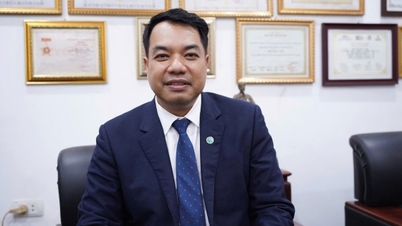
Dr. Phi Vinh Tuong, Deputy Director of the Institute of Vietnamese and World Economics (Vietnam Academy of Social Sciences ), believes that after the 14th Party Congress, the implementation of development tasks has been carried out with urgency, focusing on reforming the growth model towards science, technology, innovation, and digital transformation, aiming for double-digit growth linked to long-term development milestones. However, the foundations of the new growth model have not yet been fully established. The contribution of science, technology, and innovation is still limited compared to expectations; the mechanism for decentralizing revenue sources and the budgetary relationship between the central and local governments still have some unreasonable aspects; in particular, policies to attract and encourage the private sector to participate more deeply in high value-added sectors have not yet yielded clear changes.
According to Dr. Phi Vinh Tuong, as the economy expands, continued reliance on public investment and land resources as before is no longer appropriate. These are finite resources; if used irrationally, they not only reduce investment efficiency but can also affect the motivation of the private sector and the attractiveness of the investment environment. Increasing budget spending on public investment without clearly defining its leading role can also put pressure on the budget balance, especially domestic revenue. A notable reason is that the old management method still provides a sense of "safety" in implementation. In many cases, growth targets can be achieved through expanded public investment, even if the quality of growth is not high. This prevents the transition to a "developmental state" role from happening as strongly as required.
From an institutional perspective, policies promoting research, development, and innovation lack consistency, especially for the staff directly involved in managing this field. Innovation activities inherently involve risks, while the benefits of success primarily accrue to businesses and society. Without appropriate mechanisms to share risks and protect staff, it will be difficult to create incentives for new approaches. Furthermore, the management capacity of staff, especially at the grassroots level, still needs improvement. The shift from a development management model to a development governance model is not just a change in process, but also a change in mindset and approach. Meanwhile, the mechanisms for protecting staff during the testing and innovation process are not yet clearly defined, leading to hesitation in implementation.
Based on this reality, Dr. Phi Vinh Tuong argues that, in addition to continuing to invest in traditional infrastructure, more attention should be paid to the infrastructure of the innovation ecosystem, such as public laboratories serving private enterprises. These are important components for forming the foundation of a new growth model, although investment may face risks in terms of exploitation efficiency if appropriate mechanisms are lacking.
Regarding the use of state capital, Dr. Phi Vinh Tuong emphasized that the issue lies not only in the disbursement schedule but, more importantly, in how to define the role of public investment. For state capital to be truly effective, it is necessary to clearly identify strategic infrastructure and key economic sectors. Based on this, specific areas should be defined: those where the state should lead, those that can be implemented through public-private partnerships, and those where the private sector can actively participate. When public investment is used correctly as "seed capital," it will create conditions for private and foreign investment to participate more strongly in the economy. According to Dr. Phi Vinh Tuong, the important thing is to design a sufficiently clear mechanism to build trust among participating entities, rather than just focusing on increasing the scale of investment.
Conditions for creating sustainable growth momentum

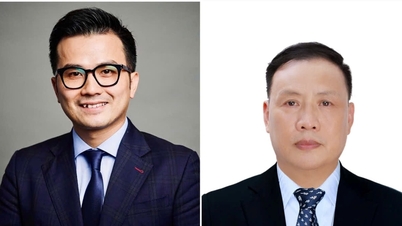
Associate Professor, Dr. Nguyen The Chinh, Vice President of the Vietnam Association of Environmental Economics, believes that the shift in the State's role from direct investor to designing and creating a development environment is consistent with the trend of a socialist-oriented market economy. The State cannot and does not need to replace the market, but rather needs to create a framework for the market to operate effectively. To achieve this, it is first necessary to re-examine the methods of mobilizing and utilizing resources in the economy. The private sector needs to be properly positioned as one of the important drivers of growth. When this sector is given the conditions to develop, resources in society will tend to shift towards more efficient production and business sectors.
According to Associate Professor, Dr. Nguyen The Chinh, a noteworthy issue is that resources held by the people are still not being exploited adequately. A portion of their assets remains in the form of gold or bank deposits, instead of being used in value-added activities. This reflects not only the issue of capital but also the level of trust in the investment environment. When people are not truly secure, capital flows will be difficult to move.
Associate Professor, Dr. Nguyen The Chinh believes that comprehensive solutions are needed to facilitate the participation of people's resources in the economy. First and foremost is the completion of the legal framework to ensure property rights and create peace of mind for people when investing. In addition, the business environment needs to be maintained in a stable and transparent manner to minimize risks for long-term investment decisions.
Along with policies on capital and markets, the role of the education system also needs to be more clearly recognized. Education should not only focus on imparting knowledge, but also contribute to the formation of entrepreneurial thinking and a spirit of hard work. When workers are capable of creating their own jobs, instead of just seeking employment, resources in society will be activated in a more proactive and effective way.
Regarding the financial market, Associate Professor, Dr. Nguyen The Chinh believes that it is necessary to develop a comprehensive system of capital channels, with the stock market playing a crucial role in providing medium and long-term capital. At the same time, appropriate mechanisms are needed to ensure the healthy development of capital, credit, and bond markets, thereby facilitating capital flows into innovative sectors.
With foreign loans, their use must be linked to efficiency and the economy's absorption capacity. Project selection must be based on clear criteria of economic efficiency, while carefully considering factors such as interest rates and loan terms to ensure repayment and create spillover effects.
According to Associate Professor, Dr. Nguyen The Chinh, the current issue is not just about mobilizing more resources, but about creating a mechanism for these resources to operate smoothly and be interconnected. When people and businesses feel confident in investing resources in production and business, capital flows in the economy will have the conditions to move in a more efficient direction.
Source: https://baotintuc.vn/thoi-su/go-nut-that-nguon-luc-khoi-dong-tang-truong-20260502080853301.htm


![[Photo] General Secretary and President To Lam presides over the meeting to approve the draft report on the results of the second inspection by the Politburo of the Standing Committee of the Hanoi City Party Committee.](https://vphoto.vietnam.vn/thumb/1200x675/vietnam/resource/IMAGE/2026/05/26/1779789811432_a2-bnd-4430-9620-jpg.webp)

























































































Comment (0)