

From Chinese novels to penny novels
In the early 20th century, Chinese novels dominated the literary scene. Many translations were published, serialized in newspapers, and distributed as books throughout Vietnam. Even before winning the Self-Reliance Literary Award, Anh Thơ would read Chinese novels. "Whenever I had free time, I would look through my aunt's books. Things like ' Rebirth of Love,' 'The Twin Phoenixes' Romance,' 'Heroic Chaos,' 'Continuation of Heroic Chaos,' 'Journey to the West,' 'Eastern Zhou Kingdoms '... I devoured them day and night." Tô Hoài, Huy Cận, Nguyễn Huy Tưởng… most of them had read many Chinese novels in their youth.
Readers' fondness for Chinese novels led Pham Quynh in 1918 to consider this a problem for Vietnamese literature, arguing that these novels infected people's minds and spirits, causing them to act wrongly. "It's no wonder that the national consciousness is immersed in endless enchantment, sometimes giving rise to foolish actions that harm social order."
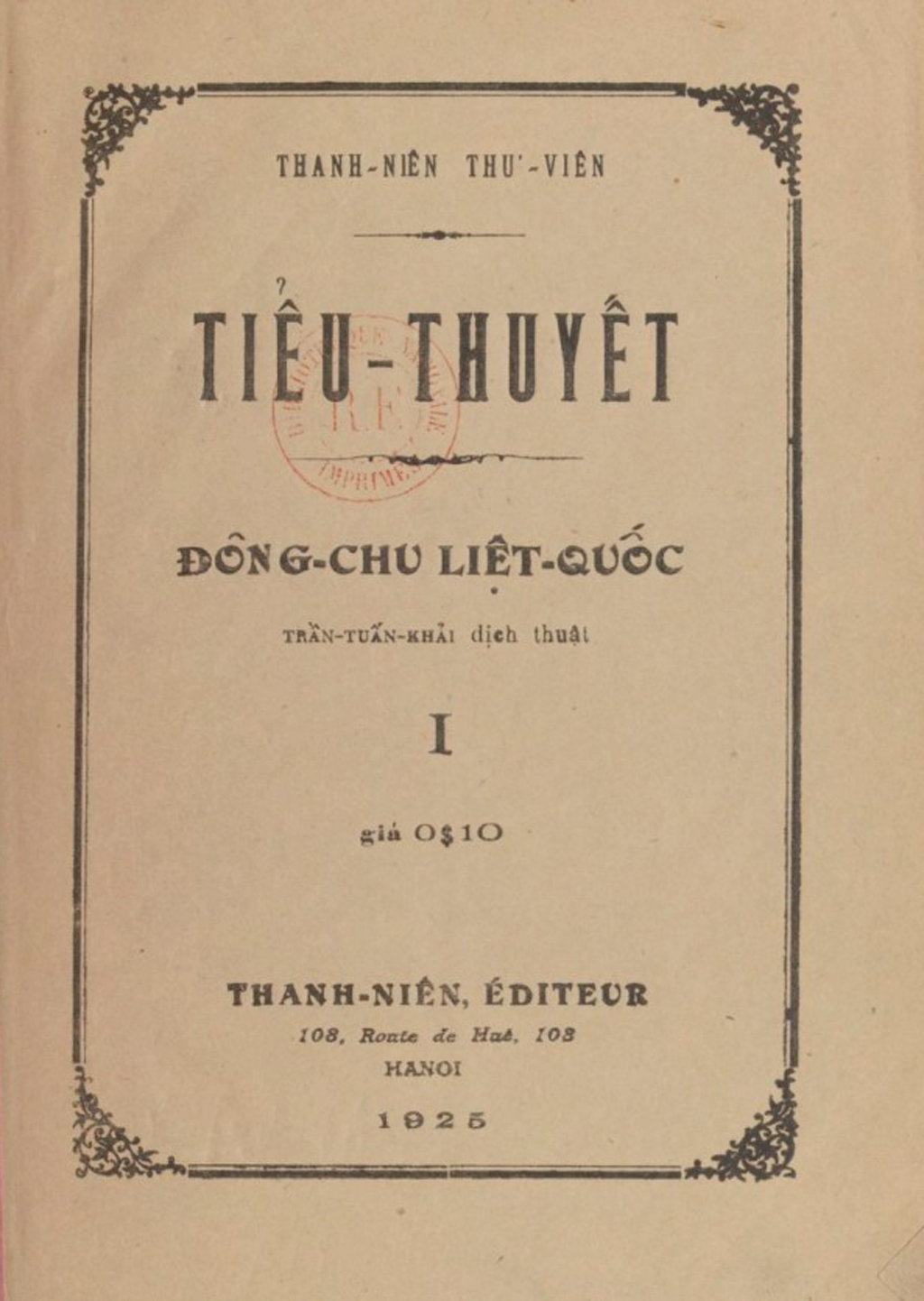
The novel *Eastern Zhou Kingdoms*, Volume I, translated by [Á Nam] Trần Tuấn Khải, was published in 1926.
Readers' tastes vary, depending on age and the time period. When he was a student, Vu Bao and his friends were captivated by martial arts and detective novels, which he explained as "literature being a kind of drug; at first you smell it, you're fascinated, and then you really dive in and inhale it." Because they were so engrossed in these martial arts and adventure novels, the students kept reading regardless of the quality: "At first, we students liked martial arts and detective stories, then we became obsessed. And once we were obsessed with a writer, even if they wrote poorly, we had to keep reading... We also read 'The White Swallow,' 'Flying Knife,' 'Le Hang and the Revenge,' 'Bong Lai Heroine,' 'Giao Tri Heroine'... after finishing the first volume, we eagerly awaited the next week to buy the second."
In the mid-1930s, the book industry saw the rise of the "three-penny novel," which dominated the market. These books were published in thin volumes of just over a dozen pages, divided into multiple parts, playing on readers' curiosity and anticipation. At three cents, they were priced at only the equivalent of a simple breakfast. Many publishers, even pharmacies, established their own publishing houses to print and sell these three-penny novels and… advertise medicine. Take the Bao Ngoc Literary Group as an example. This group published Thanh Van's *The Story of De Tham* in 1935 in six issues, each with a print run of 10,000 copies, demonstrating the immense popularity of these three-penny novels among readers.
The pittance of cheap novels has caused many in the profession to lament the loss of writer's integrity, with some works being utterly worthless. A representative from the Indochina Publishing House criticized them, stating: "Recently, many people have complained vehemently about the small books selling for 2 or 3 cents by writers they call 'cheap writers.' Newspapers have clearly shown in numerous articles the worthlessness of these books, both in terms of literature and ideology."
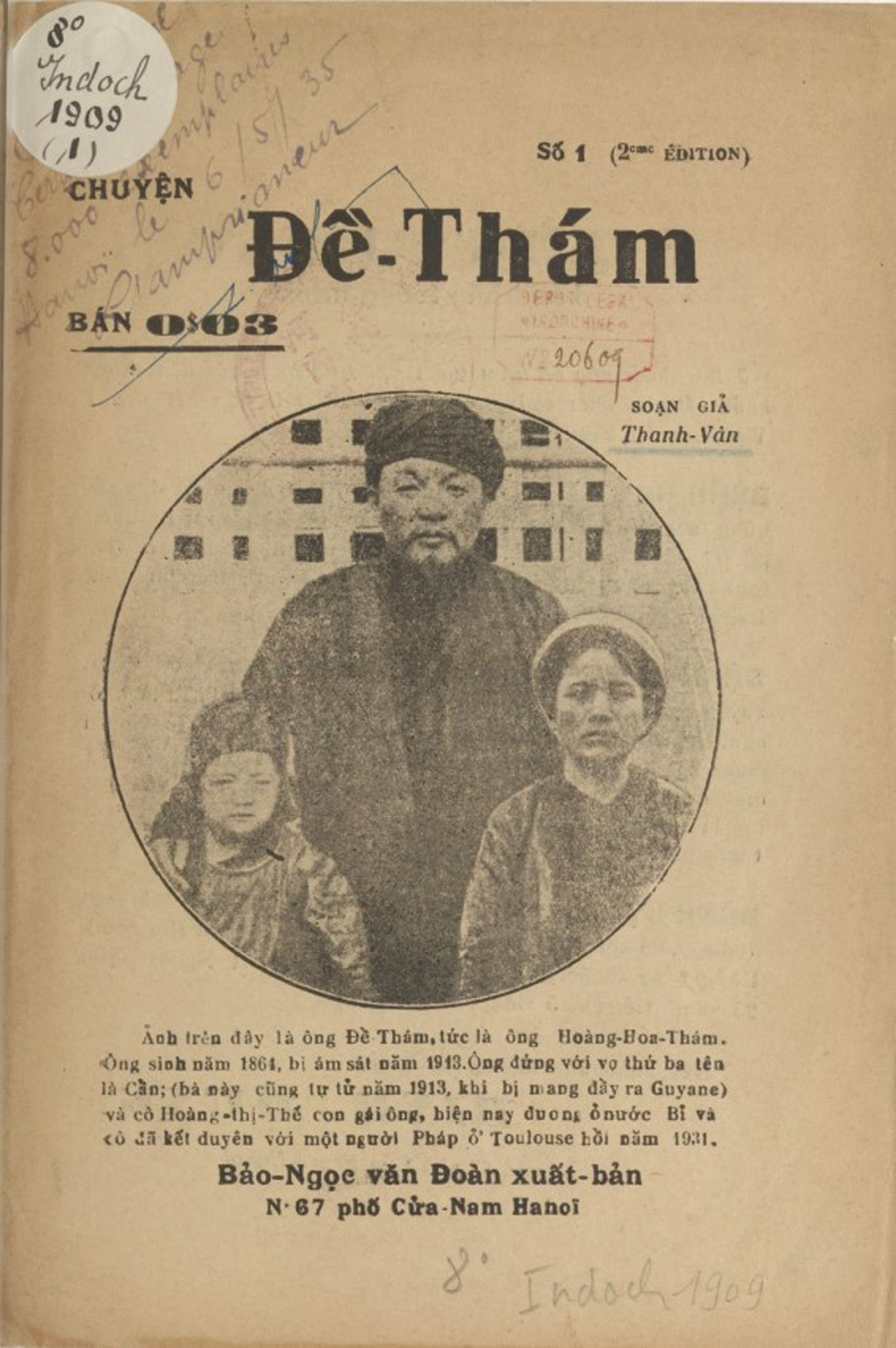
Thanh Vân's *The Story of Đề Thám* belongs to the genre of cheap novels, published in 1935.
Reading books according to the times
During the latter half of the 1930s, under the influence of the French Popular Front, the pro-democracy movement in Indochina, alongside the ever-dominant literary works, saw a greater increase in the publication of political books. Works such as "Wanting to Become a Union Fighter" (translated by An Hai, published in 1937), "Europe: War or Peace" (translated by Thach Dai, published in 1937), and "A Project for Tax Reform" by Qua Ninh and To Dan (published in 1938) are examples of such books.
Vu Ngoc Phan noted that during the years 1940-1945, novels were better-selling than other genres. Due to the war, books from France could not be imported into Indochina, so French people in Vietnam also read Vietnamese-language books.
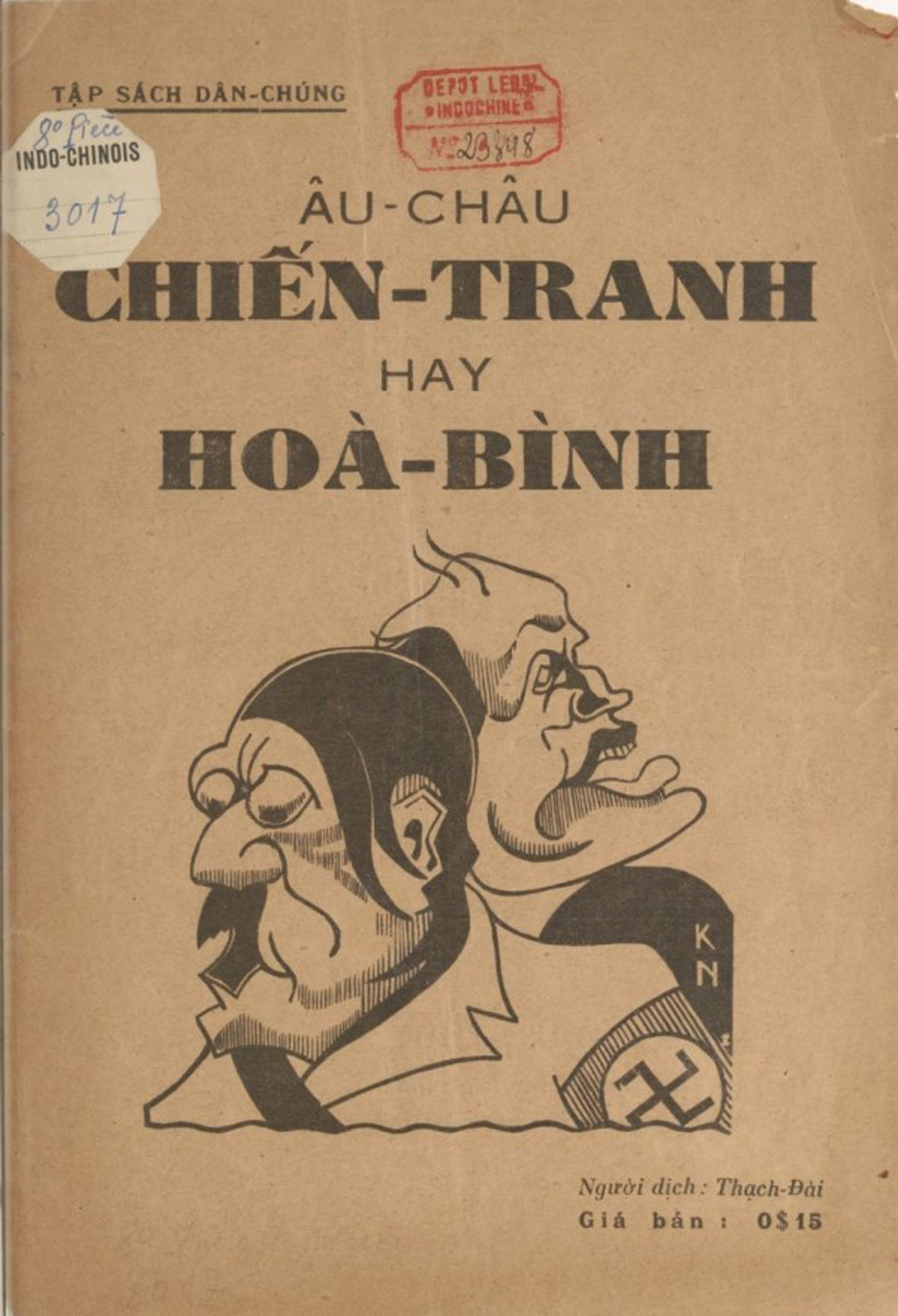
The book Europe: War or Peace, published in 1937.
After the Japanese coup against the French in early March 1945, many Japanese language textbooks were published. Japanese books became a highly sought-after commodity. Vu Bang recalled that " practical Japanese language books sold like hotcakes." Vu Bao, in his memoir "Roots of Water Hyacinths on the Waves," also stated that after the Japanese army entered Hai Phong, "scattered throughout the city, there were a few Japanese language classes. Practical Japanese and 'Accelerated Japanese Learning ' appeared on bookstore shelves." Not only after March 1945, but even after the Japanese entered Indochina in 1940, many Japanese language learning books were published: "A Unique Japanese Language" published by Nam Thien Bookstore in 1942; "A Unique Japanese Language Study" compiled by Nguyen Manh Bong, published by Nam Son Publishing House in 1942; "Learning to Speak Japanese Alone" published in 1942; "Speaking Japanese" by Dao Nguyen published in 1942…
Reading wasn't something you could just do whenever you wanted. Books banned by the state from being bought or stored became prohibited, and if discovered, it could easily lead to criminal charges. In school, students had to read according to regulations. Son Nam, while studying in Can Tho, recalled, "The funniest thing was that during free study time, reading Vietnamese books was forbidden; if you wanted to read, you had to present it to the Vietnamese literature professor for approval." This was a precautionary measure by the French at the time, which, according to Son Nam, "I understood it to mean banning political books, directly or indirectly opposing colonialism. Occasionally, the supervisors would find a few such books, issue a warning, or refer the case to the disciplinary committee; students could be expelled, even though those books were freely available in bookstores in the market ." (to be continued)
Source link


![[Photo] General Secretary To Lam working with Ambassadors and Heads of Vietnamese representative offices abroad attending the 14th National Congress of the Party](/_next/image?url=https%3A%2F%2Fvphoto.vietnam.vn%2Fthumb%2F1200x675%2Fvietnam%2Fresource%2FIMAGE%2F2026%2F01%2F25%2F1769334314499_image.jpeg&w=3840&q=75)



Comment (0)