

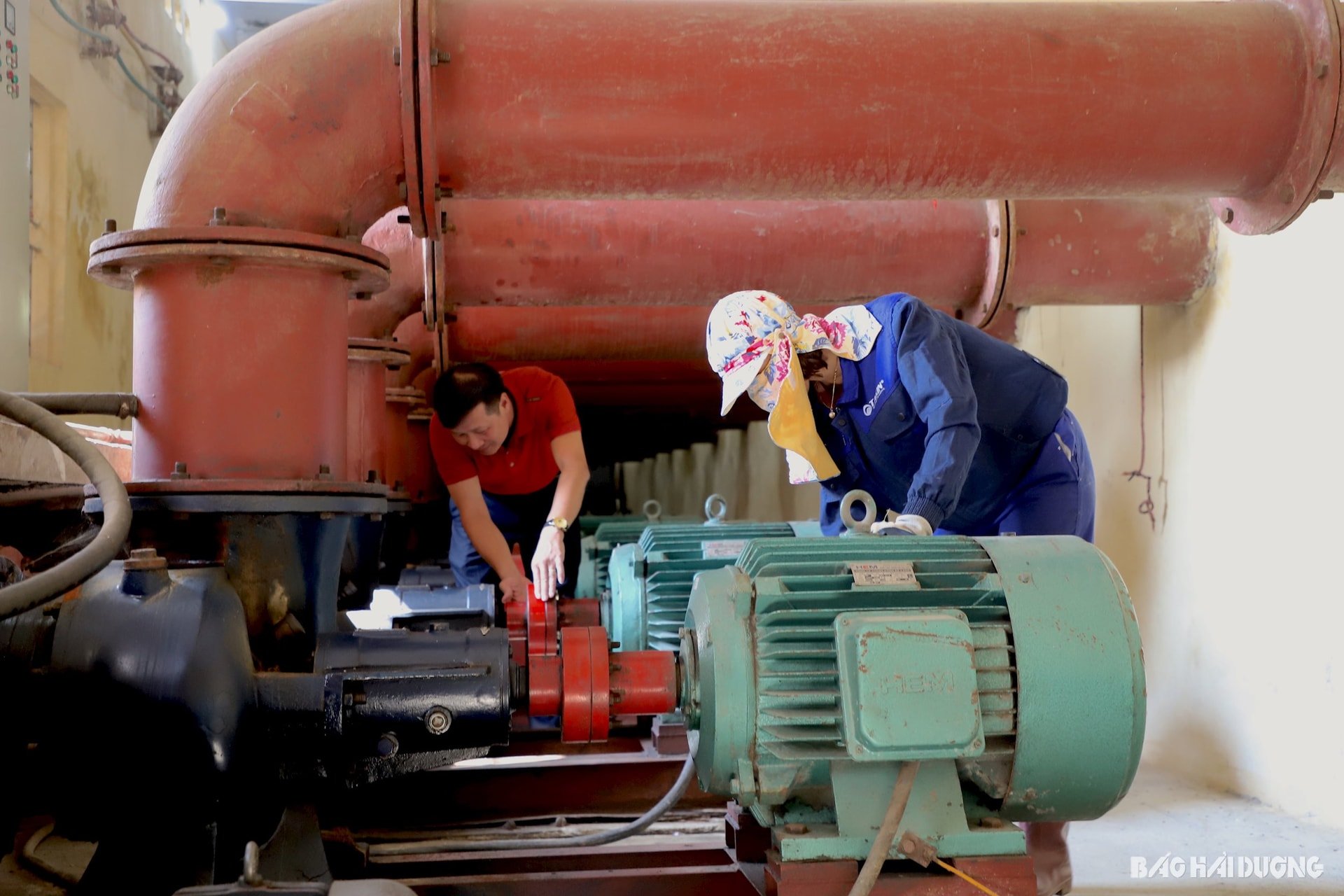
Many disadvantages
According to the Hai Duong Provincial Irrigation Works Exploitation Company Limited, in recent years, the process of supplying water for irrigation and nurturing the winter-spring crop, especially in Binh Giang, Cam Giang, Thanh Mien districts and Chi Linh city, has often encountered difficulties and disadvantages such as water shortage, water pollution, and excessive salinity.
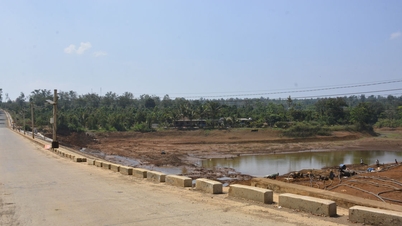
During last year's winter-spring season, from January to March, water levels in the Bac Hung Hai area were consistently low and polluted. From March 5th to 19th, water in the Kim Son, Trang Ky, Tay Ke Sat, Dinh Dao, Cuu An rivers, and other areas experienced severe to deep pollution, with the water turning black and emitting a foul odor. Most factories in the Bac Hung Hai area had to close their sluice gates to prevent polluted water from entering the main irrigation canals.
For areas that draw water from lakes in Chi Linh City, such as Phu Loi, Ben Tam, and Ho Ven, there have been times when water shortages have occurred. In 2025, the predicted rainfall is lower than the same period in previous years, and the water inflow into the lakes is minimal or nonexistent, so the risk of drought may occur.
Recent years of experience in supporting winter-spring crop production show that around March and April each year, the water source in the Bac Hung Hai river area (the section passing through Binh Giang, Thanh Mien, and Cam Giang districts) is frequently polluted due to water flowing from factories and industrial zones in Hung Yen province into Hai Duong province. At Cau Xe and An Tho sluice gates (Tu Ky district), salinity levels prevent upstream water intake.
Meanwhile, salinity levels at the Cau Xe and An Tho sluice gates often exceed permissible limits, preventing many pumping stations from drawing water for rice irrigation. Consequently, the highland areas of Bac Hung Hai in Binh Giang, Cam Giang, and Gia Loc districts are also experiencing water shortages for crop irrigation.
For other gravity-fed irrigation areas located in tidal zones, water resources have been declining in recent years, and saltwater intrusion is occurring earlier, leading to low gravity-fed water supply capacity and numerous difficulties.
Forecasts for January to March 2025 indicate that average temperatures in the Hai Duong area will generally be similar to last year's average. The weather and climate during the 2024-2025 winter-spring season will be complex. River water levels will change slowly, trending downwards. Water resources in rivers and reservoirs will generally be slightly deficient compared to the multi-year average.
The current irrigation season is very urgent, requiring short irrigation times, and many existing irrigation systems cannot meet the demand. Meanwhile, the province has a very large area of agricultural land requiring irrigation, including nearly 51,000 hectares of rice, over 17,455 hectares of rice seedlings, vegetables, and converted land, over 7,212 hectares of industrial crops, fruit trees, and medicinal plants, and over 9,851 hectares of aquaculture.
"Given the numerous disadvantages, the development and implementation of a drought prevention plan for the winter-spring crop is necessary and urgent. To date, we have disseminated this plan to each district-level irrigation works exploitation enterprise; clearly identifying the risks, situations, and specific drought prevention solutions for each district, town, and city," emphasized Ms. Nguyen Thi Tu, Deputy General Director of the Provincial Irrigation Works Exploitation Company Limited.
Implement key plans
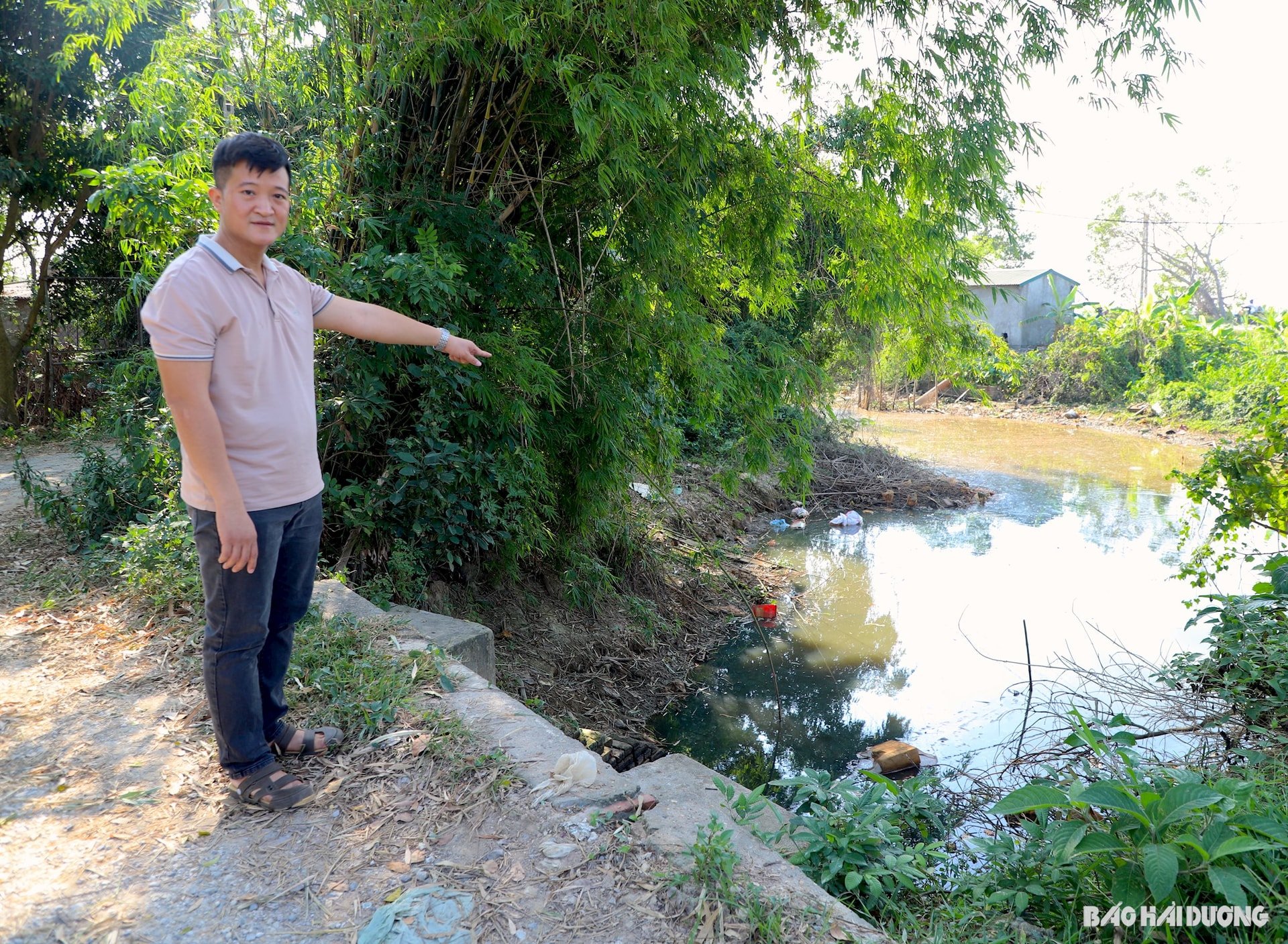
During the 2023-2024 winter-spring season, Binh Giang was a "hot spot" for drought. Due to the impact of multiple factors, including severe pollution of rivers in the Bac Hung Hai system, more than 500 hectares of agricultural land in the district were severely affected by drought.
Anticipating similar difficulties that may arise, the Binh Giang District Irrigation Works Exploitation Enterprise has proactively developed a key plan to combat drought during the 2024-2025 winter-spring crop season.
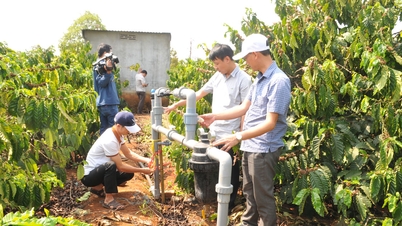
According to Dao Van Dong, Director of the Irrigation Works Exploitation Enterprise of Dao Van Dong district, the unit has developed many plans to respond to situations ranging from severe to extremely severe droughts and force majeure events. "The enterprise has developed very specific measures for when there is no rain, river water levels are low, and pollution and salinity prevent water from reaching the fields. The focus will be on renting and installing mobile pumping systems to pump water from safe areas into the fields and continuing to use on-farm pumping stations to distribute water to drought-affected areas," Mr. Dong said.
Based on the local production plan and planting season, the Irrigation Works Exploitation Enterprises of districts, towns, and cities have also developed appropriate water management plans for each production area. For areas where there may not be enough water for rice cultivation, it is recommended to switch to suitable crops.
Mr. Bui Quang Bac, Director of the Cam Giang District Irrigation Works Exploitation Enterprise, said that the unit has proactively reviewed, repaired, and upgraded 17 pumping stations under its management to fully utilize high tides and water releases from hydroelectric reservoirs to channel and store water early into the irrigation canal system. This is one of the key measures to overcome potential drought conditions. This requires mobilizing maximum capacity of machinery, equipment, and personnel and is more costly, but it is necessary.
The Provincial Irrigation Works Exploitation Company Limited requests that enterprises carry out water pumping, water distribution, and water storage in the inland irrigation systems before December 31st. Concentrated irrigation should be carried out from January 15th to February 25th, 2025. For highland areas in Cam Giang, Binh Giang, Thanh Mien, and Gia Loc districts facing water shortages, early irrigation should be proactively implemented...
TMSource: https://baohaiduong.vn/hai-duong-chu-dong-chong-han-tu-som-tu-xa-398784.html
![[Photo] Capturing the moment the tide recedes at Yen Binh Son rapids - a million-year-old scenic spot in Quang Ngai.](https://vphoto.vietnam.vn/thumb/1200x675/vietnam/resource/IMAGE/2026/05/19/1779175463885_yen9-1199-jpg.webp)
![[Photo] National Assembly Chairman Tran Thanh Man attends the groundbreaking ceremony for the National Highway 1A spatial axis project.](https://vphoto.vietnam.vn/thumb/1200x675/vietnam/resource/IMAGE/2026/05/19/1779161360398_ndo_br_bnd-1412-jpg.webp)
![[Photo] General Secretary and President To Lam presides over a meeting on the implementation of Directive No. 34-CT/TW of the Party Central Committee.](https://vphoto.vietnam.vn/thumb/1200x675/vietnam/resource/IMAGE/2026/05/19/1779187768672_a1-bnd-2350-631-jpg.webp)









































![[Photo] General Secretary and President To Lam receives Indian Defense Minister Rajnath Singh](https://vphoto.vietnam.vn/thumb/402x226/vietnam/resource/IMAGE/2026/05/19/1779184046302_anh-man-hinh-2026-05-19-luc-16-46-58.png)


























Comment (0)