


This is the result of three years of implementing Resolution No. 21 dated February 10, 2022, of the Standing Committee of the Provincial Party Committee (22nd term) on building a team of ethnic minority cadres for the period 2022-2025 and orientation to 2030. However, in reality, the roadmap for building a team of ethnic minority cadres is facing many "obstacles," especially in recruitment, placement, and the mechanisms and policies to attract high-quality cadres who are both politically sound and professionally competent...
"A bridge" from local officials
With a sense of responsibility and dedication, many generations of ethnic minority officials have been playing a bridging role, contributing to the goal of developing mountainous regions.
Serving the homeland
With nearly 10 years of experience in the medical field, Dr. Kring Truong, Deputy Head of the Emergency Department at the Nam Tra My District Health Center, is known as a "connector" in grassroots professional activities. Besides his work at the center, Dr. Kring Truong is almost always present in the annual medical examination and volunteer programs and military recruitment drives in the mountainous region. Undeterred by difficulties or hardships, he is always there wherever the people need him.

Dr. Kring Truong (born in 1989) is a Ve ethnic minority, a branch of the Gie Trieng ethnic group, from the border commune of Dak Pring (Nam Giang). In 2017, after nearly two years of internship in his hometown, Kring Truong volunteered to go to Nam Tra My on a probationary basis. Demonstrating his creative work abilities and enthusiastic dedication to patients, he was soon offered a contract. In early 2019, Kring Truong applied for and passed the civil servant recruitment exam at the Nam Tra My District Health Center.
Dr. Kring Truong recounted that working in challenging conditions like Nam Tra My, young doctors inevitably face unique pressures and difficulties. In particular, the shortage of personnel forces them to work continuously without timely replacements.

“The hectic work schedule leaves very little time for rest and recovery for the medical staff. But we don't give up. The doctors and nurses often encourage each other to persevere, because the greatest joy for those of us working in mountainous areas is being able to return and serve our people,” shared Dr. Kring Truong.
The story of Dr. Kring Truong reminds us of the journey home of Riah Dung, the Youth Union Secretary of Ga Ry commune (Tay Giang district). A few years ago, after working at the district Youth Union, Riah Dung unexpectedly requested a transfer to the grassroots level, with the desire to contribute to reviving Youth Union movements and gathering young people in the border region. The baggage this 32-year-old Co Tu man brought back was a startup model under the project " Ecotourism linked with local oranges in Tay Giang".
After nearly four years of implementation, Riah Dung said he has been gradually improving the quality of Ga Ry oranges, aiming to build a unique brand in the Eastern Truong Son region through an integrated ecological model. “This is what I'm most looking forward to. Hopefully, with the shared determination of the local youth in Ga Ry, the model will create a unique identity, bringing the distinctive product of the Co Tu people in the Vietnam-Laos border region to all parts of the country,” Riah Dung shared.
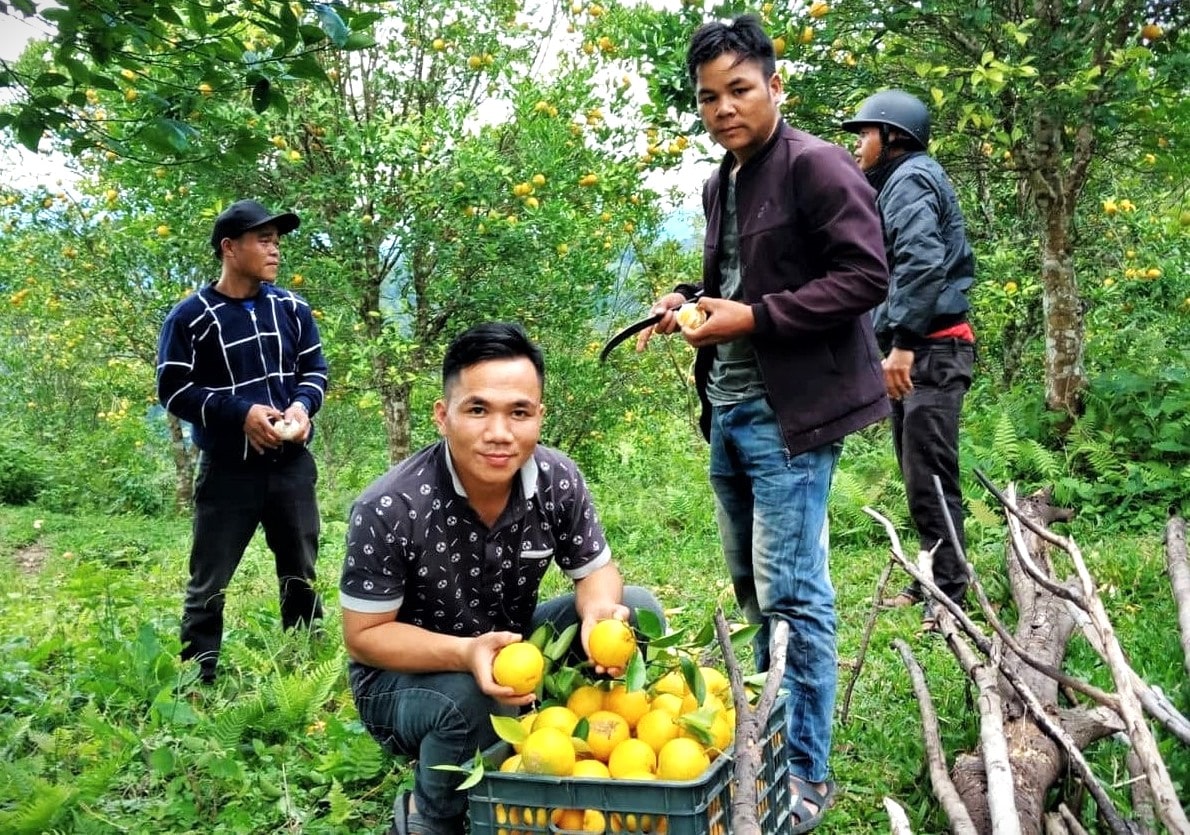
With her practical contributions to her homeland, in recent years, Ríah Dung has been continuously honored, becoming a typical young person who received the Lý Tự Trọng Award from the Central Committee of the Ho Chi Minh Communist Youth Union in 2023. Most recently, Ríah Dung participated in the ceremony honoring "Beautiful Examples of the Village" and presenting the Vừ A Dính Award for outstanding achievements and contributions to the development of ethnic minorities in mountainous and island regions, organized by the Central Committee of the Youth Union.
Pioneering the "measure" of quality.
Through practical training programs, many ethnic minority officials in the province have overcome the previous notion of limitations in their capabilities and professional qualifications. Over the past decade or so, assessments have shown that most officials in mountainous areas have received attention in terms of training and development, filling the gaps in their current qualifications.

According to Mr. Zoram Buon, Permanent Deputy Secretary of the Tay Giang District Party Committee, recognizing quality as the "measure" for evaluating the capacity of grassroots officials, the locality has sent hundreds of ethnic minority officials for training and professional development in specialized skills, political theory, state management, information technology, and foreign languages over the years. This training is linked to planning and appointment to positions, gradually overcoming the current shortage of ethnic minority officials to meet demand. "After being sent for training and professional development, the ethnic minority officials have been able to utilize their abilities in their work," Mr. Zoram Buon added.
Tay Giang has planned for 175/178 ethnic minority cadres at the commune level and 42/73 at the district level. Based on this, the Standing Committee of the District Party Committee proactively proposed to the province to open training courses on political theory, professional skills, as well as related professional training courses. At the same time, cadres and civil servants participated in training courses inside and outside the province... As a result, the quality of the ethnic minority cadre team has been increasingly improved, meeting the local cadre needs for placement, promotion, and appointment.
Quang Nam currently has 3,751 ethnic minority officials, civil servants, and public employees, accounting for 10.5% of the total; including 34 at the provincial level, 185 at the district level, and 1,070 at the commune level, with 2,462 being public employees. By 2023, the province had 658 ethnic minority officials, civil servants, and public employees working in state agencies and public service units at the provincial level out of 10,215 allocated positions, reaching 6.4%. 1,243 ethnic minority officials and civil servants are representatives in People's Councils at all levels, accounting for 21%.
“To take care of local ethnic minority cadres, we have registered with the province to send students to study specialized university courses according to needs. Of the 177 people sent to study under the scholarship program, 157 have graduated from university so far. Over the years, we have arranged jobs for 100 scholarship students, including 11 commune-level civil servants, 9 district-level officials, and the rest are assigned to teaching and working at public service units under the district and the province's vertical departments,” said Mr. Zơrâm Buôn.
These "bridges" are gradually spreading. The mountainous regions are increasingly producing "shining gems" after a long journey of self-improvement. From practical stories and the changing landscapes of the mountains, people are talking more and more about local officials – the intellectuals of the villages. Examples include Bhling Mien – Chairman of the People's Committee of Lang Commune (Tay Giang); Dinh Thi Ngoi – Chairman of the People's Committee of Song Kon Commune (Dong Giang); Ho Van Phuc – Chairman of the People's Committee of Phuoc Thanh Commune (Phuoc Son)... who are tirelessly contributing to their communities.
The difficult recruitment problem
Despite positive developments, the proportion of ethnic minority cadres remains low, or even absent, in Party committees or socio-political organizations.
Many obstacles and difficulties regarding the recruitment and employment of ethnic minority cadres in provincial-level agencies and six high-mountain districts were noted during a recent monitoring visit by the Vietnam Fatherland Front Committee of the province.
Low recruitment at the provincial level.
Among the specific targets set out in Resolution No. 21 for 2025, provincial-level agencies and units are striving to have ethnic minority cadres, civil servants, and public employees. According to the Department of Internal Affairs, to date, the provincial government has 11 out of 21 provincial-level departments and agencies, and 5 out of 8 public service units under the Provincial People's Committee with ethnic minority cadres, civil servants, and public employees working there. For the Provincial Ethnic Affairs Committee, there are currently 4 ethnic minority civil servants out of 20 allocated positions, reaching only 20%, which is lower than the resolution's target.
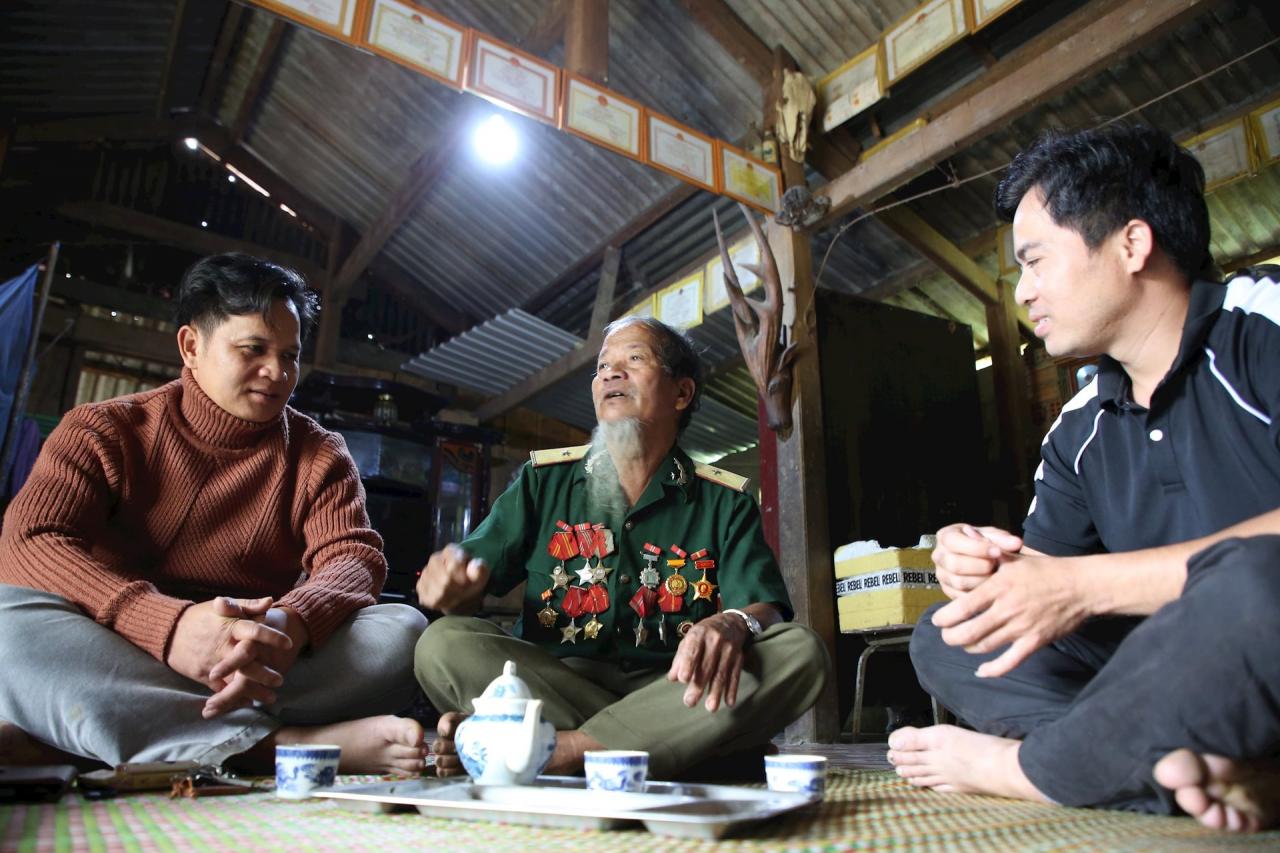
Speaking about the difficulties in recruiting ethnic minority officials, Mr. Ha Ra Dieu, Deputy Head of the Provincial Ethnic Affairs Committee, said that in the past two years, the unit has announced five recruitment exams to supplement ethnic minority staff. However, only one case of a child from an ethnic minority family in Dong Giang district was successful. The Committee had to encourage this person many times before they agreed to work in Tam Ky, due to their reluctance to travel long distances and unfamiliarity with city life.
"The Provincial Ethnic Affairs Committee is still short of two ethnic minority officials to reach the 30% target set in Resolution No. 21. In the coming period, the Committee will continue to hold recruitment exams to ensure the target is met," Mr. Dieu said.
Quang Nam province has also reviewed the number and quality of ethnic minority civil servants and public employees in the province and assessed the surplus and shortage of ethnic minority civil servants and public employees in each agency, unit, and locality compared to the targets assigned in Resolution No. 21. As of June 30th, departments and agencies recruited 9 people out of 66 targets (achieving 13.6%); public service units under the Provincial People's Committee recruited 3 people out of 8 targets (achieving 37.5%); and the People's Committees of high-mountain districts recruited 172 out of 248 targets (achieving 69.4%).
Ms. Tran Thi Kim Hoa, Director of the Department of Internal Affairs, stated that to ensure each department and agency in the province has at least one ethnic minority official or civil servant, the Department has "gatekeeper" the recruitment registration process. Since only ethnic minority individuals can be recruited for these positions, the Department of Internal Affairs will monitor the process. If the target for ethnic minority officials is not met, the position will remain vacant and no non-ethnic minority civil servants will be recruited or accepted.
Strive to achieve the target.
The Department of Internal Affairs affirmed that the Provincial People's Committee issued Decision 3161 dated November 21, 2022, based on surveys, the allocated staffing quota for 2021-2022, the unused staffing quota of units and localities, and the projected retirement age by 2025, and not imposed.
Notably, in implementing the policy of prioritizing recruitment for ethnic minorities, in 2023, the Department of Internal Affairs advised the Provincial People's Committee to organize a separate civil servant recruitment exam for ethnic minorities. Units and localities registered for 16 positions, with 84 applications. The results showed that only 13 positions were filled, falling short of expectations.
According to Mr. Dinh Minh Nho, Head of the Civil Servant and Public Employee Department (Department of Internal Affairs), organizing such an exam is very costly. The Department of Internal Affairs has proposed it, but the demand for recruitment quotas from units and localities is very low. “Currently, the Provincial Party Standing Committee has approved the organization of the 2024 civil servant recruitment exam. The Provincial People's Committee has issued a plan for 41 positions, focusing on high-mountain districts, including positions for ethnic minorities,” Mr. Nho stated.
From 2020 to June 30, 2024, Quang Nam province organized training and professional development for approximately 2,500 ethnic minority officials and civil servants. Compared to the period before February 10, 2021, the number of ethnic minority officials and civil servants in the provincial government increased by 944 people. As of June 30, 2024, there were 227 ethnic minority officials and civil servants holding leadership and management positions in state management agencies and public service units from the district level upwards (including 3 department-level leaders, 14 district-level leaders, and 210 division-level leaders), and 601 commune-level officials were ethnic minorities.
Regarding the Party, Front, and socio-political organizations, the Provincial Party Committee's Organization Department reported that from February 2022 to June 2024, 28 positions were filled by ethnic minority individuals. Of these, 9 were filled through the selection process; 9 through competitive examinations; and 10 positions involved the transfer of commune-level officials to district-level positions and civil servants to public positions.
Mr. Cao Thanh Hai, Deputy Head of the Provincial Party Committee's Organization Department, stated that the recruitment of ethnic minority cadres is facing difficulties due to regulations increasing the retirement age, downsizing the workforce, streamlining the organizational structure, and reducing the number of deputy positions. The number of people retiring annually is decreasing, leaving no surplus personnel for the Party, the Fatherland Front, and socio-political organizations to recruit. In departments and agencies with limited quotas, ethnic minority individuals also have little desire to work in the province due to customs, living conditions, and transportation challenges.
Resolution 16 dated December 15, 2014, of the Provincial Party Committee's Standing Committee set a target for provincial-level agencies and units to strive to have ethnic minority cadres and civil servants, but this was not achieved. Recognizing some difficulties, Resolution 21 continued to set the direction to strive to achieve this goal by 2025. Although not yet mandatory, the Provincial Party Committee's Organization Department, in coordination with the Department of Internal Affairs, is researching and advising on a mechanism to ensure that each agency and department in the province has ethnic minority cadres.
"We will actively coordinate with the Standing Committee of the Provincial Party Committee and the Party Committee of the Provincial People's Committee to direct the Provincial People's Committee and relevant departments to focus on recruitment in order to strive to achieve this target according to Resolution 21," Mr. Hai said.
Rotation, exposure to new tasks.
Many ethnic minority officials have been "honed" through the rotation of positions and work environments. Besides being exposed to diverse and novel tasks, most officials subject to reassignment and rotation have demonstrated high competence, work efficiency, and creative thinking...
The form of "tempering"
After serving as Chairman of the People's Committee of Tra Nam commune, Nguyen Thanh Phuong, a young Xo Dang ethnic minority official, was transferred by the Nam Tra My District Party Committee to become Chairman of the People's Committee of Tra Van commune. This is the most disadvantaged commune in Nam Tra My district, with a relatively high poverty rate.

Nevertheless, Nguyen Thanh Phuong's nearly 10 years of experience as the commune chairman gave him confidence in taking on the task. Mr. Phuong said that after getting used to the new environment, he realized that Tra Van was not much different from Tra Nam many years ago. That includes difficult transportation conditions, underdeveloped infrastructure, and a lack of responsiveness in the people's thinking regarding labor and production.
To overcome these difficulties, in addition to maximizing the resources prioritized for ethnic minority and mountainous areas to invest in infrastructure, Tra Van will develop a socio-economic development plan. “Given the characteristics of mountainous areas, agriculture remains the mainstay of the economy. Therefore, we will invest heavily in agriculture, specifically in cultivating medicinal plants under the forest canopy combined with growing cassava, bananas, cinnamon, and concentrated livestock farming. Hopefully, this will be a new direction to help people escape poverty,” Mr. Phuong shared.
Mr. Nguyen Thanh Phuong is not an isolated case. The rotation of ethnic minority commune officials to the district level for training and familiarization with new tasks, along with the transfer of district officials to the grassroots level to build, strengthen, and develop the commune-level government apparatus to meet new requirements, is being implemented in many mountainous districts.
Mr. Briu Quan, Chairman of the Vietnam Fatherland Front Committee of Tay Giang District, recounted that during the period from 2014 to 2018, he was assigned and transferred by the district to serve as the Party Secretary of A Vuong and A Tieng communes. At that time, both localities lacked key officials and were preparing for the personnel restructuring of the Party Congress, so they needed reinforcement from the district.

“After the Party Congress of the commune, I, along with the local leadership team, focused on directing the construction of new rural areas. Many resolutions were issued, encouraging people to expand fish ponds to develop aquaculture, combining it with livestock farming and fruit tree cultivation. In particular, we expanded the cultivation of medicinal plants under the forest canopy, such as Ba kích (Radix Polygoni multiflori), cinnamon, and implemented the construction of land for residential areas and the commune's administrative center...”
"In addition, we also focus on personnel organization, training local leaders, continuing to promote and preserve Co Tu culture, and establishing groups for reciting and singing folk songs... Thanks to this, both commune Party committees now have strong, qualified cadres; some have pursued postgraduate studies, advanced political theory, and have become District Party Committee members and District People's Council representatives," said Mr. Briu Quan.
Creating a local pool of personnel.
Mr. Lalim Hau, Permanent Deputy Secretary of the Nam Giang District Party Committee, stated that, given the unique characteristics of the mountainous region, the rotation of ethnic minority cadres from the commune level to the district level and vice versa is seen as an opportunity to enhance the work efficiency of grassroots cadres. This ensures compliance with central and provincial regulations on cadre work while also being appropriate to the local situation.
To strengthen grassroots cadres, immediately after the District Party Congress for the 2020-2025 term and the elections for People's Councils at all levels for the 2021-2026 term, Nam Giang focused on assigning and arranging qualified and capable cadres, especially young cadres and female cadres, to key positions in district-level departments and agencies.
At the same time, organize the deployment and rotation of ethnic minority cadres from the district to the grassroots level or between localities, agencies, and units, helping to strengthen human resources for necessary areas and fields, meeting the requirements for training cadres through practical experience in difficult areas.
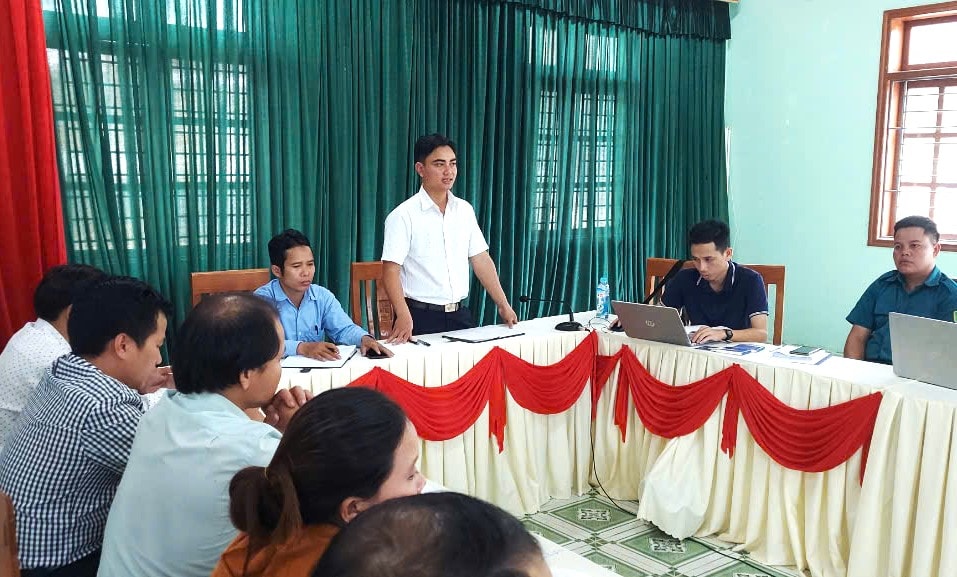
“To date, we have transferred and rotated 12 ethnic minority officials. After the job position plan was approved, the District People's Committee also transferred 34 civil servants and public employees to different positions; including 17 ethnic minority officials.”
"During the 2020-2025 term, 24 ethnic minority cadres participated in the District Party Committee's Executive Board, accounting for 61.54%, and 6 comrades participated in the District Party Committee's Standing Committee, accounting for 46.15%. In addition, since the beginning of the term, Nam Giang has appointed 18 ethnic minority leaders and managers, increasing the number of departmental-level leaders and managers to 51 people," Mr. Lalim Hau added.
As of the end of May 2024, Nam Giang had 1,058 civil servants and public employees; of which, 737 were ethnic minority officials, accounting for 69.66%. “At the district level, 501 out of 813 officials are ethnic minorities, with 469 out of 501 holding university degrees and 11 out of 501 holding postgraduate degrees. In addition, the locality has 99 out of 501 ethnic minority officials with intermediate-level political theory qualifications and 27 out of 501 with advanced-level political theory qualifications. At the commune level, out of 236 ethnic minority officials, 209 have university degrees and 1 has a postgraduate degree.”
Thanks to the rotation system, ethnic minority officials and civil servants have had the opportunity to access diverse and sensitive tasks, enabling them to perform their duties more effectively.
Specific policies are needed.
A specific roadmap and concrete policies are needed to recruit and improve the quality of ethnic minority cadres in the coming period.

Ms. Nguyen Thi Tuyet Thanh – Secretary of the Bac Tra My District Party Committee: Prioritizing the planning of cadres from ethnic minority groups.
In Bac Tra My district, the planning of ethnic minority cadres is receiving attention and is being implemented very well. Of the 11 members of the District Party Committee Standing Committee, 5 are from ethnic minority groups. However, the problem is that even though 100% of the cadres in the communes are from ethnic minority groups, they cannot be included in the planning. The reason is that none of the ethnic minority cadres there have studied specialized fields such as land administration or finance, which are not relevant to their job positions, making them unsuitable for inclusion in the planning.
Compared to the general standard in mountainous areas, the quality of ethnic minority cadres in Bac Tra My is quite good. However, while the transfer of Kinh cadres to ethnic minority areas is convenient, the transfer of ethnic minority cadres in the opposite direction does not guarantee the professional requirements associated with the job positions.
We determined that it takes more time for ethnic minority officials to reach a certain level of maturity. Therefore, for deputy positions in specialized departments, the district is trying to find ethnic minority officials to assign to these positions, so that they can strive, train, mature, and develop to higher positions.
Ms. A. Lang Thi Tam - Head of the Internal Affairs Department of Nam Giang District: Guidance is needed on signing training order contracts.
The Provincial People's Committee has approved the list of undergraduate and postgraduate training majors for students and civil servants from ethnic minority groups in Quang Nam province for the period 2023-2025. Accordingly, the People's Committees of the districts benefiting from the National Target Program for socio-economic development in ethnic minority and mountainous areas for the period 2021-2030 are assigned to implement the training based on the approved list of majors and the annual allocated budget.
Circular No. 02 dated August 21, 2023, issued by the Committee for Ethnic Minorities Affairs, stipulates that the method of signing contracts with training institutions is subject to consideration and decision by the Provincial People's Committee. However, currently, the Provincial People's Committee has not issued specific regulations or guidelines on the contract method. Therefore, it is very difficult for the district to implement the signing of contracts with training institutions. The competent authority needs to provide specific guidance and regulations on the method of signing contracts with training institutions so that localities have a basis for implementation.
During a recent working session with the National Assembly's Ethnic Affairs Council's monitoring delegation, Quang Nam province proposed a more open and flexible mechanism and regulations to prioritize ethnic minority cadres in recruitment. "To fulfill the roadmap and targets set out in Resolution 21, and to build a team of ethnic minority cadres capable of meeting current job requirements, more fundamental and decisive policies are needed from the central to local levels, along with more coordinated efforts from all sectors and levels," a representative from the Department of Internal Affairs stated.
Mr. Nguyen Van Mau – Vice Chairman of the Vietnam Fatherland Front Committee of the province: We must have appropriate methods to avoid waste.
Regarding policies and regulations for ethnic minority officials, the province has issued them promptly and comprehensively, but their implementation in practice has revealed many shortcomings. For example, Resolution 09 dated July 12, 2023, of the Provincial People's Council, reports indicate that its application to transfers and assignments from the province to the district level is problem-free; however, its application to transfers from the district to the commune level and vice versa, or from one commune to another, presents difficulties for localities in balancing funding and requires careful planning to implement the policy, otherwise it will lead to resentment and complaints.
Now, with the current job placement system, mountainous areas lack teachers, and healthcare workers cannot be recruited or placed in positions after graduation from the government-sponsored scholarship program. This represents a huge waste of resources.
Building a team of ethnic minority cadres to meet the development requirements of the locality is not something that can be achieved overnight. All localities want specific policies for ethnic minority cadres to attract, retain, and develop a local workforce, as outlined in Resolution 21.
Mr. Dang Tan Phuong - Deputy Head of the Ethnic Affairs Committee of the Provincial People's Council: Policies are needed to attract and retain officials.
In recent years, the province has issued many policies and mechanisms for mountainous regions and ethnic minority communities in general, including policies on personnel management. However, there is a lack of clear specific mechanisms for ethnic minority cadres. Specifically, Resolutions 11 and 09 of the Provincial People's Council only stipulate additional support levels for ethnic minorities, but do not include separate policies.
Localities in mountainous areas have reported that while civil servants are recruited from the lowlands, after a few years of service or after receiving preferential policies in particularly difficult areas, they often request to return to the lowlands. The problem of manpower shortage in mountainous areas has not been fundamentally solved because there are no policies to attract and retain personnel, especially local people. It is recommended that the Standing Committee of the Provincial Party Committee and the Provincial Party Committee direct the development of a specific policy on the work of ethnic minority cadres, aiming to build a local cadre team and create a stable, long-term source of personnel.
Content: ALĂNG NGƯỚC - NGUYÊN ĐOAN - HỮU PHÁT - ĐĂNG NGỌC - KHÁNH NGUYÊN - HOÀI AN - HÀN GIANG - ĐĂNG NGUYÊN
Presented by: MINH TAO
Source: https://baoquangnam.vn/xay-dung-doi-ngu-can-bo-nguoi-dan-toc-thieu-so-hai-hoa-co-cau-va-chat-luong-3143370.html



























































































Comment (0)