

SGGPO
High-tech crimes related to the banking sector continue to increase, becoming more complex and constantly evolving in methods and tactics. New criminal tactics include covering up QR codes at stores to steal assets, creating fake money transfer receipts to steal assets, and more.
 |
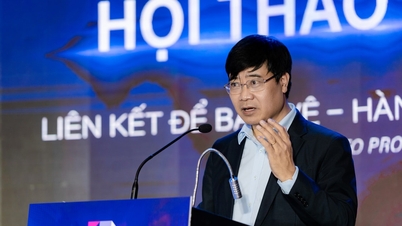
ACB Bank shared its views on security issues at the conference. |
At the seminar "Protecting Bank Accounts Against the Increasing Risk of Online Fraud" organized by Tuoi Tre newspaper in collaboration with the State Bank of Vietnam (SBV) on September 19th, Lieutenant Colonel Cao Viet Hung, Deputy Head of Department 4 of the Cyber Security and High-Tech Crime Prevention Department ( Ministry of Public Security ), stated that high-tech crime is increasingly developing, tending to exploit scientific and technological achievements such as AI to impersonate faces (Deepfake) and voices (Deep voice), then contacting relatives and friends to ask for money transfers.
Additionally, these individuals may impersonate services that recover money lost due to fraud, or set up "ghost" businesses and open bank accounts to receive investment funds for stocks, Forex, etc., before misappropriating the money.
 |
Lieutenant Colonel Cao Viet Hung, Deputy Head of Department 4, Cyber Security and High-Tech Crime Prevention Bureau (Ministry of Public Security) |
Lieutenant Colonel Cao Viet Hung also shared that new tactics have emerged, such as pasting over QR codes at stores to steal property, creating fake invoices showing money transfers to steal property, impersonating bank employees, requesting customers to provide card information, and illegally using it to purchase goods and services.
“Users and banks continue to be targets of criminals. For banks, criminals scan and attack systems, search for and exploit security vulnerabilities, and launch malware attacks. For bank customers, criminals constantly introduce new and sophisticated methods and tricks to defraud and seize assets…. Therefore, banks need to further strengthen coordination between the Ministry of Public Security, the State Bank of Vietnam, and payment service providers to build a coordinated process to limit the use of bank accounts and e-wallets without proper ownership, in order to prevent the flow of illegal funds early on,” Lieutenant Colonel Cao Viet Hung suggested.
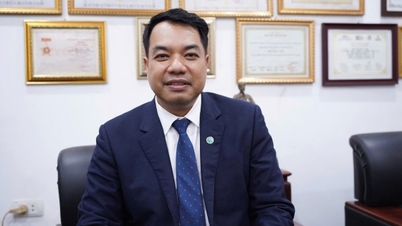
Mr. Le Anh Dung, Deputy Director of the Payment Department (State Bank of Vietnam) |

On the part of the State Bank of Vietnam, Mr. Le Anh Dung, Deputy Director of the Payment Department of the State Bank of Vietnam, also stated that online fraud has been rampant worldwide recently. The FBI has categorized online fraud into 27 different types of crimes, causing losses of over $10.3 billion in 2022. The surge in online fraud has a negative impact on consumers, businesses, and financial institutions.
In Vietnam, forms of online fraud and property theft include: fraudsters impersonating police officers, prosecutors, or court officials, calling and threatening customers with involvement in criminal cases or networks. They demand that customers transfer money to designated accounts for investigative purposes.
In addition, phone number hijacking scams have become quite common recently. Scammers impersonate network employees, offering free 3G to 4G SIM card upgrades or informing victims that their SIM cards have not been standardized. Victims follow the instructions and have their phone numbers hijacked to receive OTP codes, which, combined with the collected customer identification information, are used to reactivate online banking services, gaining access to conduct transactions and steal the user's money.
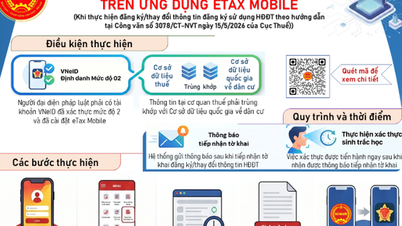
"Another new form of fraud that has recently emerged is fraudsters impersonating civil servants, officials, and government agencies to instruct people to install fake applications (VssID, VNeID, eTax Mobile, etc.) in order to gain control of their phones, collect personal information and bank account details, and steal money from users' bank accounts," said Mr. Le Anh Dung.
According to Mr. Dung, dealing with this type of fraud is not simple. To limit fraud and deception in payment activities, concerted efforts and coordination from all parties are needed, including the roles of banks and users.
The State Bank of Vietnam (SBV) has coordinated with the Ministry of Public Security to continue connecting to the national population database to verify customer credit information. They are also working with the Ministry of Information and Communications on a plan to clean up data and match account holder information registered for online banking services with mobile phone subscriber information. To protect customer accounts at banks, the SBV will amend Decision 630/2017 on security solutions for online payments to include detailed regulations on transaction limits requiring biometric authentication to ensure that the account holder and the transaction performer are the same person.
"According to statistics, 90% of interbank transfers are under 10 million VND, with only 10% exceeding 10 million VND. Therefore, there will soon be regulations requiring biometric authentication (fingerprint, facial recognition) for interbank transfers, possibly at 10 million VND. This will also effectively eliminate the buying, selling, and renting of bank accounts that has existed for a long time," Mr. Dung informed.
Source





































































































Comment (0)