

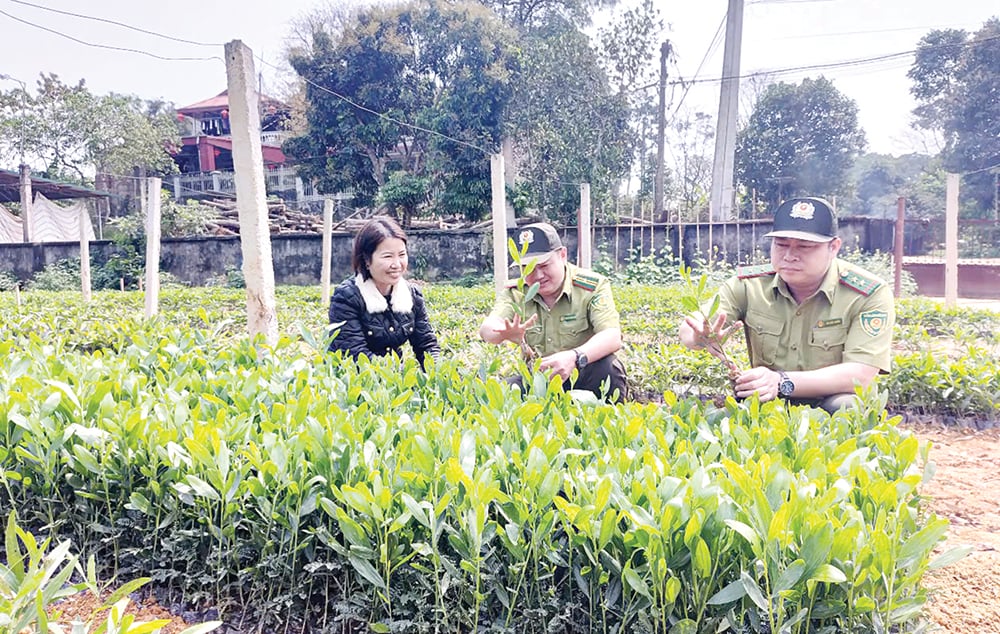
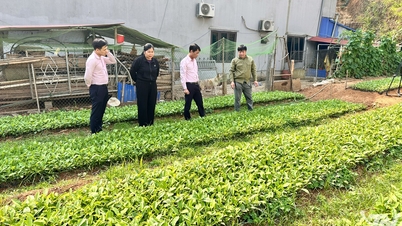
Producing high-quality seedlings for reforestation in Đoan Hùng.
Yen Lap is a mountainous district with 80% ethnic minority population. With its diverse terrain and large land resources, the district has many advantages for developing agriculture and forestry, especially perennial forestry and industrial crops, helping local people escape poverty. Recognizing poverty reduction as a key priority, and considering the development of hill and forest economies, particularly large timber trees, medicinal plants, and fruit trees, as a feasible solution, the district government has created favorable conditions to support people in developing hill and forest economies. This includes providing capital and technical solutions, and promoting the role of local people in self-reliance and poverty alleviation. Most localities in Yen Lap district focus on developing large timber forests, concentrated in communes such as My Lung, My Luong, and Ngoc Dong. The people of Yen Lap in general, and ethnic minorities in particular, have clearly recognized the benefits of forest economics and are therefore willing to participate in reforestation projects. To date, along with active efforts in forest protection, regeneration, and reforestation, the district's forest cover has risen to over 61%, and the movement to develop hill and forest-based economies among households has flourished.
Not only Yen Lap, but also other districts such as Thanh Son, Tan Son, Doan Hung, Cam Khe, Ha Hoa... have focused on promoting economic development from forestry, planting new forests, transforming large timber forests, expanding the area certified as sustainable forests, contributing to improving production efficiency, productivity, quality, and value of planted forests. The annual targets for forest protection and development in the districts have all been met and exceeded compared to the set plan.
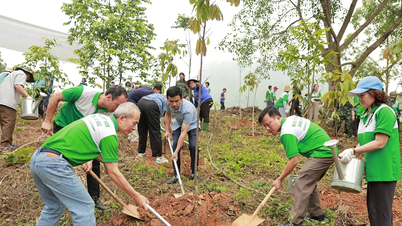
In reality, policies supporting forestry development have gradually changed people's perceptions of forest protection and development, while encouraging and motivating them to actively participate in reforestation. With the goal of sustainable forest economic development, the province has set out a direction to continue restructuring forestry production, creating new impetus for forestry development, protecting, developing, and effectively and sustainably utilizing existing forest areas, and conserving forest genetic resources and biodiversity. This includes prioritizing concentrated production forest planting, selecting high-quality seeds with clear origins for production, and promoting intensive cultivation to improve the economic efficiency of planted forests towards multi-functional forestry development.
Annually, the province plants nearly 10,000 hectares of concentrated forest; over 2,000 hectares of large timber forest; the output of timber from planted forests has increased over the years, with the output of timber harvested from concentrated forests reaching over 770,000 m3. The management and planning of the three types of forests are emphasized, ensuring compliance with current laws and regulations. As a result, the forest area in the province is protected, exploited, and used effectively and sustainably, maximizing the potential and advantages of forestry in the province; natural and protection forests, especially special forests, are strictly managed and protected; the annual forest cover rate is 39.7%.
Forest protection and fire prevention efforts have been strengthened; violations of the law on forest management, protection, and development have decreased in both the number of violations and the extent of damage; the value of forests is being gradually exploited and promoted in conjunction with the development of ecotourism and the provision of forest environmental services, ensuring sustainable development. The goal is to double the income from planted production forests per unit area by 2030 compared to 2020.
To ensure the sustainable development of the forestry sector, all levels of government, sectors, localities, and businesses should continue to promote the application of advanced technologies in wood processing, develop non-timber forest products, and build complete value chains for these products to increase people's income and enhance export value. In addition, awareness campaigns and education about the importance of forest protection are essential to maintaining this valuable natural resource.
Hoang Huong
Source: https://baophutho.vn/hieu-qua-kinh-te-lam-nghiep-232334.htm


![[Photo] Prime Minister Pham Minh Chinh receives the Chinese Ambassador to Vietnam](https://vphoto.vietnam.vn/thumb/1200x675/vietnam/resource/IMAGE/2026/04/05/1775397481797_ndo_br_dsc-5512-jpg.webp)





























































Comment (0)