

SGGP
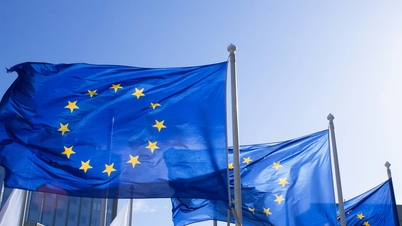
At the conclusion of the two-day summit between the two sides on July 17 and 18, the European Union (EU) committed to investing more in the Community of Latin American and Caribbean States (CELAC). This is seen as part of the EU's reform policy on international relations.
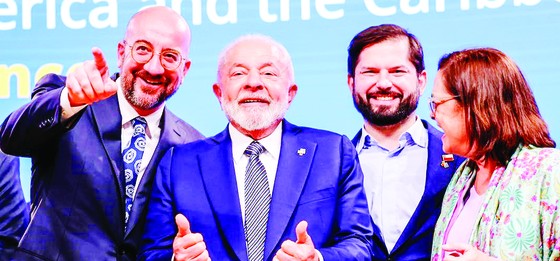 |
| Leaders at the EU-CELAC Summit |
A long-standing collaborative platform
Over 50 leaders from the EU and CELAC gathered in Brussels, Belgium, for the EU-CELAC Summit after an eight-year hiatus. EU officials saw this as an opportunity to revive bilateral relations. At the summit, leaders addressed a range of topics, including: strengthening cooperation in multilateral forums, regional peace and stability, trade and investment, economic recovery, efforts to combat climate change, research and innovation, justice and security for citizens, all aimed at further enhancing the EU-CELAC partnership. Leaders also discussed how to harness the immense potential and opportunities offered by the ecological and digital transformation to enhance prosperity for both regions. Both sides affirmed that the principles of social justice would form the basis for mobilizing collaborative efforts to ensure that no one is left behind.
Europe and Latin America-Caribbean have a long-standing partnership based on shared values and a common commitment to democracy, respect for human rights , and the rule of law. These two regions represent more than one-third of the United Nations members and are a force for a robust multilateral system. They also share a common vision for protecting the planet.
Launched in 2010, CELAC is a bloc of 33 Latin American and Caribbean countries with the aim of linking these countries to enhance political dialogue and socio-cultural integration in the region, improve the quality of life for their people, stimulate economic growth, and improve the well-being of all citizens.
A crucial link in the strategy.
European Commission President Ursula Von der Leyen stated that this is a time when both sides need each other more than ever. Citing the consequences of the Covid-19 pandemic, the conflict in Ukraine, and China's increasing assertiveness, she called for closer cooperation between the EU and CELAC. The head of the EU's executive body affirmed that the EU wishes to be a key partner of CELAC. While the EU is currently the largest foreign investor in CELAC, China has become the bloc's largest trading partner. According to Ms. Von der Leyen, the EU is planning to invest €45 billion in CELAC as part of its Global Gateway strategy, a counterweight to China's Belt and Road infrastructure investment program.
Economically, the EU is seeking to establish a new energy partnership with CELAC after severing ties with Russia. The EU also wants to reduce its dependence on China for semiconductors for electric vehicles, supporting its transition to a low-CO2 economy. The Union is pushing for a trade deal with Chile, the world's largest copper producer and second-largest lithium producer. The EU is also seeking to accelerate trade agreements reached with Mexico in 2018 and with the Mercosur bloc of Argentina, Brazil, Paraguay, and Uruguay in 2019.
Source


![[Photo] General Secretary and President To Lam presides over a working session with the Central Policy and Strategy Committee on the development of the materials industry.](https://vphoto.vietnam.vn/thumb/1200x675/vietnam/resource/IMAGE/2026/05/21/1779359935432_a3-bnd-3129-1412-jpg.webp)

![[Photo] National Assembly Chairman Tran Thanh Man working with the Standing Committee of the Law and Justice Committee](https://vphoto.vietnam.vn/thumb/1200x675/vietnam/resource/IMAGE/2026/05/21/1779378929214_ndo_br_1-4610-jpg.webp)



































































Comment (0)