The habitat of swallows
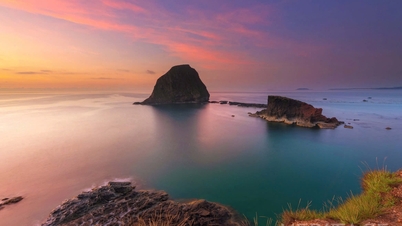
The Hon Yen complex includes Hon Yen, Hon Dun, Hon Choi, Vung Choi, Ganh Yen, and Ban Than, forming a natural scenic area along the coast. Among them, Hon Yen, located approximately 400 meters from the shore, covers an area of 1.98 hectares, stands 70 meters high, and is surrounded by sheer cliffs, making it a prominent highlight of this scenic complex.
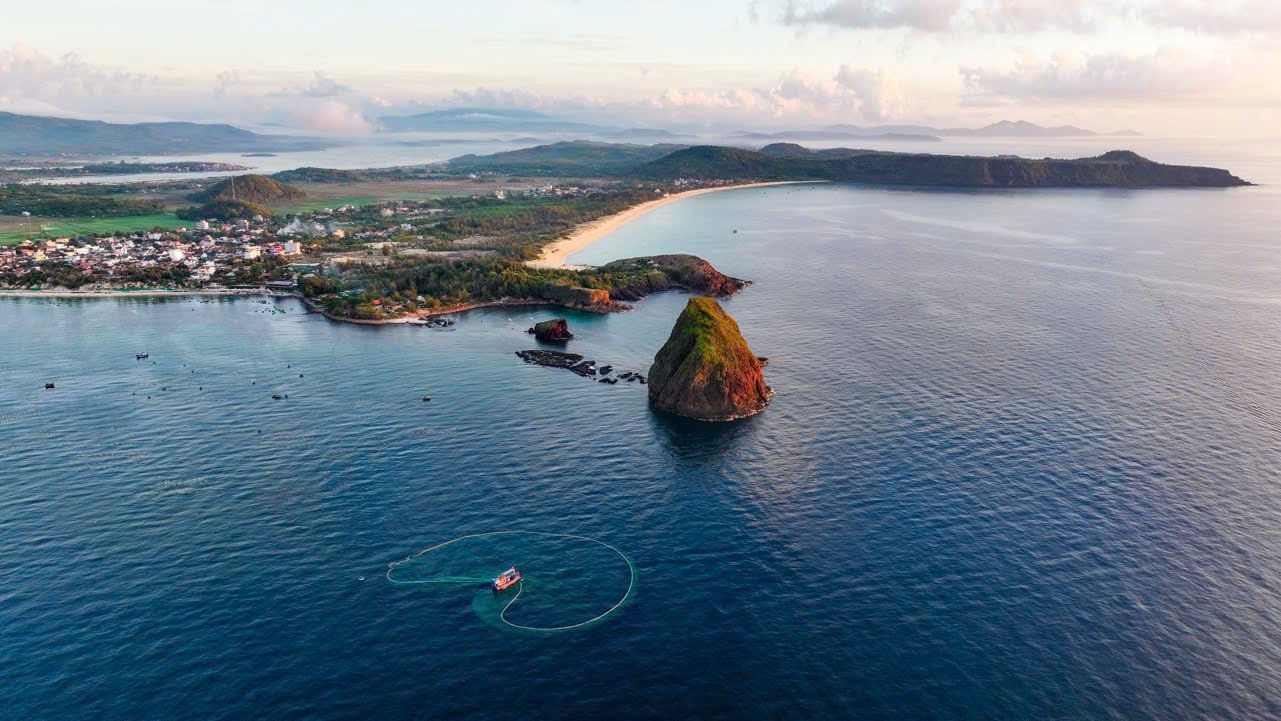
The Hon Yen complex was classified as a national scenic landscape complex by the Ministry of Culture, Sports and Tourism in 2017.
PHOTO: TIN PHAN
About 50 meters from Hon Yen Island towards the shore is Hon Dun Island, covering an area of about 0.1 hectares and rising to a height of about 20 meters. The sea connecting the mainland to Hon Yen and Hon Dun is relatively shallow; at low tide, it forms an exposed rocky beach linking the coastline with Hon Yen and Hon Dun. To the northwest of Hon Yen Island is a small, elongated mountain embracing the coastline called Hon Choi. Hon Choi is about 40 meters high; its seaward side has been eroded by waves into steep cliffs, while its landward side slopes gently, connecting to sand dunes extending westward.
According to researchers, the Hon Yen archipelago was formed by geological tectonic activity along the coast of Phu Yen, most notably volcanic eruptions that occurred approximately 10 million years ago. The erupting lava, upon contact with seawater, formed columnar or massive basalt rocks, similar to the basalt rocks found at the Ganh Da Dia National Scenic Area. In some areas, the rocks are red, deep black, or yellow, possessing beautiful colors and significant value for geological research.
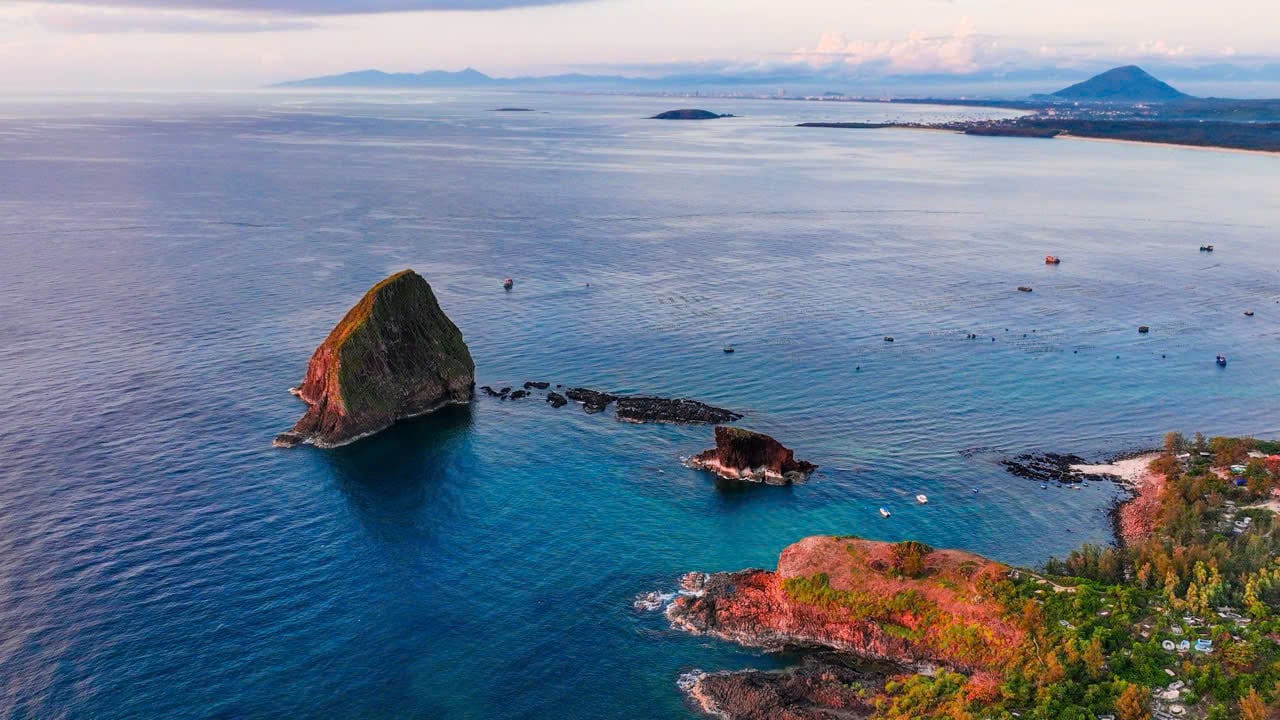
The story of Hon Yen and Hon Dun, and the tale of the older brother who turned to stone waiting for his younger sibling, has been passed down through generations by the people of Nhon Hoi village.
PHOTO: TIN PHAN
The name Hon Yen (Swallow Island) comes from the fact that this place was once home to tens of thousands of swallows. The steep cliffs, strong winds, and lack of human activity created ideal conditions for swallows to build their nests. Local fishermen say that during the breeding season, the swallows would fly back, darkening the sky.
Today, swallows no longer return as frequently as before, but traces of the old caves and nests remain as living relics of a time when nature was undisturbed.
Legend of the brother who turned to stone
Yen Island carries a sad legend about family ties, vows, and turning into stone. Many elders of the village recount that, long ago, the Nhon Hoi sea area was still wild and undeveloped, where two orphaned brothers lived together, relying on each other for their livelihood as fishermen. They loved each other dearly, inseparable like shadows, going out to sea every day, living a simple and peaceful life.
One day, the two brothers were out fishing when a great storm suddenly arose, capsizing their small boat. The older brother clung to a piece of driftwood, while the younger brother was swept away by the waves and lost in the sea. After the storm, the older brother returned to shore, his heart aching because he couldn't find his brother. From then on, every day he would go to the edge of the sea and gaze out at the distant horizon, where he last saw his brother.
Years passed, and the older brother never left the rocky beach. One moonlit morning, the villagers no longer saw him. And strangely, right where he used to sit, a large rock rose up, facing the sea. Still astonished, a few days later, a smaller rock suddenly emerged offshore, resembling a human figure turning to look back at the shore.
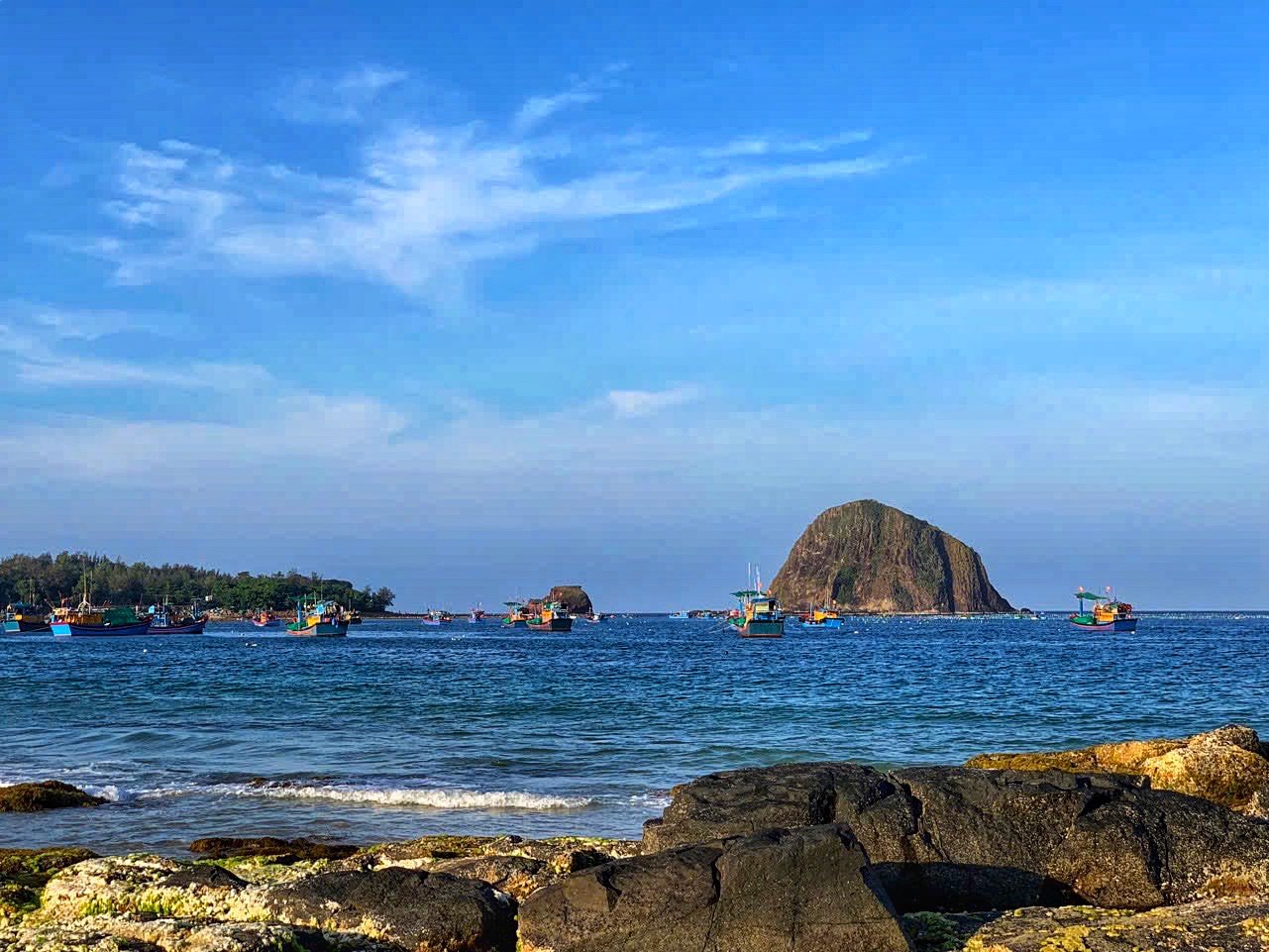
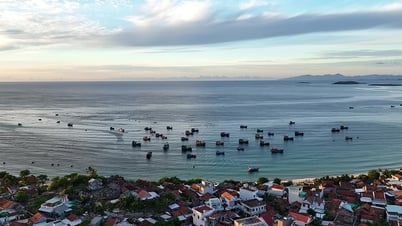
From Nhon Hoi beach, Hon Yen looks like a giant mushroom rising from the water.
PHOTO: TRAN BICH NGAN
From then on, it was believed that the older brother transformed into Hon Yen, standing tall and gazing out to sea, forever waiting for his younger brother. The younger brother, after the storm, also found his way back, but only managed to turn into a small rocky outcrop offshore. Each time the tide recedes, a rocky path appears, connecting the land to the sea, as if heaven and earth took pity on the two brothers, allowing them to meet briefly before separating again when the tide rises. Every year in the fourth lunar month, when the water is lowest and the rocks are most exposed, the two brothers are reunited, albeit for a short time.
Rock garden under the sky
Looking out from Nhon Hoi beach, Hon Yen resembles a giant mushroom rising from the water. Its lines are neither sharp nor perfectly rounded, yet it possesses a strange allure due to its rustic simplicity, as if someone had dropped a drop of ink into the sea and let it spread and take shape on its own. Hon Dun, nearby, is smaller and more humble, like a younger sibling standing silently beside its older brother.
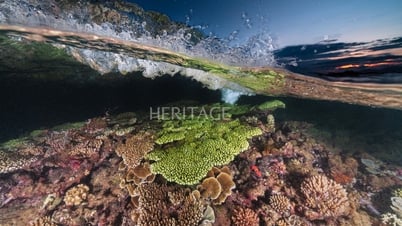
The most unusual thing about Hon Yen Island isn't its shape, but how it interacts with time. When the tide recedes on full moon nights, a submerged reef, like a hidden road, unexpectedly appears, connecting the mainland to the island. Not everyone gets the chance to see this, as it doesn't follow a fixed schedule but rather the cycle of nature. Each time this road appears, the sea "lifts its cloak," revealing layers upon layers of rocks and coral, like opening the doors to a real, vibrant, and unobstructed natural museum.
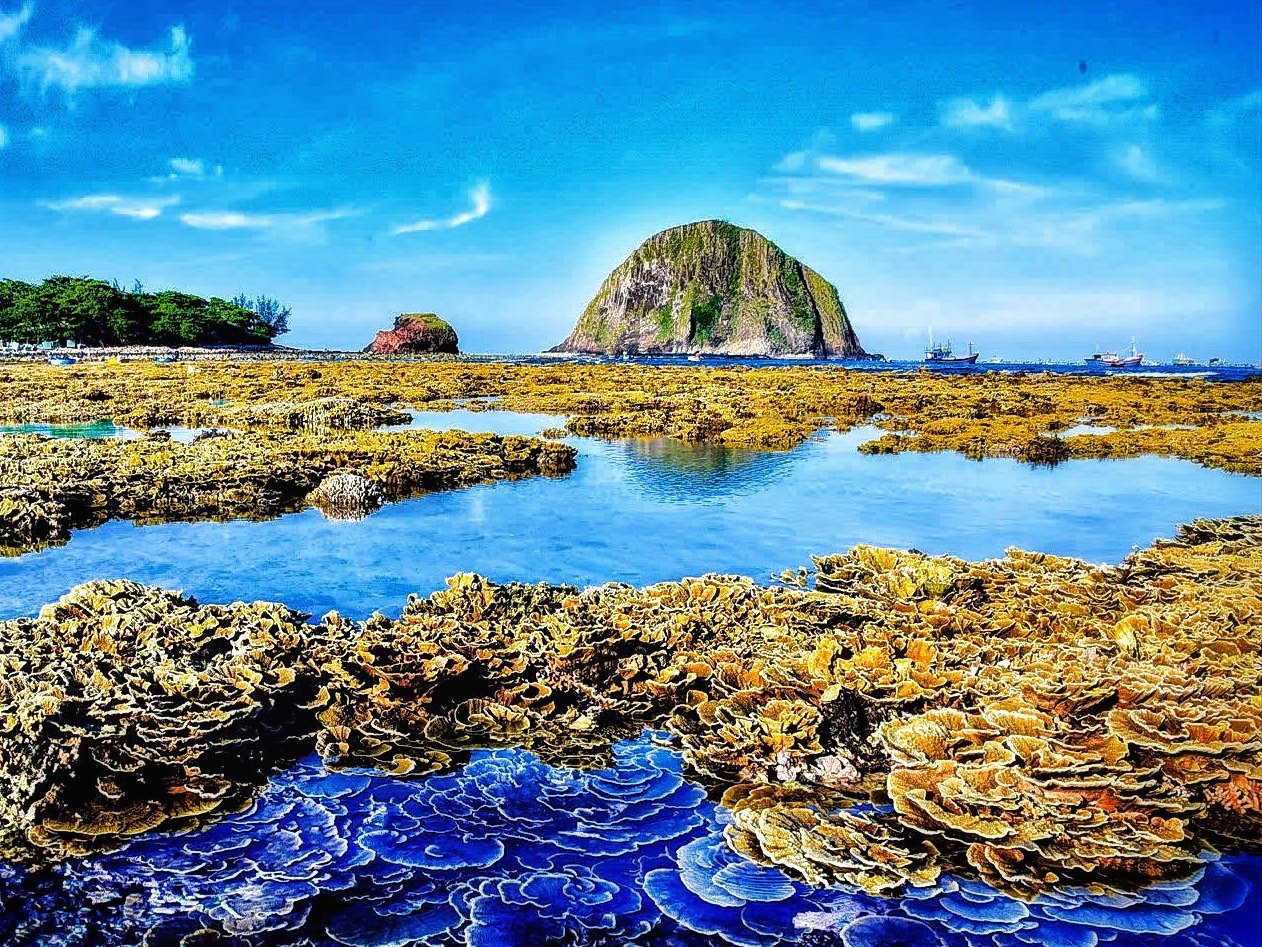
As the tide recedes, patches of coral are revealed, resembling a fossilized forest.
PHOTO: TUY AN DISTRICT PEOPLE'S COMMITTEE
Viewing Hon Yen from above at low tide, the entire area resembles a three-dimensional painting. Beneath the crystal-clear water, towering coral reefs emerge, like a fossilized forest. Some corals are fan-shaped, others arranged in layers like discs, interspersed with sea anemones, starfish, black sea urchins, and tiny fish shimmering like stardust carried by the wind. Many elderly men in the Nhon Hoi fishing village say that in the past, this area was called "the garden of rocks from the sky." When the sea recedes and the sun shines, the rocks also reveal their souls.
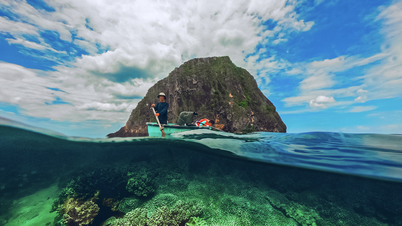
Mr. Nguyen Van Hoang, Vice Chairman of the People's Committee of Tuy An District, said: "The Hon Yen complex was ranked as a national scenic complex by the Ministry of Culture, Sports and Tourism in 2017 according to Decision No. 5387 dated December 29, 2017. Along with Ganh Da Dia and Cu Lao Mai Nha, Hon Yen is an unmissable tourist destination when traveling to northern Phu Yen. Currently, the local authorities and people here are actively promoting community tourism with various types of tours of the Hon Yen complex by basket boat, allowing tourists to experience anchovy processing and the unique local culinary culture." (to be continued)
Thanhnien.vn
Source: https://thanhnien.vn/hon-yen-hon-dun-and-the-spirit-of-hoa-da-185250529211828565.htm


![[Photo] The courage of new recruits of Brigade 144 on the training ground.](https://vphoto.vietnam.vn/thumb/1200x675/vietnam/resource/IMAGE/2026/05/27/1779881651341_anh-man-hinh-2026-05-27-luc-18-32-52.png)

![[Photo] The heat at the fireworks display site on the opening night of the Da Nang International Fireworks Festival 2026](https://vphoto.vietnam.vn/thumb/1200x675/vietnam/resource/IMAGE/2026/05/27/1779889741485_ndo_br_z7872039145157-fecaba5112f39e8352544099d7ef4738-5140-jpg.webp)























































![[Photo] The courage of new recruits of Brigade 144 on the training ground.](https://vphoto.vietnam.vn/thumb/402x226/vietnam/resource/IMAGE/2026/05/27/1779881651341_anh-man-hinh-2026-05-27-luc-18-32-52.png)





























Comment (0)