

Memories of the "hidden medicine" plant
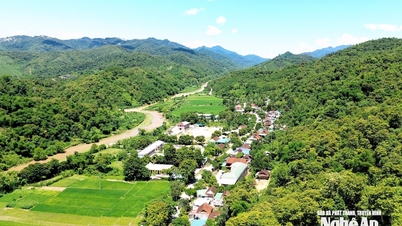
Mount Ngoc Linh is famous for the legend of the "hidden medicine" plant, a precious, secret medicinal herb passed down through generations of the Xe Dang people, which was later identified as Ngoc Linh ginseng. The sacred Mount Ngoc Linh also lies on the border between Dak Glei district of Kon Tum province and Tra My district of Quang Nam province.
In Tra My district, six communes have been planned for the cultivation of Ngoc Linh ginseng, while in Dak Glei district, seven communes have been entrusted with the mission of preserving this valuable genetic resource. Dak Glei, in particular, experiences high rainfall and humidity, which are ideal for ginseng growth.
Mr. Nguyen Trong Tam, a retired teacher in Hamlet 7, Kon Dao Commune, Dak To District, still remembers the early days when he first set foot here nearly 50 years ago. It was 1977, shortly after the country's liberation, when the young man from Can Loc, Ha Tinh Province, after graduating from the Literature Department of Hue University of Education, was assigned to teach in Kon Tum.
Throughout his teaching career, Mr. Tâm was deeply connected to the Central Highlands region. After four years as a teacher, he was appointed principal and served until his retirement. Living among the local people and bringing literacy to them with all his heart, he cherished them, and they reciprocated with special affection, expressed simply and without flowery words.
During the days when the FULRO regime was still rampant, many officials and civilians were brutally attacked by them, but the FULRO still spared teachers, because "teachers teach our children." He said that once the Xê Đăng people understood and loved him, they could sacrifice themselves for him.
Having lived on this land for nearly 50 years, Mr. Tam understands the land and the people here. Therefore, his memories of ginseng are a long story. He says that back then, ginseng was only slightly more expensive than sweet potatoes, and when people went up the mountain to find it, they would hold it in their hands and give it as a gift to their teacher.
Mr. Tâm himself has climbed Mount Ngọc Linh many times, starting from Đắk Sao commune in what is now Tu Mơ Rông district, not from Ngọc Linh commune, a journey that takes a whole day. His trips involved excavating precious metals from a crashed French plane on the summit of Ngọc Linh, and sometimes inspecting forest products; some of the ginseng roots he found weighed up to 200 grams. Local people who found ginseng in the forest also brought it back to sell.
Anyone living around the Ngoc Linh mountain area has memories of ginseng. Stories of people who became wealthy trading wild ginseng, and tales of ginseng dormant and awakened, ginseng only visible to those who see it. Some ginseng roots lie dormant for years, buried deep in the earth and rocks, only to sprout and grow again one day when rain and wind bring them close to the surface. Therefore, while the age of cultivated ginseng can be determined by its nodes, determining the age of wild ginseng by nodes is not accurate.
Wild ginseng is also more valuable for this reason. Ginseng plants only flourish during the rainy season, when they sprout new leaves and buds. This is a difficult time to climb the mountains, but it is also the ginseng hunting season for foresters.
Wild ginseng is not as abundant as it used to be, but people can still find it. Although rare, its value is many times higher. One kilogram of top-grade wild ginseng (containing 5 roots) can fetch nearly 300 million VND. Smaller, younger roots are priced progressively lower.
However, not everyone is fortunate enough to encounter this mysterious plant. Mr. A Dom, from Dak Xi Na village, Xop commune, Dak Glei district, is considered to have the most wild ginseng in the commune; this is a matter of luck and fortune for each person, not something that can be achieved simply by striving. Wealth here is measured in ginseng, accompanied by admiration.
Ginseng garden at an altitude of 1,650m
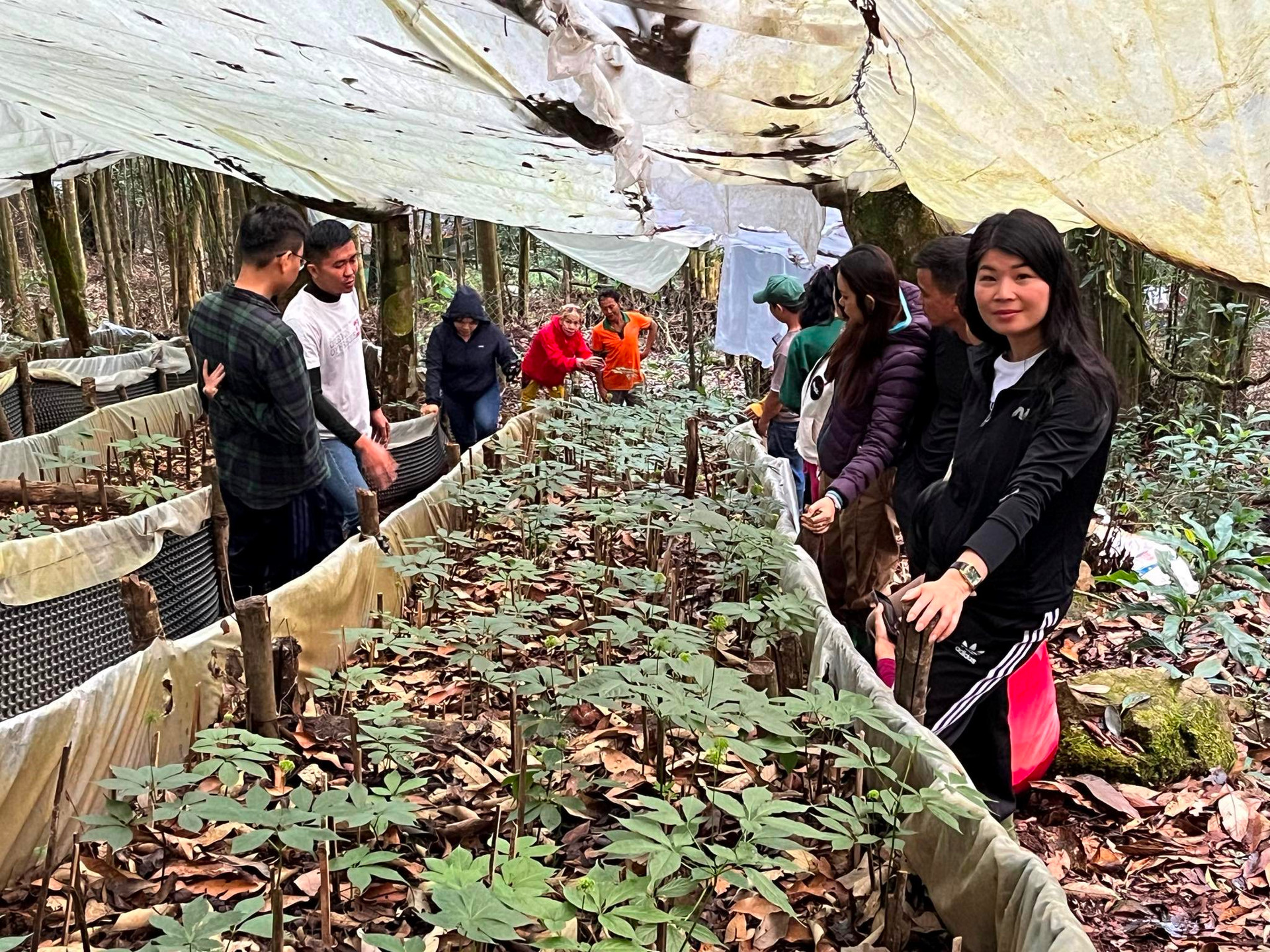
Upon arriving in Kon Tum, I was introduced to someone who was diligently cultivating ginseng using semi-natural methods. So, I decided to travel up the mountain to see for myself the ginseng garden of Nguyen Duc Quoc Huy, born in 1984, currently residing in Tan Canh, Dak To.
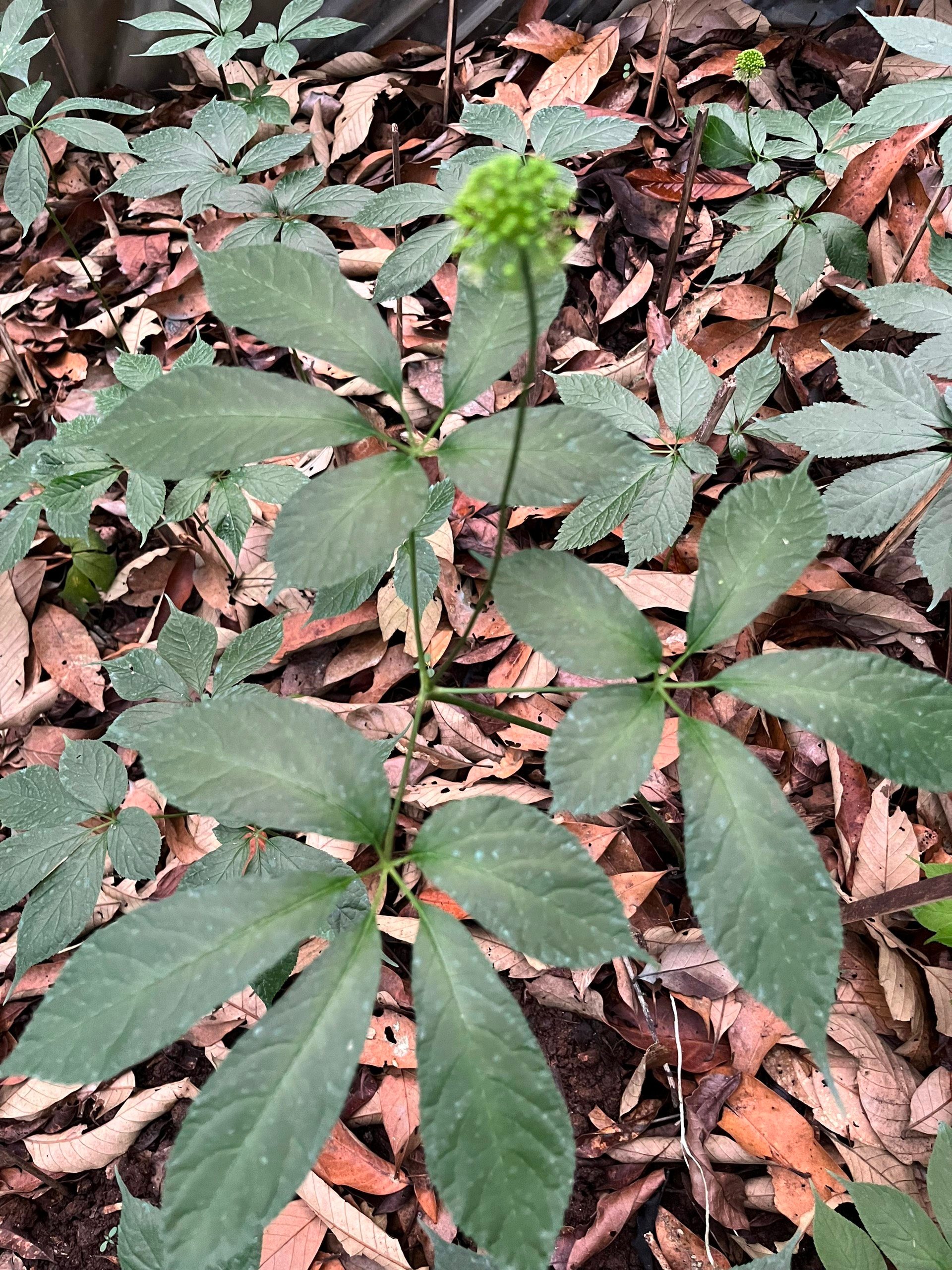
Huy's ginseng farming career began earlier, when a friend who worked for a forestry company involved in planting and harvesting ginseng advised Huy to invest in this valuable crop.
At that time, Huy was working as a civil engineer in Dong Nai . He had invested in some ginseng on the mountain in Dak Xi Na village. The event that marked Huy's focus on ginseng was the Covid-19 pandemic. Being quarantined in Dong Nai, far from his ginseng farm and unable to return home, he returned to Kon Tum and immediately went up the mountain when the lockdown restrictions were eased.
That was also the time he decided to devote himself entirely to ginseng. Huy quit his job to focus on ginseng farming, invested money, and raised additional capital from some close friends to buy seedlings and develop his garden.
Following a semi-natural method that respects the growth and habitat of ginseng plants on Ngoc Linh mountain, Huy's ginseng garden is located within the Ngoc Linh Nature Reserve, at an altitude of 1,650 m, in Xop commune, Dak Glei district.
Therefore, transporting farming tools and materials for ginseng cultivation is extremely difficult. The slopes are steep, making climbing even difficult, so he had to hire young Xê Đăng men to haul rolls of B40 steel wire, wrapped in chains, up the mountain to build fences, both for security and to prevent rats from destroying the ginseng.
A friend, convinced by the beautiful idea and promising future, joined him, but after only a week of "experience," he gave up. Left alone, Huy continued. Following Mr. Tam's method, he gradually approached the Xê Đăng people at the foot of the mountain, helping them understand and support his project, while simultaneously seeking local permission and completing the necessary administrative procedures.
When Huy started, Ngoc Linh ginseng was already a famous and valuable commodity; however, there was also a lot of mixing of genetic sources, varieties, and different cultivation methods, affecting the market and the authenticity of quality. Huy chose to follow a sustainable path. At that time, in Mang Ri commune, Tu Ma Rong district, ginseng cultivation had been successfully developed by officials and the Xe Dang people.
Learning from this model, he built a ginseng garden model that is closely linked to the community, calling on local people to participate in cultivation and patiently wait until harvest time. A ginseng plant takes a very long time from planting to harvesting, requiring 7 years to reach the necessary micronutrient content for market release.
To shorten the growing time, instead of sowing from seeds, Huy bought seedlings to plant, which, although costly, is faster. Although these plants haven't yielded tubers yet, the seeds can be harvested and sold, providing a small income to maintain the ginseng garden. Within the 30-hectare area are rows of ginseng plants belonging to Nguyen Duc Quoc Huy, some 3 years old, some 5 years old, alongside wild ginseng plants that he bought and sent back into the forest to prolong their growth period.
Extending the growth of precious ginseng varieties.
We encountered local people's pickup trucks driving on the roads in Tu Mo Rong; some Xe Dang households here have become wealthy by participating in ginseng cultivation. Mang Ri commune in Tu Mo Rong is considered the current capital of Ngoc Linh ginseng, pioneering in ginseng cultivation and selling ginseng vines to the market.
The Ngoc Linh Ginseng Conservation and Development Project, with community participation, has been implemented since 2005. Managed by the 5 Million Hectare Forest Management Board – Dak To District Agricultural, Forestry and Industrial Development and Service Investment Company, it covers seven communes in two districts, Tu Mo Rong and Dak Glei, with the goal of conserving Ngoc Linh ginseng. In addition, models like that of Nguyen Duc Quoc Huy also contribute to the socialization of protecting this valuable genetic resource.
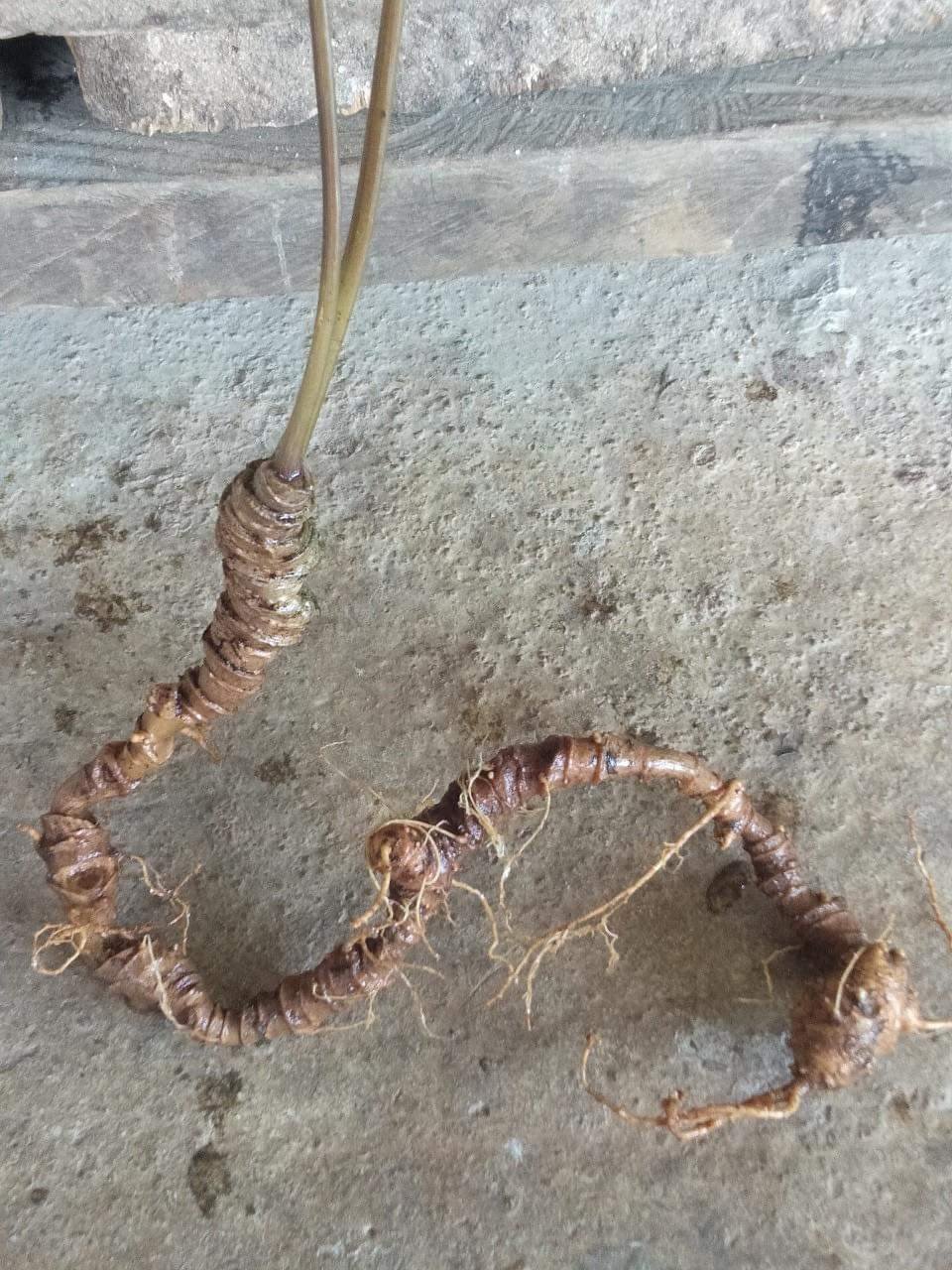
Ginseng plots hidden beneath the canopy of old-growth forests, in natural conditions, are proving to be a sound approach to the conservation and development of wild ginseng. Mr. A Dieu, who once served as Vice Chairman of Xop commune, has now joined Huy's team to oversee the ginseng garden daily.
Young Xê Đăng people in Đắk Xi Na have also become accustomed to having a ginseng farm where they can work and receive benefits after their time of service. The story of Ngọc Linh ginseng is being continued by these young people. Nguyễn Đức Quốc Huy's father, originally from Quảng Ngãi, came to Kon Tum to work as an accountant in a forestry unit, and his mother, from Hà Tĩnh, also came to Kon Tum to work as a teacher like Mr. Tâm.
Teacher Tâm's former students, including his eldest son Nguyễn Trọng Nam, are now the leaders of Kon Tum. Some are involved in developing green and clean agriculture, bringing local agricultural products to the national market, like Nguyễn Thị Thanh Thúy; others are pursuing the development of medicinal herbs, like Cù Thị Hồng Nhung, owner of the An Thành medicinal herb brand; and some have returned to dedicate themselves to ginseng cultivation, like Nguyễn Đức Quốc Huy…
They are the ones continuing to write the legend of Ngoc Linh ginseng.
Source: https://daidoanket.vn/kham-pha-mien-dat-cua-sam-10284564.html




































































Comment (0)