

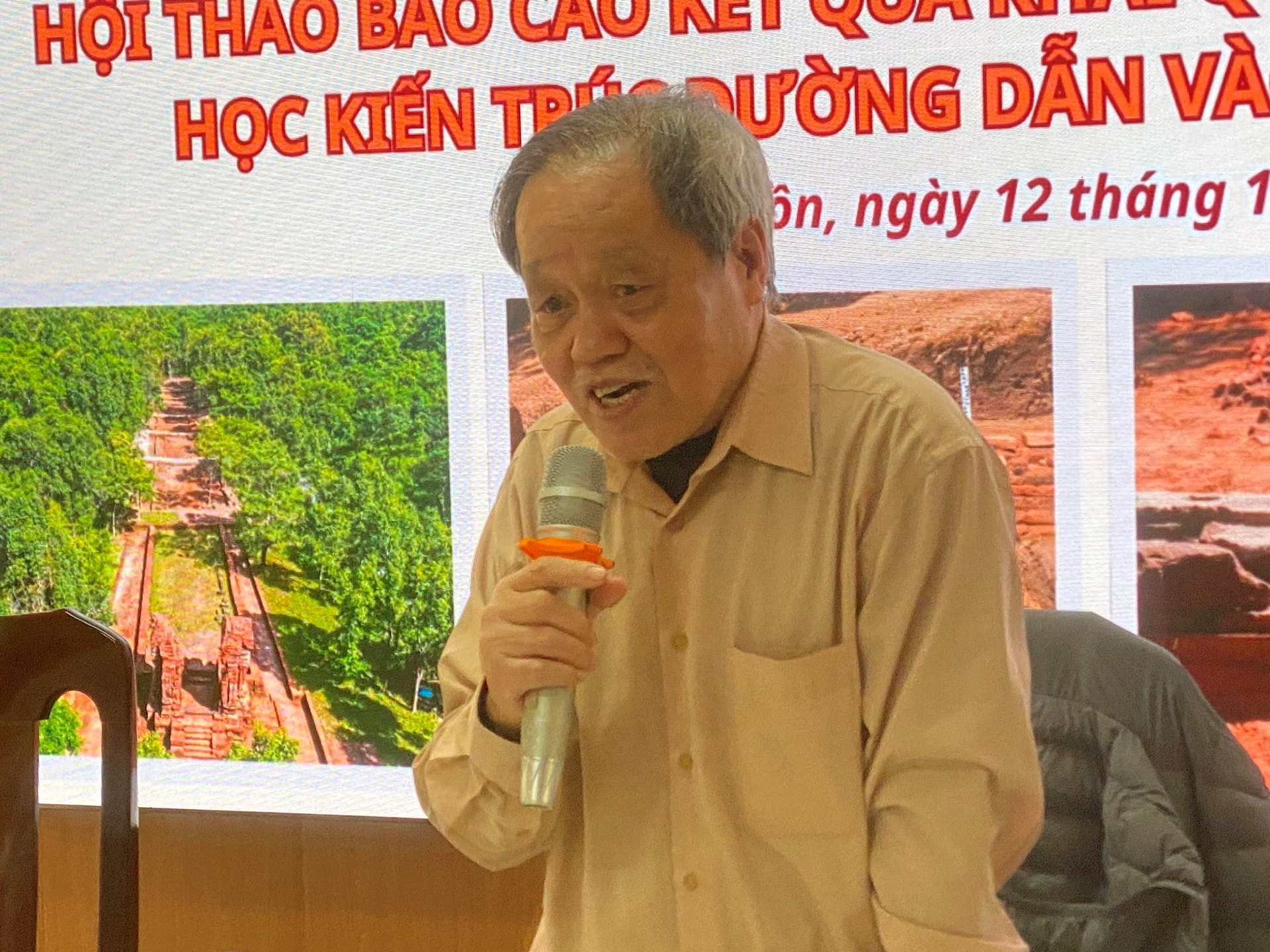
According to Associate Professor Ngo Van Doanh, the uniqueness of the road lies not only in the type of architectural relics but also in the location where the road leads to the temple complexes. These are things that, for various reasons, French researchers were previously unaware of.
Furthermore, the discovery of five doorways on the right side of the road's perimeter wall raises many interesting issues that require further research. "Based on archaeological evidence and analysis by experts, it can be confirmed that this is the sacred road leading to the My Son relic site," asserted Associate Professor Dr. Ngo Van Doanh.
Reporting on the excavation results, Dr. Nguyen Ngoc Quy, from the Institute of Archaeology (Vietnam Academy of Social Sciences ), who led the excavation project, stated that during the restoration and renovation of Tower K from 2017 to 2018, a team of Indian experts noted the presence of two gates, East and West, at this architectural structure. Simultaneously, at the East gate of Tower K, there were two sections of a surrounding wall leading towards the E and F tower groups.
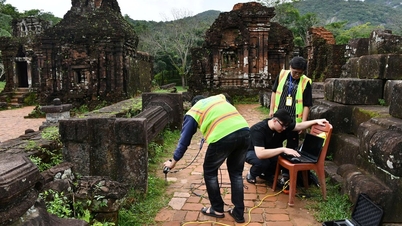
In June 2023, the My Son World Cultural Heritage Management Board, in coordination with the Institute of Archaeology, conducted exploratory excavations in an area of 20m² around Tower K. By March 2024, the two agencies continued to explore and excavate an area of 220m² in the area east of Tower K.
As a result, two sections of the road's perimeter wall extending from Tower K eastward towards Towers E and F were discovered. The data obtained from the excavations confirmed the presence of a previously unknown architectural structure leading to the center of the My Son complex. This road is distinctly different from the current route designed to welcome visitors to My Son.
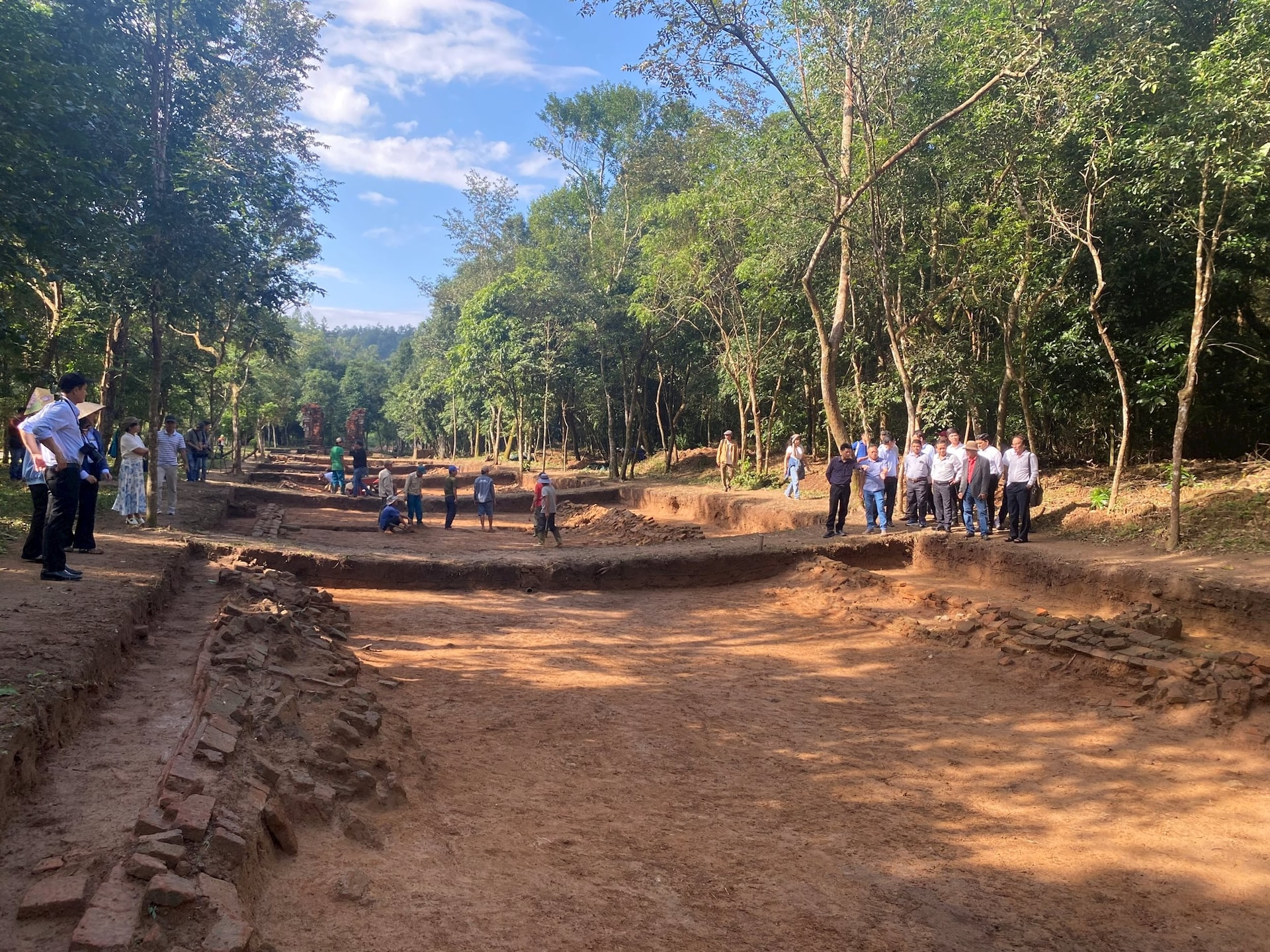
In early July 2025, the My Son World Cultural Heritage Management Board, in coordination with the Institute of Archaeology, continued the exploration and excavation of the area between Tower K and the central group of towers in the My Son temple complex (total area 770m²). The unearthed remains in the excavation area include a 75m long section of an access road to the east of Tower K, oriented east-west with a 45º northward deviation.
The road structure, similar to the one discovered in 2024, has an overall width of 9m, a carriageway width of 7.9m, a flat surface, and is composed of compacted sand, gravel, and broken bricks, with a thickness of 0.15 - 0.2m; the retaining walls on both sides are made of rows of bricks, with the highest section remaining at about 1m, including the foundation and the collapsed walls. The foundation is reinforced with a layer of compacted gravel and brick powder.
[ VIDEO ] - The sacred path to the My Son historical site:
The excavation process also identified a total of five locations where gates were placed on the southern boundary wall. At the gate locations, there were traces of stone gate beams with square mortise holes for supporting stone pillars and round mortise holes for supporting the rotating pillars of the gate. These may have been gates leading to/from the sacred space outside the road.
Archaeological excavations uncovered additional fragments of earthenware and glazed pottery dating from the 10th to the 12th centuries.
According to Nguyen Thuong Hy, a researcher of Cham culture, the discovery of the road has provided a lot of interesting information, especially regarding religious and spiritual elements in the worship of the principal deity of the Champa kingdom.
"It's possible that the Cham people initially worshipped the god Vishnu, then switched to worshipping the god Shiva. Therefore, clarifying the role of the road is very interesting because it relates to the spiritual element of the path leading to the temple complex," Mr. Nguyen Thuong Hy commented.
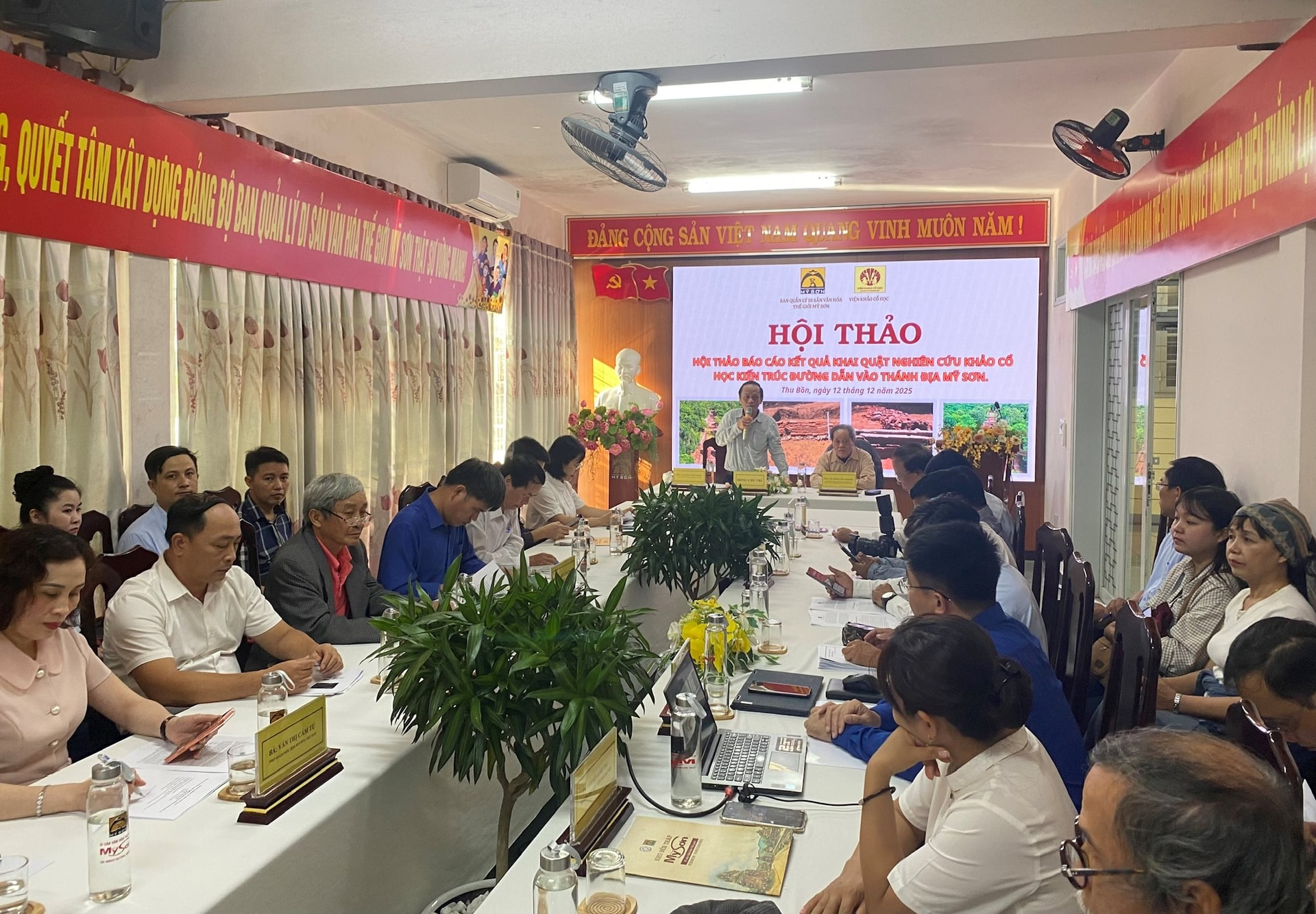
According to Mr. Nguyen Cong Khiet, Deputy Director in charge of the My Son World Cultural Heritage Management Board, the unit will propose solutions to preserve and promote the value of the road to serve tourism. In particular, they will find a name that is attractive and mysterious enough to attract visitors, thereby clarifying information about the road while also contributing to effective heritage preservation.
Source: https://baodanang.vn/pgs-ts-ngo-van-doanh-con-duong-thieng-vao-khu-den-my-son-la-phat-hien-lon-nhat-trong-thoi-hien-dai-3314692.html

























































Comment (0)