

Over 1.4 million people benefited.
Implementing Resolution No. 72-NQ/TW , The Prime Minister issued Directive No. 17/CT-TTg (May 6, 2026) on organizing free periodic health check-ups or screenings for the people. On the same day, the Ministry of Health issued Decision No. 1272/QD-BYT approving the plan for implementing this task. Based on that, the Department of Health advised the Provincial People's Committee to issue Plan 229/KH-UBND (May 22, 2026) to implement free periodic health check-ups and screenings for people in the province in 2026.

The plan aims to ensure that residents in the province receive regular health check-ups, screenings, or free health examinations at least once a year according to a suitable schedule. This will enable the health sector to promptly detect diseases and risk factors affecting health; effectively manage non-communicable diseases, occupational diseases, and infectious diseases. As a result, people will receive timely advice, prevention, and treatment, contributing to a reduction in morbidity and mortality rates and easing the burden of healthcare costs.
The plan also aims to create a strong shift in awareness and action regarding the care and protection of people's health, thereby ensuring that all citizens have access to comprehensive, continuous, equitable, convenient, and quality healthcare services right from the primary healthcare level, contributing to improved physical health and life expectancy, and meeting the requirements of sustainable development of the province.

In 2026, the entire province will have over 1.438 million people subject to screening and registration for regular health check-ups or screenings. This includes 90,888 children under 6 years old; 300,359 children aged 6 to under 18; 794,419 people aged 18 to under 60; and 235,154 people aged 60 and above. Of this total, the province has identified 511,496 people in priority groups, including people with disabilities, war veterans, people with chronic diseases, the elderly, and people from ethnic minority communities, mountainous areas, island communes, special zones, and areas with difficult socio-economic conditions.
The implementation will follow a specific roadmap. From May 25th to June 30th, 2026, the province will focus on directing, disseminating information, and mobilizing agencies, businesses, organizations, and individuals employing workers to conduct health check-ups for their employees in accordance with the law on occupational safety and hygiene; approximately 328,084 people are expected to be covered. This group already has regulations requiring annual periodic health check-ups, so the initial phase aims to review, monitor, and ensure full and timely implementation.
Phase 2 will be implemented from July 1st to November 15th, 2026, focusing on routine health check-ups or screenings for the remaining groups. For students and children aged 6 to under 18 who are not attending school, the process is expected to be completed before September 30th, 2026.

To prepare for the large-scale health check-up, Quang Ninh is mobilizing both the public and private healthcare systems. Along with provincial and regional hospitals, the participation of Vinmec Ha Long General Hospital and Hanoi International General Hospital - Quang Ninh will contribute to expanding coverage, improving professional quality, and increasing access to healthcare services for people in many areas.
One of the highlights of this plan is the central role of primary healthcare. Commune, ward, and special zone health stations will not only conduct health screenings and compile lists of eligible residents but will also directly participate in managing and monitoring long-term health in the community. This is a crucial requirement to ensure that free health checkups are not limited to a single screening event, but become the foundation for managing people's health throughout their lifecycle.
To enhance the capacity of grassroots healthcare facilities, the Department of Health has directed provincial hospitals such as the Provincial General Hospital, Bai Chay Hospital, Obstetrics and Pediatrics Hospital, and the Provincial Center for Disease Control to strengthen training and professional skills development for grassroots healthcare staff. The training focuses on procedures for examination, screening, health counseling, management of non-communicable diseases, updating electronic health records, and handling common community situations.

Specifically, on May 21st, the Department of Health dispatched 111 doctors to reinforce commune, ward, and special zone health stations throughout the province. This is an important preparatory step to ensure sufficient personnel for the implementation of the health station model in the new phase, aiming to improve the quality of medical examination, treatment, and primary healthcare for the people at the grassroots level. The doctors who were reinforced all have appropriate professional qualifications and are capable of meeting the technical requirements of the receiving units. During their time working at the health stations, the doctors not only participate in medical examinations and treatment but also support on-site training, technology transfer, standardization of professional procedures, building individual health records, and participating in community health programs such as nationwide health check-ups, immunization, and disease prevention.
Strengthening the number of doctors at the grassroots level is a major policy of the Quang Ninh Health Department from now until 2030. This aims to address the shortage of high-quality medical personnel at the local level while simultaneously supporting on-the-job training and improving the capacity of health stations. It is projected that, on average, the Quang Ninh Health Department will continue to send approximately 50 doctors from hospitals to reinforce health stations each year. When health stations have sufficient capacity to manage people's health, detect early disease risks, and provide timely advice, people will receive better care right where they live, reducing the burden on higher-level facilities.
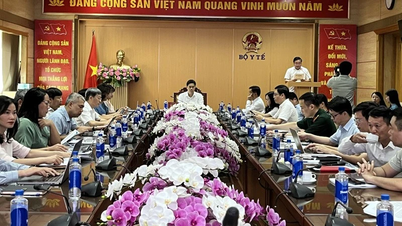
Dr. Bui Manh Hung, Director of the Department of Health, said: "Providing free health check-ups for the people is an important political task, demonstrating the province's concern for the protection, care, and improvement of people's health. Therefore, the health sector requires units to urgently develop specific plans, clearly assigning responsibilities; preparing sufficient human resources, equipment, medical supplies, infection control, and emergency safety, especially for mobile health check-up activities in the community; closely coordinating with local Party committees and authorities in reviewing, compiling lists, classifying target groups, and promoting and encouraging people to participate. The organization of check-ups must be scientific, convenient, and avoid overloading the grassroots health system. The sector's view is that check-ups must be substantive, targeting the right people, and following the professional procedures guided by the Ministry of Health." Following the examination, there should be counseling, classification, monitoring, and long-term health management, especially for the elderly, those with chronic diseases, and high-risk groups.
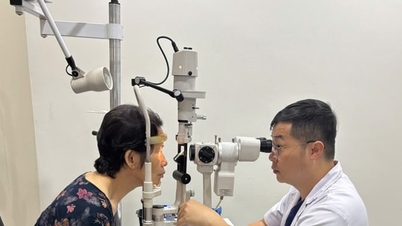
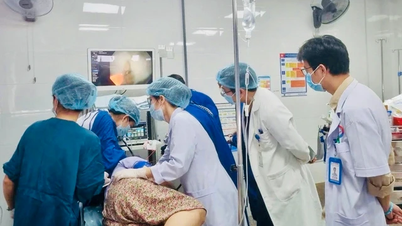
According to the plan, examination locations will be arranged flexibly according to target groups. For those under 18 years old, examinations can be held at health stations, community centers, schools, cultural centers, media centers, stadiums, or other suitable locations. For those 18 years and older, examinations will be conducted at regional general hospitals, specialized hospitals, multi-specialty clinics with X-ray machines, or other locations that meet the prescribed conditions. In special cases, such as for people with disabilities or serious illnesses who cannot travel, examinations may be conducted at home.

Free health check-ups are also linked to the development, updating, and interconnection of people's health data. The results of the check-ups will be compiled, evaluated, and recorded in electronic health records; linked to specialized medical databases, the health insurance claims information system, and integrated into the VNeID application as regulated. The use of citizen identification numbers or personal identification codes during the check-up process helps to accurately manage each individual, minimize omissions, and avoid duplication of check-ups. This also serves as a basis for statistics, management, direction, and long-term monitoring of people's health.
Funding for implementation will be allocated from various sources as stipulated, including the state budget, health insurance fund, employers' contributions for periodic health check-ups for employees, social contributions, and other legal sources. In 2026, the total estimated budget for the plan is over 453 billion VND; the cost of periodic health check-ups or screenings for citizens will not exceed 350,000 VND/person/check-up/year, excluding implementation costs.
The large workload, tight implementation timeframe, and wide coverage extending to every commune, ward, and special zone place high demands on coordination between the health sector and local authorities, agencies, units, businesses, and the people. Besides organizing examinations on schedule, public awareness campaigns are being intensified to ensure people understand their rights and responsibilities and actively participate.
Proactive disease prevention from an early stage and in advance.
Risk factors for health are present in daily life, from smoking, alcohol abuse, poor nutrition, lack of exercise, environmental pollution, prolonged mental stress, etc. These are the causes of increased non-communicable diseases such as hypertension, diabetes, cardiovascular disease, cancer, etc. Meanwhile, many people still have the habit of only seeking medical attention when the disease has already manifested clearly, making treatment more difficult and increasing the risk of complications.
Therefore, regular health check-ups play a particularly important role. This is a solution that helps detect risk factors and diseases early on; thereby providing timely advice, intervention, and treatment, improving the effectiveness of healthcare, reducing complications, and lessening the financial burden on families and society. According to Dr. Ha Manh Hung (Head of the Intensive Care, Toxicology - Stroke Department, Provincial General Hospital), treatment experience shows that many cases are admitted when the disease has already progressed to a severe stage, reducing treatment effectiveness and increasing the risk of complications. At that point, treatment becomes very difficult, the cost is high, and the chances of recovery are not always as desired. If people undergo regular health check-ups, detect risk factors early, and adhere to treatment, many serious complications can be prevented. Therefore, in addition to treatment, the medical team always focuses on educating and guiding people to monitor their health regularly, control blood pressure, blood sugar, and blood lipids, and recognize early signs of abnormalities in the body.

These changes are clearly evident in daily life, as more and more people are becoming more proactive in monitoring and caring for their health. Ms. Nguyen Thi Huong (Area 4A, Ha Long Ward) has maintained the habit of regular health check-ups for many years. Recently, when she noticed her heart beating unusually fast and strong, she proactively went for a check-up at the cardiology clinic of the Provincial General Hospital and received advice from the doctor on early monitoring and treatment. “I usually have a health check-up every six months. Or whenever I notice any unusual symptoms, I go for a check-up immediately. I find that early detection and treatment are very effective, giving me peace of mind and avoiding impact on my work and daily life,” Ms. Huong shared.
Not only are people proactively getting health checkups, but many have also changed their lifestyles in a more positive direction. Mr. Dong Xuan Binh (Area 8, Ha Lam Ward) used to smoke heavily for many years. After being educated about the harmful effects of cigarettes and clearly feeling his health deteriorating, he decided to quit. Mr. Binh said: “Since I stopped smoking, I feel healthier. Now I just hope my relatives and friends smoke less to avoid harming themselves and those around them.”
Ms. Do Thi Hong Van (63 years old, Ha Lam ward) recently had a health screening at the ward's health station. During the examination, the doctor discovered a cyst in her left kidney and advised continued monitoring. Ms. Van shared: "Having the screening done right at the local facility saves people from having to travel far while still receiving thorough check-ups and advice. We, the residents, hope that the health station will continue to receive investment in equipment and maintain regular check-up programs so that people, especially the elderly, can have their health monitored regularly, detect diseases early, and receive timely treatment."

In Quang Ninh, the "early and remote disease prevention" approach has been implemented for many years, notably through mobile medical examination programs and free medication distribution for people in remote, border, and island areas. Since 2016, the province has organized dozens of mobile examination sessions annually, serving nearly 20,000 people, contributing to the early detection of many diseases and raising health awareness in the community. Ms. Nguyen Thi Khanh (Hamlet 1, Quang Duc Commune) said: "Thanks to the free examination by doctors from the Provincial General Hospital, I was diagnosed with varicose veins. The doctors advised me to seek treatment early to prevent the disease from progressing and affecting my mobility."
Along with experience in implementing mobile health check-up programs, Quang Ninh has a comprehensive foundation to expand routine health check-ups for the entire population. In recent years, the province has invested heavily in healthcare infrastructure. A series of key projects have been put into operation, such as: the Obstetrics and Pediatrics Hospital, the Geriatrics and Rehabilitation Hospital, the Lung Hospital, the Dong Trieu Regional General Hospital, the Provincial Center for Disease Control and Prevention… Many large projects are continuing to be implemented, including: the expansion and upgrading of the Vietnam-Sweden Uong Bi Hospital (nearly 1,300 billion VND); the construction of a 12-story outpatient building at the Provincial General Hospital (nearly 1,240 billion VND); the expansion of the Quang Ninh Obstetrics and Pediatrics Hospital (Phase II, 665 billion VND); and the expansion of the Bai Chay Hospital (210 billion VND).

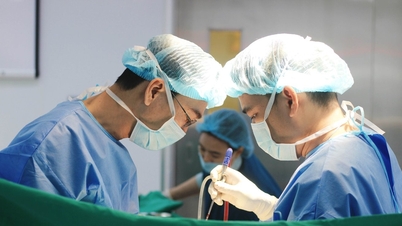
Quang Ninh also pays special attention to developing specialized healthcare. Currently, Quang Ninh has four hospitals that have achieved specialized status: the Provincial General Hospital, the Vietnam-Sweden Uong Bi Hospital, the Bai Chay Hospital, and the Quang Ninh Obstetrics and Pediatrics Hospital. These units have independently implemented over 70% of the specialized medical procedures as regulated by the Ministry of Health. A notable milestone is the successful implementation of kidney transplantation at the Provincial General Hospital and the Vietnam-Sweden Uong Bi Hospital. Mastering many advanced and specialized techniques allows people to access quality medical services right in their locality. The rate of referrals to higher-level hospitals in Quang Ninh is currently only 3.86%, the second lowest in the country and significantly lower than the national average of 11.32%.
To meet the growing demand for high-quality medical examination and treatment, the provincial health sector is developing and proposing a plan for the development of specialized medical services at healthcare facilities throughout the province. Several centers are planned, including a Cardiovascular, Spinal Neurosurgery, Diagnostic Imaging, and Interventional Radiology Center at the Provincial General Hospital; an Oncology, Training and International Cooperation, Quality Management and Social Work, Trauma and Orthopedics, Urology, and Pelvic Floor Center at Bai Chay Hospital; a Prenatal Diagnosis, Reproductive Support, and Genetics Center at Quang Ninh Obstetrics and Pediatrics Hospital; a Hyperbaric Oxygen Center at the Geriatric and Rehabilitation Hospital; and a Smart Emergency Operations Center in the province.

Alongside the development of specialized healthcare, Quang Ninh province places special emphasis on strengthening grassroots healthcare to bring health care services closer to the people. Currently, 96.5% of communes, wards, and special zones in the province meet national criteria for healthcare; the health insurance coverage rate reaches 95.56%; and the average life expectancy of the people is 75 years. The province's healthcare indicators are high compared to the national average, with 17 doctors per 10,000 people, 25 nurses per 10,000 people, and 57.7 hospital beds per 10,000 people.
In line with Resolution No. 72-NQ/TW's call for fundamental reforms in the protection, care, and improvement of people's health, free periodic health check-ups represent a crucial shift from treating diseases to proactively preventing them and managing health throughout the life cycle. With a comprehensively invested healthcare infrastructure, gradually strengthening grassroots healthcare, and increasingly enhanced specialized capabilities, Quang Ninh has the conditions to implement this task in a practical and long-term manner. This also serves as a foundation for the provincial health sector to continue building a modern and intelligent healthcare system; combining the development of specialized centers with the consolidation of grassroots healthcare, bringing healthcare services closer to the people, contributing to improving the quality of the population, human resources, and ensuring sustainable social security.
Source: https://baoquangninh.vn/kham-suc-khoe-dinh-ky-mien-phi-cho-toan-dan-3408711.html


![[Photo] General Secretary and President To Lam presides over the meeting to approve the draft report on the results of the second inspection by the Politburo of the Standing Committee of the Hanoi City Party Committee.](https://vphoto.vietnam.vn/thumb/1200x675/vietnam/resource/IMAGE/2026/05/26/1779789811432_a2-bnd-4430-9620-jpg.webp)





























































































Comment (0)