The Latoa Indochine group of artists has been working to restore, preserve, and enhance the value of Vietnamese folk paintings using carved lacquer.
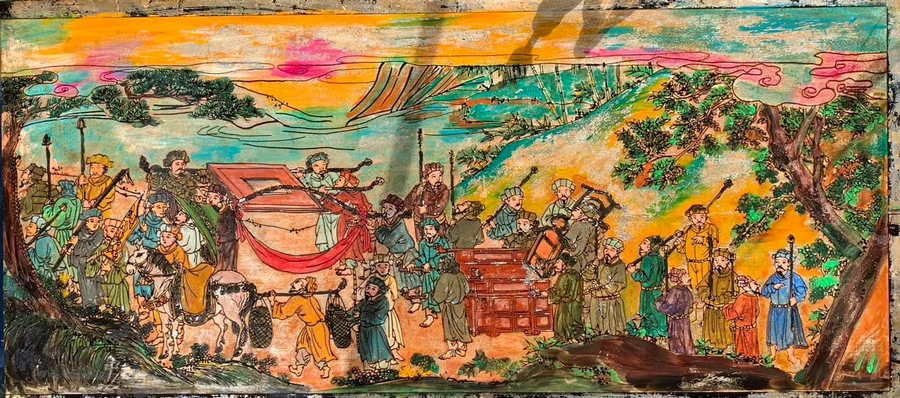
An excerpt from the work 'The Great Master of Truc Lam Descending from the Mountain'.
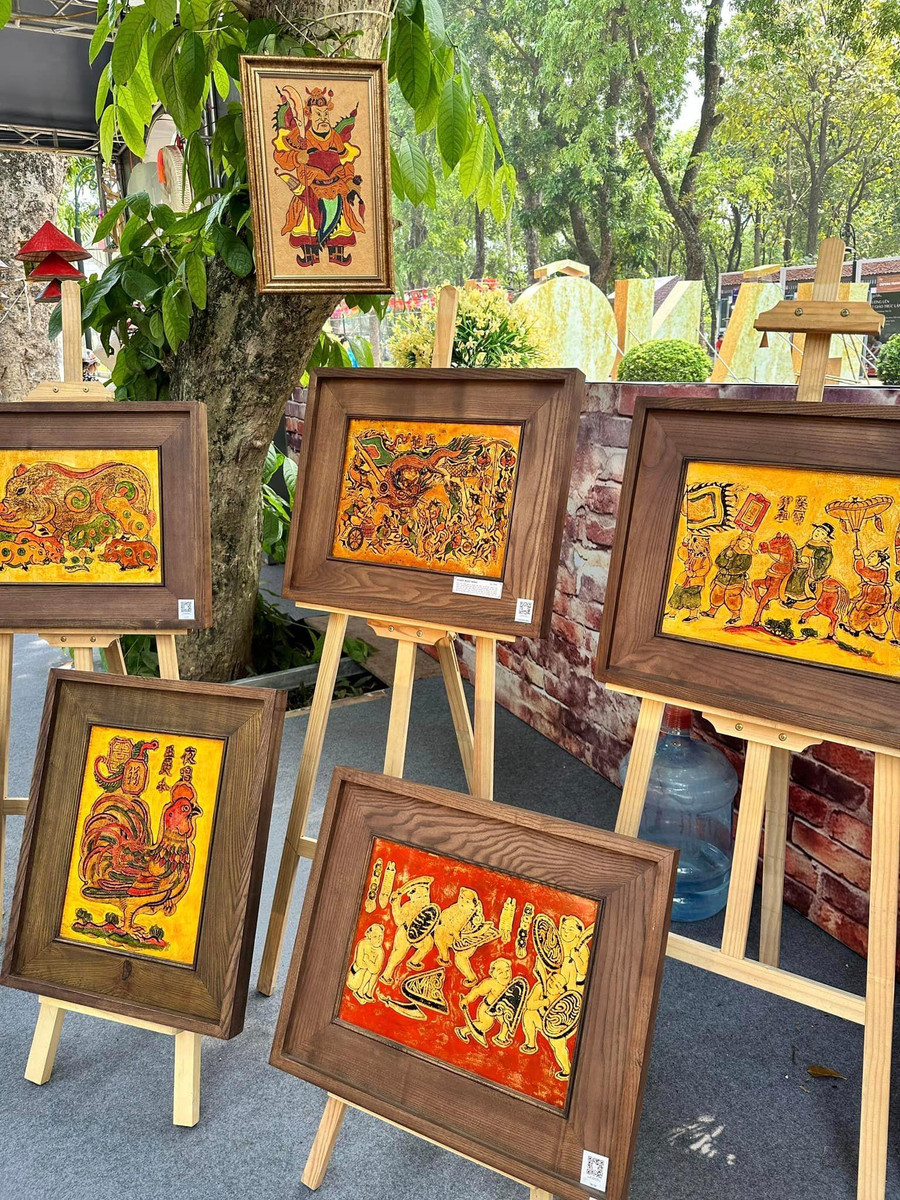
The lacquer painting exhibition "Heritage Veins" will showcase 60 folk paintings from Hang Trong, Dong Ho, and Kim Hoang styles, featuring familiar themes. With the goal of spreading traditional culture to young people and international friends, the Latoa Indochine group of artists has been working to restore, preserve, and elevate the value of Vietnamese folk paintings using carved lacquer.
Following the trajectory of Vietnamese folk heritage
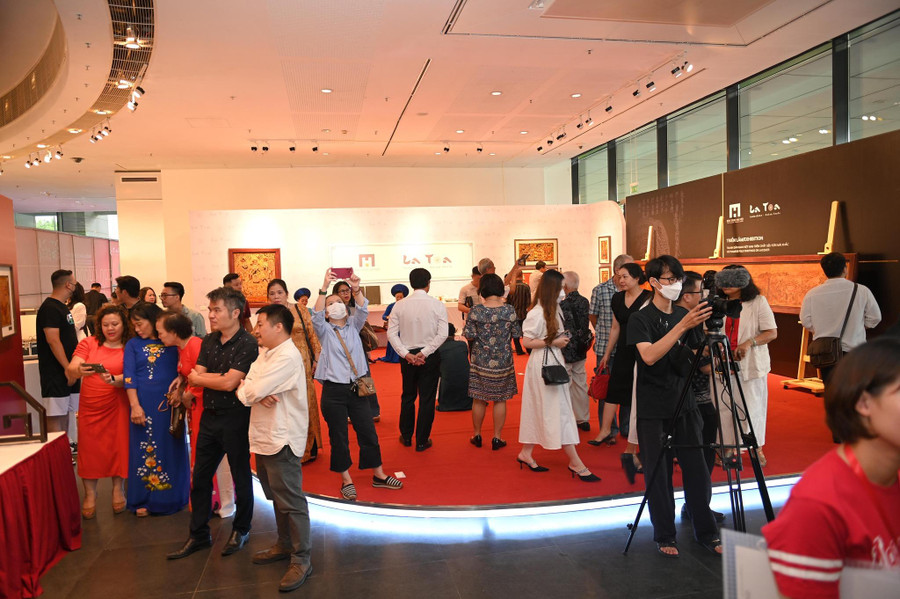
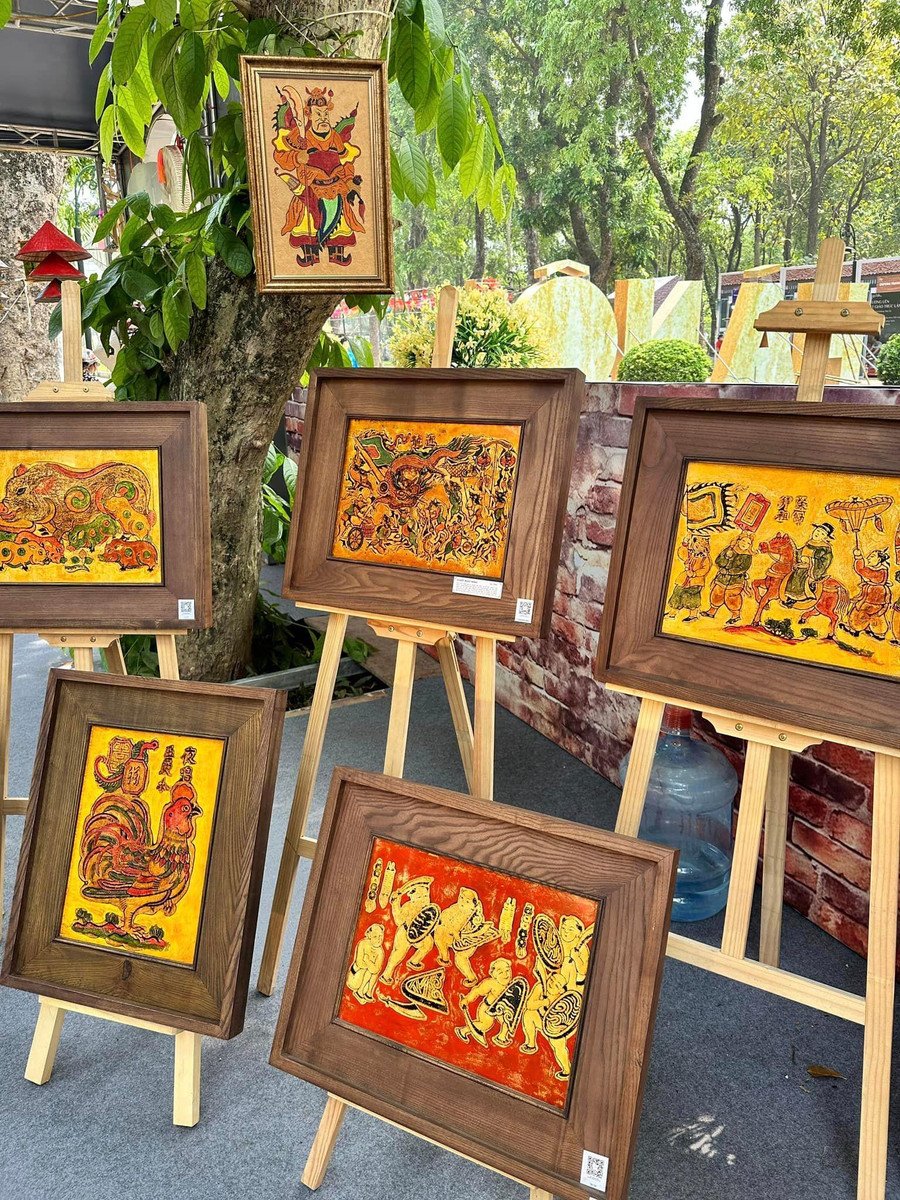
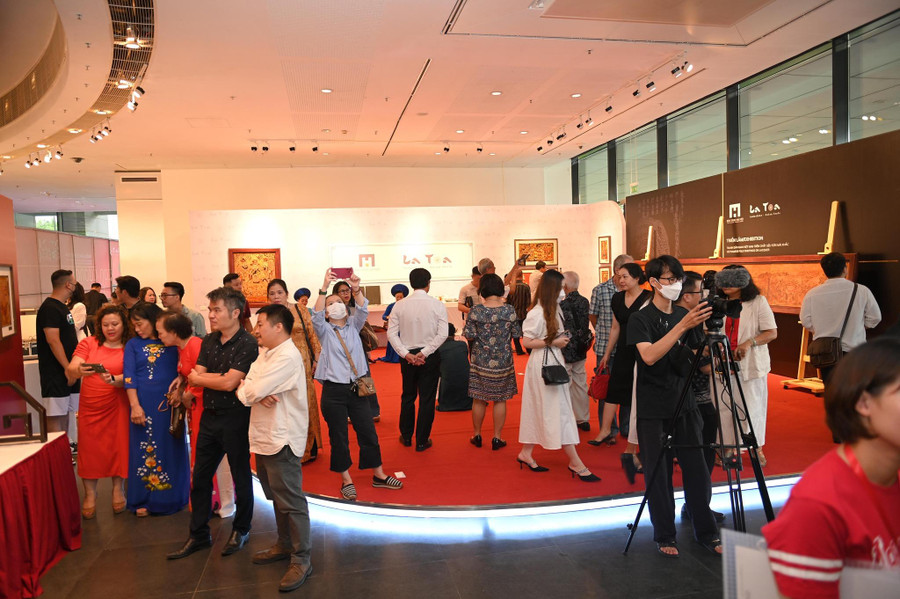
Originating from a group of artists with a special passion for folk painting and aiming to spread traditional culture, the "Heritage Vein" exhibition, held from August 9th to September 3rd at the Old Quarter Cultural Exchange Center (49 Tran Hung Dao, Hoan Kiem, Hanoi ), will tell a fascinating story about folk painting, recreated using a combination of lacquer painting and wood carving techniques, offering a fresh perspective on Vietnam's unique traditional art. According to representatives from Latoa Indochine, the "Heritage Vein" lacquer painting exhibition will showcase 60 folk paintings from Hang Trong, Dong Ho, and Kim Hoang styles with familiar themes such as: Herd of Pigs, Divine Rooster, Jealousy, Five Tigers, Mouse Wedding… recreated using a combination of lacquer painting and wood carving techniques, providing a new perspective on this traditional art form. The artists of Latoa Indochine say that by peeling back the layers of culture evident in each folk painting, one can see just how pure, bright, diverse, and unique the Vietnamese cultural heritage is. The painting, called "Mouse Carrying a Dragon," isn't meant to glorify dragons and phoenixes, but rather to depict a joyful festival, showcasing the strength of mice, who are considered inferior to dragons. Mice, though afraid of light, still carry lanterns, subtly conveying the message of their prosperity and confidence in celebrating the Lunar New Year. The image of mice in Dong Ho folk paintings is also seen in the painting "Mouse Dancing with a Dragon." This humorous folk painting depicts a group of mice carrying a dragon in a festival. In the past, the Chinese community in Hanoi often organized fun activities like dragon and lion dances during festivals such as the Mid-Autumn Festival and Lunar New Year. These dragon dances paraded through the streets, with dragons made of paper or cloth attached to poles. The anthropomorphic mice are depicted dancing with poles, carrying fish-shaped lanterns, or lanterns shaped like various fruits. Some groups carry flags or emblems, while others are musicians playing trumpets and drums on carts, striking gongs, and setting off firecrackers. There are a total of 11 mice, but notably, they all have very long tails. This may be because the artist wanted to specifically depict the characteristics of the Chinese people during the Qing Dynasty, particularly their long braided hair. The uniqueness of these folk art pieces doesn't stop at the depictions or messages. Some paintings – like "Red Tiger" – are intentionally created as a "two-in-one," meaning the lacquer painting has two sides. Simply flipping it over reveals a new, stunningly beautiful painting. In the Five Elements theory, the Red Tiger represents life, symbolizing fire, fairness, justice, honor, as well as immortal spirit, enthusiasm, and courage. Meanwhile, the Divine Rooster in the Golden Rooster painting was often pasted on doors during the Lunar New Year. The painting is bright and symbolizes good fortune, but its true meaning, as practiced by the ancients, was that of a "charm" to protect the home and ward off evil spirits. The ancients believed that the Rooster God possessed such power that even demons and gods feared it. Each folk painting deeply reflects the material and spiritual life of people in ancient society. Through the creativity and dedication of the artists, the images in these carved lacquer paintings are meticulously and sharply depicted, possessing depth. The artists transport viewers back to the past, allowing them to see the flow of heritage from tradition to modernity. The artists of Latoa Indochine aspire to spread traditional culture to a wider audience.
Going to the very heart of tradition
Furthermore, the exhibition also features themes such as lotus flowers, lantern dances, landscapes, and figures, all rendered in lacquer, reflecting a love and passion for art. During the exhibition, the group of artists Tran Thieu Nam, Nguyen Van Phuc, Nguyen Thai Hoc, and Luong Minh Hoa will also organize hands-on activities involving lacquer carving and folk painting to help the public better understand traditional Vietnamese lacquer art. Lacquer is considered a "specialty" of Vietnamese art. Meanwhile, folk paintings have been deeply intertwined with the lives of Vietnamese people. However, as life changes, many folk painting styles face the risk of disappearing. The recreation and "reimagining" of folk paintings on a lacquer base is a creative practice that embraces the essence of tradition. Folk art paintings on carved lacquer surfaces bring new values of modernity, durability, and elegance. The artists of the Latoa Indochine group used a combination of ancient and modern artistic methods: lacquer carving. Instead of the vibrant colors of the original Hang Trong paintings, the lacquer painting technique uses more subdued tones. The characteristic of lacquer painting is the process of painting and polishing. After each coat of paint, the artists polish until the desired color and light effects are achieved.Each artwork goes through many stages, including sketching, carving details using indentation tools, applying lacquer, and gilding with gold and silver after each polishing. The entire process for a single artwork involves approximately 15-20 steps and takes about 45-60 days to complete. In 2022, Latoa Indochine exhibited nearly 100 unique works in the "The Road" exhibition at the Hanoi Museum. Among them, the most noteworthy work is "Truc Lam Dai Si Xuat Son Do," nearly 5 meters long, painted in the long scroll style, consisting of two sections and 82 characters. It depicts the event of Emperor Tran Nhan Tong achieving enlightenment and leaving Vu Lam Cave (Trang An, Ninh Binh ) to return home, where he is welcomed by King Tran Anh Tong and his officials. With their creative and interesting presentation, these "traditional within traditional" works have opened new avenues for projects to restore and preserve artistic values. At the same time, they spread the cultural heritage left by our ancestors, elevating the value of Vietnamese folk paintings on lacquer.



























































Comment (0)