

“In 2010, teachers could live on their salaries.” That was the striking statement made by Minister Nguyen Thien Nhan when he met with exemplary teachers nearly 20 years ago. The Minister emphasized this again in a letter to teachers on November 20th, 2006, this time without the word “could,” but more emphatically: “In 2010, teachers could live on their salaries!”
Many people say it's just a promise from the minister. But I understand it's a wish, or rather, a goal to strive for. The minister can't decide on raising teachers' salaries. Teachers account for 70% of the country's civil servants, which means they make up the majority of the salary budget. Even a small increase would make a big difference to the overall budget. Moreover, if the increase goes to 70%, how will it address the remaining 30%, when there are sectors and fields that also need priority?
The country has made tremendous progress after 40 years of reform. However, with over 22 million students attending school and more than 1 million teachers, achieving breakthrough investment is extremely difficult. The projected figure of over 580 trillion VND over 10 years (from 2026 to 2035) allocated to the national target program for breakthrough educational development is a significant effort. Even more importantly, it represents a strong, direct, and clear commitment: Education is a top national priority, determining the nation's future. The State and the people will spare no expense for a better future, and therefore, education must be prioritized for breakthrough investment!
There will be many challenges that the education sector must address. These include promoting digital transformation, building a comprehensive education database, and making English a second language. Strengthening school infrastructure, starting with the construction of 248 border schools, standardizing the use of a single set of textbooks selected by the Ministry of Education and Training , and promoting multidisciplinary universities to rank among the top in Asia and the world… None of these tasks are easy. Time waits for no one. Decisiveness and unity are essential. Dedicated education administrators who understand their work and are willing to take responsibility are needed. The entire society must share the pressures faced by educators. On one hand, education needs input and collaborative effort. On the other hand, it also needs to create a space for autonomy and an academic environment to foster creativity among teachers and students. Teachers need to be given the "right to be strict" alongside their inherent compassion to mold students into responsible individuals, especially during their formative years.
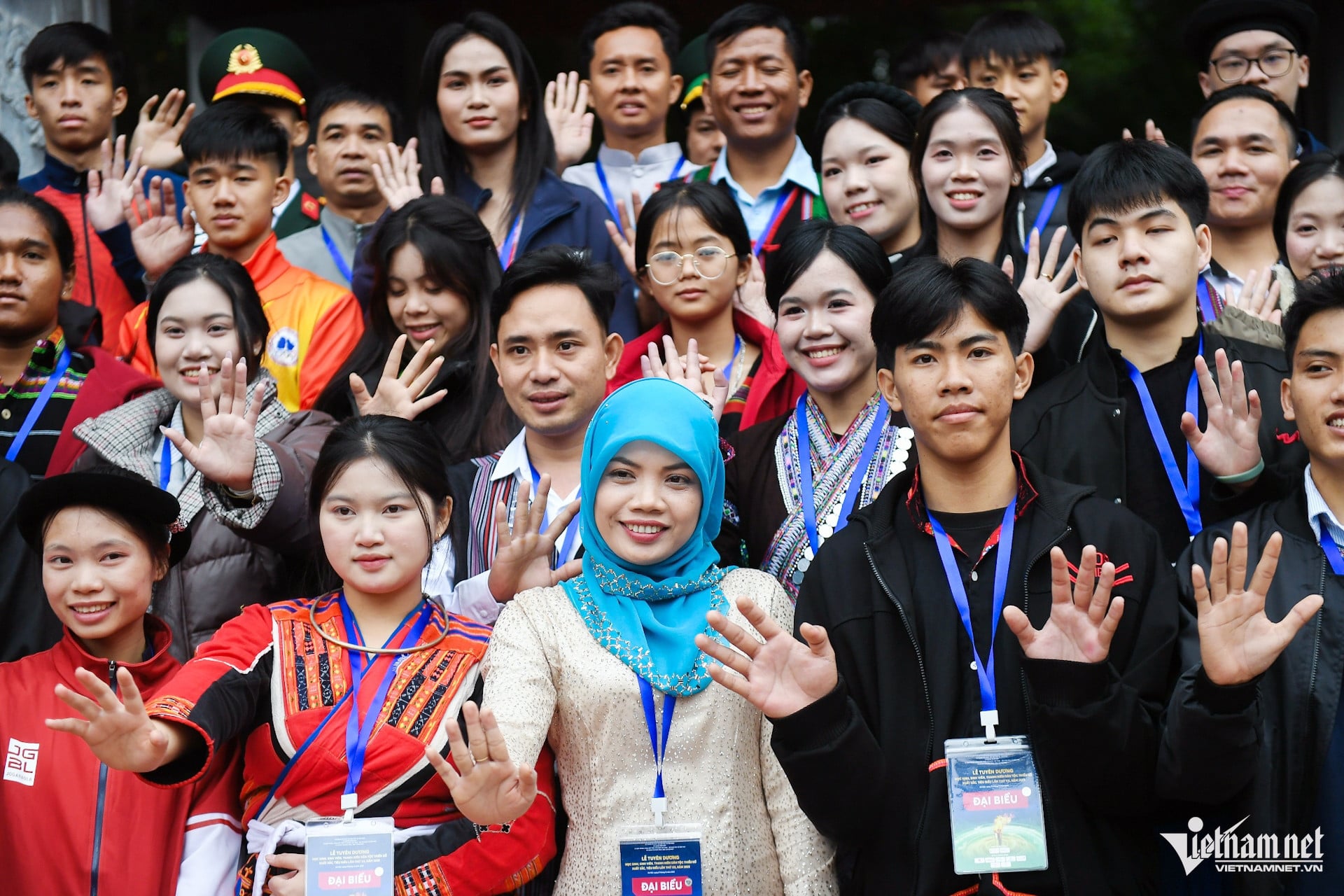
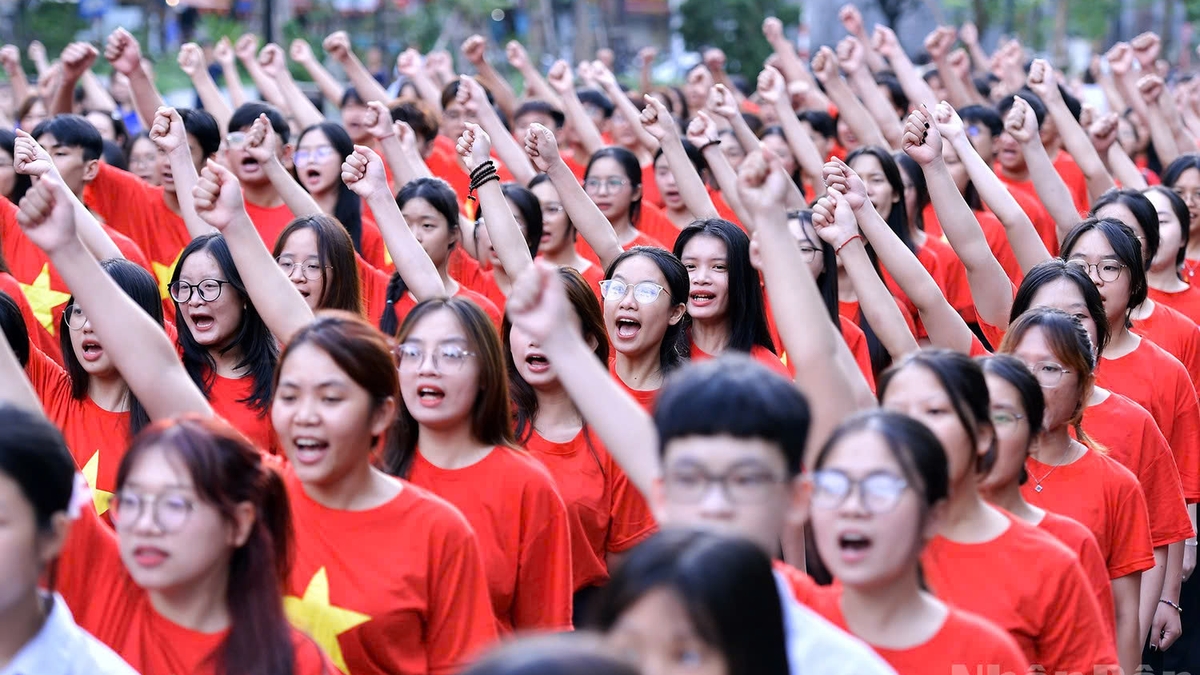
Outstanding individuals at the 2025 ceremony honoring exemplary ethnic minority students and youth. Photo: Thach Thao
The foundation of education must still be the teachers. Teachers must be true teachers, students true students, schools true schools, classes true classes, teaching true teaching, and learning true learning. Prime Minister Pham Van Dong's words from years ago remain valuable lessons for the education sector today! Excellent teachers, those with dedication and vision, are still the pride of generations of students and of the entire education sector.
I once sat down for a long time with a professor from Hanoi Pedagogical University, a mentor to many others. It was hard not to mention his concern when he said that in some years the entrance scores for teacher training programs were too low. Not to mention, many schools opened teacher training programs because they thought the costs were low, the process easy, and there was a high societal demand, because "you always have to eat and study anyway"... The consequence is that the quality of teacher training is not guaranteed, and the education sector struggles with a shortage of qualified people...
I remember the literature and pedagogy department used to have many famous names: Nguyen Dang Manh, Phuong Luu, Phung Van Tuu, Tran Dinh Su, Tran Dang Suyen, La Nham Thin… Back then, students at the University of Propaganda, right next to Hanoi Pedagogical University 1, benefited because more than half of those renowned professors were invited to lecture to journalism students from many different places. Now, I wonder if it's because society's attention has changed, or because pedagogy is more "focused and professional," but the training seems more discreet? Even in the key departments, fewer people know the names of the professors than before. Looking at the University of Social Sciences and Humanities (Vietnam National University, Hanoi), where the History department had the quartet of professors "Lam, Le, Tan, Vuong," if you asked anyone outside the field, they'd probably be stumped! It's not that the professors aren't excellent now, because the number of internationally published works is much higher than in the past. But it seems that the teaching profession is no longer as popular or sought after as it used to be?
Schools in rural areas are proud to have excellent teachers. In the past, being a teacher was considered a poor profession. Now, some teachers earn top incomes thanks to tutoring in general subjects and the busy schedules of training programs that attract many students. Then there are those who aren't officially employed by any school but earn huge incomes simply by teaching online, thanks to their good reputation...

The 2025-2026 school year will be the first year of implementing the tuition-free policy. Photo: Trong Tung
The education market is now vibrant, with many well-off families accumulating awards and achievements for their children to prepare them for applications to world-class universities. I've seen parents at the airport diligently taking their children to Indonesia for skills competitions, to the Philippines for chess tournaments, and even to Taipei (China) for fencing competitions! But there are also parents urgently bringing their children back from studying abroad to "reintegrate" because they haven't made it in 5-7 years in a foreign country. Having a lot of money doesn't automatically make you a talented person; the main thing is to find your strengths and your niche to develop. It's not uncommon for poor students to rise above their circumstances and become shining examples for their entire hometown. I remember the story of the valedictorian of Hanoi Pedagogical University 2 from Thanh Hoa province who brought his abandoned nephew to enroll. He had been accepted into the Foreign Trade University, but family burdens prevented him from pursuing his dream of higher education. Thanks to the tuition-free policy for teacher training programs, the young man found his place and was accepted by a high school in Tay Ninh.
The policy of waiving tuition fees for preschool and primary school students has provided educational opportunities for many poor students. I witnessed a provincial Party secretary pondering deeply when he saw that some localities were waiving primary and secondary school tuition fees. In poor provinces, where the budget still depends on the central government, the expenditure of over a hundred billion dong exceeded the local capacity. Now that the Politburo has approved the tuition fee waiver, that nagging debt has been lifted. Actions speak louder than words. Policies that win the people's hearts will bring new vitality to education, giving wings to dreams of reaching further!
The country is entering a new era of development. All development must be for the people. People are the driving force of all development. When education is valued and given its proper role, the country will open up new opportunities for development.
Education is a top national priority, determining the future of the nation. And for a better future, who would dare to begrudge anything!
The projected figure of over 580 trillion VND over 10 years (from 2026 to 2035) allocated to the national target program for breakthrough educational development is a significant effort. Even more significant, it represents a strong, direct, and clear commitment: Education is a top national priority, determining the future of the nation.
THE FUTURE OF EDUCATION
By 2030:
Percentage of people of high school age who have completed secondary education or equivalent nationwide: ≥85%
Education inequality index: <10%
Higher education and vocational training institutions are equipped with modern facilities comparable to those in developed countries in Asia: 20%
Percentage of workers with intermediate, college, or university degrees or higher: 24%
The proportion of students studying basic sciences, engineering, and technology in higher education is ≥35%.
The number of international scientific publications and revenue from science, technology, and innovation increased by an average of 12% annually.
By 2035
Complete the universalization of high school education and equivalent levels: 100% of provinces and cities
Education index contributes to the Human Development Index: >0.85
Human capital and research contribute to the global innovation index: Above the average for upper-middle-income countries.
By 2045
Ranking of modern, equitable, and high-quality national education systems worldwide: In the top 20.
Number of higher education institutions ranked among the top 100 universities in the world in certain fields according to reputable international rankings: ≥5
(According to the appendix to the Government's action plan for implementing Resolution No. 71-NQ/TW)
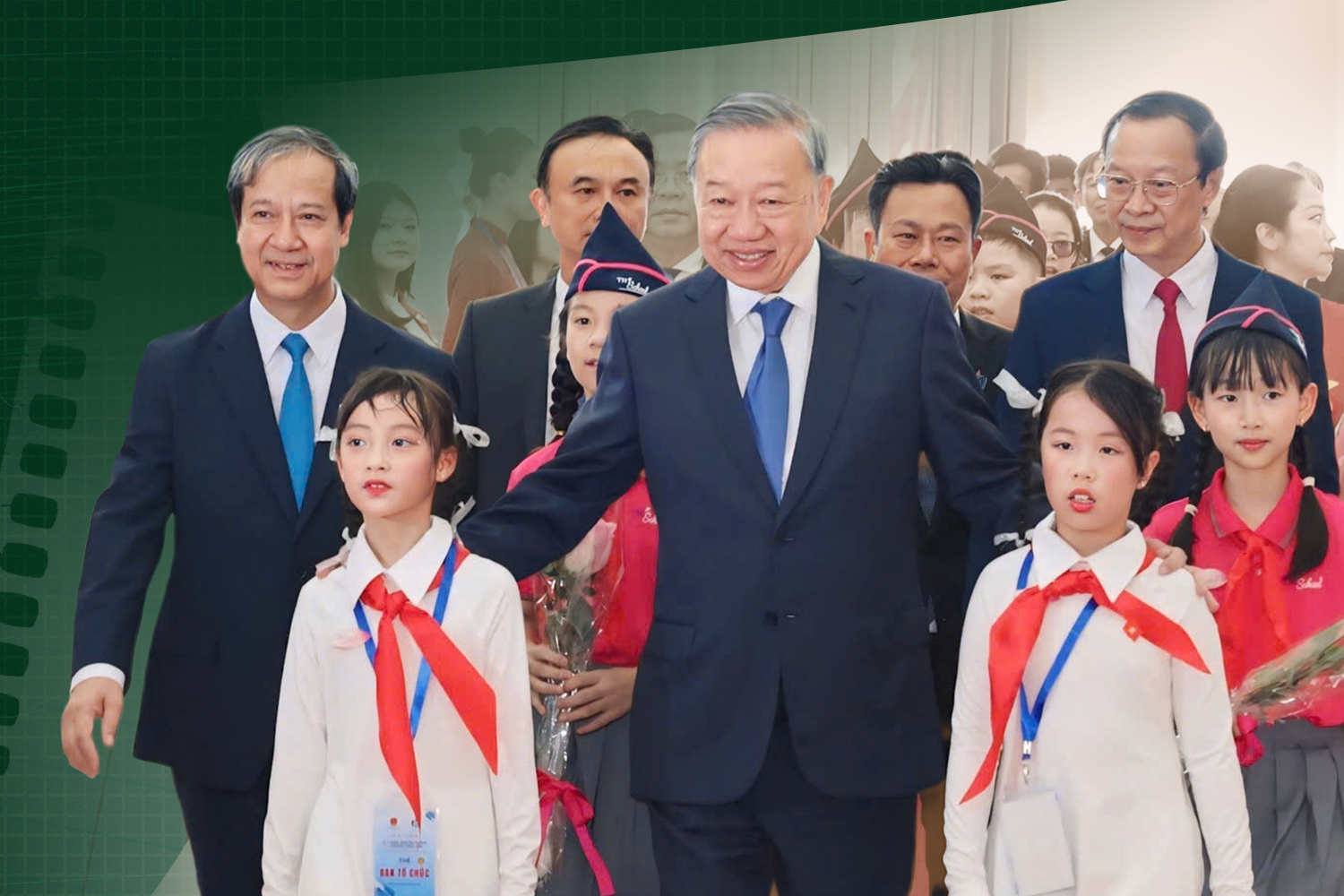
Tuition-free education: A humane gesture, a long-held dream of the education sector. The policy of completely waiving tuition fees for students nationwide, to be implemented from the 2025-2026 school year, is great joy for millions of families and a long-held dream of the education sector.
Source: https://vietnamnet.vn/sinh-khi-moi-cua-giao-duc-2489400.html

![[Image] Close-up view of the 10-lane road connecting to Long Thanh Airport](https://vphoto.vietnam.vn/thumb/1200x675/vietnam/resource/IMAGE/2026/04/04/1775291871988_ndo_br_1-resize-5690-jpg.webp)

































































Comment (0)