

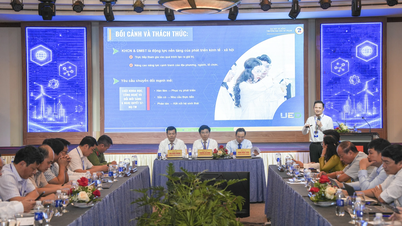
This was also the main topic of discussion among scientists , experts, and lecturers at the scientific conference "Digital Skills and the Transformation of Learning Methods in the New Era" held at Hanoi Open University. Through this, many solutions were proposed to improve the quality of education to meet the demands of the digital age.
Digital skills development must be implemented in a coordinated manner.
According to Dr. Thai Thanh Tung, Head of the Basic Training Department at Hanoi Open University, the world is entering a period of strong development of the digital economy , digital society, and digital citizenship, where data, digital technology, and artificial intelligence (AI) become core resources driving innovation and sustainable development.
"Higher education not only faces the need to innovate teaching methods but also must undergo a radical transformation in learning methods to meet the needs of society and the labor market in the new era. Learners no longer access knowledge through traditional methods but are shifting to flexible, personalized, and technology-based learning models," affirmed Dr. Thai Thanh Tung.
.jpg)
This requires education to shift from a "knowledge transmission" mindset to a "competency development" mindset, from providing what is readily available to guiding learners on how to learn, adapt, and innovate.
Many modern educational trends are thriving worldwide, such as AI-based personalized learning, blended in-person and online learning models, flipped classrooms, microlearning, learning data analytics, open learning ecosystems, AI-generated learning applications, and real-time data-driven competency assessment.
According to Master's student Nguyen Cong Duc from the Vietnam Trade Union University, digital skills have become a fundamental competency that helps students study effectively, adapt to the digital environment, and enhance their competitiveness in the labor market.
However, the reality shows that there is still a significant gap in students' digital skills across different fields of study and educational institutions. Many students use technology regularly but lack the ability to effectively utilize data, assess the reliability of information, or responsibly apply AI.
.jpg)
To address this issue, Master's student Nguyen Cong Duc suggested that the development of digital skills needs to be implemented synchronously from multiple perspectives. Specifically, universities need to integrate digital skills into their training programs, innovate teaching methods to enhance practical experience, invest in modern technology infrastructure, and expand links with businesses so that students can access digital work environments while still in school.
In addition, building a digital culture, raising awareness of information security, digital ethics, and self-learning abilities are also important factors that help students adapt to the rapid changes in technology.
Innovating teaching methods based on technology.
Not only students, but also faculty members must undergo significant changes to adapt to the new educational environment. Based on her experience teaching the General Law course at Hanoi Open University, Dr. Le Thi Ngoc Tram stated that digital transformation has contributed to expanding access to legal learning materials, enhancing interaction between teachers and students, and supporting more effective and regular assessments.
Through digital platforms, students have the opportunity to hone their skills in researching legal documents, accessing official information sources, and becoming more proactive in their studies. However, the implementation process has also revealed limitations such as disparities in digital literacy among learners, uneven quality of learning materials, and the risk of superficial learning or over-reliance on technology.
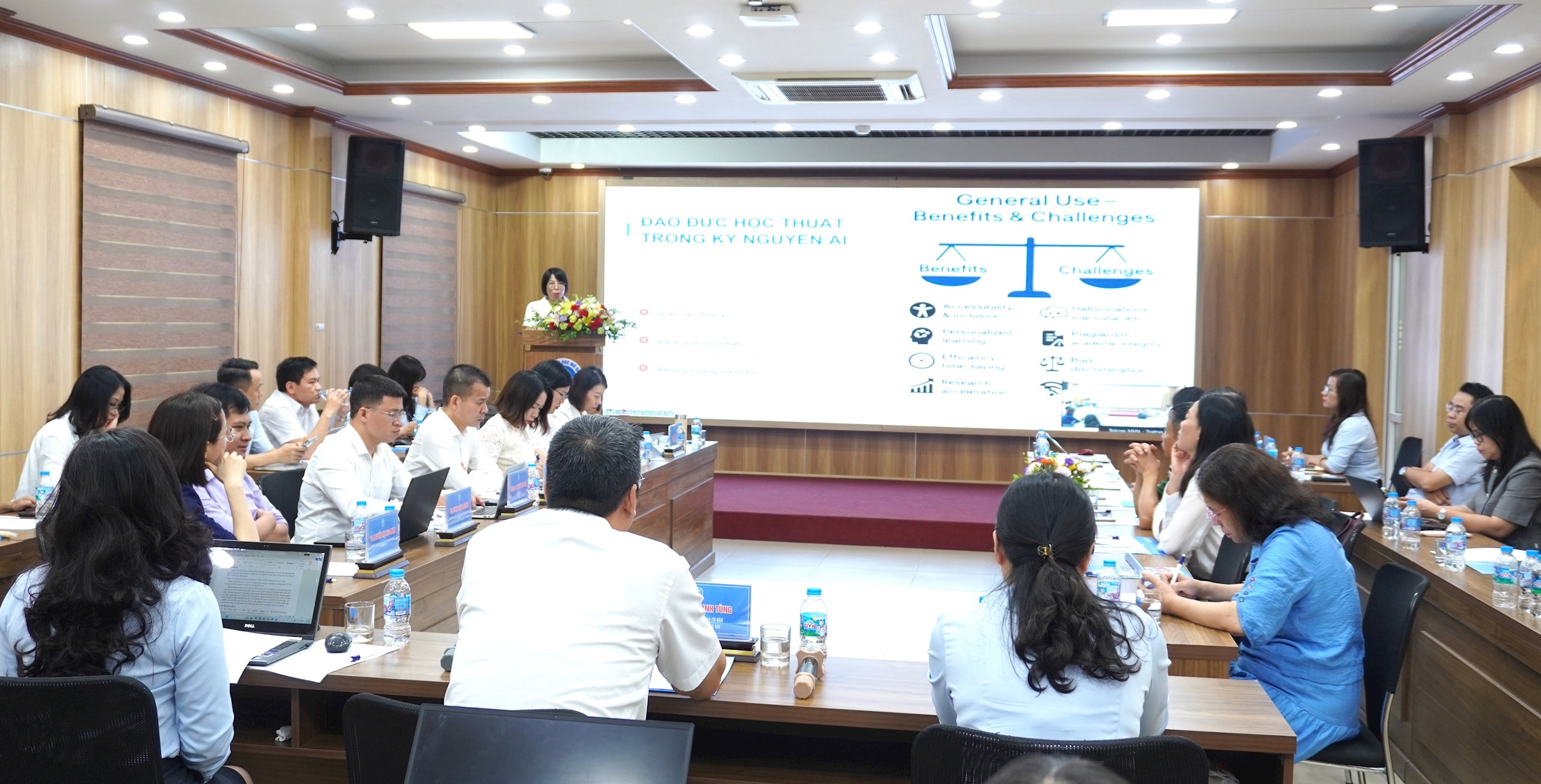
To enhance the effectiveness of digital transformation in teaching, Dr. Le Thi Ngoc Tram suggests standardizing the digital learning materials system, innovating course design towards a learner-centered approach, strengthening academic responsibility, and fostering digital skills among lecturers.
According to Dr. Tran Thi Thu Huong from the People's Security Academy, the application of technological tools not only helps improve the effectiveness of knowledge acquisition but also motivates lecturers to innovate teaching methods towards increased interaction, personalization of the learning process, and promotion of learners' initiative.
Building a comprehensive digital learning ecosystem.
A study by PhD candidate Tran Trieu Hai from Hanoi Open University comparing the effectiveness of in-person and AI-generated teaching videos also offers new perspectives. The survey results showed that in-person videos were rated higher for content clarity, while AI-generated videos received higher levels of satisfaction from learners. Notably, the level of learner engagement with the two formats was almost insignificant.
.jpg)
This shows that AI can absolutely become a powerful tool to support teaching activities, helping to save time, diversify learning materials, and expand access to knowledge for learners.
The consensus at the conference was that digital transformation in education will not succeed if it stops at simply investing in technology. More importantly, it requires building a comprehensive digital learning ecosystem where learners are equipped with essential digital skills, digital thinking, and the ability to use technology safely and effectively.
To realize that goal, experts propose several groups of solutions such as improving training programs linked to digital competencies; innovating teaching methods towards personalization; standardizing digital learning materials; increasing the application of AI in teaching and assessment; developing digital competencies for lecturers; raising awareness of digital ethics and personal data protection; and promoting cooperation between schools, businesses, and technology organizations…
Source: https://hanoimoi.vn/ky-nang-so-va-doi-moi-phuong-phap-hoc-tap-chia-khoa-nang-cao-chat-luong-dao-tao-trong-ky-nguyen-moi-980723.html




































































































Comment (0)