|
Every craftsman, in addition to technical skills, must also possess dedication and vision. |
Sowing seeds from a love for the profession.
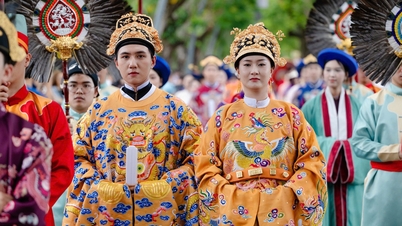
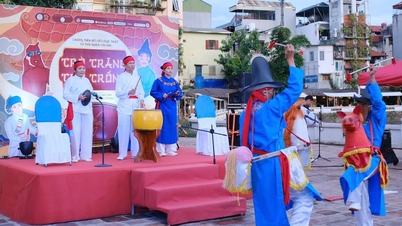
Behind the spotlight of the Hue Royal Court Traditional Arts Theatre are the diligent rehearsals of young actors and artists. They practice embodying their roles in excerpts from classical plays and traditional court music. Meritorious Artist Hoang Trong Cuong – Director of the Theatre – shared: “Training new talents is difficult, but retaining them is even more challenging.”
Performing traditional arts, especially forms like tuồng (classical Vietnamese opera), dance, or court music, requires not only talent but also perseverance and rigorous training. “Some students start learning tuồng early, but it takes them a decade or more to play leading roles. If they didn’t have passion, they would have given up long ago,” Mr. Cương said.
You may also like

The person who contributed to the revival of Chu Dau pottery.Having known Dr. Tang Ba Hoanh, a historian and researcher, for a long time, I finally had the opportunity to chat with him. At 85 years old, his love for history is still evident in his every gesture and word. And when I mentioned Chu Dau pottery, a look of excitement appeared in his eyes. Perhaps that is his pride in his years of dedication to the craft...? The difficulties stem not only from the unique nature of court art, but also from the fact that modern life means artists' incomes are insufficient to ensure their continued dedication to the art form. That's why the theater has chosen a "direct mentoring" approach, while the Hue Imperial City Relics Conservation Center provides support mechanisms to help artists generate additional income from performances, projects, and creative spaces.
Recently, with the sponsorship of the Vingroup Innovation Fund (VinIF), the theater implemented a 3-month training course on the technique of painting traditional Vietnamese opera masks. As a result, 15 young artists completed 300 traditional opera masks – vividly portraying the faces of Tru Vuong, Dao Tam Xuan, Ly Ngu Tinh, and others. Each mask embodies the colors, artistic lines of traditional Vietnamese opera, and a love for the heritage.
The course was taught directly by Meritorious Artist La Hung. “He not only passed on the craft, but also the history of each mask design,” said Ms. Le Mai Phuong, Head of the Applied Research Department of the Theater. The project, though only three months long, has lasting significance, helping young artists to personally apply makeup and design masks according to the standards of court art. Based on these results, the Theater plans to hold annual classes so that every artist entering the profession will have a firm grasp of traditional identity.
"We don't force anyone; we let them discover it on their own. Only those who truly love it will have the patience to pursue a unique art form like royal court opera," Ms. Phuong said.
Retaining skilled workers
Not only artists, but also artisans, skilled craftsmen, and those involved in the restoration and reconstruction of historical relics are facing a shortage of manpower. According to Mr. Hoang Viet Trung, Director of the Hue Imperial City Relics Conservation Center, this workforce is gradually aging, while the younger generation is less interested because the work is arduous and the income is not high. "One craftsman leaving is a significant loss. It takes decades to pass on the skills," he said.
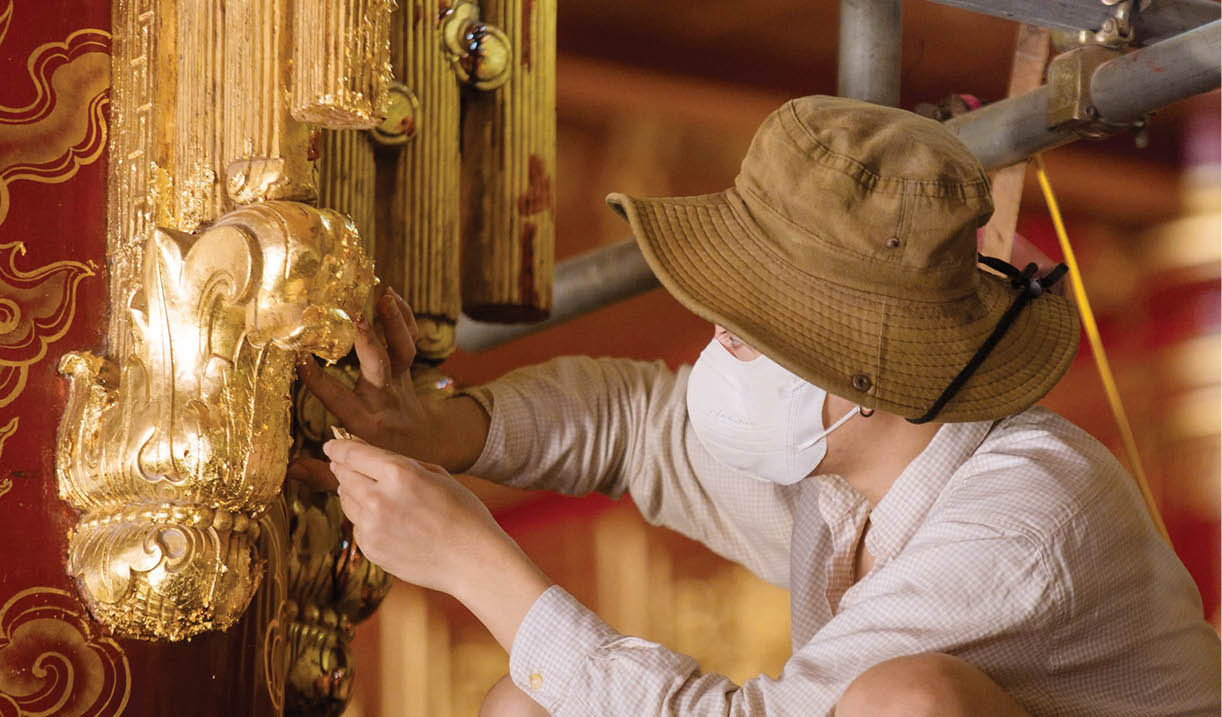
In a conversation with us, artisan Ngo Dinh Trong – Head of the Painting Team, Hue Relic Restoration Joint Stock Company – shared: The technique of gilding cannot be learned in a day or two, but is a lifelong journey of refinement. The gilded and lacquered components are the soul of the imperial architecture. Most of the skilled craftsmen in the team were taught by the late painter Do Ky Hoang, a lecturer at the Hue University of Arts. Those who practice the craft must deeply understand and love their work to be able to imbue each layer of gilding and each stroke of paint with soul.

Strengthening the friendship between Vietnam and the United States.On July 3rd, as part of the Pacific Partnership - Friends of the Pacific 2026 program, the U.S. Army Pacific delegation, led by Lieutenant General Joel Vowell, Deputy Commander of the U.S. Army Pacific, paid a courtesy visit to the Quang Tri Provincial Military Command. Currently, many unique crafts are passed down orally, "from father to son," without any certification. "We need policies to recognize, support, and honor them as 'living heritage.' They are not just craftsmen, but guardians of the essence of the heritage," Mr. Trung emphasized.
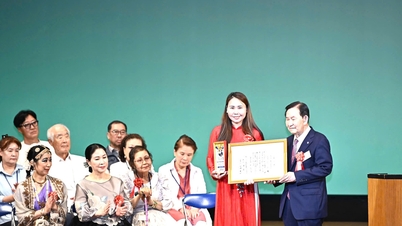
“We hope to have a specialized training center focusing on traditional crafts related to heritage restoration. There, trainees and craftsmen will learn through practical experience, touching the heritage firsthand. The center highly values the role and contributions of the artisans. The unit has awarded certificates of merit to hundreds of artisans and skilled craftsmen involved in the restoration of the Thai Hoa Palace. This is not only a thank you, but also a motivation to keep them in the profession,” added the Director of the Hue Center for Conservation of Traditional Crafts.
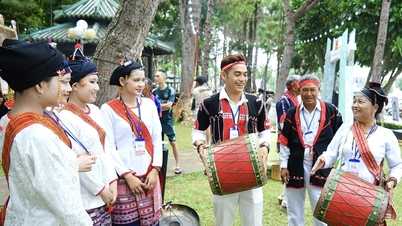
In the heart of the ancient capital, the rhythmic drumming of traditional theater classes still resounds, the sounds of hammers and chisels fill the restoration sites, and the hands of young craftsmen are still relearning the techniques of their ancestors. Keeping them involved in the restoration work means preserving the heritage.
Source: https://huengaynay.vn/van-hoa-nghe-thuat/lang-tham-giu-lua-cho-di-san-hue-153260.html






![[Photo] General Secretary and President To Lam working with the Technical and Professional Center, Ministry of Public Security](https://vphoto.vietnam.vn/thumb/1200x675/vietnam/resource/IMAGE/2026/07/06/1783318005842_a1-bnd-1129-2263-jpg.webp)