

A glorious landmark in the heart of the delta.
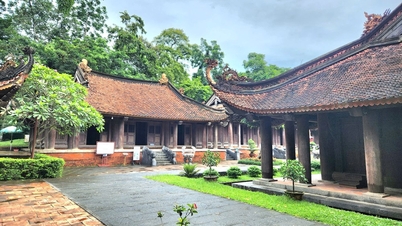
Located in the Dinh field in Thuong Hoi village, Tan Hoi commune, Dan Phuong district, Van Son Mausoleum embodies unique spiritual and cultural values, reflecting the pride and patriotic traditions of the former Tong Coi Son (or Tong Goi) region.
Van Son Mausoleum is located in Thuong Hoi village, Tan Hoi commune, Dan Phuong district ( Hanoi ) (Photo: Tin Tuc Newspaper) |
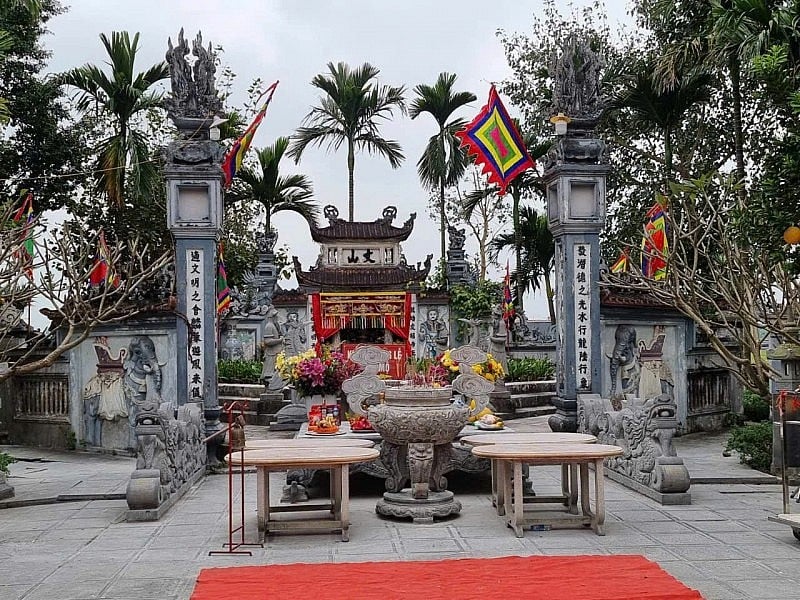
According to the elders, in 1407, Vietnam (then known as Dai Ngu) was invaded and occupied by the Ming dynasty. At that time, General Van Di Thanh of Tong Goi gathered forces and, along with his deputy Le Ngo, rebelled against the Ming army. He established his headquarters at Dong Dam hill, in the middle of the Dinh field of Thuong Hoi village, and usually wore all-black attire, earning him the nickname "Black-Clad Army." Van Di Thanh was the First Black-Clad Army Commander. He bravely sacrificed his life on March 12, 1416, in battle against the Ming army at Dong Dam hill.
On the day of his sacrifice, a mound of earth rose up in the middle of the Dinh field. The local people believed that he had manifested himself and become a saint, so they built a small mausoleum to commemorate and worship him. The mausoleum was built in the year 1688 (the year of Chinh Hoa Thuong Giap). In 1940, the mausoleum was renovated to its current form, with the name on the altar reading "Van Di Thanh Son," meaning "merit as great as a mountain," and it is commonly known as the Van Son Mausoleum.
Out of gratitude to the general who was both wise and courageous, all four villages in the Gối district revered him as the village's tutelary deity and built the Voi Phục temple right on his land as a place of worship (which still exists today in Thượng Hội village). It currently preserves 40 royal decrees bestowing titles from the Later Lê dynasty (1620) to the Later Nguyễn dynasty (1924).
The Tong Goi boat folk opera festival is held every five years to commemorate the talented general Van Di Thanh. (Photo: Collected) |
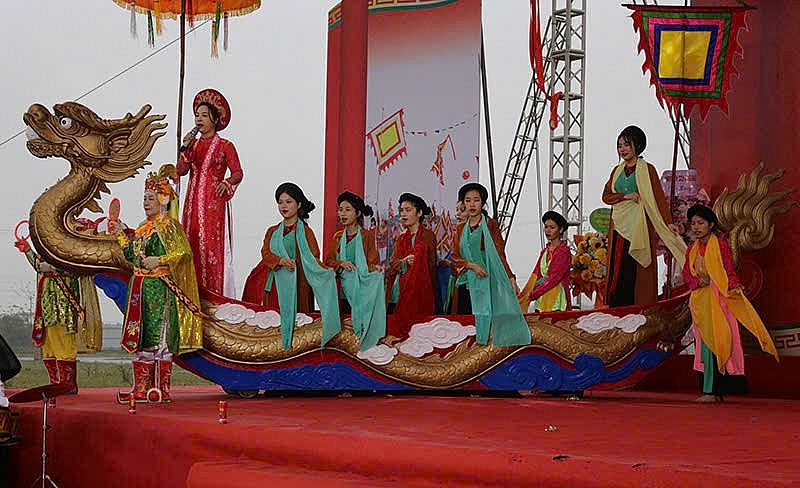
The heroic tradition of fighting foreign invaders in the Tong Goi region has been passed down from generation to generation. On December 20, 1998, on the occasion of Tan Hoi commune receiving the title of Hero of the People's Armed Forces, General Vo Nguyen Giap revisited the Voi Phuc Temple and planted a banyan tree at Van Son Mausoleum. With their immense cultural and historical value, the Voi Phuc Temple and Van Son Mausoleum were recognized as national historical relics in July 1997.
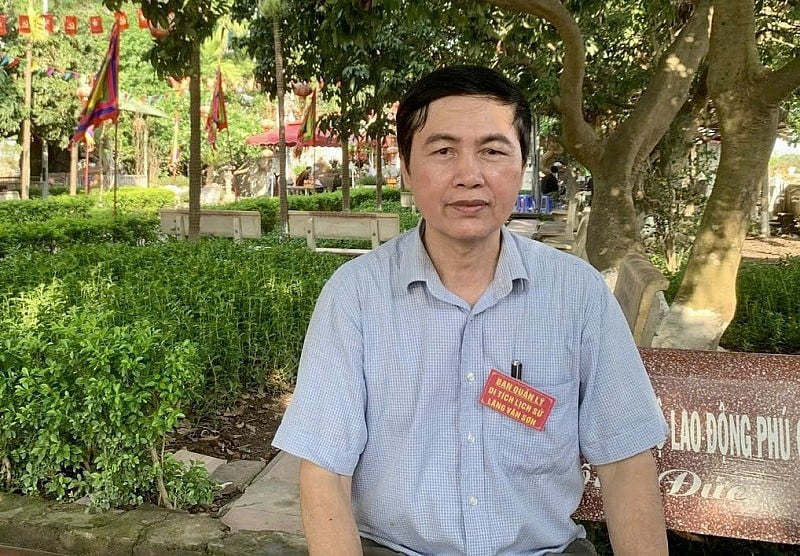
Today, Van Son Mausoleum is not only a place of worship commemorating the talented general but also a value that forms the soul of the Dan Phuong region. Mr. Nguyen Van Xuan, Head of the Management Board of Van Son Mausoleum, said: “On the 15th and 1st of each lunar month, people in the area still maintain the custom of coming to the Mausoleum to offer incense, pray for good fortune, and pray for health. Over 600 years, Van Son Mausoleum has become an irreplaceable spiritual anchor for the local people.”
"The cultural thread" connects the past, present, and future.
Dan Phuong today is undergoing a rapid transformation with a high rate of urbanization. In this context, the challenge of preserving traditional values such as the Van Son Mausoleum has become urgent.
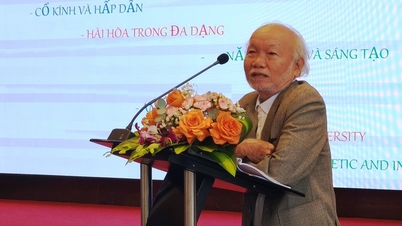
Architect Tran Huy Anh believes that planning and developing modern buildings should preserve and promote the values of historical relics, maintaining the cultural essence of the Doai region. One feasible option for preserving Van Son Mausoleum is to connect it with public green spaces. If implemented correctly, this approach could create a harmonious living space that is both modern and convenient while preserving the cultural soul of Dan Phuong.
According to the current plan, Van Son Mausoleum is located within the grounds of an urban project invested by Vingroup Corporation. With a focus on people and local values, the investor has committed to restoring and preserving the historical and spiritual value of the monument, while also planning to develop it into a unique cultural park.
Under meticulous planning, Van Son Mausoleum will be developed into an ecological landscape space combining heritage, a venue for regular traditional festivals, folk art performances, community activities, and cultural experiences for residents, students, and tourists. Beyond its role as a sacred place of worship for a talented national general, Van Son Mausoleum will be "awakened" to become an attractive cultural and historical destination, a center for traditional education in the heart of a modern city.
“We believe that with proper planning and investment, Van Son Mausoleum will not only continue to be a spiritual anchor for the people of Dan Phuong but also a place for the younger generation and tourists to learn about and explore the history of the ancient Tong Goi region. This will be a source of pride for the entire community ,” shared the Head of the Van Son Mausoleum Management Board.
Mr. Nguyen Van Xuan, Head of the Management Board of Van Son Mausoleum, said that preserving Van Son Mausoleum is the aspiration of all the people of Dan Phuong. |
On a deeper level, the Lang Van Son Cultural Park is not merely a restoration of a historical monument, but also an effort to preserve the "soul" of Dan Phuong – a land that has produced many famous figures, a place with a long tradition of patriotism, scholarship, and culture. This is a land of spiritual significance and outstanding people, where the flow of history is not forgotten, but is conveyed coherently and vividly into modern life.
When harmoniously integrated with green spaces, public amenities, and a civilized urban community, Van Son Mausoleum will become a "cultural thread" connecting the past, present, and future, helping today's generation deeply understand their roots, cultivate love for their homeland, and foster national pride.
Source: https://thoidai.com.vn/lang-van-son-tu-bieu-tuong-van-hoa-den-bai-toan-bao-ton-di-san-giua-boi-canh-do-thi-hoa-214239.html

































































Comment (0)