

 |
Vietnam leads in cryptocurrency acceptance.
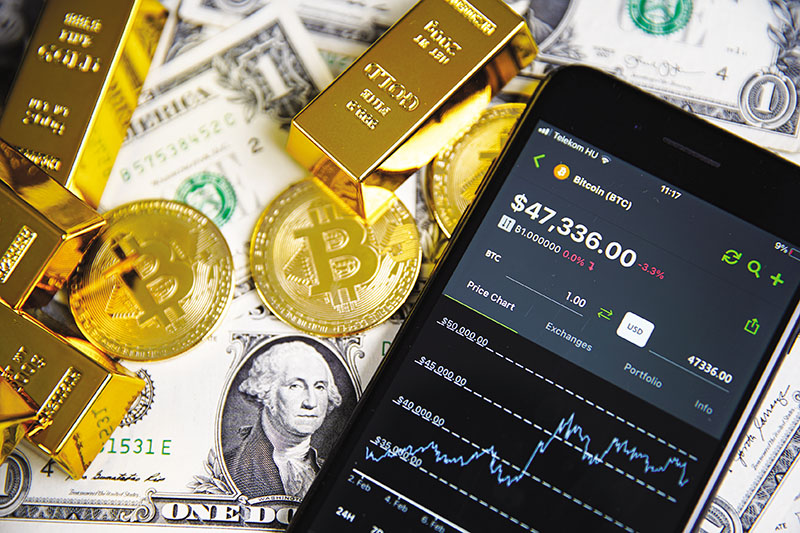
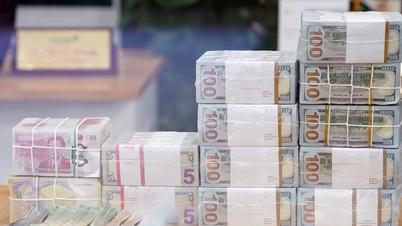
According to a recent report by Chainalysis, Vietnam has moved up one rank in the Global Cryptocurrency Adoption Index 2025, reaching fourth place. The Vietnamese cryptocurrency market was valued at over $220 billion last year, ranking third in the Asia-Pacific (APAC) region.
The scale of cryptocurrency transactions in Vietnam is growing and is beyond the government 's control, indicating significant risks and waste. The government's issuance of Resolution No. 05/2025/NQ-CP on piloting the crypto asset market in Vietnam is entirely justified.
However, according to Dr. Can Van Luc, chief economist of BIDV , the purpose of establishing the exchange is not to encourage people to buy and sell virtual currencies (coins).
“Vietnam has approximately 21 million people owning cryptocurrencies, with transaction volumes reaching hundreds of billions of USD, ranking among the top in the world . This money does not return to Vietnam for investment, business, or tax payment, but is entirely held on foreign exchanges, causing waste and tax losses, not to mention that investors will not be protected when they encounter risks. Therefore, establishing an exchange to manage it is necessary. Thinking of establishing a cryptocurrency exchange to encourage people to 'play coin' is very dangerous,” Mr. Luc stated.
According to him, a country where people are solely focused on investing in cryptocurrencies cannot become wealthy and powerful, nor can it mobilize capital for production and business.
Blockchain technology has numerous applications, particularly in the finance and banking sector. Recently, many banks have been at the forefront of adopting this technology.
 Cryptocurrency assets are divided into two types: those linked to real assets (tokenized) and those not linked to real assets. Vietnam's orientation is to develop the cryptocurrency market to attract capital and increase liquidity for other markets. Tokenizing real assets is also a global trend.
According to forecasts by Boston Consulting Group (BCG), the market for tokenized real assets will account for 10% of global GDP by 2033, equivalent to nearly $19 trillion. Resolution 05 will restrict financial fraud. Accordingly, investors can participate in the market through exchanges to ensure transparency and openness.

- Mr. Phan Duc Trung, Chairman of the Vietnam Blockchain and Digital Assets Association
Mr. Luc gave an example: with the traditional method of opening a letter of credit (L/C), the bank needs to send up to 6 sets of documents to the parties involved, costing about 20-30 USD. However, nowadays, thanks to the encryption of documents using blockchain, the cost has been reduced to just "a few cents," and the relevant parties can access the information immediately.
According to experts, the purpose of cryptocurrency exchanges in Vietnam is not just to "trade coins," but to allow all real-world assets to be tokenized and listed on the exchange, such as mutual funds, artwork, music projects, films, and real estate. Once these real-world assets are listed, sellers can quickly raise capital without intermediaries, reducing time and costs and benefiting all parties involved.
Real estate benefits from cryptocurrency exchanges.
According to experts, the greatest significance of establishing a cryptocurrency exchange is not the trading of coins, but rather the connection with real-world assets, i.e., tokenizing real-world assets and listing them on the exchange (tokenization). Real estate is one of the real-world assets with the most potential for tokenization.
Mr. Nguyen Tuan Minh, General Director of AFA Capital, analyzed that it is impossible for an individual with less than 1 billion VND to invest in a 20 billion VND villa (without a loan). However, if that villa is divided into 1,000 parts, tokenized with 1,000 tokens, and listed on an exchange, then individuals with small capital can absolutely invest in a portion. If the villa's price increases, the token price will also increase, not to mention the income from operating the property.
Ms. Duong Thuy Dung, CEO of CBRE Vietnam, pointed out that the majority of real estate transactions in Vietnam, across all segments, serve speculative and investment purposes rather than actual residential needs. Therefore, a solution is needed to classify real estate for residential purposes from real estate for speculative purposes. For speculative properties, coding them for listing on the stock exchange is entirely feasible.
According to Mr. Nguyen Duc Tai, Chief Financial Officer of Meey Group, the company's MEY Network platform is now ready to launch real estate tokenized asset products. The company has planned to tokenize large projects and expects the sandbox mechanism to allow for controlled pilot testing, ensuring investor safety while encouraging innovation.
"Technology will be the main driving force changing the way real estate market marketing is conducted, from traditional to digital, in the new cycle," Mr. Tai said.
Real estate is one of the sectors most eager to tokenize its assets. However, the cryptocurrency market includes not only cryptocurrencies or real estate tokens, but also many other investment assets. According to Trinh Ha, a strategy expert at Exness Investment Bank, clear guidance is needed for real estate assets to be tokenized and listed on exchanges. Furthermore, regulations are needed to specify whether real assets, once tokenized and listed, must comply with relevant securities market laws.
Experts also warn that while cryptocurrency exchanges can be a good channel for fundraising and investment, they also carry inherent risks. Investors must be cautious to avoid falling into fundraising "traps."
Source: https://baodautu.vn/lap-san-tai-san-ma-hoa-khong-phai-de-choi-coin-d395186.html



























































































Comment (0)