

Therefore, finding ways to lower blood pressure and blood lipid levels is crucial for protecting the heart. New research, recently published in the journal of the American Nutrition Association, has discovered another delicious summer fruit that can do just that.
Researchers from the University of California (USA) conducted a study on 24 postmenopausal women aged 50 to 70 who were overweight or obese to investigate the impact of eating mangoes on cardiovascular health.
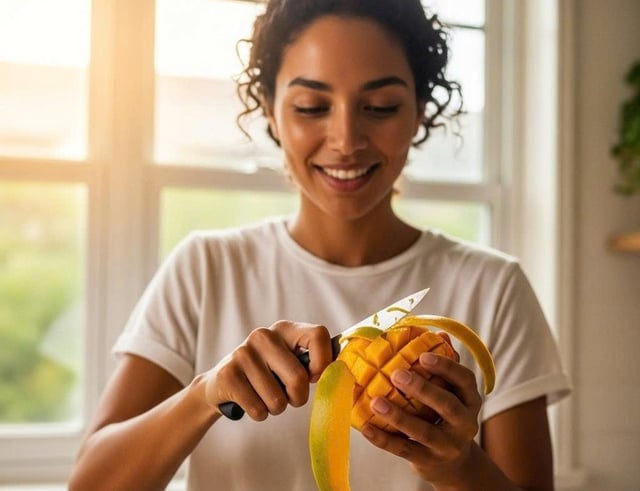
Mangoes have long been known for their numerous health benefits, thanks to their high content of antioxidants and fiber.
Photo: AI
Co-author, Dr. Roberta Holt, from the Department of Nutrition, University of California, said: “We chose mangoes because they are rich in nutrients, fiber, antioxidants, and bioactive compounds that support cardiovascular health. Previous studies have shown that mango consumption has a positive impact on blood pressure and lipid control.”
Dr. Holt added: "Postmenopausal women are at particularly high risk for cardiovascular disease, and we wanted to see if eating mangoes daily could make a significant difference."
Participants were given 330 grams of mango daily for two weeks, equivalent to one large mango. They also had their blood pressure measured and underwent tests to check cholesterol and other indicators.
The results revealed that eating mangoes daily for two weeks offered several unexpected benefits, including:
Significantly reduces blood pressure.
Researchers found that two hours after eating mangoes, participants experienced a reduction of approximately 6 mmHg in systolic blood pressure and a 2.3 mmHg reduction in mean arterial pressure. Study author, Dr. Robert M. Hackman, from the Department of Nutrition at the University of California, explained: "This small reduction helps lower the risk of heart disease and stroke over time. This is encouraging news, suggesting that eating mangoes daily may significantly support cardiovascular health."

Eating mangoes daily helps lower blood pressure.
Photo: AI
Lower bad cholesterol levels.
Participants also saw reductions in both total cholesterol and bad cholesterol – by about 13 points. Dr. Roberta Holt stated: "Although the reduction is modest, it could have a positive long-term impact on cardiovascular health. The fact that mangoes yielded these results after only two weeks of consumption suggests this could be a simple way to better control cholesterol, especially in postmenopausal women."
Regulates glucose and insulin responses.
Additionally, researchers found that mangoes caused a smaller and faster return to normal blood sugar levels compared to eating bread.
Dr. Holt explains: This is important because sudden or prolonged spikes in blood sugar can increase the risk of insulin resistance over time. Mangoes, with their fiber and bioactive compounds, can help slow this response, making them a viable option for blood sugar control.
Dr. Lauri Wright, director of the nutrition program at the University of South Florida School of Public Health (USA), although not involved in the study, described it as a "fascinating study."
This study suggests that mangoes, already well-known for their antioxidants and fiber, may also support vascular health in postmenopausal women.
Dr. Lauri concluded that mangoes can be enjoyed as part of a whole, varied diet rich in fruits and vegetables.
Source: https://thanhnien.vn/loai-qua-ngon-ngot-khong-ngo-giam-ca-mo-mau-huyet-ap-cao-185250616160345815.htm































































































Comment (0)