|
Pằng's family was very poor. Her father went to work as a laborer across the border and hadn't returned for ten years. Her mother toiled tirelessly just to provide food and clothing for her four young children. Pằng was the eldest child; she only finished fifth grade before staying home to help her mother work in the fields and take care of her younger siblings.
At sixteen, Pằng's mother sent her to the city to learn tailoring. Skilled and quick-witted, after two years she returned to the village and became a renowned seamstress. Moreover, Pằng was beautiful, so many customers from near and far came to order her clothes. The lives of the five of them gradually overcame their difficulties. Marriage, if considered a woman's second birth, seemed to bring Pằng more luck this time.
Peng's family is financially stable. Peng has both parents and grandparents. Above her is an older brother who is married and lives in his own house. Below her is a younger sister who is also married. The only thing that saddens Peng is the open dislike she faces from her mother-in-law since she got married.
Six months after their wedding, the couple moved into their own house, just as Pằng had wished, on the condition that they take care of everything themselves. The place where Pằng and his wife built their house was on a hillside, below the entrance to the Wind Cave.
The house overlooked the Bun stream and the vast valley. Long ago, it had been a small village there. But because no one could bear the howling wind, they left one by one. That place used to be Peng's cornfield. If corn could grow, then people could live there. That's how simply Peng thought.
Only after moving out on their own did the young couple realize the immense difficulties that befell them, and no matter which side they tried to protect themselves from, they couldn't. Pằng was pregnant and couldn't sit at the sewing machine continuously, so she couldn't work as a seamstress either.
Working from home in a remote location meant no customers came. The debt from the house loan was like a termite mound under the bed. It made Pằng's dreams precarious and strained the relationship between the couple, like adding more water to a bowl of soup.
On the day Pằng gave birth, her in-laws came to the health center to see their grandchild only as a formality. Their gazes at the newborn baby boy were fleeting, like a gentle breeze rustling through young leaves, before they left. Pằng felt incredibly hurt but didn't dare let her husband see her tears. It was considered taboo for a woman to cry during childbirth.
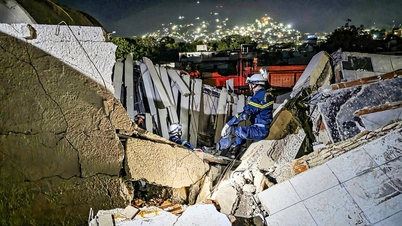
That day, in mid-September, when his son was three months old, Peng carried him to his mother's house for a visit. He didn't go with his wife and child; he went to his uncle's house for some business. That evening, Peng frantically called his wife to tell her that a landslide had occurred. Their house had been swept away into the Bun stream. Their newly built house, less than a year old, was completely buried under mud and debris.
For an entire month, the people of this region lived in constant anxiety, afraid to sleep soundly at night for fear of a sudden landslide. Up close, the eroded mountain slopes looked like brutal, crimson gashes. From afar, the undulating mountains, marked by hundreds of furious claw marks from the earth and sky in their rage, resembled a deliberately painted picture. Everywhere was devastated by landslides and flash floods, leaving behind tragic deaths and homes.
After calming down, Pằng hurriedly carried her child back home. The muddy stream roared and thrashed like a wounded giant python. The wind had knocked down all the trees, leaving the mouth of the Wind Cave bare and gaping like a strangled beast, revealing the stalactite columns that resembled dull, yellowish fangs. The ground beneath the cave entrance had almost completely eroded.
The rain continued to pour down. Pằng carried her child back to the village of Bun, bowing her head in remorse. The twenty-year-old daughter-in-law knew that from now on, she had no right to demand to live separately anymore.
Peng followed the other young men from the village to the lowlands to work as a laborer. Pang stayed home, tending the fields and taking care of the children. One night, while getting up to go to the kitchen to get hot water to make milk for her child, Pang passed by her parents-in-law's bedroom door and accidentally overheard their conversation.
The father-in-law's voice murmured, "People in this world, we're not related by blood, yet they love our children and grandchildren so much. They give us clothes, rice, even money to buy piglets to raise. So why do we hate our own children?" The mother-in-law grumbled.
He was the one who convinced me to let her move out so that mother and daughter wouldn't clash. Now he's calling me cruel. He says I'm the kind of daughter-in-law who, seeing her parents-in-law sick, encourages her husband to move out so she doesn't have to take care of them. Then, in times of trouble, she brings her child back here, without any shame. If you truly love your son, you should treat your daughter-in-law well. They're going to live together for life, not with you.
Pằng felt relieved. At least, in this house, there were people who cared for her and defended her. Day after day, carrying her child on her back, Pằng tilled the land, planted a garden of cabbage and kohlrabi, and raised five pigs. With the money donated by philanthropists and the government, Pằng didn't dare spend a single penny, saving it all to buy ducklings to raise.
Pằng wanted to buy a new sewing machine but didn't have enough money. She didn't dare ask Peng for help. Tet (Lunar New Year) was only four market days away. The mountain peach blossoms were beginning to appear. But, her mother-in-law said that the whole Pờ Sì Ngài region wasn't celebrating Tet this year, so nobody was doing any sewing.
Peng returned unexpectedly. He said he was back from this trip and would be working until Tet (Lunar New Year). Taking advantage of her husband's good mood, Pang asked him to take her to see an old sewing machine in the neighboring village. She even showed him her hand, with its fingertips bruised purple from needle pricks, so he would know how painful it was to sew clothes by hand, especially on thick fabric.
Unexpectedly, Peng roughly pushed Pằng's hand away from his thigh. "If you don't demand to live separately, will you lose your house? Now I have to work hard to earn money to pay off the debt, and you're still not satisfied?" Pằng withdrew her hand, firmly. "The landslide wasn't my fault, was it? Hundreds of people will never be able to go home for the Lunar New Year with their families; was that their choice?" Peng glared at his wife. "You're very good at arguing now. Go find a better place to live; I can't afford it."
Her husband's words sent shivers down Pằng's spine. In the vast ocean of life, how could Pằng have been so moved by Peng's flute playing that she poured all her love into it? It wasn't until the day the other family came to ask for her hand in marriage that Pằng learned that Peng's father had once been her mother's fiancé and the unfaithful man her mother had told her about.
It turns out that this world isn't so vast, and these mountains and forests can't forever conceal human secrets. Peng's days at work, the distance between them, were understandable. But, the fire is so close yet the straw doesn't catch, remaining cold and lifeless. What is there to regret?


The day went by, and when evening came and Pằng didn't come home, Peng suddenly felt scared. He called her and found out she hadn't brought her phone. She must have gone back to her mother's house. But if he went to pick her up now, wouldn't Pằng become even more overbearing?
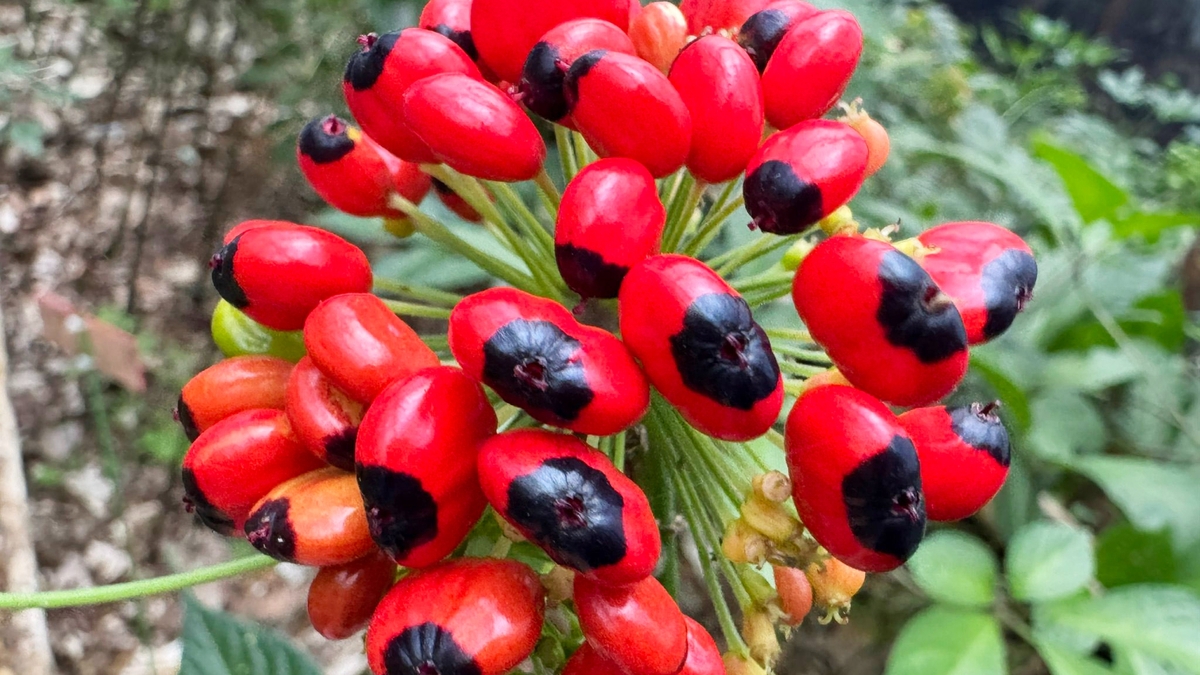
At midnight, hearing Pao's faint cries, Peng woke up with a start, went out into the yard, and listened intently. He heard nothing. Suddenly, the image of the poisonous plant, *Gelsemium elegans*, flashed through Peng's mind. He felt as if someone was pressing down on his chest, suffocating him. If anything happened to his wife and child, how would he live?
But, with the baby still breastfeeding, surely Pằng wouldn't do anything foolish. Pằng is gentle, hardworking, beautiful, and skillful; so many men are infatuated with her, but Pằng chose Peng, her first love. And yet, Peng treats his wife like this. Just to please his mother. A twenty-five-year-old man, strong and capable, yet he opens his mouth to say he can't provide for his wife and child, telling her to go find a better place to live.
It was terrible. Peng tormented himself with self-reproach until morning. While the chicken was still drowsily sleeping under the gourd trellis, Peng took his motorbike out, rode to town, bought his wife a new sewing machine, and brought it back home. Seeing this gift, Peng must have been overjoyed.
Peng brought the sewing machine home but didn't see anyone return, so he sped to his mother-in-law's house in the village above. But when he arrived, he didn't see his wife and child, and his hands and feet went cold. The woman, who had married and had children late in life and was already frail from hard work, collapsed, clutching her chest, upon hearing that her daughter had taken the child away the previous morning and that her son-in-law hadn't gone to look for them immediately.
Peng hurriedly helped his mother-in-law up. But she pushed his hand away, choking back tears. She knew it all along; you can't plaster a wall with mud. No matter how kind he was, he was still the son of a treacherous man. Peng's face turned pale as he sped away from his mother-in-law's house. Peng's siblings, hearing that their sister had run away with her child, burst into tears and frantically split up to search for her.
Peng trudged home after a long day of searching. He pictured Pằng leaning her head against her new sewing machine. Pằng was as beautiful and radiant as a wildflower in the morning, just like her name suggested. Why did Peng only now realize that Pằng was at her most beautiful when she sat by the sewing machine?
Peng imagined the gentle rustling sound of the needle threading through the linen fabric. He imagined Pang pursing her lips, squinting, her delicate hands spinning the thin thread. All of Peng's imaginations were now mere illusions. Then Peng suddenly thought, perhaps Pang should carry her child back to that place?
From afar, Peng saw the scar on the mountain covered in the lush green of tender young corn. It was corn that Peng had grown and had once shown Peng, but he hadn't paid attention. Peng looked down at the stream bank and saw a figure bustling about in the muddy ground, as if searching for something. Approaching closer, he saw his wife had dug a large, deep hole and brought to the surface a sewing machine, a wedding gift from his mother to her daughter when she got married.
Pằng was using a stiff stick to scrape away the mud that had accumulated on the machine's body. Just three months after leaving Pằng's hands, the sewing machine was in such a state. The table was broken, the belt was missing. Their son was fast asleep on his mother's back. Pằng grasped his wife's mud-covered hand and urged her, "Let's go home."
Peng didn't even glance at the beautiful new sewing machine that he proudly placed near the window. Peng had returned to the industrial zone to continue working in the plywood factory.
On nights when he didn't work overtime, Peng would still call home to chat with his wife, but Pang responded to his enthusiasm with indifference and coldness. As a result, their conversations were disjointed, like undercooked rice porridge. The invisible chasm between them grew deeper and deeper.
One day, her sister-in-law and brother came home, loaded the new sewing machine Peng had bought for Pằng onto the car, secured it, and said nonchalantly, "If you don't want to use it, we'll borrow it to sew clothes for Tet." Pằng didn't say anything. She knew her mother-in-law had called them to come and get it.
With the machine gone, the space by the window became vast and empty. Pằng asked someone to fetch the mud-covered sewing machine from the stream and clean it thoroughly. Then she hired someone to build a new table, went to the market to buy belts and other parts to replace the damaged ones.
In less than two days, Pằng had repaired the sewing machine, a gift from her mother. She was once again engrossed in sewing. The light from the window was the most beautiful light, warming the desolate heart of a girl who hadn't yet fully savored the sweetness of youth before becoming a daughter-in-law, a mother, and being submerged in a bitter sea of resentment and revenge.
The light shone on every stitch, freeing Pằng from her worries. Who says you can forget by drinking? Pằng's father-in-law drank, and occasionally got drunk. But he never forgot anything. Every time he got drunk, he would look at Pằng affectionately, as if she were his own daughter.
His gaze made Peng feel both uncomfortable and warm inside. The struggle to break with the past tormented the four of them, leaving them exhausted. Peng, fearing his mother's displeasure, dared not express his feelings to his wife. Peng's father only dared to speak reasonably to his wife and kindly to his daughter-in-law when drunk. But drunken words often don't count. And Peng's mother was a fickle woman. If jealousy is considered a disease, then it's a disease for which there's no cure.
Pằng was busy sewing and embroidering. The rolls of linen fabric she displayed gradually shrank and disappeared. On the clothesline, long, shimmering linen garments hung neatly side by side, their scents blending together into a warm, comforting aroma—the scent of Tet (Vietnamese New Year). People came and took them one by one.
Tet was slowly approaching. Peng's colorful dress was finished and hanging on the edge of the coffin. Tonight, Peng would be going home. Her mother-in-law was very annoyed to see her daughter-in-law pacing back and forth so anxiously.
Peng arrived home just as the chickens were going to roost. She had a backpack full of clothes, a large bag of New Year's gifts, and a branch of peach blossoms, bright red like lipstick, which she'd bought in the town. Her mother-in-law gasped. "Oh, I heard the whole village isn't celebrating Tet this year. Why buy peach blossoms?"
Peng was surprised. "Mom, what's wrong? Those who left are gone, but those who remain must still live. Not celebrating Tet (Lunar New Year) is a sin against heaven and earth, against the spirits. How long has it been since you left the house? Try taking a walk around the village. Go, Mom, spring is coming, our village is so beautiful, it would be a shame not to celebrate Tet."
The mother-in-law looked at the father-in-law's face suspiciously and asked, "Are we still celebrating Tet this year, husband?" The father-in-law, holding his grandson in his arms, nodded. "Yes, we are." The mother-in-law panicked. "It's already the 26th of Tet, and I haven't prepared anything yet." The father-in-law scratched his ear. "Don't worry, ma'am. My son and I have everything ready. But I still don't have any new clothes. You're lucky, daughter-in-law."

"She's been sewing day and night for a whole month, and you didn't know? We have a skilled tailor, and we still have to worry about clothes." He then glanced at his daughter-in-law and chuckled softly.
He sadly recalled the day his daughter-in-law carried his grandson out of the house right in front of his son. He quickly ran to intercept her, persuading her to return via the back garden, towards the old house of his grandparents, Peng. Since the old couple had moved to the main house to enjoy time with their children and grandchildren, the old house had been locked and left unoccupied.
He took his daughter-in-law inside and told them to rest there. He would bring food. He locked the outer door, and if they wanted to go anywhere, they could open the side door. He said, "Being too gentle as a woman will only lead to your husband bullying you. When necessary, you should also know how to leave the house to scare him. Only when he's afraid of losing you will he worry about keeping you."
Sure enough, when Pang took the child away, both mother and daughter were thrown into a frenzy. They lost sleep and appetite. That's what they need to do to stop bullying their own children. In other people's homes, the child is treated like gold and silver, so why should they be treated like straw in their own home?
That evening, Pằng sat with her chin resting on the sewing machine table, lost in thought. Peng walked over, gently pulled his wife's head close to his chest, and, holding a vibrant red peach blossom, placed it in her hair and flattered her, "Whose wife is this beautiful?" Pằng shrugged, "I don't know."
Peng pleaded with his wife. "Tell me, where were you and our child that night?" Pang looked up at her husband, negotiating. "If I tell you, what will you give me?" Peng looked at his wife with the eyes of a lovesick man who had been hiding his feelings for so long. "I'll give you a gift that you'll definitely like." Pang blinked as if asking what kind of gift. Peng covered his wife's eyes with his hand and told her to stand up and follow him.
Peng led his wife out into the garden. He then removed his hand from her eyes and said, "Look. This is your gift." Peng rubbed her eyes and looked at the old, clean horse stable, brightly lit. Inside, a plump calf with glossy golden fur, a white collar, a twitching black nose, and wet, dark eyes stared at Peng strangely.
Pằng was surprised, almost disbelieving. "You're giving this to me? Really? Yes, I'm giving it to you. Soon, you'll have a whole herd of buffalo." Pằng hurried into the house, and a moment later ran out, carrying a steel bell collar with a green plastic tube around the outside. The bell itself, Pằng had somehow painted pink, looking very stylish. Carefully, Pằng put the bell collar around the calf's neck and affectionately caressed it: "This is your New Year's gift."
Peng looked at his wife, his heart overflowing with happiness. He recalled the day their new house was buried by a landslide; the two of them went to the market to buy some things, and Peng lingered around the stall selling bells, unwilling to leave.
From that moment, Peng had been thinking about a gift for his wife. He had been saving up for ages, and only today did he have enough money to buy it. Peng moved closer and further away, admiring the gift, then nodded in conclusion. "It's so cold, we definitely need a coat, my dear!"
Source: https://baothainguyen.vn/van-hoa/van-hoc-nghe-thuat/202602/luc-lac-hong-2d95169/