

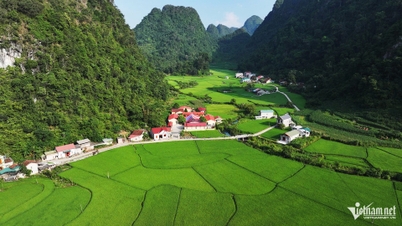
In the yard, the banana leaves that Grandma had planted were tattered and torn by the wind. Grandma had passed away six years ago, and Dad had died when Long was still young, so the house was quieter, but the memories were as crowded as an old, deserted market.
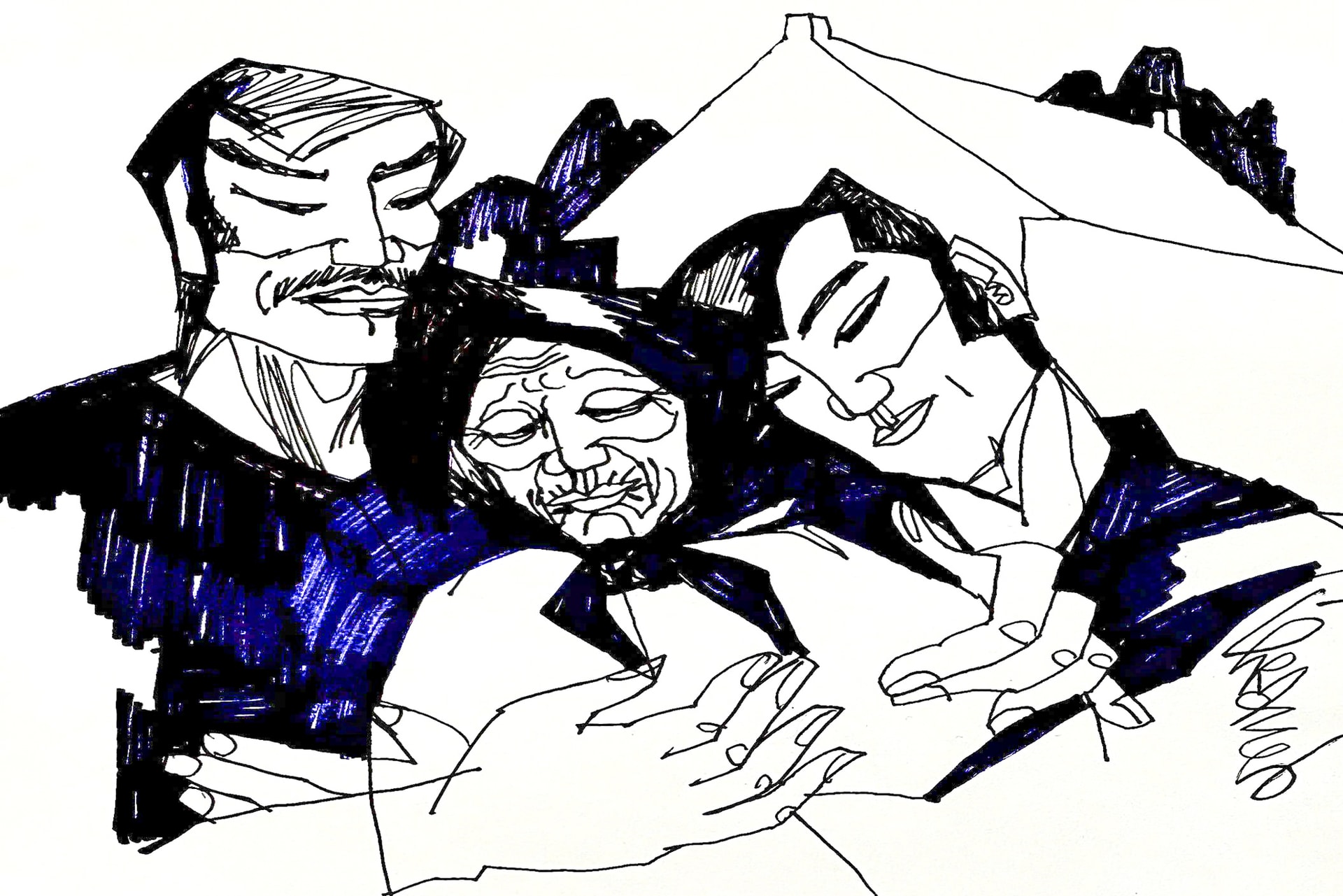
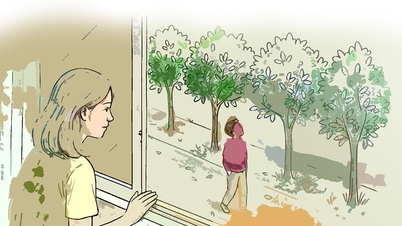
Long returned home after a night bus ride. The journey was not only long but also exhausting, a confession of his weariness. He was exhausted by the city, by his work, by the constant questioning, "Where am I going?". But as the bus turned onto the red dirt road, the pungent smell of dry straw and pond mud mingled, and he knew his heart had automatically switched back to "home mode."
Father is gone, but the hammock remains in the yard. The hammock, though its green canvas faded and its threads worn down to white, still hangs under the old mango tree at the end of the yard, where the wind rustles through the leaves, creating whispers. The hammock lies there like an unbroken trail of memory. Long always believed his father would follow the scent of the mango leaves and the rustling of the wind to return, lie down in the familiar hammock, close his eyes for a moment, then smile and wake him up to help him repair the fence, just like in the old afternoons.
Long was only ten years old when his father died. The funeral was crowded, but his mind was blank. He only thought of one thing: that no one should take away his father's hammock. He was afraid his father would return and not find it, that he would get lost. A child's fear is sometimes naive, but so genuine that adults, upon hearing it, would turn away, as if to hide the lump in their throats. From then on, the hammock became sacred. Every Tet (Lunar New Year), when the family cleaned, everyone avoided the hammock, walking around it and sweeping leaves more gently, as if making an unspoken agreement with the deceased. But this year, his older brother returned, and a different story began to unravel.
Long's older brother, Phúc, was eleven years older than him. Phúc left home early for work, got married early, and left his hometown early, like leaving an old train station. The station wasn't bad, it just no longer suited someone who wanted to go fast. Phúc rarely came home; when he did, it was always fleeting, like a passing breeze across the porch.
On the 27th day of the Lunar New Year, Phuc stood in the middle of the yard, but his gaze was fixed on every inch of land. He looked at the well, at the patch of water spinach by the ditch, at the cracks running along the wall like old, dried-up riverbeds. Then he uttered a sentence, not loudly, but like a hammer striking the heart of those who remained:
- Long, let's talk about dividing the house. Dad passed away without a will. Leaving the house empty is a waste. Let's sell it, each of us gets a share, simple!
The words fell onto the dry courtyard like pebbles, but echoed longer than a firecracker. Mother, who was busy sweeping the yard, suddenly stopped. The bamboo broom froze in mid-air, a few strands of bamboo falling onto the cement ground. She looked at Phuc, her eyes reddening, not from surprise, but from a pang of pain:
- Why would you say that, Phuc? Your mother is still alive. As long as I'm here, this house is a warm home. How miserable are you that you've come back demanding to sell the house?
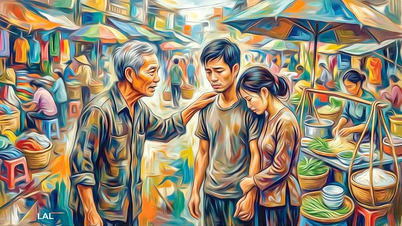
My mother's voice was choked, but not loud. The choked feeling of a country person isn't dramatic or forceful; it's a gnawing ache from within, like a river blocked but not overflowing its banks, only seeping into the earth, deeply soaking the heart.
Phuc was silent. But Phuc's silence was the silence of conflict, not of reconciliation. He wasn't irritable, but his tone was heavy:
- Mom, we understand you love the house and the memories. But the old house is cracked and dilapidated, and repairing it will cost a lot. Let's sell it, each of us will have capital to rebuild, and you can come live with us in the city.
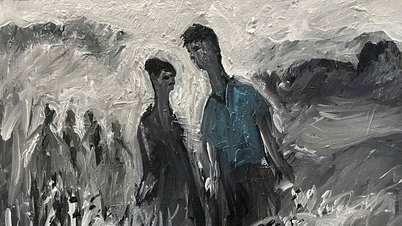
Long stood on the porch, still holding the cloth used to wipe the altar. Hearing this, he felt a tightness in his heart, like a hammock. A hammock, seemingly soft, but stretched too taut, can hurt the hand that touches it. He stepped down into the yard, his voice not loud, but clear like footsteps on a country road:
- Brother, are you selling the house because you're afraid of the cost of repairs, need capital more, or are you more afraid of losing your memories? Aren't you afraid you'll no longer see the place where you were once poor, small, and carefree under this roof?
Phuc looked at Long. Their eyes met like two ends of a hammock. One end pointed out to the vast ocean, the other anchored to the garden land. Neither was wrong, but if pulled to one side, the hammock would capsize, and the person lying in it would fall.
Phuc smirked, his nose twitching slightly. An outsider might think it was annoyance, but Long knew it was the awkwardness of someone caught between two conflicting selves.
- Long, you're all grown up now, you speak so eloquently. But when your father passed away, you were just a child, you didn't understand the burden of providing for the family that adults carry.
Long responded with a profoundly sad smile, as if looking at himself reflected in a crack in the wall:
- I was very young when my father passed away, but I remember every one of his belongings. I remember the hammock, its creaking sound, the shadow of the mango leaves cast on his chest. I kept the hammock so he would have something to lie on when he came home. And you, you want to sell the house, why don't you try going inside, check your memories and see if they're still there?
The arguing stopped abruptly. Phuc angrily pushed the door open and stormed out, heading somewhere unknown, and nobody wanted to stop him.
***
Long tidied up the altar by himself. Everything on it was old. The brass candlestick was tarnished, the incense burner set was slightly dented from a flood years ago. There was a black and white photograph of his grandparents taken in front of the house long ago, when the fence was still made of tea plants, not yet replaced with bricks.
Long decided to clean out the drawer under the altar where he and Phuc used to hide their toys as children. Back then, the drawer was a secret hideout. The younger ones hid candy and marbles; the older ones hid their dreams and the times they were scolded by their father but didn't dare argue. People often say the deeper the drawer, the darker it is, but for children, the deeper the drawer, the warmer it is, because secrets are kept safe, not blown away by the winds of life.
Long pulled open the drawer. A small tin box lay tucked away in the corner, covered in a thin layer of dust. He opened it, and colorful marbles rolled gently against the sides. A folded piece of paper lay underneath. The handwriting was slanted and old, but its meaning remained undimmed: "This land is ancestral land of our family. Don't sell it. As long as the family lives here, the land retains its spirit. If the land loses its spirit, the family will also lose their home in their hearts." There was no signature. But Long knew it was his father's handwriting.
Long sat down on the steps. His heart pounded. A child from long ago intended to give his father the most beautiful box of marbles to take to heaven. A grown man today intends to keep the box of marbles to hold onto the path back for his father and for himself.
Mother came out of the kitchen. The aroma of braised pork with eggs simmering gently in the pot was sweet yet salty, much like life itself. She looked at Long, then at the metal box in his hand, not understanding the specifics, but she had a rough idea of his feelings:
- What did you find, Long?
Long replied, his voice soft as low smoke, yet brimming with emotion like dew falling on the early morning riverbank:
- I'm trying to relive our memories, Mom.
***
As New Year's Eve approached, Phuc returned to the house and stood beside the hammock at the end of the yard. For the first time in many years, Phuc gently touched the hammock's ropes. Not to pull it down, but to feel the vibration. A gentle vibration, but enough for the person who had once lain there to realize they still belonged there. Long walked closer to Phuc and placed in his hand the tin box he had found while cleaning the altar.
Do you remember these marbles? My childhood is all in them.
Having said that, Long started to sit down next to his mother. Phuc's hands trembled as he stroked the tin box, then he gently turned to Long and his mother. Phuc was pensive for a long time, then he spoke, this time not with the harsh sound of a hammer, but with the sound of opening his heart:
- Mom, Long, don't sell this house. Let me repair the walls, patch up the cracks. Not because the cracks are gone, but because it deserves to be healed along with us brothers.
The mother, weeping, walked over and embraced Phuc with overflowing love:
- Now that you two are home, I don't need anything else.
Long looked at his mother, at his brother Phuc, at the hammock still intact under the mango tree, and then at the path of the monsoon wind blowing through the old door. He knew that cracks in the wall could be patched up, but cracks in a person's heart had to be listened to, touched, and called by name at the right time before they could heal themselves.
Perhaps, familial bonds never truly disappear; they remain in the gentle sway of the hammock, in the unspoken tears, in the box of marbles from a carefree time that adults thought they had forgotten. The house may not be new in time, but hearts have warmed up again. The Lunar New Year may lack fireworks, but the New Year's Eve is filled with laughter, creating a joyful reunion. And the hammock at the end of the yard, still in its original place, is the most fragile yet enduring bridge connecting those who leave and those who stay in this house.
Source: https://hanoimoi.vn/tham-nha-cuoi-chap-732721.html





























































Comment (0)