

Mark Zuckerberg shared the story of building Facebook from scratch 20 years ago at the Stripe Sessions conference. The former Harvard student said that back then, he had to do everything himself because technologies like AI didn't exist. He pointed out how AI can help founders focus on the core idea of their business.
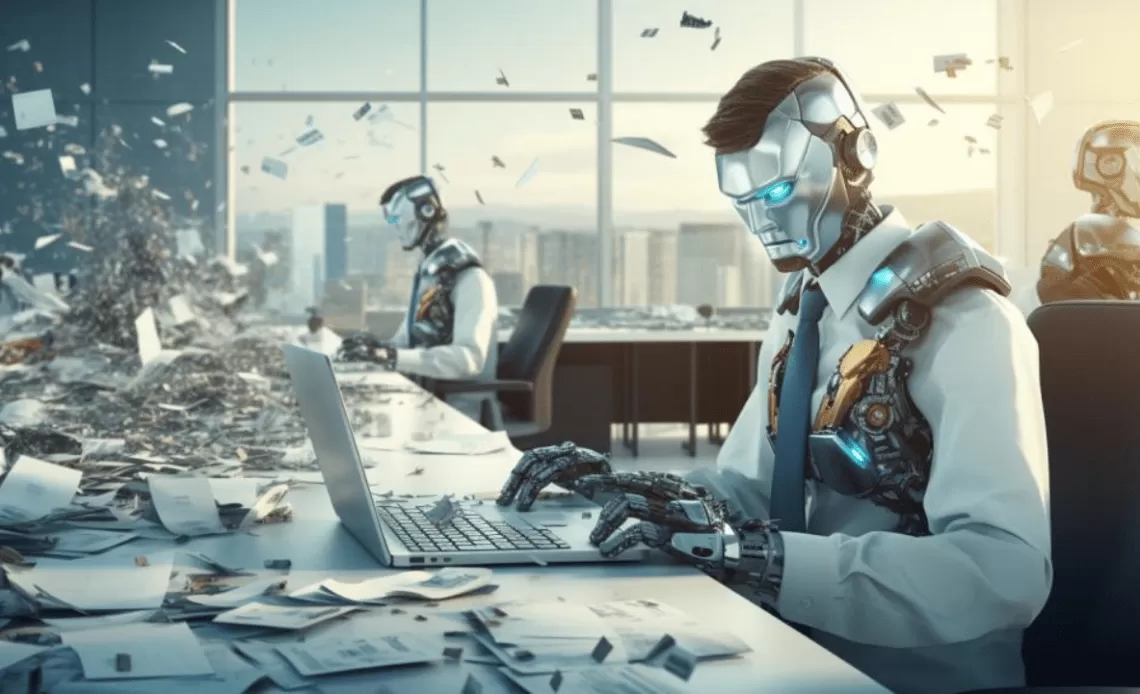
Earlier, Zuckerberg also spoke about the impact of AI on large companies, including Meta, in a podcast in January . "Perhaps by 2025, Meta, like other companies, will be using an AI equivalent to a mid-level engineer to program."
Of course, large language models (LLMs) cannot be fully trusted yet, and the removal of mid-level engineers could have serious consequences. Harry Law, an AI researcher at the University of Cambridge, calls ease of use a "double-edged sword." "Newcomers can make the process faster, but it prevents them from learning about system architecture or performance."
Over-reliance on AI in programming also makes scaling and debugging more difficult. "Security vulnerabilities can be missed if the code isn't properly evaluated," he said.
Nevertheless, companies are still looking for ways to apply AI more widely. In Silicon Valley, there's a growing trend called "Vibe Coding," a term coined by OpenAI co-founder Andrej Karpathy in early 2025.
In this process, he doesn't program; instead, he presents ideas to the AI, and it implements everything from start to finish. His job is simply to issue commands (prompts) and watch the AI work. Sometimes, the AI's programming capabilities even exceed his own, requiring him to ponder and analyze the process.
In an interview with CNBC in March, the CEO of Y Combinator also expressed a similar view, arguing that it helps startups stay lean because smaller engineering teams can work as effectively as 50-100 people.
Google CEO Sundar Pichai revealed in October 2024 that more than 25% of new code at the company is generated by AI. Humans play a role in testing. Using AI for programming drives efficiency and productivity at Google, he stated.
Recently, the CEO of Shopify required managers to demonstrate that AI could no longer improve before hiring additional staff. Meanwhile, in early February, OpenAI CEO Sam Altman predicted that programming would be significantly different by the end of this year.
Large tech companies like Google and Meta are leveraging AI to support, enhance, or replace employee tasks. This aligns with the efficiency goals that the tech industry has set in recent years.
Zuckerberg declared 2023 to be Meta's "effective year" and subsequently implemented multiple rounds of layoffs. Other companies also cut thousands of jobs as they focused on downsizing and eliminating their underperforming employees.
(According to Insider)

Source: https://vietnamnet.vn/mark-zuckerberg-ngam-xac-nhan-ai-dang-day-hang-nghin-ky-su-phan-mem-ra-duong-2400004.html

![[Photo] Prime Minister Pham Minh Chinh presides over a meeting on private sector economic development.](/_next/image?url=https%3A%2F%2Fvphoto.vietnam.vn%2Fthumb%2F1200x675%2Fvietnam%2Fresource%2FIMAGE%2F2025%2F12%2F20%2F1766237501876_thiet-ke-chua-co-ten-40-png.webp&w=3840&q=75)























































































Comment (0)