

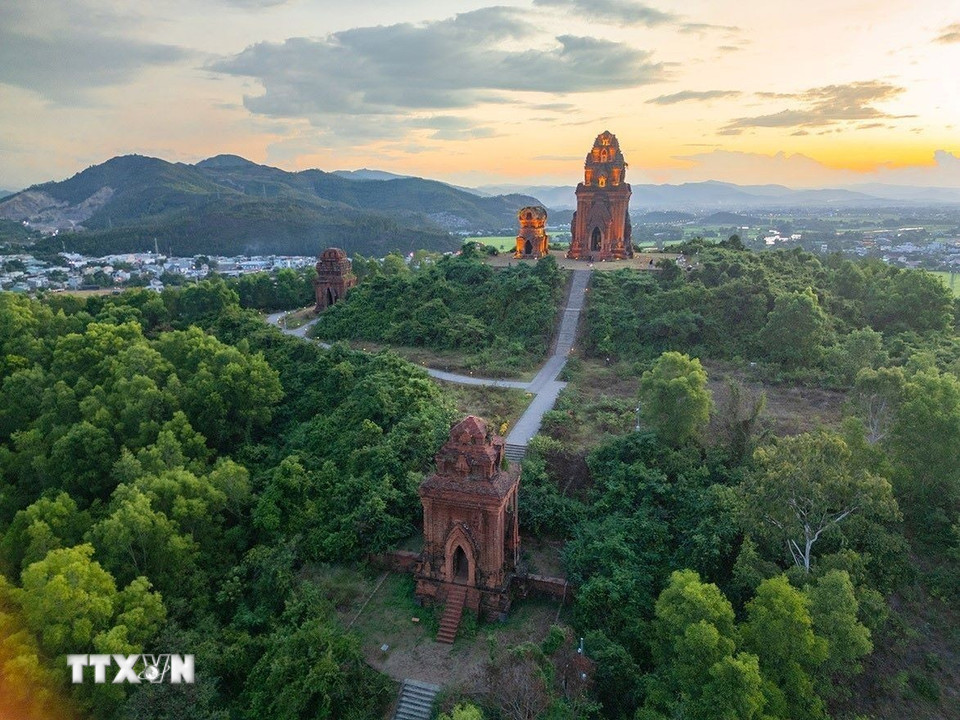
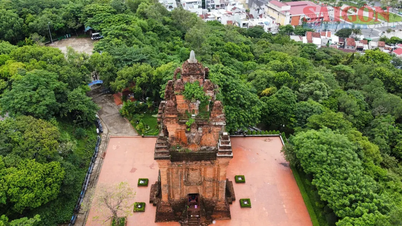
The Banh It Tower complex is located on a hilltop in Tuy Phuoc Bac commune, and consists of four different towers: the Main Tower (Kalan), the Gate Tower (Gopura), the Fire Tower (Kosagrha), and the Stele Tower (Posah). (Photo: Khanh Hoa / VNA)
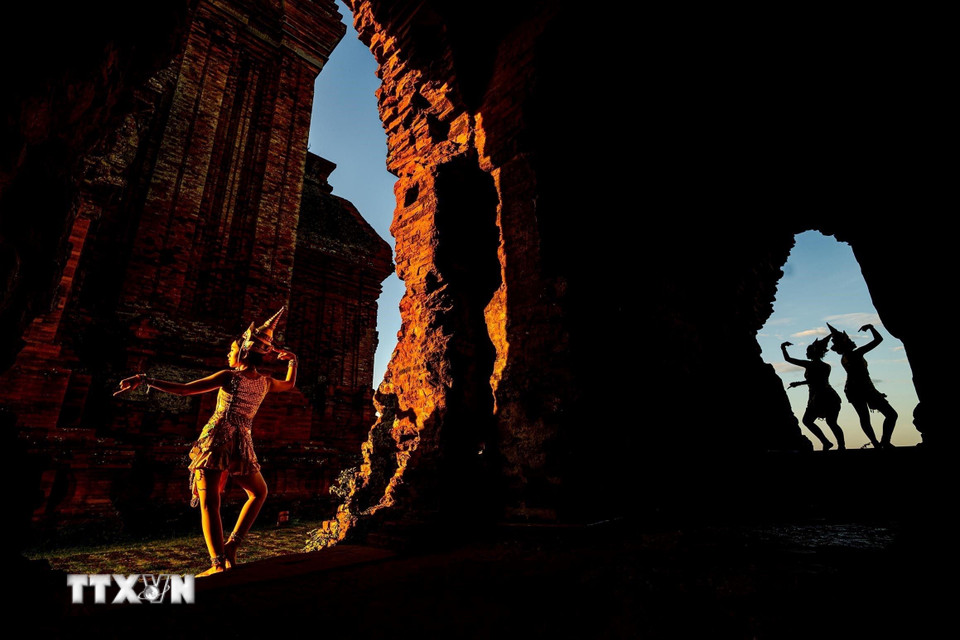
Banh It Tower has been the site of traditional Cham rituals for centuries. Although rituals are no longer held regularly at the tower, it still holds profound significance for the Cham community, as a symbol of the cultural heritage and spiritual values left by their ancestors. (Photo: Khanh Hoa/VNA)
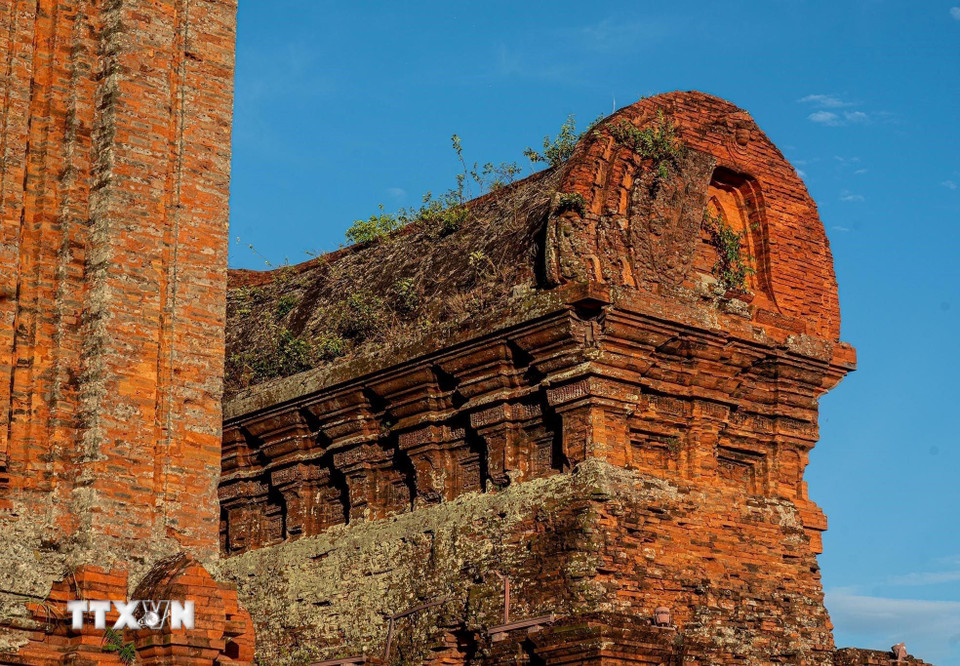
The exquisite architecture of the Banh It Tower is a testament to the sustainable construction techniques and high artistic skill of the ancient Cham people. (Photo: Khanh Hoa/VNA)
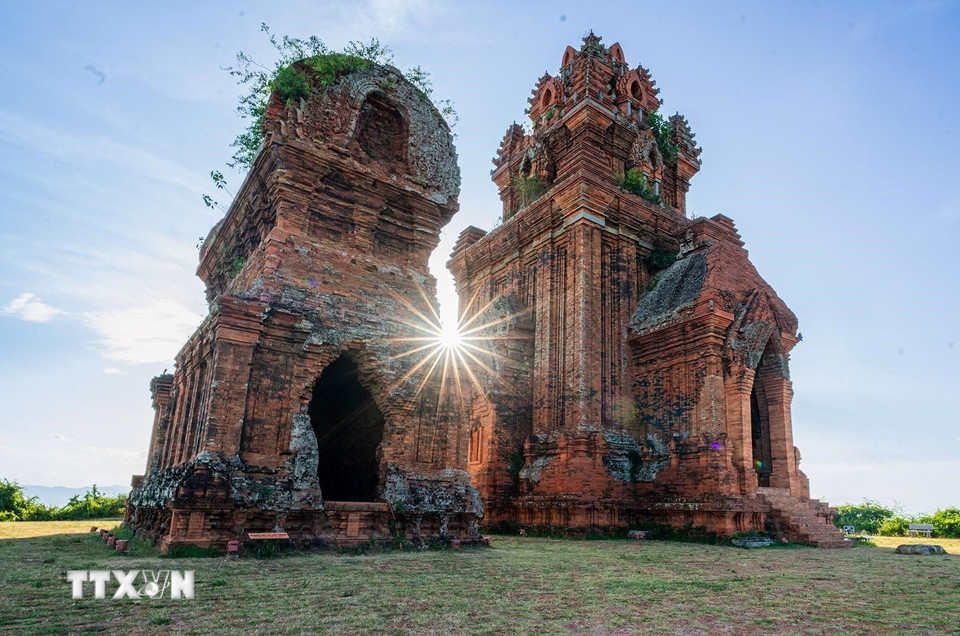
The Banh It Tower was built around the late 11th to early 12th centuries, during the flourishing period of the Champa kingdom. This was the time when Champa architecture reached its peak, clearly evident in its motifs, structure, and construction techniques. (Photo: Khanh Hoa/TTXVN)
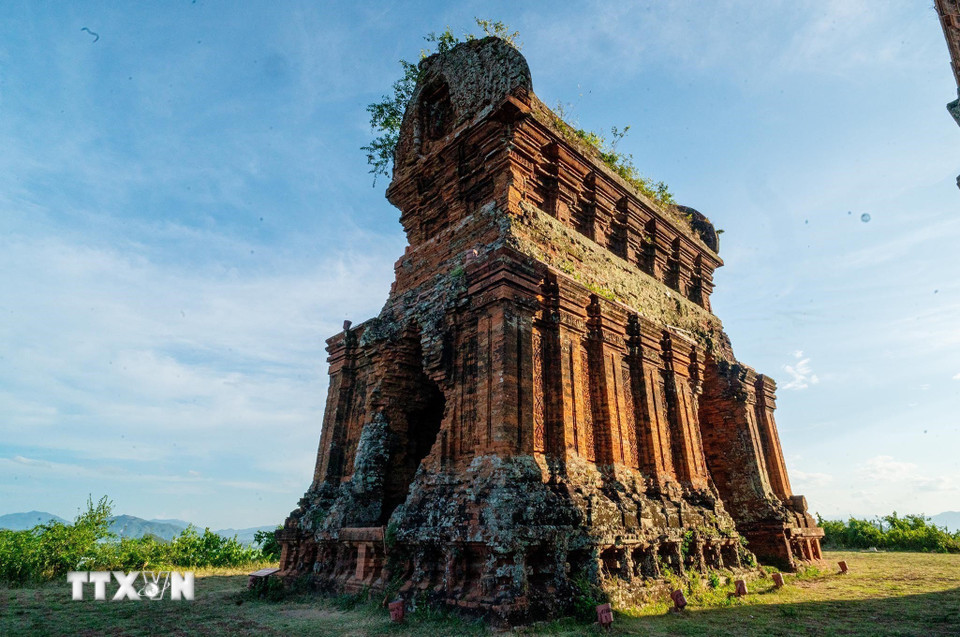
Kosagrha Tower has a rectangular structure, 10m high, 12m long, 5m wide, and 1.4m thick walls. This structure is also known as the Saddle Tower. (Photo: Khanh Hoa/VNA)
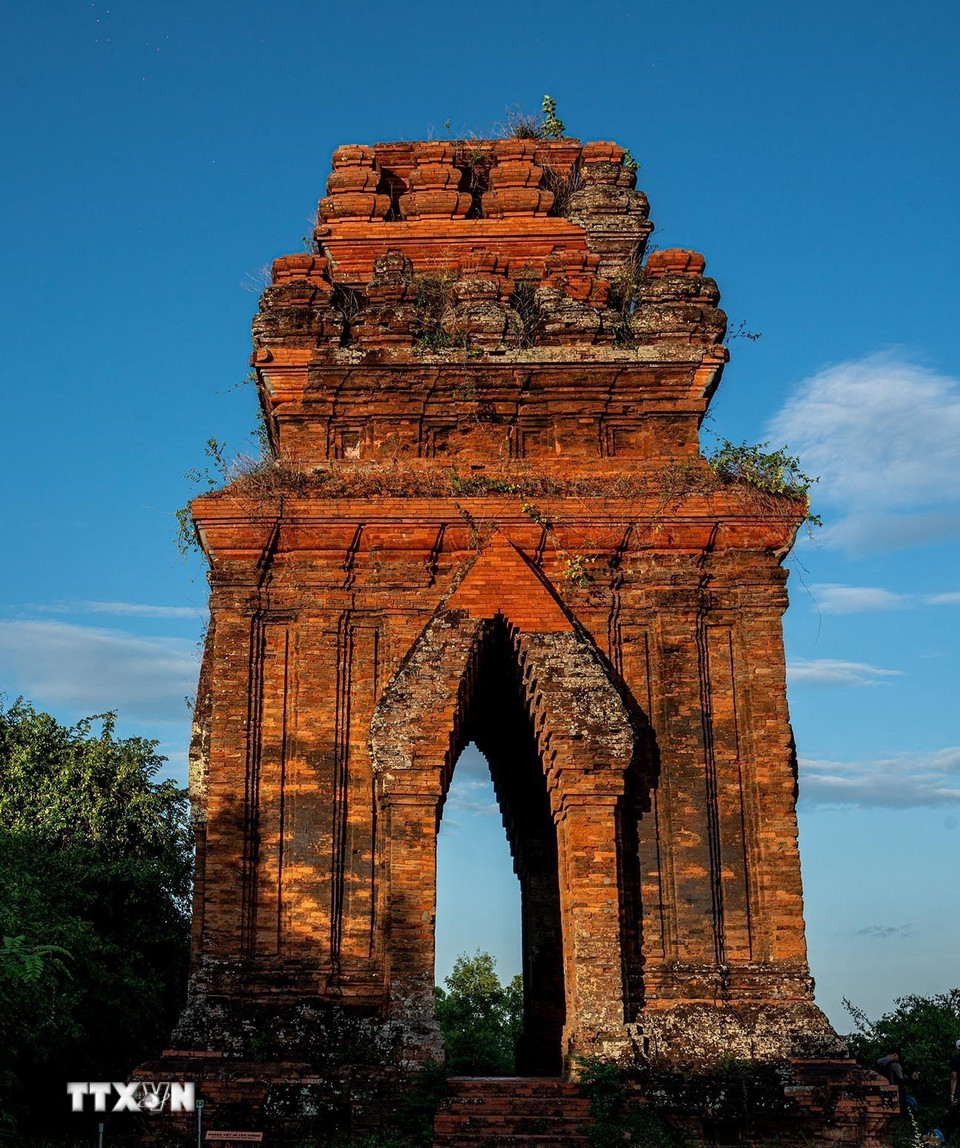
The Po Sah Tower. (Photo: Khanh Hoa/VNA)
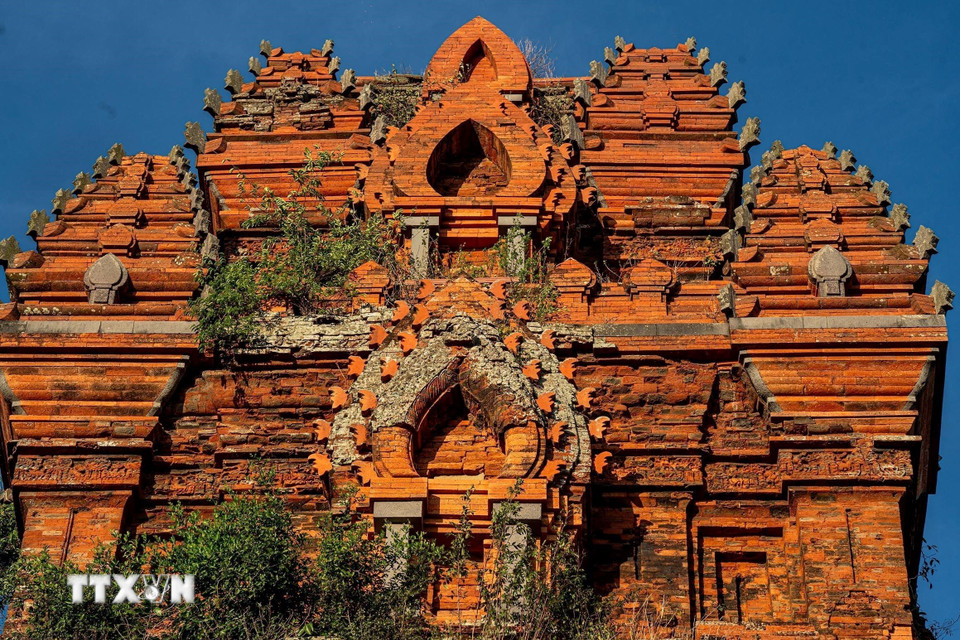
The exquisite architecture of the Banh It Tower is a testament to the sustainable construction techniques and high artistic skill of the ancient Cham people. (Photo: Khanh Hoa/VNA)
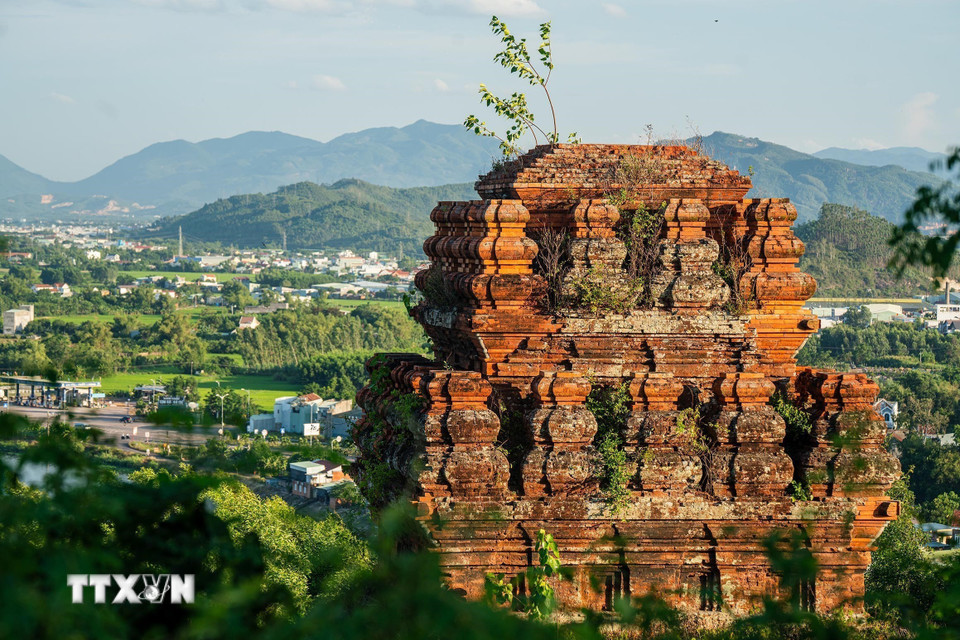
The Banh It Tower was built around the late 11th to early 12th centuries, during the flourishing period of the Champa kingdom. This was the time when Champa architecture reached its peak, clearly evident in its motifs, structure, and construction techniques. (Photo: Khanh Hoa/TTXVN)
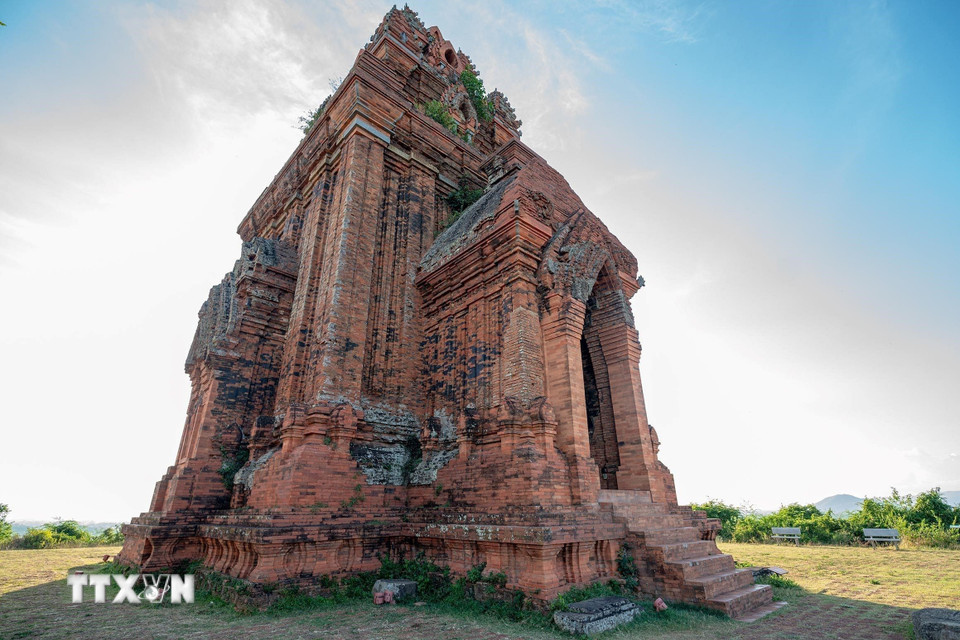
The main tower (Kalan) is located at the highest point on the hilltop, standing 29.6 meters tall. It has a square base with each side measuring 12 meters, and features a main entrance facing east and three false entrances. (Photo: Khanh Hoa/TTXVN)
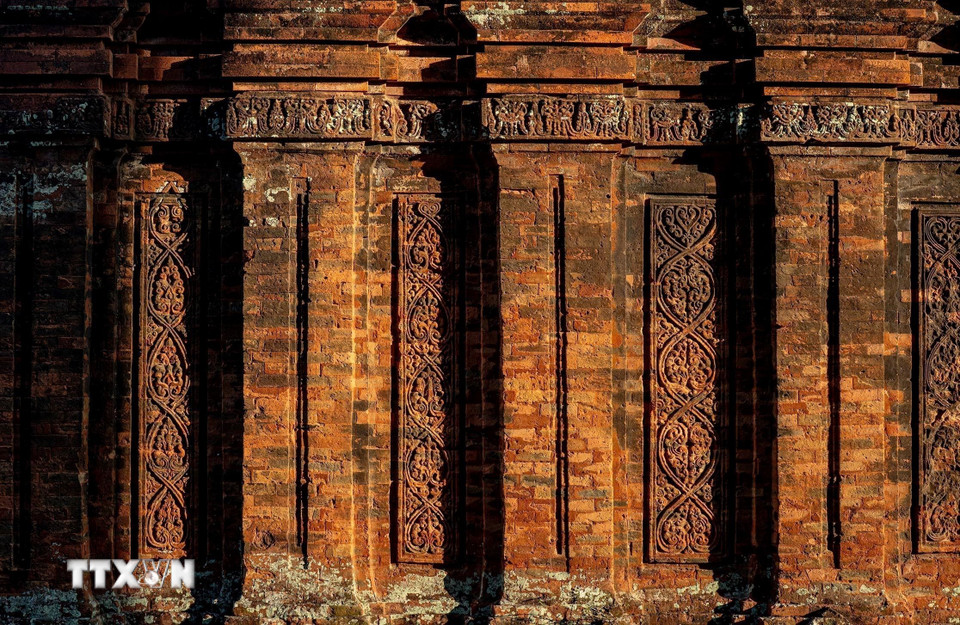
The exquisite architecture of the Banh It Tower is a testament to the sustainable construction techniques and high artistic skill of the ancient Cham people. (Photo: Khanh Hoa/VNA)
Vietnamplus.vn
Source: https://www.vietnamplus.vn/thap-banh-it-quan-the-kien-truc-van-hoa-dac-sac-cua-nguoi-cham-co-post1060511.vnp












![[Photo] Explore the US Navy's USS Robert Smalls warship](https://vphoto.vietnam.vn/thumb/402x226/vietnam/resource/IMAGE/2025/12/10/1765341533272_11212121-8303-jpg.webp)











![[Video] The craft of making Dong Ho folk paintings has been inscribed by UNESCO on the List of Crafts in Need of Urgent Safeguarding.](https://vphoto.vietnam.vn/thumb/402x226/vietnam/resource/IMAGE/2025/12/10/1765350246533_tranh-dong-ho-734-jpg.webp)

















































Comment (0)