

Shaping production according to market demands.
Inheriting his family's free-range chicken farming model, Mr. Nguyen Giang Tri (An Tuong commune, Gia Lai province) has successfully built the "Giang Nguyen Green Chicken" brand.
Instead of raising chickens for commercial purposes and chasing quantity as before, Mr. Tri is focusing on improving the quality of the chickens and investing in machinery and equipment for further processing.
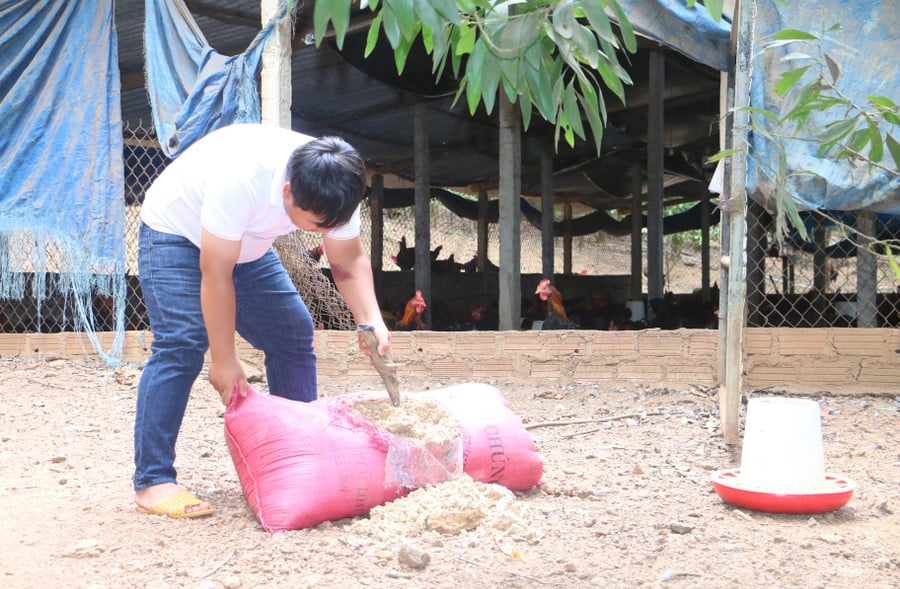
Mr. Tri raises his chickens free-range on the hills and feeds them natural foods such as beer residue, calcium-rich worms, and herbs.
Photo : Quang Tan
Spanning approximately 10 hectares, Mr. Tri's chicken farm currently raises around 30,000-40,000 chickens of various breeds in a staggered breeding cycle to meet the processing needs of his facility.
What makes "Giang Nguyen Green Chicken" special is that the chickens are raised naturally on open hillsides. Their diet consists mainly of brewer's yeast, green vegetables, calcium-rich insects, herbs, and absolutely no growth hormones are used. As a result, Giang Nguyen's chicken products consistently offer high quality, a distinctive aroma, and are highly favored by consumers.
“Previously, my farm mainly raised free-range chickens for commercial purposes, but the market was quite unstable, and profits were not high. Therefore, after researching market demand, I decided to invest in machinery and equipment to process and produce higher-quality chicken products. We currently have dried green chicken and green sugarcane chicken products that have been certified OCOP 3-star, and have been very well received by markets inside and outside the province,” Mr. Tri shared.
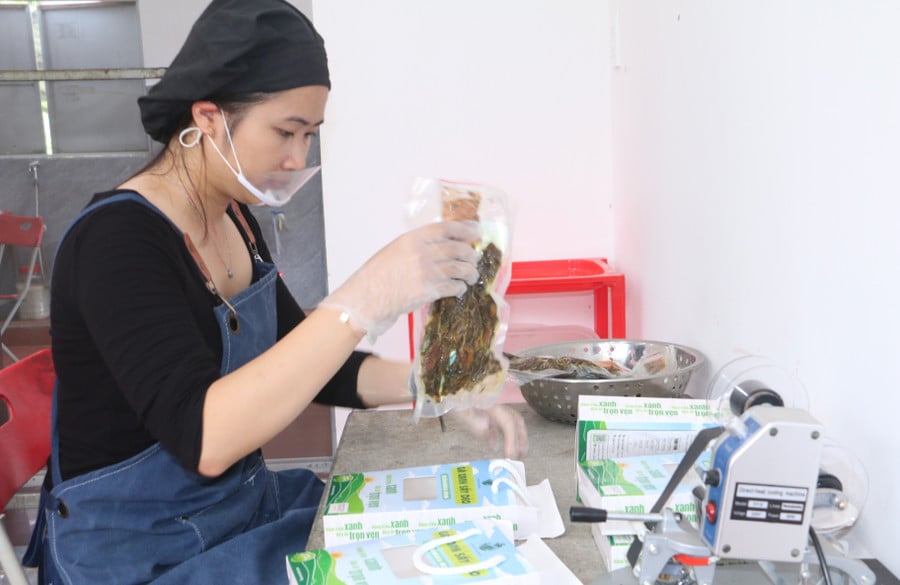
"Giang Nguyen Green Chicken" is gradually establishing itself in the market. Photo: Quang Tan
Besides successfully developing two products certified with 3-star OCOP, Mr. Tri is nurturing a new series of products, processed in depth using a closed-loop circular model, such as: chicken liver pate, chicken sausage, concentrated chicken bone broth…
Developing a product line from chicken not only helps increase income but also enhances the competitiveness of the "Giang Nguyen Green Chicken" brand. From providing employment for his family, Mr. Tri's facility now provides regular jobs for 5 local workers.
Similarly, Mr. Han Van Thanh's green pomelo orchard, with over 100 trees (Tan Thinh village, An Tuong commune), which is being cultivated according to VietGAP standards, is gradually building trust and establishing a foothold in the hearts of consumers near and far.
Mr. Thanh said: "To meet the increasing demands of customers, I cultivate all of my family's pomelo orchards according to VietGAP standards, limiting the use of chemical fertilizers and pesticides, prioritizing only the use of manure, organic fertilizers, and biological pesticides. The fruit is also carefully wrapped to prevent insect damage."
Thanks to this, Mr. Thanh's family's pomelo orchard consistently yields high productivity and good quality fruit, with fragrant, sweet, and juicy flesh... and traders always come directly to the orchard to place orders. On average, the family earns a profit of over 100 million VND per year from the pomelo orchard.
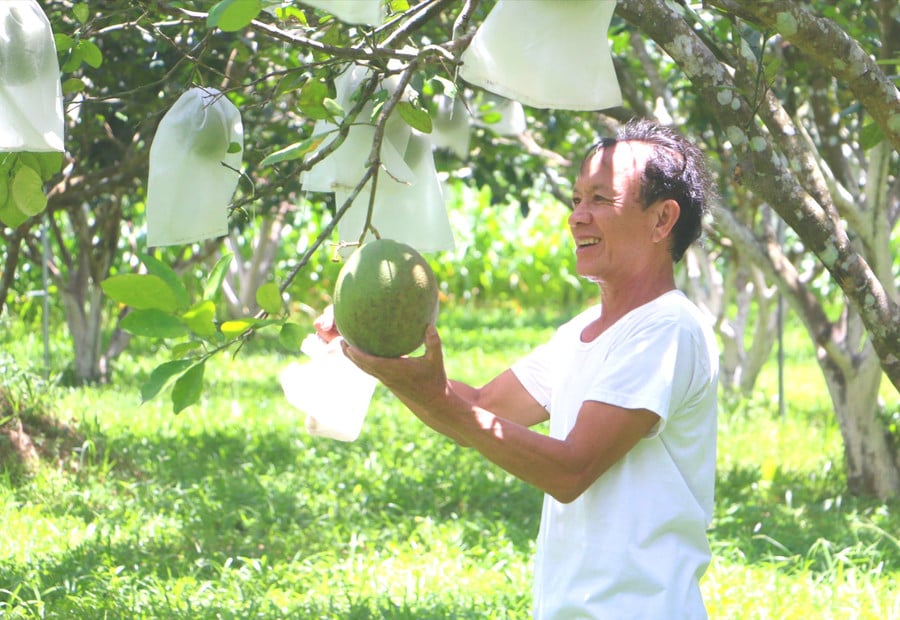
Mr. Han Van Thanh (Tan Thinh village, An Tuong commune) stands beside his pomelo orchard, which generates over 100 million VND in income for his family each year. Photo: Quang Tan
In Van Long village (An Hoa commune), Mr. and Mrs. Tran Quoc Thang have achieved success with their mulberry cultivation and silkworm farming model. After learning from several successful models in the commune, they converted 1 hectare of land previously used for growing corn along the An Lao river to mulberry cultivation and silkworm farming.
Thanks to the fertile alluvial soil, the introduction of high-quality mulberry varieties, and the application of water-saving irrigation technology, Mr. Thang consistently produces enough mulberry leaves to raise 2-3 boxes of silkworms each month. With the current selling price of 170,000 VND/kg of cocoons, his family earns an average of 15-20 million VND per month.
Mr. Thang excitedly said: “Since switching to mulberry cultivation and silkworm farming, my family's economic life has become more stable. This model doesn't require high technical skills, a large workforce, or much capital, but it has a very fast turnover and is more efficient than growing corn or beans... On average, it takes about 15 days to harvest cocoons. In the future, if conditions permit, I will expand the scale to improve my family's economic situation.”
Opening the way for sustainable agriculture.
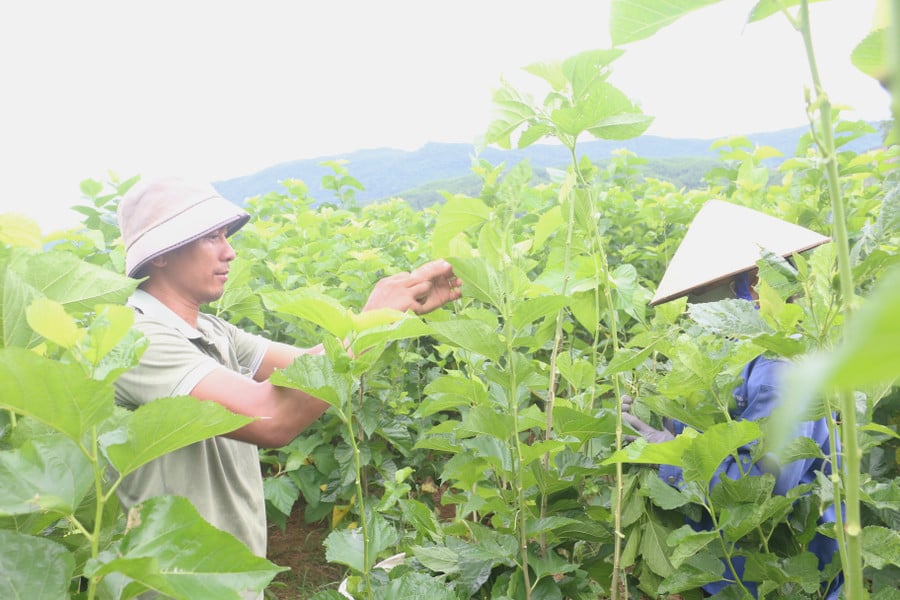
Since switching to mulberry cultivation and silkworm farming, the economic life of Mr. Tran Quoc Thang's family (Van Long village, An Hoa commune) has become increasingly stable. Photo: Quang Tan
According to Mr. Chau Van Hieu, Secretary of the Party Committee of An Hoa commune, the total area for mulberry cultivation and silkworm farming in the commune is currently about 30 hectares. Through surveys conducted among households, the commune has determined that this model yields higher efficiency compared to other crops in the area. Therefore, in the coming time, the commune will focus on restructuring the agricultural sector; including replanning the mulberry cultivation area and actively encouraging people to revive silkworm farming.
"The commune will also focus on supporting people in applying scientific and technological advancements to production, as well as calling for and creating favorable conditions for businesses inside and outside the province to participate in building a production chain linked to the stable consumption of silkworm cocoons for the people," Mr. Hieu affirmed.
According to the Secretary of the Party Committee of An Hoa commune, with its fertile land thanks to the alluvial deposits from the An Lao River, An Hoa is not only suitable for developing mulberry cultivation and silkworm farming but also for developing citrus fruit trees, rice paddies, forestry, and large-scale concentrated chicken and pig farming.
At the same time, if investment attraction is done well, processing plants are linked to concentrated raw material areas, and high technology is applied to production, it promises to create a breakthrough in the local economic development. This will help people increase their income, reduce poverty sustainably, and gradually promote sustainable socio-economic development during the 2025-2030 term.
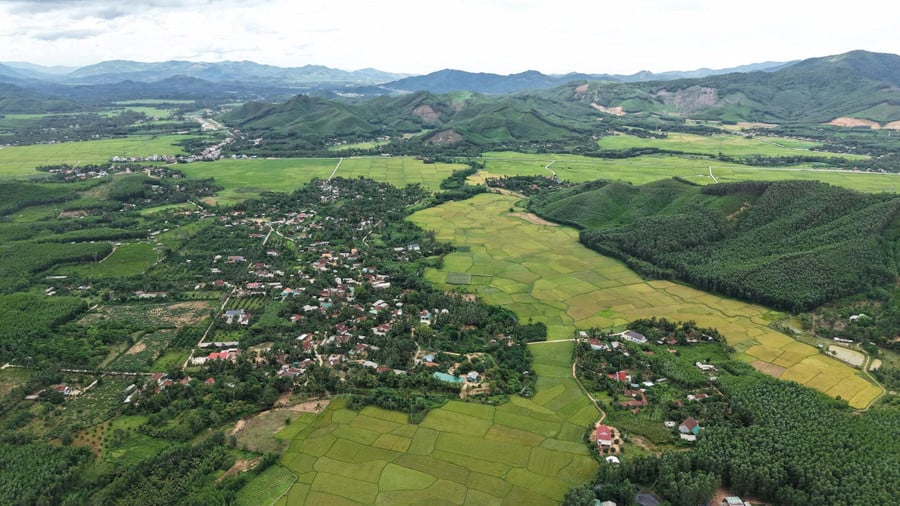
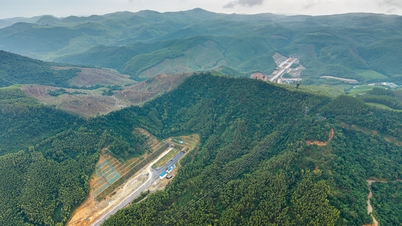
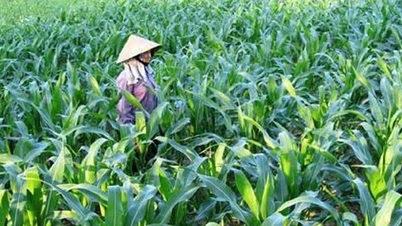
An Tuong has favorable land and climate for developing rice cultivation, citrus fruit trees, and large timber forests. Photo: Thanh Sang
Mr. Nguyen Van Tuan, Vice Chairman of the People's Committee of An Tuong Commune, said: The commune has great potential in terms of land and climate to develop agriculture with key crops such as rice, citrus fruit trees, planted forests, raising chickens, pigs, etc. In recent years, farmers in the area have gradually applied scientific and technical advances in cultivation and production according to standards to meet the increasing demands of the market.
“Models such as ‘Giang Nguyen Green Chicken’, black pig farming, VietGAP rice cultivation, and FSC-certified forest planting… are showing high economic efficiency and have great potential. The commune will aim to replicate and promote these models among the people, as well as build linkages connected to domestic and international markets,” Mr. Tuan said.
In particular, An Tuong commune is also focusing on attracting businesses with strong potential to invest in building large-scale raw material areas linked to processing plants and export markets, in order to create stable outlets for local agricultural and forestry products.
In addition, the commune will develop policies on investing in the application of high technology in production; support cooperatives and business households in the area to develop distinctive OCOP products to enhance product quality, expand markets, and aim for sustainable agricultural development.
The models in An Hoa and An Tuong show that when production is linked to market demand, technological advancements are applied, and deep processing is emphasized, farmers not only have stable incomes but also open up a sustainable path for local agriculture.
Source: https://baogialai.com.vn/san-xuat-nong-nghiep-gan-voi-thi-truong-hieu-qua-kep-post565833.html





![[Photo] Closing Ceremony of the 10th Session of the 15th National Assembly](/_next/image?url=https%3A%2F%2Fvphoto.vietnam.vn%2Fthumb%2F1200x675%2Fvietnam%2Fresource%2FIMAGE%2F2025%2F12%2F11%2F1765448959967_image-1437-jpg.webp&w=3840&q=75)




































![[OFFICIAL] MISA GROUP ANNOUNCES ITS PIONEERING BRAND POSITIONING IN BUILDING AGENTIC AI FOR BUSINESSES, HOUSEHOLDS, AND THE GOVERNMENT](https://vphoto.vietnam.vn/thumb/402x226/vietnam/resource/IMAGE/2025/12/11/1765444754256_agentic-ai_postfb-scaled.png)

































Comment (0)