

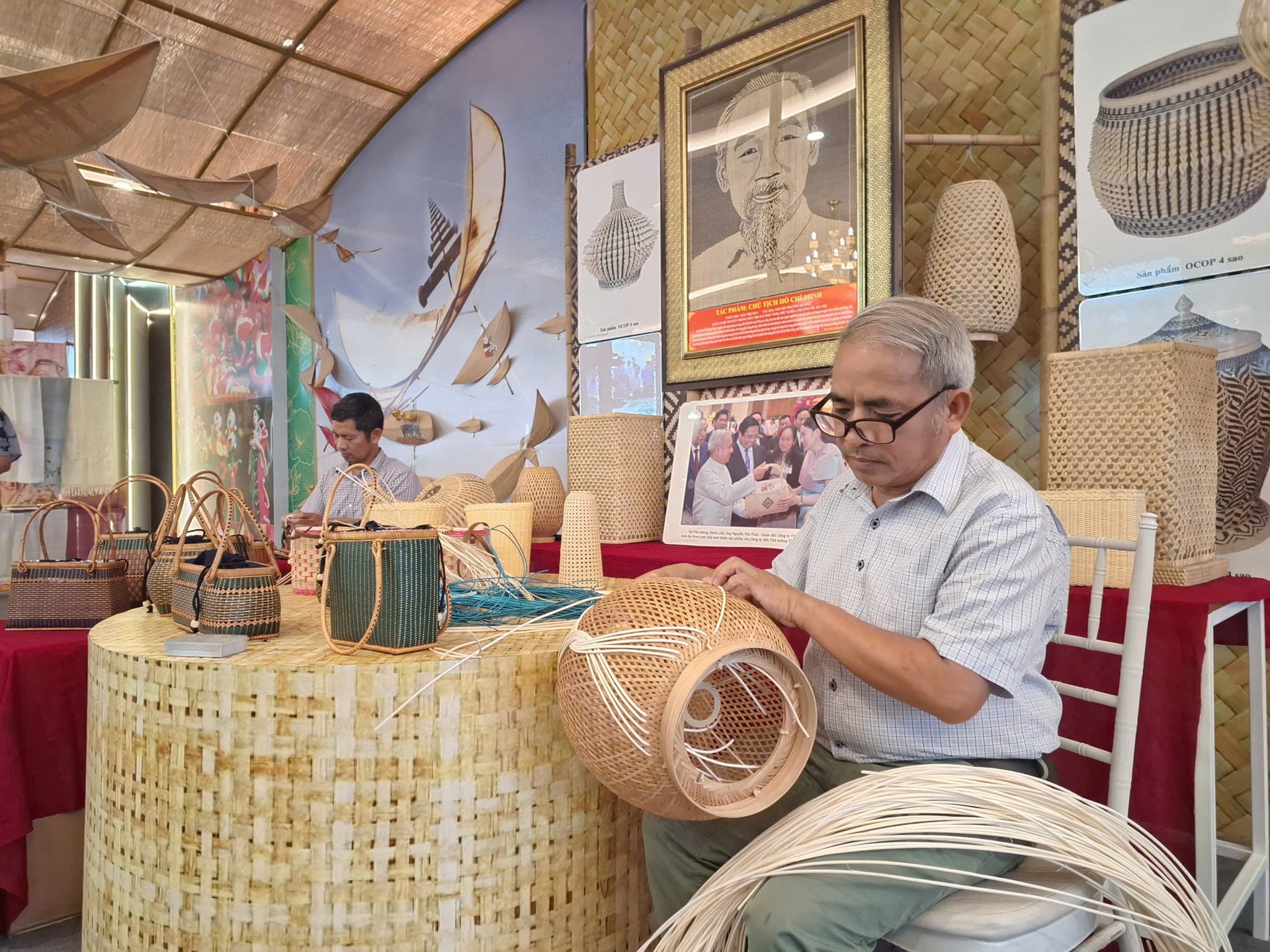
Handicrafts made from rattan and bamboo in Phu Nghia commune. Photo: Minh Phu
At the workshop, Chairman of the Vietnam Handicraft Village Association Trinh Quoc Dat affirmed that handicrafts are always among Vietnam's top 10 key export items with high added value. For every 1 million USD exported, these products generate profits 5-10 times higher than many other items, while imported raw materials only account for 3-3.5% of the export value. The industry creates jobs for more than 5 million rural workers and makes a significant contribution to the national foreign exchange market.
The recovery of the tourism industry, especially international tourism, has become a driving force for handicrafts, with many products being used as souvenirs and promoting Vietnamese culture. The trend of using natural materials and the increased demand for home decoration after the pandemic have also created further development opportunities.
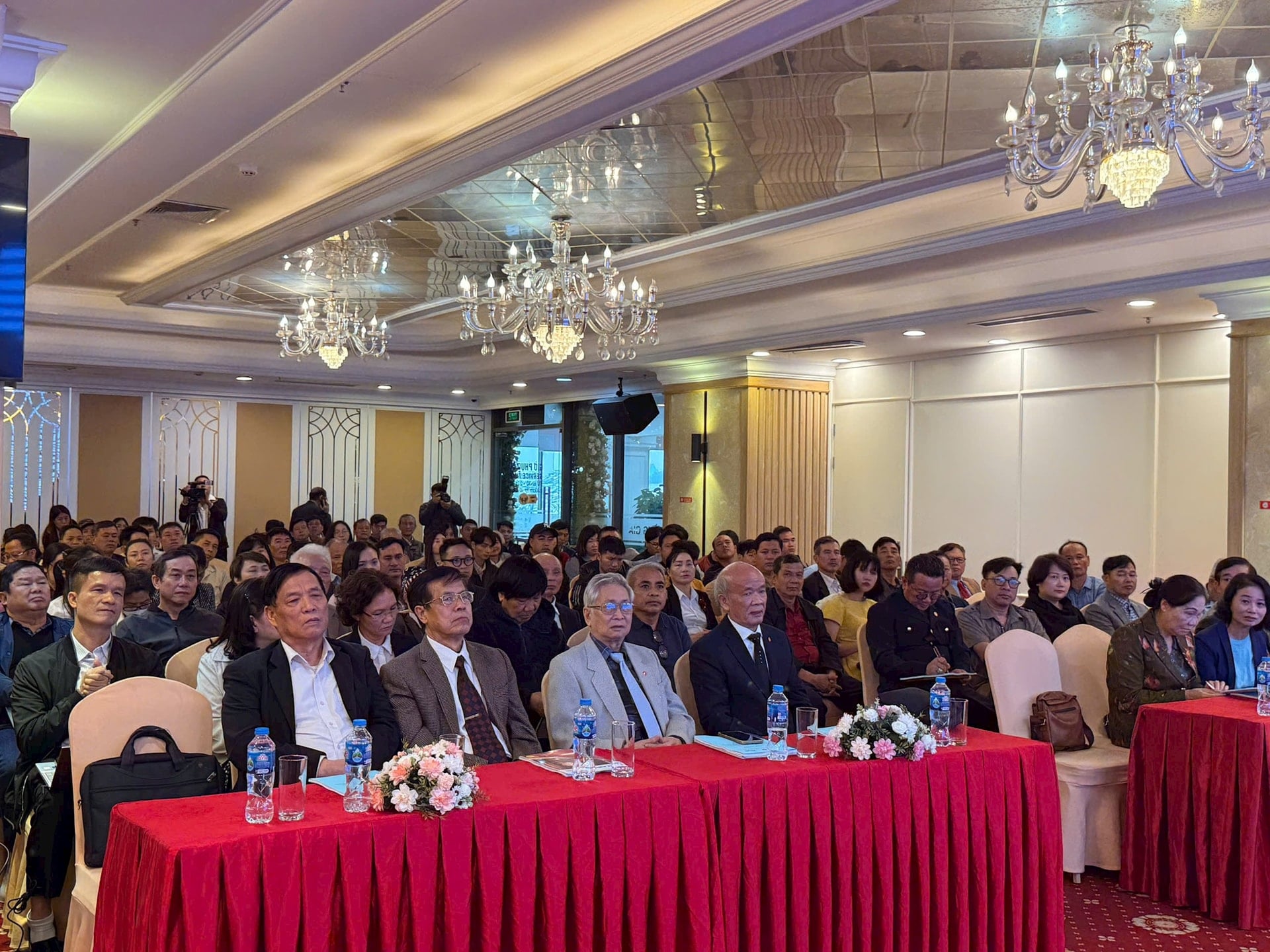
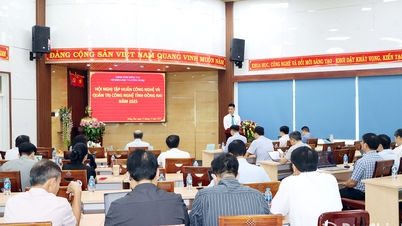
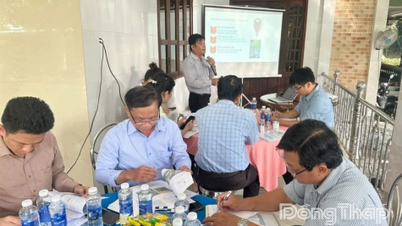
Delegates attending the workshop. Photo by Nguyen Van
However, according to Trinh Quoc Dat, Chairman of the Vietnam Handicraft Village Association, the industry still faces many challenges: small-scale establishments, spontaneous production by region, and lack of value chain linkages; limited design and innovation capabilities; ineffective exploitation of distribution channels and e-commerce; and inconsistent international standards, affecting competitiveness in demanding markets.
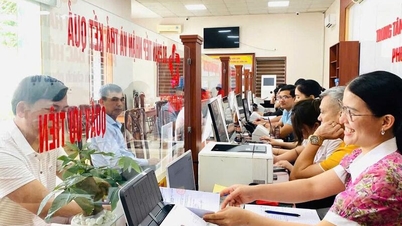
The workshop provided an opportunity for businesses and craft villages to exchange experiences and share solutions to enhance competitiveness and expand export markets. Representatives from the Ninh Binh Provincial Department of Industry and Trade stated that there are currently approximately 5,400 craft villages and villages with traditional crafts nationwide, with Ninh Binh province alone possessing over 250. Trade promotion activities play a crucial role in improving the competitiveness of businesses and rural industrial establishments in the handicraft sector. Effective implementation of trade promotion activities will help craft villages, businesses, and handicraft products access broader markets, increase sustainable economic value, and preserve the traditional cultural values of the locality.
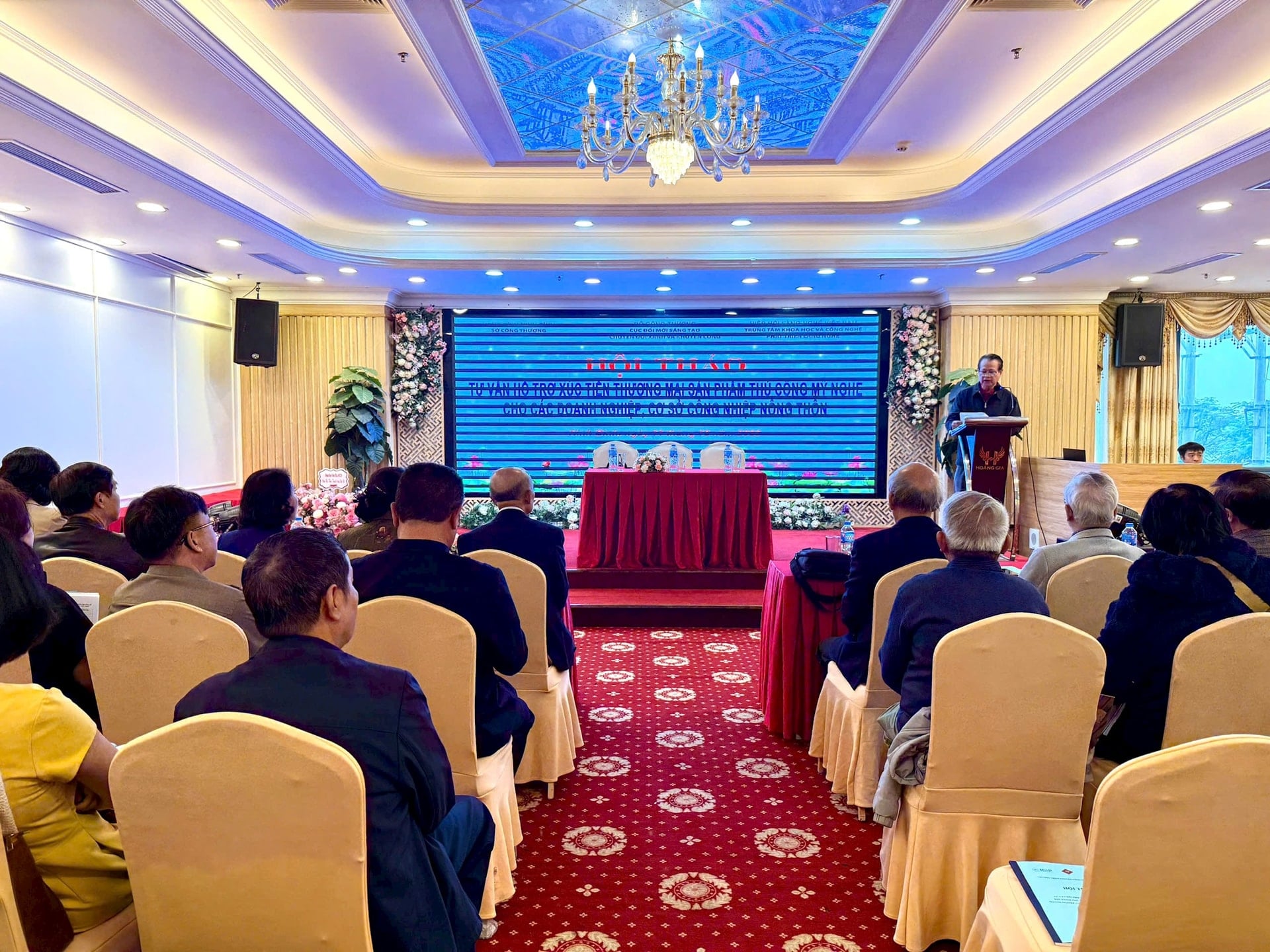
The scene at the seminar. Photo: Nguyen Van
According to Dr. Ton Gia Hoa, Vice President of the Vietnam Handicraft Village Association, to enhance competitiveness, it is necessary to rationally plan handicraft villages, develop brands, improve designs, and produce according to international standards. At the same time, mechanisms and policies need to provide comprehensive support from raw materials and production to trade promotion, combined with FTAs such as EVFTA, CPTPP, RCEP… to expand export opportunities.
Numerous experts and delegates agreed that policies in the coming period need to shift from subsidized support to strengthening core competencies and applying technology, focusing on breakthroughs in design and increasing added value; implementing trade promotion on digital platforms; and transparentizing tax and customs procedures to create a favorable business environment. This will help Vietnamese handicrafts affirm their true value, compete in the international market, and develop sustainably in the digital economy.
Source: https://hanoimoi.vn/tu-van-ho-tro-xuc-tien-thuong-mai-san-pham-thu-cong-my-nghe-726444.html

![[Photo] Closing Ceremony of the 10th Session of the 15th National Assembly](/_next/image?url=https%3A%2F%2Fvphoto.vietnam.vn%2Fthumb%2F1200x675%2Fvietnam%2Fresource%2FIMAGE%2F2025%2F12%2F11%2F1765448959967_image-1437-jpg.webp&w=3840&q=75)

![[Photo] Prime Minister Pham Minh Chinh holds a phone call with the CEO of Russia's Rosatom Corporation.](/_next/image?url=https%3A%2F%2Fvphoto.vietnam.vn%2Fthumb%2F1200x675%2Fvietnam%2Fresource%2FIMAGE%2F2025%2F12%2F11%2F1765464552365_dsc-5295-jpg.webp&w=3840&q=75)





































![[OFFICIAL] MISA GROUP ANNOUNCES ITS PIONEERING BRAND POSITIONING IN BUILDING AGENTIC AI FOR BUSINESSES, HOUSEHOLDS, AND THE GOVERNMENT](https://vphoto.vietnam.vn/thumb/402x226/vietnam/resource/IMAGE/2025/12/11/1765444754256_agentic-ai_postfb-scaled.png)











































Comment (0)