

Ignore the warning
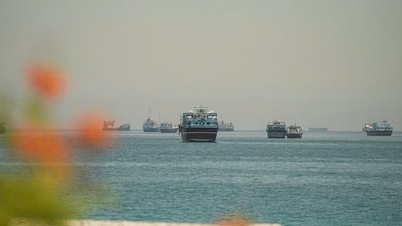
Since May 18th, the Persian Gulf Straits Administration has been in control of the situation in the Strait of Hormuz. This new agency was established by Iran's Supreme National Security Council and is responsible for overseeing compliance with Iranian-imposed maritime rules.
This agency was established in response to the naval blockade initiated by the US that began in April. The entire Strait of Hormuz, including its underwater infrastructure, is now considered by Iran to be part of its jurisdiction and strategic control.
However, even before the current escalation, discussions about an undersea internet cable in the Strait of Hormuz had been appearing in Iranian media.
This topic was first addressed in July 2019, in a broadcast on state-controlled IRIB television and radio.
At the time, one expert claimed that disruptions to the cables in the Strait of Hormuz could affect up to 70% of global internet traffic.
In 2019, Arab nations dismissed these warnings as Persian myths. But perhaps they were wrong.
The expert opinion issued in 2019 was not an official statement from the Iranian government regarding its intention to cut the cables. It pointed to the potential vulnerabilities of the cables in the Strait of Hormuz and the international implications of a significant escalation of regional tensions.
Thus, from that point on, Iran viewed the underwater digital infrastructure in the Strait of Hormuz as a potential tool for strategic leverage.
Is Iran ready to act?
Whether Iran is actually prepared to cut internet cables in the Strait of Hormuz should not be seen as an isolated technical issue, but as part of a broader Iranian strategy to exert pressure around this vital waterway.
For Iran, underwater digital infrastructure now serves as a new leverage point alongside oil, tanker traffic, seaports, and energy logistics. However, there is a fundamental difference between pointing out vulnerabilities and physically destroying the cables.
In 2026, Iran returned to the topic of undersea internet cables, taking the issue to a new level. On April 22, the Tasnim news agency, which is linked to the Islamic Revolutionary Guard Corps (IRGC), published a report mapping the cable and cloud computing infrastructure of the Persian Gulf region.
Essentially, this serves as a warning that Iran may consider the digital infrastructure of Gulf states as part of a conflict zone.
By May 2026, this idea had evolved into a more complete political and economic concept. Iranian state media began spreading the argument that Iran could charge foreign technology companies for using undersea cables running through the Strait of Hormuz.
This isn't simply a matter of fees; it also involves legal oversight, requiring operators and major technology companies to comply with Iranian regulations, as well as attempts to monopolize cable maintenance and repair services.
Military perspective
From a military perspective, Iran has the capability to threaten cable infrastructure. When it comes to physical interference rather than a precise cyberattack, the vulnerabilities of such infrastructure are very clear.
Economically, Iran could assert its right to collect tolls for the use of undersea cables within its territorial waters. Under international maritime law, coastal states have the right to regulate the installation and maintenance of such infrastructure near their coastlines.
That is why Iran views these cables not only as part of its international communications network but also as an object under its control.
Seven main communication systems run along the seabed of the Strait of Hormuz, but they branch into approximately 17 separate cables.
Some serve primarily regional purposes: The FALCON system connects India with Oman, Iran, Qatar, Saudi Arabia, and extends to Egypt, while the Ooredoo Gulf Pathway manages a significant portion of digital traffic in the Persian Gulf region.
Other cable systems of strategic importance include: SEA-ME-WE 5, linking Southeast Asia with the Middle East and Europe, and TGN-Gulf, connecting the infrastructure of Gulf states with India and global networks, including the US.
Without Iran's direct or at least tacit consent, repair efforts in the strait could become impossible. This situation turns the threat of damaging the cables into a tool for pressure, because in addition to disrupting traffic, the repair process could become complicated.
More likely, instead of actually sabotaging the cables, Iran will use the threat of this possibility as leverage to exert influence. Simply mentioning the possibility of these cables being targeted is enough to alter market behavior:
Operators are taking risks into account, repair ships are moving more cautiously in conflict zones, Gulf nations are reassessing alternative routes, and investors are evaluating the region's vulnerabilities not only in oil but also in digital infrastructure.
Underwater cables remain primarily a strategic means of exerting pressure on Iran – a way to demonstrate that responses to blockades or military pressure can extend beyond the oil market to include digital infrastructure.
Physically cutting the cables would be a last resort, only to be implemented in the event of significant escalation. However, given the logic of the current pressure strategy, that would not be the most sensible step for Iran.
Source: https://giaoducthoidai.vn/mat-tran-chien-luoc-thu-2-cua-iran-o-eo-bien-hormuz-post779334.html


![[Photo] General Secretary and President To Lam presides over the meeting to approve the draft report on the results of the second inspection by the Politburo of the Standing Committee of the Hanoi City Party Committee.](https://vphoto.vietnam.vn/thumb/1200x675/vietnam/resource/IMAGE/2026/05/26/1779789811432_a2-bnd-4430-9620-jpg.webp)
























































































Comment (0)