

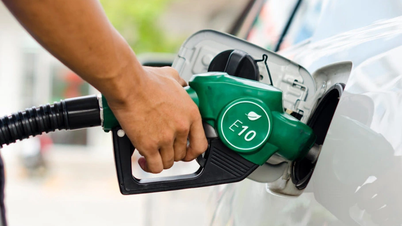
People shouldn't be overly concerned because this is a green fuel trend that has been adopted by many countries for a long time. E10 gasoline is a biofuel consisting of 90% mineral gasoline and 10% ethanol - a type of bio-alcohol produced from renewable resources such as cassava, sugarcane, corn, and some agricultural by-products.
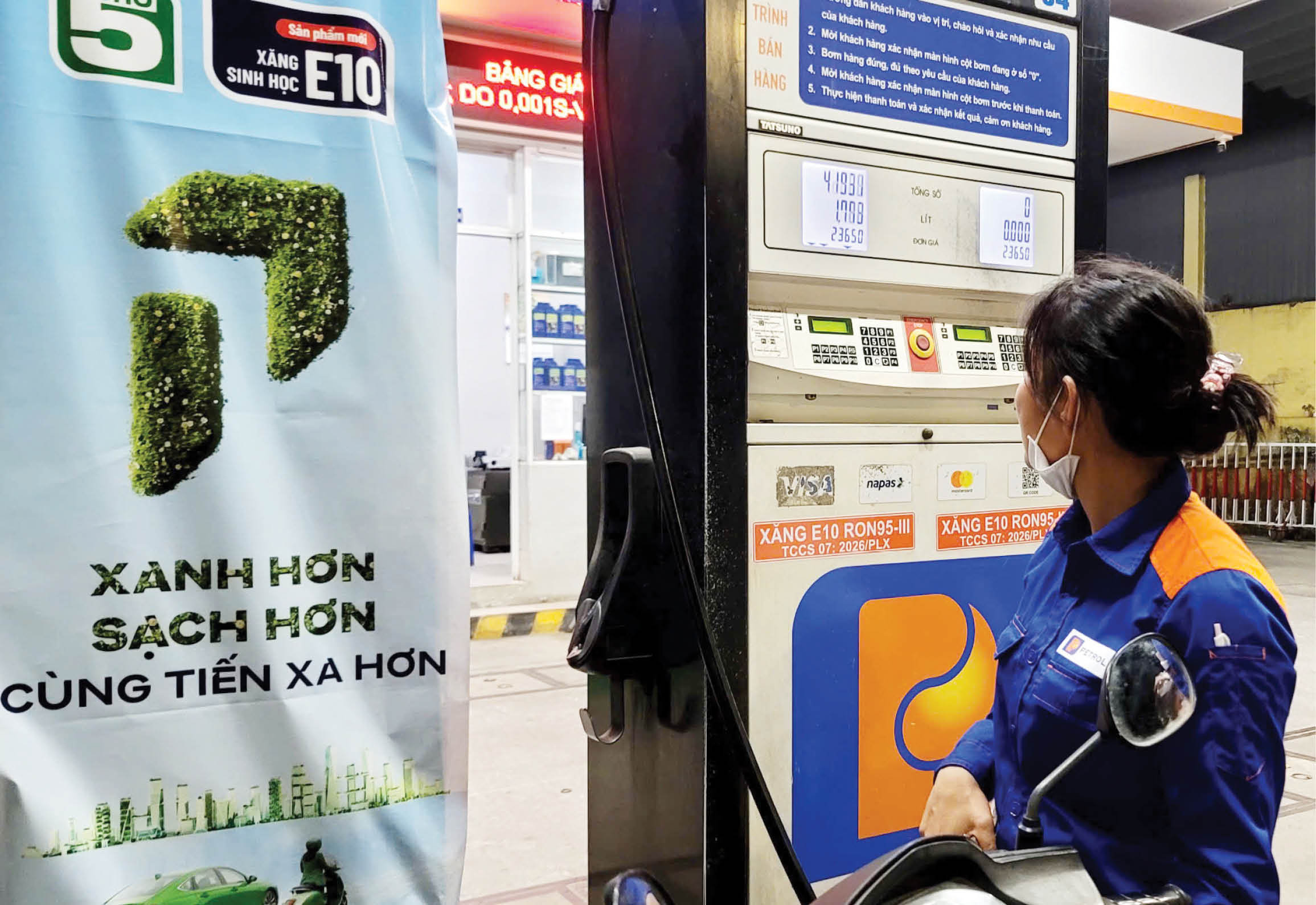 |
| E10 gasoline has been available for sale in Hue City since May 25th. |
In many countries such as the US, Brazil, and some European and Asian countries, people have been using E10 gasoline for more than a decade. Even in Thailand, E15 or E20 gasoline is commonly used. Therefore, Vietnam's gradual rollout of E10 gasoline is consistent with its green energy development roadmap and the current global trend of fuel transition.
Many people are concerned that using E10 gasoline may affect their vehicle engines. What is your opinion on this issue?
This is an understandable reaction when a new product or type of fuel appears, or when there is a change in the blending ratio. However, from a technical perspective and based on practical experience in many countries, people should not be overly concerned.
Most motorcycles and cars manufactured in the last 10 years or so have been designed by their manufacturers to be compatible with biofuels such as E5 or E10. Many major car manufacturers have also announced that their engines can operate normally with E10 gasoline without significantly affecting engine lifespan.
In Vietnam, E5 gasoline has been used for many years without any serious engine-related problems being reported. With E10 gasoline, which essentially only increases the ethanol content, if the fuel is produced according to standards and the storage and distribution systems ensure quality, vehicles will operate stably.
However, for some very old vehicles, those that are rarely maintained, or those using older carburetors, users should periodically check the fuel system to ensure that components such as hoses, rubber gaskets, and the fuel tank are not aging. This is a general maintenance recommendation for all vehicles, not just when using E10 gasoline.
Compared to traditional gasoline, what are the environmental benefits and efficiency advantages of E10 gasoline?
Ethanol is a biofuel, so when mixed with gasoline, it helps the combustion process to be more efficient. As a result, E10 gasoline can reduce the amount of CO, unburned hydrocarbons, and some pollutants in exhaust gases compared to conventional gasoline.
With many cities currently facing increasing pressure from air pollution and carbon emissions, the development of biofuels is a suitable solution. This is also an important transitional step before moving towards cleaner forms of energy in the future.
In addition to environmental benefits, the use of ethanol contributes to diversifying energy sources and reducing dependence on imported fossil fuels. As an agricultural country, Vietnam has the potential to develop biofuels, thereby creating outlets for some agricultural products and promoting a green and circular economy.
In terms of operational efficiency, ethanol has a high octane rating, which helps the combustion process in the engine to be more efficient. With compatible engines, the vehicle still operates smoothly and it is difficult to notice any difference in acceleration or driving feel compared to traditional gasoline.
Some people believe that using E10 gasoline will increase fuel consumption or make the car less powerful. Is this true, sir?
Theoretically, ethanol has a lower calorific value than mineral gasoline, so fuel consumption may increase slightly. However, with a blending ratio of 10% like E10, the difference is usually not significant and difficult to notice under normal operating conditions.
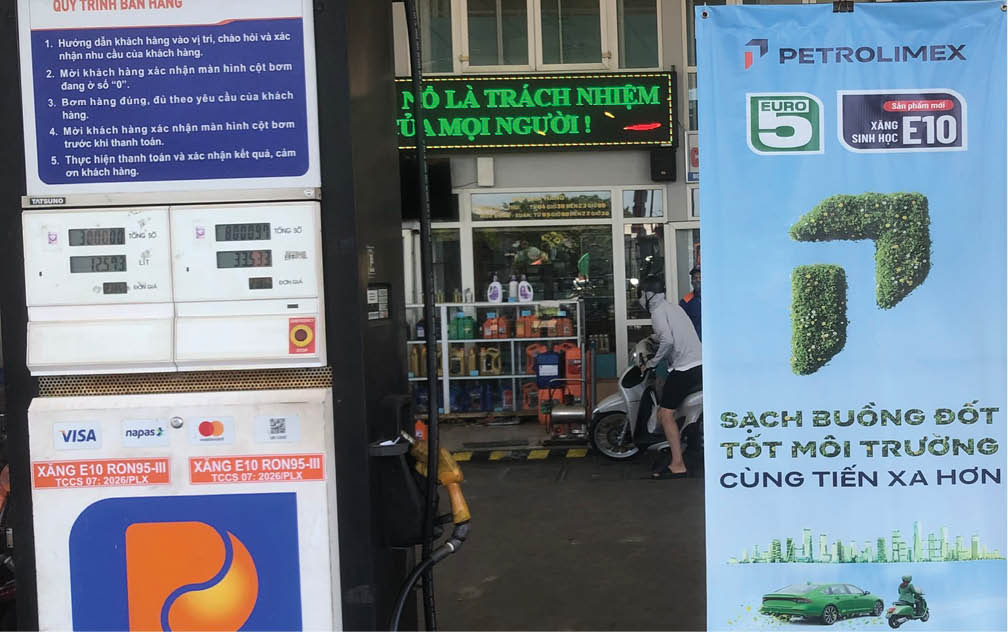 |
| Hue City has started selling E10 bioethanol fuel, 6 days earlier than the nationwide rollout (June 1st). |
Numerous international studies show that the difference in fuel consumption between E10 and traditional gasoline is usually very small, depending on the engine type, vehicle condition, and driving habits of the user. When the vehicle is well-maintained and the fuel injection system is functioning properly, the difference is almost negligible.
The feeling that the car is less powerful is a user's perception and not a technical difference compared to current vehicles. Ethanol has a high octane rating, so in some cases it can even help the combustion process be more efficient. For newer vehicles using electronic fuel injection systems, the engine control unit can automatically adjust to suit the type of fuel being used.
It is crucial to ensure fuel quality. If the gasoline is contaminated, improperly stored, or the vehicle is in poor condition, then regardless of the type of gasoline used, it can lead to increased fuel consumption and unstable operation.
What recommendations do you have to reassure people when switching to E10 gasoline?
In my opinion, people shouldn't worry about unverified information on social media. The implementation of E10 gasoline has been researched, evaluated, and carried out according to a roadmap by relevant ministries and agencies; it's not a sudden change.
Users should choose to refuel at reputable gas stations; and should also maintain a habit of regular vehicle maintenance, checking the air filter, spark plugs, fuel injectors, and fuel delivery system to ensure the vehicle always runs smoothly.
For vehicles that have been in use for many years, owners should have additional rubber parts, gaskets, and fuel lines inspected to minimize the risk of degradation due to material age. This is a necessary periodic check for all motor vehicles.
Thank you, sir!
Source: https://huengaynay.vn/kinh-te/nguoi-dan-khong-nen-lo-ngai-khi-su-dung-xang-e10-166269.html







































































































Comment (0)