

Ho Chi Minh City is something very glamorous, quite unfamiliar, and very difficult to reach, especially for "country folk" like my brothers and me.
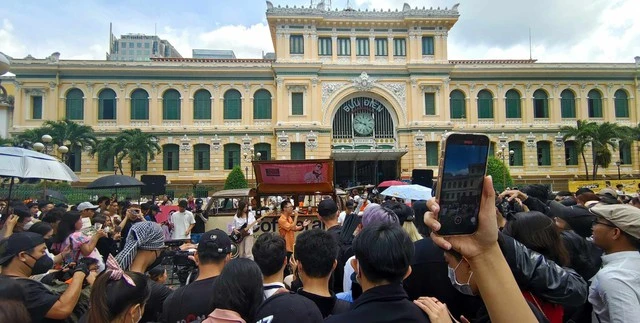
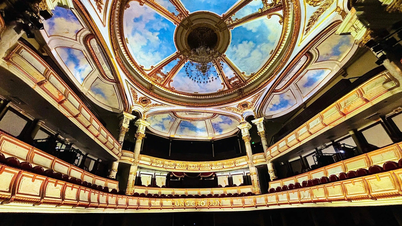
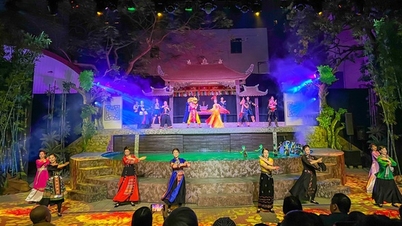
Cultural and artistic activities last weekend at Ho Chi Minh City Post Office .
We grew up in the countryside of the former Song Be region, hundreds of kilometers from Ho Chi Minh City. Until I was 10 years old, I only knew about Saigon – Ho Chi Minh City – through the stories of my aunts and uncles who traded goods from there. I don't know if they exaggerated or embellished anything, but in our eyes at that time, it was undoubtedly a bustling metropolis, and my desire to see that city firsthand burned brighter than ever.
In 1996, my brother got into university and moved to Ho Chi Minh City. He said that even now, he can't forget the first day he set foot in the city and the nickname "country bumpkin" his friends gave him. The nickname wasn't meant to mock him, but simply because his friends found him so funny; everything was unfamiliar, and his surprised reactions made them burst out laughing.
My brother studied at the University of Ho Chi Minh City, now the University of Social Sciences and Humanities (Vietnam National University Ho Chi Minh City). When he first arrived in that bustling city, he felt so lost; he said he couldn't even remember how many times he got lost, then laughed, calling himself a "country bumpkin." In his second year, he started looking for part-time jobs. Back then, the easiest job for students was tutoring. He was majoring in Oriental Studies, but with the knowledge he gained as a top student in high school, he was able to tutor younger students smoothly.
I still vividly remember that summer vacation when I was 11 years old, my brother took me on my first trip ever – a trip to Saigon that I can never forget. Although time has eroded my memory and I no longer remember every detail clearly, I remember being so excited and looking forward to the trip that I couldn't sleep, afraid that if I fell asleep, the bus would leave us behind and speed off into the city. Buses were rare back then, unlike now.
He cycled me around the familiar streets of Ho Chi Minh City, pointing out Ms. Thuong's rice shop – "his favorite place," where she'd let him pay later whenever he ran out of money. She'd always give him extra rice and food, saying she felt sorry for him because he was so thin, probably because he studied so much he couldn't gain weight. Then he pointed to the dessert shop and the spring roll shop where he and his friends occasionally treated themselves to a delicious meal to celebrate his outstanding academic achievements, and many other places he'd been attached to during his nearly two years of university. When he returned home, he bought me countless loaves of bread for my parents and sisters. You might not believe it, but in those years, the gift we always looked forward to most whenever he came back from Ho Chi Minh City was those long, plain loaves of bread.
In my third year of university, my brother's leg was run over by a truck while he was tutoring. He had no family with him, so the vendors on the street rushed him to the hospital without even bothering to close their stalls. One woman even volunteered to stay and care for him for two days until my parents managed to raise the money to bring him down. Some people say, "Saigon is glamorous, with flowers for the rich and tears for the poor," but I don't think that's true. My brother was very poor, even from the countryside, yet this city embraced him throughout his impoverished student life, treating him with great kindness.
After my trip to the city, my preconceived notion of Saigon – Ho Chi Minh City as something unattainable vanished. The city turned out to be very simple and welcoming, and the people of Saigon are very friendly and lovable. I chose to study and work in my hometown, so my sisters and I only occasionally go to Ho Chi Minh City to see how much it has changed.
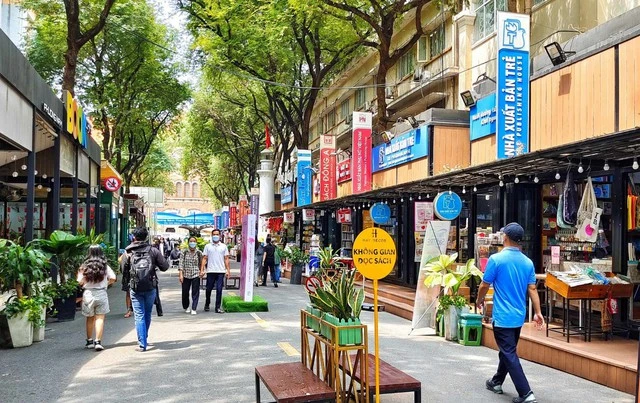
Ho Chi Minh City's Book Street, one of the cool, green spaces that attracts young people and tourists.
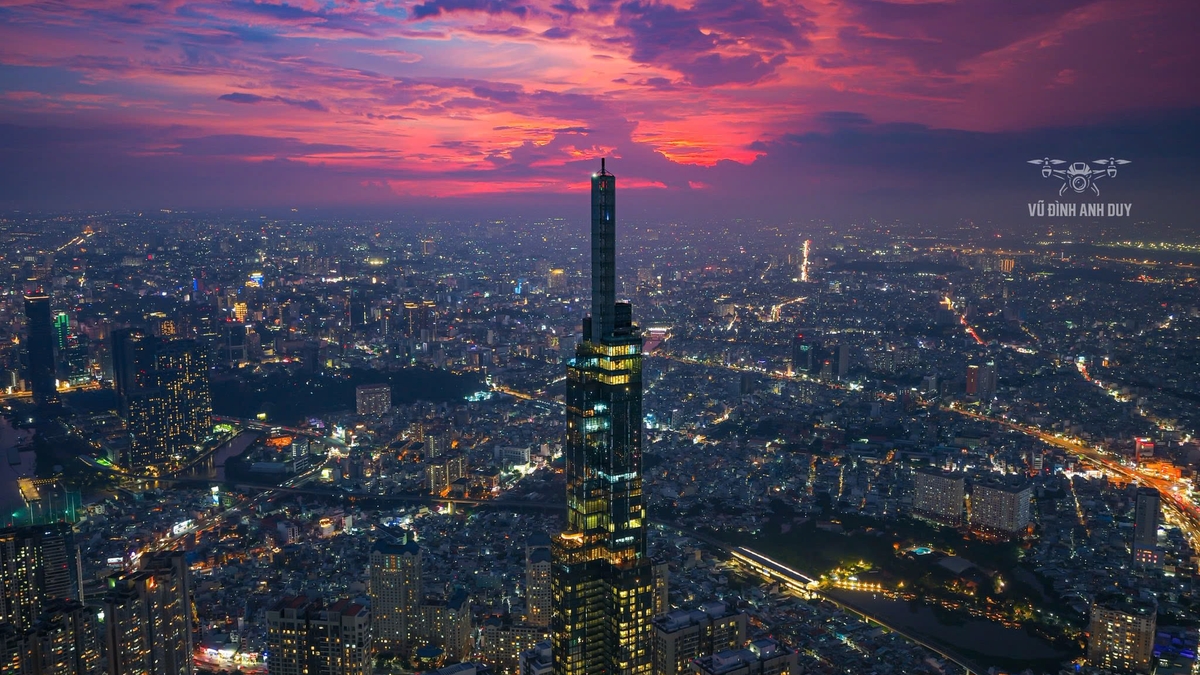
And every time we come to Ho Chi Minh City, we realize we're truly "country bumpkins," unmistakably so. The city has changed and developed so rapidly, like the little girl who used to cling to her mother's skirt every time she went out, now transformed into a beautiful, mature, and modern young woman. Without "Google Maps," I would be no different from my brother in the past, unable to find my way through the bustling streets. Even though we don't live here, we are still very grateful to this city for embracing, sheltering, and protecting "country bumpkins" like my brother and many others. For Ho Chi Minh City, my brother and I always want to remain "country bumpkins," so that each time we meet again, it feels like we're encountering something new yet incredibly familiar…
"Saigon, a place we once visited"
Just once, only once.
Why did you fall in love?
When far away, I suddenly feel a pang of nostalgia...
( I miss Saigon so much - author: Nguyen Dinh Huan)
The "Eastern Spirit" writing contest, organized by Thanh Nien Newspaper in collaboration with Phu My 3 Intensive Industrial Zone, is an opportunity for readers to share their deep affection for the land and people of the southeastern provinces (including Ba Ria - Vung Tau, Dong Nai , Binh Duong, Binh Phuoc, Binh Thuan, Tay Ninh, and Ho Chi Minh City), and to contribute best practices, new models, and creative, dynamic thinking of the people of the Eastern region. Authors can submit entries in the form of essays, personal reflections, notes, journalistic reports, etc., for a chance to win attractive prizes worth up to 120 million VND.
Please send your entries to haokhimiendong@thanhnien.vn or by mail to the Thanh Nien Newspaper Editorial Office: 268-270 Nguyen Dinh Chieu Street, Vo Thi Sau Ward, District 3, Ho Chi Minh City (please clearly indicate on the envelope: Entry for the "Hao Khi Mien Dong " Contest). The contest will accept entries until November 15, 2023. Articles selected for publication in the Thanh Nien daily newspaper and the thanhnien.vn online newspaper will receive payment according to the editorial office's regulations.
For detailed rules, please see here.

Source link


























![[Image] Ho Chi Minh City simultaneously commences construction and breaks ground on 4 key projects.](https://vphoto.vietnam.vn/thumb/1200x675/vietnam/resource/IMAGE/2026/01/15/1768472922847_image.jpeg)



















Comment (0)