

Hives, allergies, and contact dermatitis are causes of red rashes on the skin, causing discomfort for sufferers.
The most common locations for red rashes are the neck, face, legs, and arms; in severe cases, they can spread throughout the body. Patients experience discomfort and it affects their appearance. Below are the causes of this condition.
Medal
Hives occur when the body reacts to allergens from food, bath chemicals, cosmetics, pollen, pet dander, and household dust. The body releases a protein called histamine and other mediators that cause small blood vessels to dilate, and fluid leaks from these vessels, leading to angioedema, inflammation, and a red rash. Symptoms include raised, milky-yellow bumps on the skin resembling mosquito bites, with a red border, and itching.
Hives can be prevented by living a healthy lifestyle, wearing loose clothing, avoiding humid environments, and preventing previous triggers. Patients should take medication as advised by their doctor.
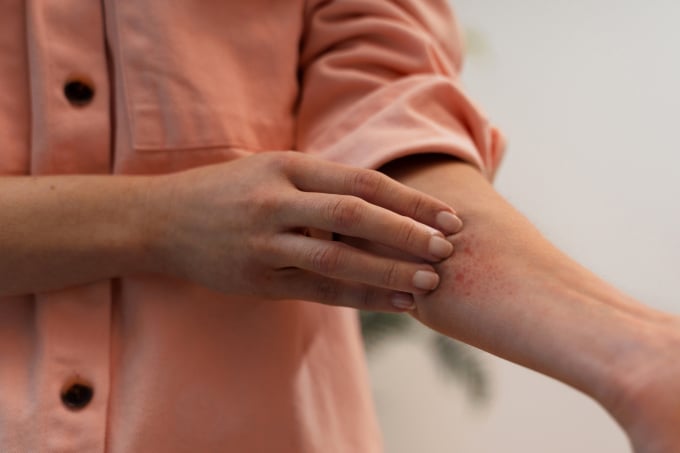
The most common location for this rash is on the hands. (Image: Freepik)
Allergy
Allergies often recur when patients encounter allergens in the air and their living environment. At this time, the immune system releases a chemical called histamine, which causes coughing, dry throat, nasal congestion, and a tingling sensation or rash on the skin.
People with allergies can prevent contact dermatitis by avoiding triggers. During an outbreak, topical steroids and antihistamines can reduce symptoms.
Contact dermatitis
If itching accompanied by a red rash appears after using a new facial cleanser, soap, lotion, or cosmetic product, you may have contact dermatitis. The condition usually clears up within a few days to a few weeks by avoiding the irritant. During this time, you can apply a cold compress for 10-15 minutes at a time to reduce itching or use a moisturizer.
Skin infections
Skin infections caused by bacteria, viruses, fungi, or parasites can result in rashes, swelling, pain, pus, and itching. To prevent them, everyone should wash their hands thoroughly after using the toilet, shower, and wash clothes after exercising, and avoid wearing sweaty clothing. Some infections may resolve on their own, and over-the-counter skin creams can help reduce symptoms. If the infection is severe, it's best to see a doctor.
Besides the causes mentioned above, skin rashes can also be caused by conditions such as liver dysfunction, parasitic infections, and thyroid disorders.
Huyen My (According to Verywell Health, WebMD )
| Readers can submit their dermatological questions here for the doctor to answer. |
Source link


![[Photo] National Assembly Chairman Tran Thanh Man attends the policy seminar to promote Vietnam-Türkiye cooperation.](https://vphoto.vietnam.vn/thumb/1200x675/vietnam/resource/IMAGE/2026/04/16/1776351415367_vna-potal-chu-tich-quoc-hoi-tran-thanh-man-du-toa-dam-chinh-sach-thuc-day-hop-tac-viet-nam-tho-nhi-ky-8705791-jpg.webp)







































































































Comment (0)