

With increasing air pollution, especially the frequent occurrence of fine particulate matter in large cities, improving indoor air quality has become a concern for many families.
Besides air purifiers, houseplants are also considered a natural, environmentally friendly, and easy-to-implement solution. Many studies show that some types of plants can trap fine dust on their leaf surfaces and absorb harmful gases, helping to create a healthier living environment.
Snake plant
Snake plant (Sansevieria trifasciata) is one of the most popular houseplants in homes today. Its long, stiff, smooth leaves help trap fine dust particles suspended in the air.
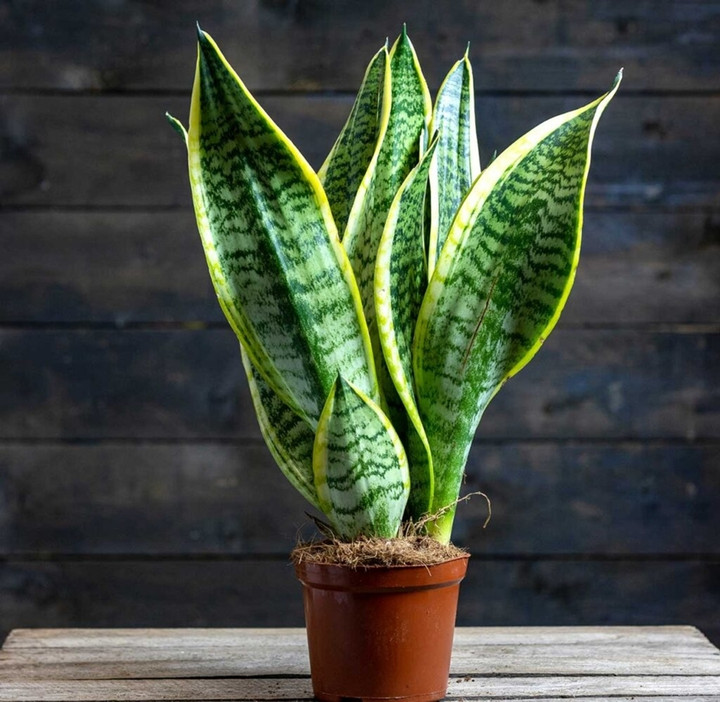
(Photo: Internet)
Furthermore, snake plant (Sansevieria trifasciata) can absorb certain toxic gases such as formaldehyde and benzene – substances often emitted from furniture and building materials.
The main advantage of snake plant is that it is easy to care for, drought-tolerant, and suitable for placement in the living room, bedroom, or office.
Pothos plant
Pothos is a fast-growing climbing plant that easily adapts to various conditions. Thanks to its broad leaf surface and dense foliage, pothos is able to trap a large amount of fine dust particles in the air.
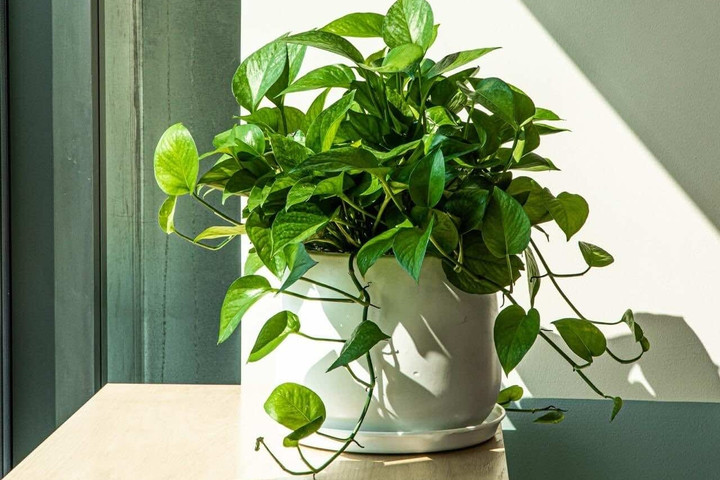
(Photo: Three Regions Tree)
In addition, pothos plants help reduce the concentration of some common toxic gases in urban homes. Pothos can be grown in hanging pots, placed on shelves, or on tables, saving space while enhancing aesthetics.
Peace lily
Peace lilies are popular for their elegant appearance and ability to improve air quality. Their large leaves effectively trap fine dust particles. At the same time, the plant absorbs volatile organic compounds, helping to reduce odors and stuffiness indoors. Peace lilies thrive in enclosed spaces with moderate light, making them suitable for placement in living rooms or hallways.
Ivy
Ivy plants are highly effective at absorbing fine dust and other air pollutants. This plant acts as a natural "air purifier," helping to clean the living environment, especially in areas near windows or where dust levels are high.
The dense foliage of ivy can trap ultrafine dust and absorb toxic gases such as formaldehyde and benzene, helping to improve indoor air quality.
Aloe vera plant
Aloe vera is not only famous for its beauty benefits but also contributes to improving air quality. The surface of aloe vera leaves can trap fine dust, and the plant absorbs some toxic gases produced by paint, cleaning products, and wallpaper. With its compact size, aloe vera is suitable for placing on a desk, bookshelf, or windowsill.
Fern
Ferns are moisture-loving plants with small, abundant leaves that form a natural "filter" for indoor air. They can trap fine dust particles while increasing humidity, helping to reduce dryness and irritation in the respiratory tract. Ferns are suitable for placement in bathrooms, enclosed balconies, or near windows where there is indirect light.
Spider plant
Spider plants (Chlorophytum) are excellent air purifiers, effectively "absorbing" dust and toxic gases such as formaldehyde, benzene, and CO. They even reduce fine dust and balance humidity. These plants don't require frequent watering as they are mildly drought-tolerant; watering is only necessary when the soil is almost completely dry.
Source: https://baolangson.vn/nhung-loai-cay-canh-hut-bui-min-nen-trong-trong-nha-5068342.html
![[Photo] Prime Minister Pham Minh Chinh receives the Governor of Tochigi Province (Japan)](/_next/image?url=https%3A%2F%2Fvphoto.vietnam.vn%2Fthumb%2F1200x675%2Fvietnam%2Fresource%2FIMAGE%2F2025%2F12%2F16%2F1765892133176_dsc-8082-6425-jpg.webp&w=3840&q=75)
![[Photo] Prime Minister Pham Minh Chinh receives Lao Minister of Education and Sports Thongsalith Mangnormek](/_next/image?url=https%3A%2F%2Fvphoto.vietnam.vn%2Fthumb%2F1200x675%2Fvietnam%2Fresource%2FIMAGE%2F2025%2F12%2F16%2F1765876834721_dsc-7519-jpg.webp&w=3840&q=75)


![[Image] Leaked images ahead of the 2025 Community Action Awards gala.](/_next/image?url=https%3A%2F%2Fvphoto.vietnam.vn%2Fthumb%2F1200x675%2Fvietnam%2Fresource%2FIMAGE%2F2025%2F12%2F16%2F1765882828720_ndo_br_thiet-ke-chua-co-ten-45-png.webp&w=3840&q=75)


















































![[Photo] Prime Minister Pham Minh Chinh attends the Vietnam Economic Forum 2025](https://vphoto.vietnam.vn/thumb/402x226/vietnam/resource/IMAGE/2025/12/16/1765893035503_ndo_br_dsc-8043-jpg.webp)



































Comment (0)