

 |
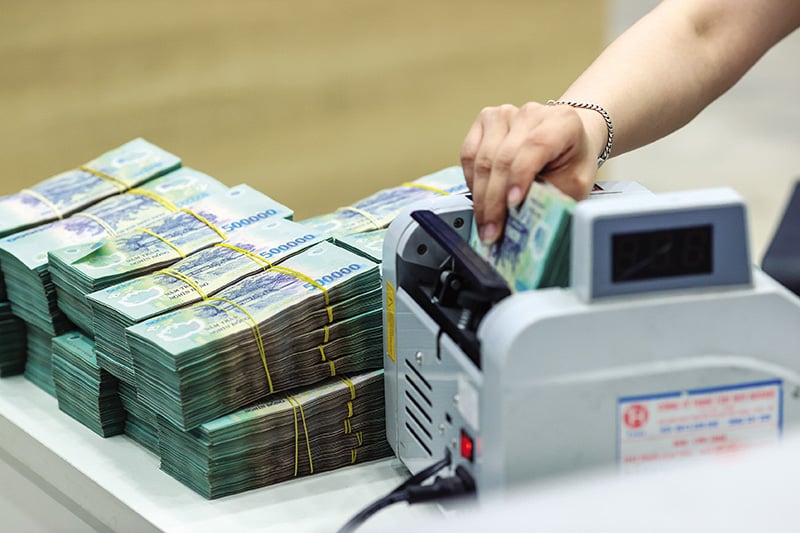
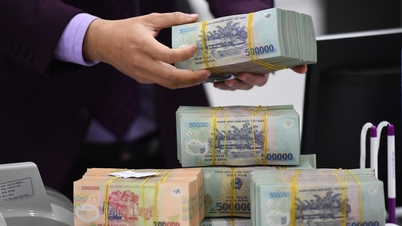
| Lending interest rates continue to trend downwards, contributing to supporting businesses and individuals in developing their production and business activities. |
The downward trend continues.
Credit institutions forecast that VND deposit and lending interest rates will remain essentially unchanged from now until the end of 2025 compared to the end of 2024, according to the results of a survey of credit institutions recently released by the State Bank of Vietnam (SBV). The SBV will continue to implement credit management solutions appropriate to the macroeconomic situation, inflation trends, and the economy's capital absorption capacity, contributing to promoting economic growth in 2025.
According to the State Bank of Vietnam's leadership, lending interest rates have continued to trend downwards since the beginning of the year. The average lending interest rate is now 6.23% per year, a decrease of 0.7% per year compared to the end of 2024, thereby contributing to supporting businesses and individuals in using borrowed capital to develop production and business.
Governor of the State Bank of Vietnam, Nguyen Thi Hong, stated that the banking sector is striving to further reduce lending interest rates, contributing to promoting growth. Monetary policy needs to be closely and synchronously coordinated with fiscal policy and other macroeconomic policies to promote sustainable economic growth associated with macroeconomic stability, inflation control, and ensuring the major balances of the economy.
Specifically, regarding interest rates, the State Bank of Vietnam (SBV) continues to maintain a low policy interest rate level to guide a reduction in lending rates, creating favorable conditions for businesses and individuals to access capital. The SBV also directs credit institutions to reduce costs, promote the application of technology, digital transformation, and implement other solutions to strive to reduce lending rates.
In the interbank market, the State Bank of Vietnam (SBV) has flexibly managed open market operations, in line with supply and demand developments in the money market. Regarding exchange rates, the SBV has also managed them flexibly, in accordance with market conditions and macroeconomic factors. In the coming period, the SBV will direct credit institutions to continue reducing costs, maintaining stable deposit interest rates, and striving to further reduce lending interest rates, creating room to support production and business activities.
 VCBS forecasts that deposit interest rates may remain stable in the near future, as the State Bank of Vietnam continues to manage interest rates to ensure they align with the overall interest rate level of the economy. Lending interest rates will remain low to support businesses in line with the government 's direction. However, businesses with weak credit histories may still face difficulties in accessing capital and may have to accept higher interest rates.
Since the beginning of the third quarter of 2025, some banks have slightly increased deposit interest rates, but financial experts believe that the overall level of input interest rates is unlikely to rise significantly.
According to Dr. Nguyen Tri Hieu, a banking expert, interest rates are unlikely to rise significantly as the Government and the State Bank of Vietnam continue to urge banks to strive to reduce costs in order to lower interest rates. Furthermore, in the current market context, where investment channels (gold, exchange rates, stocks, real estate) still carry inherent risks, idle funds remain cautious and are often used for savings. In fact, despite low bank interest rates, the amount of money deposited in banks by the public has increased to record levels recently.
According to the State Bank of Vietnam's data, by the end of May 2025, deposits from both individual customers and economic organizations at credit institutions reached over 15.3 million billion VND, an increase of nearly 1% compared to April 2025. Of this, household deposits reached over 7.6 million billion VND, an increase of 7.61% compared to the beginning of the year (with an increase of approximately 65,427 billion VND in May 2025 alone). Enterprise deposits reached over 7.7 million billion VND, an increase of 0.97% compared to the end of 2024 (an increase of over 116,370 billion VND compared to the end of April 2025).
Year-end funding needs
Credit accelerated in the first half of 2025, with outstanding loans across the economy increasing by nearly 10%, and banks experiencing significant growth ranging from 7% to nearly 20%. Simultaneously, credit growth was driven by corporate lending, thanks to persistently low lending interest rates, while retail lending grew more slowly due to weak demand.
MBS projects that credit growth will reach approximately 17-18% by the end of 2025. Lending activity in the second half of 2025 is likely to be driven by three main factors.
Firstly, it is crucial to accelerate the disbursement of public investment. According to data from the MBS report, as of the end of June 2025, public investment disbursement reached VND 268,000 billion, an increase of 42.3% compared to the same period last year, completing only 29.6% of the annual plan. MBS expects that the disbursement progress will accelerate in the second half of 2025.
Secondly, Resolution 68-NQ/TW enhances the role and position of the private economic sector. The private sector's contribution to GDP is projected to reach 55-58%, and the number of businesses is expected to reach 2 million by the end of 2030.
Regarding real estate, MSB assesses that Resolution 68-NQ/TW has effectively removed long-standing legal and administrative bottlenecks. Key measures include shifting from pre-approval to post-approval; encouraging lending based on cash flow and new development models; and clearly defining the legal responsibility of enterprises and the criminal responsibility of individuals.
Thirdly, there is a move towards eliminating the "credit limit." According to MBS experts, this will help banks with a strong Capital Adequacy Ratio (CAR), low cost of capital, and low Loan-to-Deposit Ratio (LDR) to enhance their competitiveness.
However, MBS analysts project that deposit interest rates may increase slightly by the fourth quarter of 2025, as credit growth typically tends to accelerate towards the end of the year. Based on these factors, MBS forecasts that the 12-month deposit interest rate of major commercial banks will fluctuate around 4.7% in 2025.
According to Mr. Nguyen Quang Huy, Executive Director of the Faculty of Finance and Banking (Nguyen Trai University), the trend of interest rates from now until the end of 2025 will remain at a reasonably low level, provided that macroeconomic conditions such as inflation, exchange rates, and banking system liquidity remain under control.
Mr. Huy argued that the average lending interest rate is currently around 6.23% per year, the lowest in many years, indicating that the monetary policy space has been quite thoroughly exploited. Therefore, the room for further reductions in the remainder of the year is very limited and requires caution because the interest rate differential between USD and VND is narrowing, which could put pressure on the exchange rate. At this stage, interest rate policy needs to be managed in a stable, flexible, and cautious manner.
Source: https://baodautu.vn/no-luc-giam-lai-suat-cho-vay-d343794.html



![[Photo] General Secretary and President To Lam presides over a meeting on preparations for the review of one year of operation of the three-tiered government system.](https://vphoto.vietnam.vn/thumb/1200x675/vietnam/resource/IMAGE/2026/06/02/1780391821195_a1-bnd-4595-9717-jpg.webp)


























































































Comment (0)