

Manual for coordinating and supporting risk management
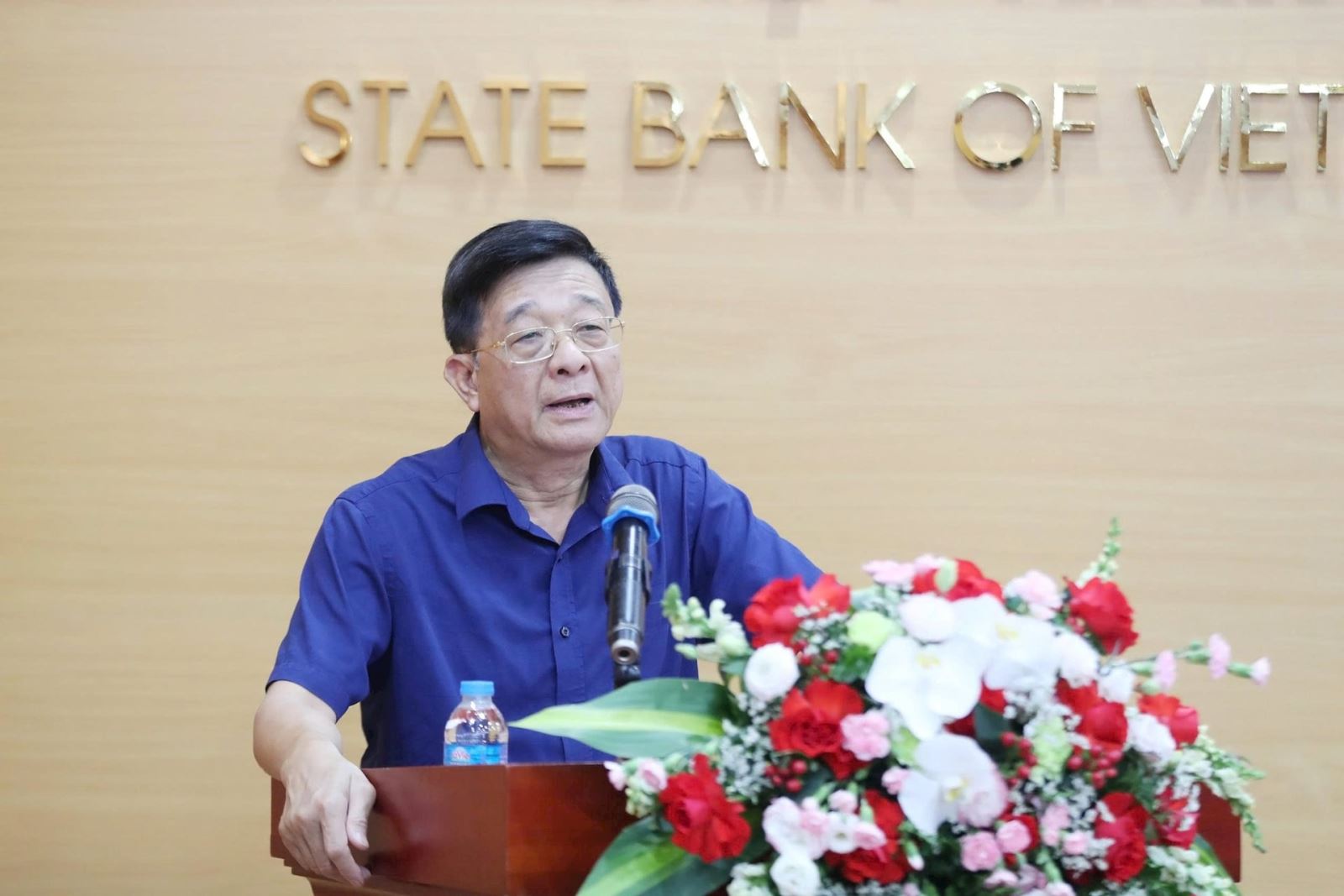
Speaking at the meeting to launch the "Handbook on coordinating support for handling risks related to accounts/cards/payment acceptance units involved in suspected fraudulent, counterfeit, or deceptive money transfer and payment transactions" on October 21, Dr. Nguyen Quoc Hung, Vice President and General Secretary of the Vietnam Banking Association (VNBA), said that coordinating efforts to prevent and combat fraud and deception in the field of accounts and cards is a very important task.
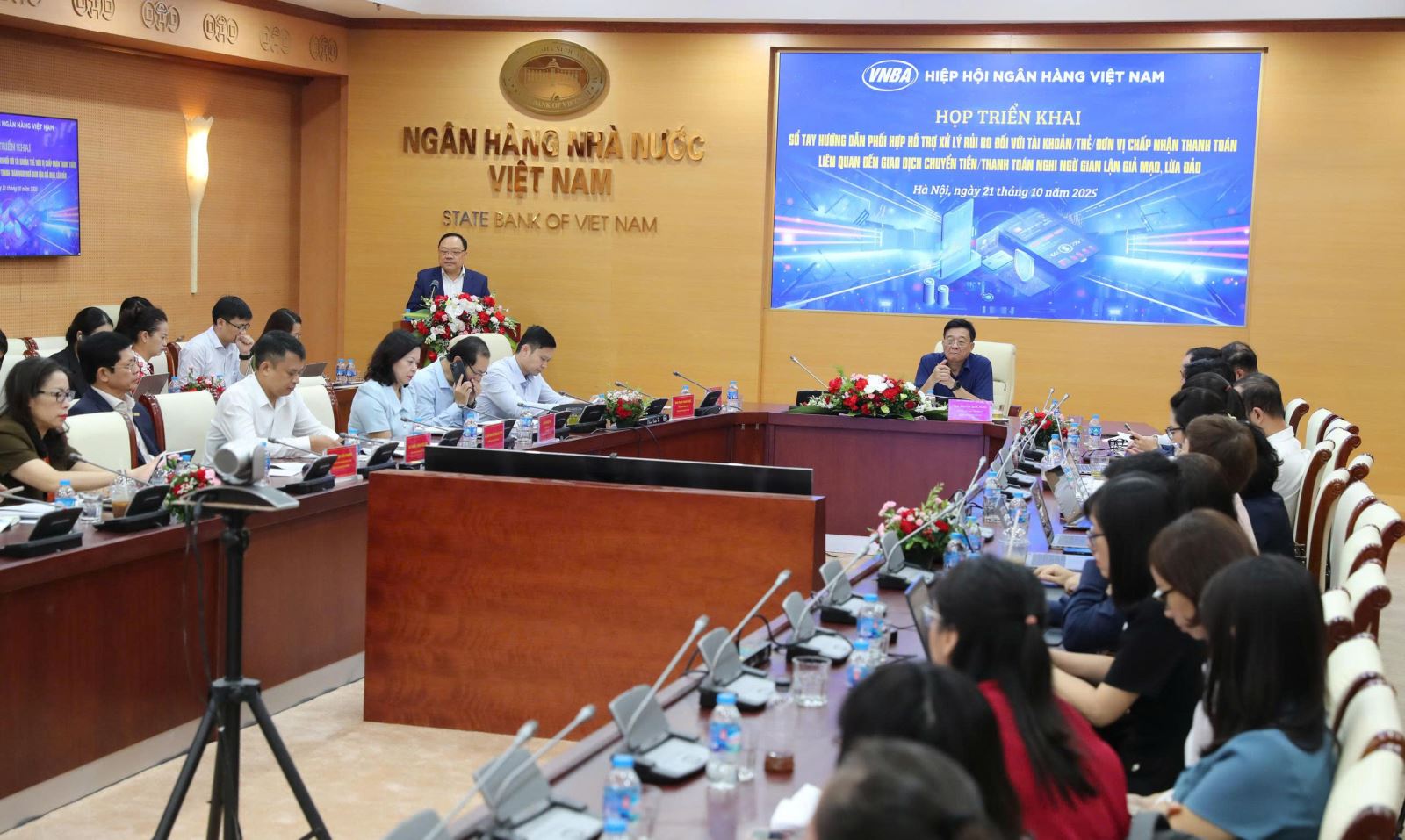
"This is also a very challenging area to implement, especially in the context of credit institutions accelerating digital transformation," said Mr. Nguyen Quoc Hung.
Over the past period, the State Bank of Vietnam (SBV) has issued numerous regulations to ensure that commercial banks, when implementing services ranging from money transfers and payments to card issuance and usage, comply with proper procedures. The banking system has also issued internal regulations to minimize risks for both customers and banks.
"However, fraud and impersonation through accounts and cards remain very complex, with high frequency and sophistication. In many fraud cases, money is often transferred through multiple accounts in a short period, making recovery almost impossible. Without quick and timely coordination, it will be impossible to freeze the flow of money. However, freezing must also comply with regulations. This handbook is not a regulation for freezing accounts; it is a guide for banks to coordinate correctly according to internal regulations, Government Circulars and Decrees, State Bank of Vietnam regulations, and the internal regulations of each credit institution," said Dr. Nguyen Quoc Hung.
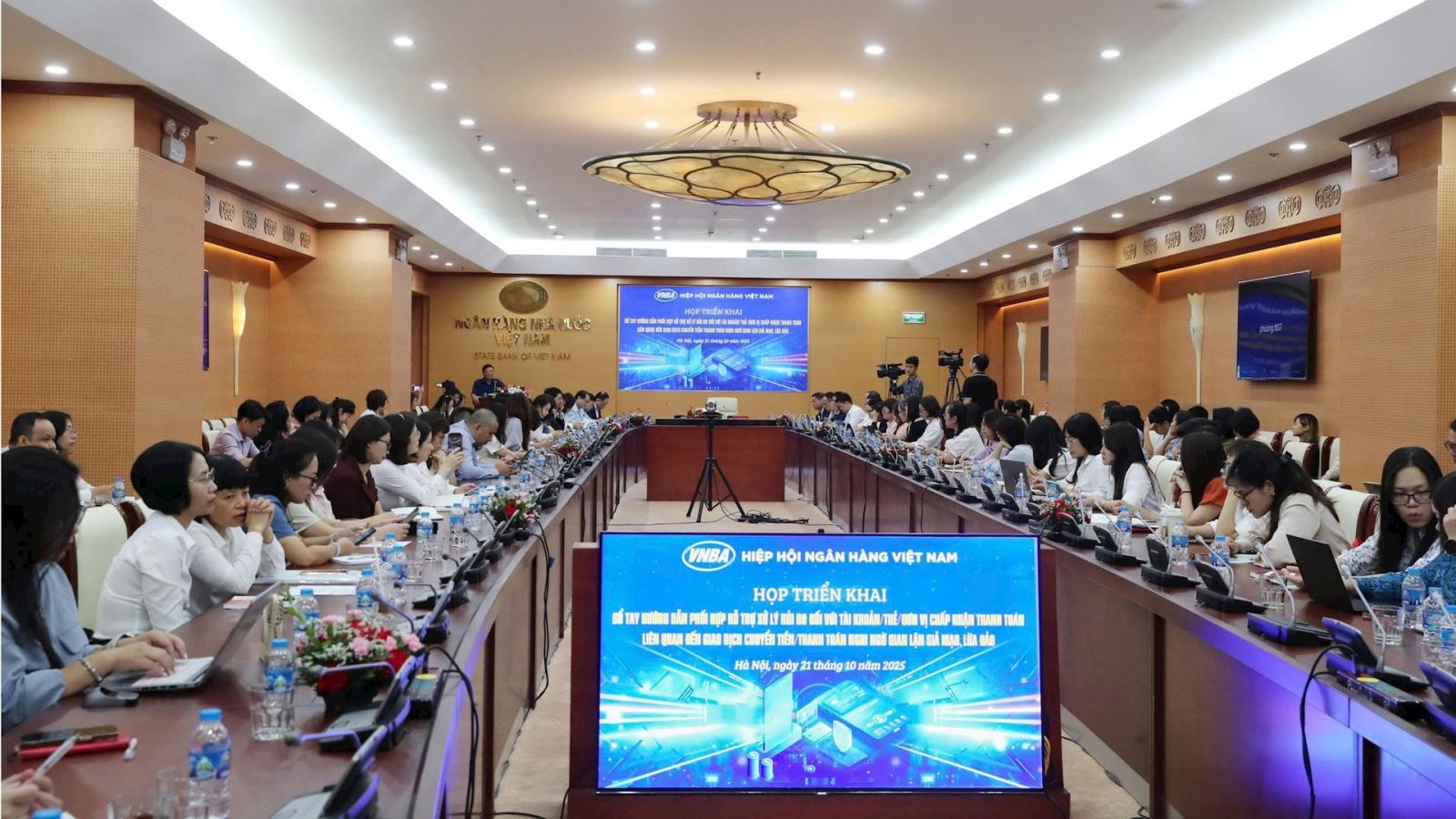
According to the General Secretary of VNBA, with the direction of the State Bank of Vietnam, and especially with the support of the Banking Inspection and Supervision Agency; the Payment Department; the Information Technology Department; the Legal Department and related units, VNBA has been assigned to be the focal point for developing and implementing the Handbook on coordinating the handling of fraud and scams in the field of accounts and cards for member organizations.
“This initiative was put forward by the Association in 2023. At the meeting with the State Bank of Vietnam at that time, Deputy Governor Pham Tien Dung also directed and agreed that the development of the Handbook was absolutely necessary. Immediately afterwards, the Association began implementing it, and now, after nearly two years, the Handbook has been completed,” said Mr. Nguyen Quoc Hung.
After numerous working sessions and consultations with the State Bank of Vietnam and several relevant ministries and agencies, the Handbook was officially issued on September 30th under Decision No. 71/QD-HHNH of the Chairman of the Association, titled "Handbook for Coordinating Support in Handling Risks Related to Accounts/Cards and Payment Acceptance Units Involved in Suspicious Transactions of Fraud, Forgery, or Deception".
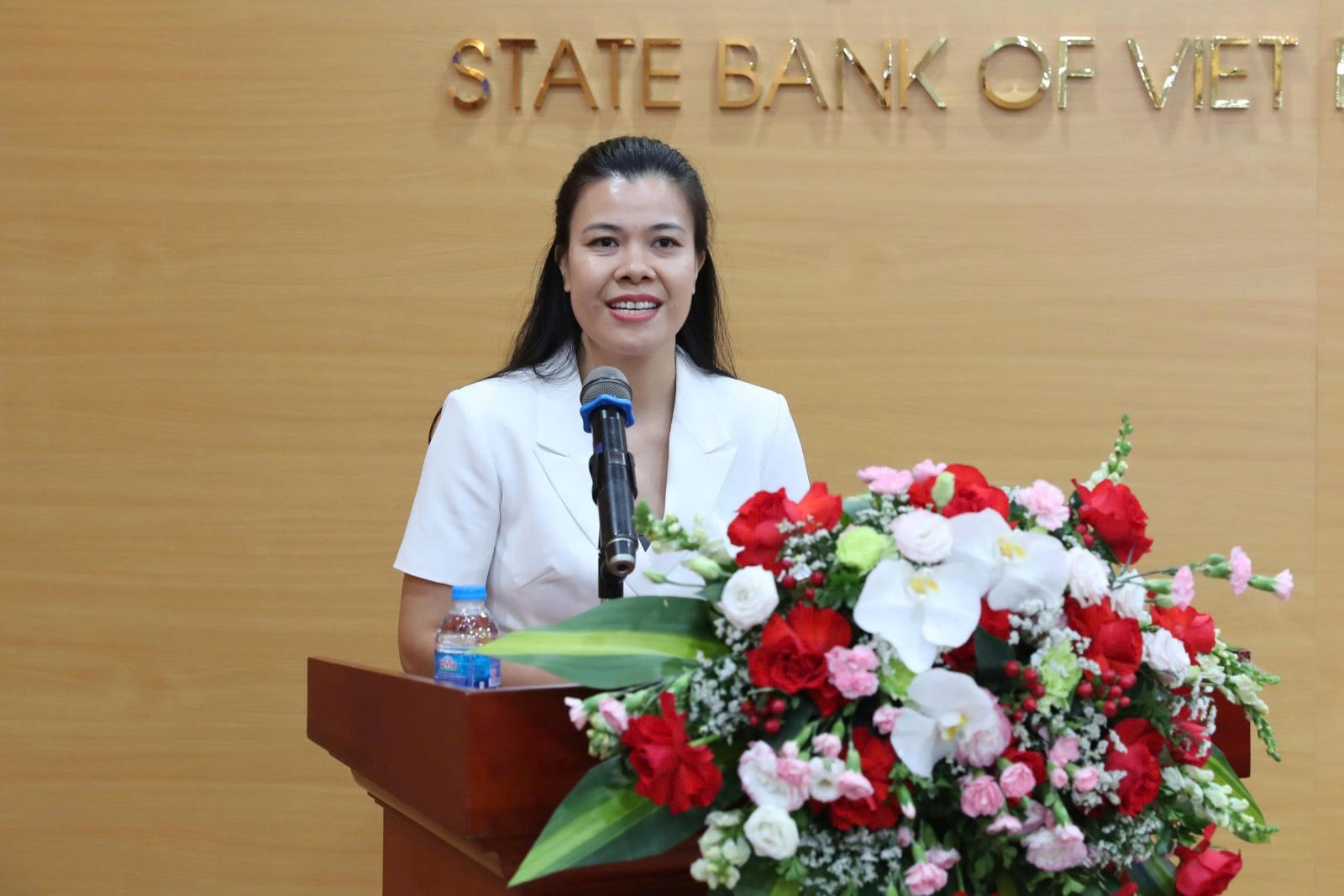
At the meeting, Ms. Le Thi Hong Nhung, Deputy Head of the Service Monitoring and Operation Center, Vietnam National Payment Corporation (NAPAS), the main drafting unit of the Handbook, presented the content of the Handbook and some issues that credit institutions need to pay attention to.
According to Ms. Le Thi Hong Nhung, the processing procedure begins with the requesting organization (TCYC) receiving a request for investigation from the cardholder/account holder and creating a support request (YCHT). This request is then forwarded to NAPAS's Risk Management System for recording and automatic tracing of related transactions and accounts. After the requesting organization (TCYC) applies risk management measures and responds to the YCHT, the TCYC will receive feedback and notify the customer.
To prevent misuse by cardholders/account holders, the Handbook requires TCYC to ensure that customers filing complaints commit to the accuracy of the information and are legally responsible for any disputes arising from the complaints...
During the meeting, a representative from VietinBank shared that although the Handbook is not legally binding, in practice it is a very significant document that helps banks to connect and coordinate more effectively. A noteworthy fact is that by the time customers submit complaints, the transaction has often already been completed – the money is transferred to another bank and withdrawn very quickly. Therefore, the VietinBank representative hopes that the transaction blocking system will be implemented uniformly across all banking channels as soon as possible.
"We also hope that in the future, monitoring will not only be limited to bank accounts, but will also be expanded to include e-wallet accounts. Although the value of each e-wallet transaction is small, the number is very large; fraudulent transactions currently often involve transferring money through e-wallets before withdrawing it or using it to buy and sell digital assets. If the coordinated system between the Ministry of Public Security and banks can be expanded to cover all e-wallet payment channels, the effectiveness of preventing financial crimes will increase significantly," a representative from VietinBank proposed.
Coordination is needed at the "golden moment".
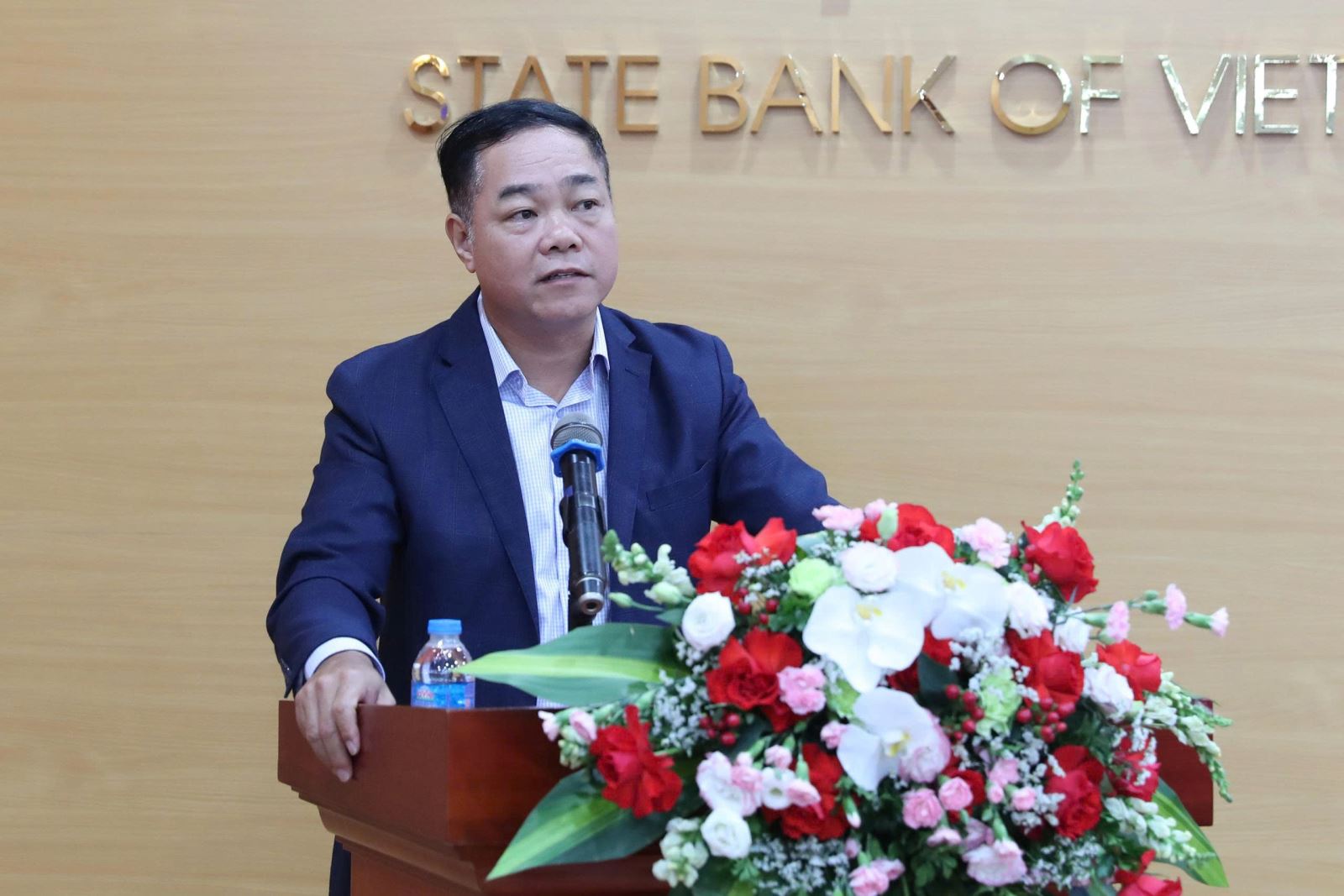
“While the banking system and regulatory agencies are striving to improve coordination processes, criminal groups have ‘gone very far’ in organizing, operating, and exploiting loopholes in the financial system to launder money or misappropriate assets. If we do not promptly tighten coordination mechanisms and proactively prevent crime, we will always be in a passive position and lag behind criminals,” warned Mr. Hoang Ngoc Bach, Head of Department A05 (Ministry of Public Security).
To improve the effectiveness of prevention, a representative from the Ministry of Public Security suggested that coordination between banks and the police is needed at the "golden time." Currently, the process of handling complaints from customers is still slow. "In many cases, it takes several months from the time the victim reports the incident until the bank provides data to the investigating agency. By then, the money has passed through many layers of intermediary accounts, making it almost impossible to trace," said Mr. Hoang Ngoc Bach.
For example, in 2023, there were many cases of foreign criminals attacking the systems of international businesses, impersonating partners' emails, and requesting money transfers to Vietnamese bank accounts. Some cases were fortunately detected in time thanks to cooperation between the Vietnamese Ministry of Public Security and police forces in European countries, helping to recover money for foreign partners and further affirming Vietnam's reputation in combating financial fraud.
A representative from the Ministry of Public Security proposed: “In the new process, when verification is requested, banks must provide transaction data and account information within 3 hours of receiving the official request, and simultaneously connect directly with the police to promptly freeze the account. If this crucial timeframe is utilized, the chances of recovering the money will be very high. However, any subsequent efforts will become meaningless.”
Another worrying issue raised is the rampant buying and selling of bank accounts. Many accounts are now being bought, sold, or leased to facilitate fraudulent activities. Furthermore, perpetrators have expanded to using cryptocurrencies to conceal financial flows. "Only when banks, regulatory agencies, and the police force truly cooperate closely with a high sense of responsibility and determination will the fight against financial fraud and scams achieve real effectiveness," a representative from the Ministry of Public Security affirmed.
While "complying with the law" is difficult, "achieving consensus" among banks to jointly protect customers is even more challenging. This requires immense determination, not only from the operational departments but also from the leadership of the banks, who must truly understand and empathize with the losses suffered by the people. The reputation of each bank, as well as the entire system, depends on how we act together in situations like this.
Source: https://baotintuc.vn/kinh-te/ra-lai-quy-trinh-noi-bo-ngan-hang-vao-cuoc-manh-me-ngan-chan-nan-lua-tien-20251021171857667.htm
![[Image] Leaked images ahead of the 2025 Community Action Awards gala.](/_next/image?url=https%3A%2F%2Fvphoto.vietnam.vn%2Fthumb%2F1200x675%2Fvietnam%2Fresource%2FIMAGE%2F2025%2F12%2F16%2F1765882828720_ndo_br_thiet-ke-chua-co-ten-45-png.webp&w=3840&q=75)

![[Image] The tenacious fighting spirit of Vietnamese women's football](/_next/image?url=https%3A%2F%2Fvphoto.vietnam.vn%2Fthumb%2F1200x675%2Fvietnam%2Fresource%2FIMAGE%2F2025%2F12%2F17%2F1765990260956_ndo_br_4224760955870434771-copy-jpg.webp&w=3840&q=75)
![[Photo] Prime Minister Pham Minh Chinh receives the Governor of Tochigi Province (Japan)](/_next/image?url=https%3A%2F%2Fvphoto.vietnam.vn%2Fthumb%2F1200x675%2Fvietnam%2Fresource%2FIMAGE%2F2025%2F12%2F16%2F1765892133176_dsc-8082-6425-jpg.webp&w=3840&q=75)
![[Live] 2025 Community Action Awards Gala](/_next/image?url=https%3A%2F%2Fvphoto.vietnam.vn%2Fthumb%2F1200x675%2Fvietnam%2Fresource%2FIMAGE%2F2025%2F12%2F16%2F1765899631650_ndo_tr_z7334013144784-9f9fe10a6d63584c85aff40f2957c250-jpg.webp&w=3840&q=75)
![[Photo] Prime Minister Pham Minh Chinh receives Lao Minister of Education and Sports Thongsalith Mangnormek](/_next/image?url=https%3A%2F%2Fvphoto.vietnam.vn%2Fthumb%2F1200x675%2Fvietnam%2Fresource%2FIMAGE%2F2025%2F12%2F16%2F1765876834721_dsc-7519-jpg.webp&w=3840&q=75)

























































![[Live] Closing Ceremony and Award Presentation for the "Impressive Vietnam Tourism" Video/Clip Creation Contest 2025](https://vphoto.vietnam.vn/thumb/402x226/vietnam/resource/IMAGE/2025/12/17/1765974650260_z7273498850699-00d2fd6b0972cb39494cfa2559bf85ac-1765959338756946072104-627-0-1338-1138-crop-1765959347256801551121.jpeg)
















Comment (0)