

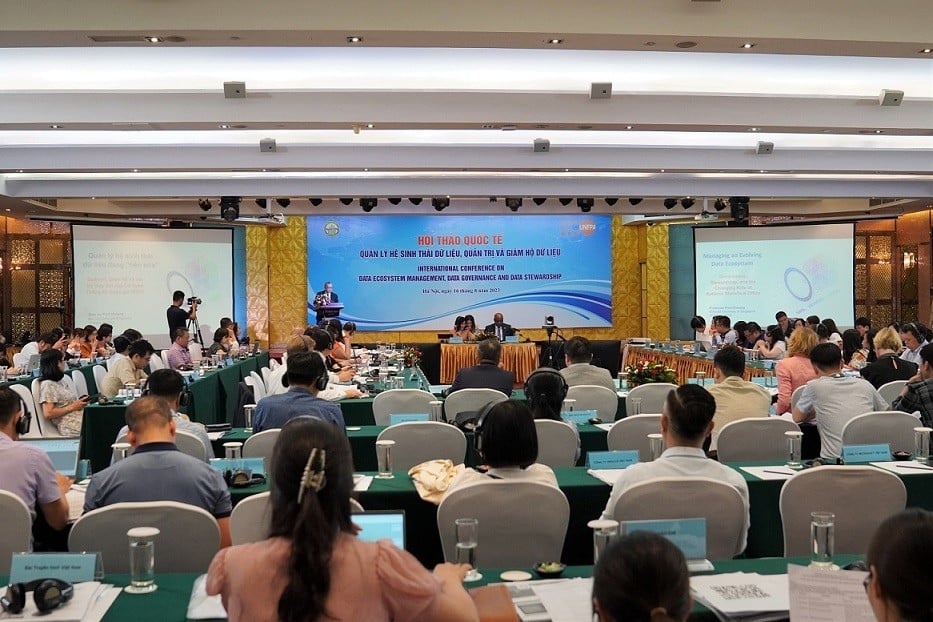
 |
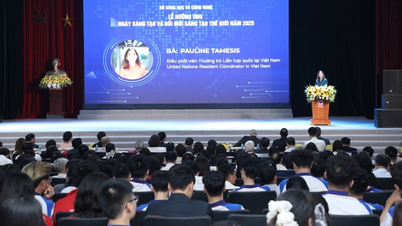
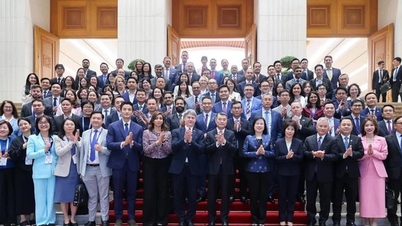
| Overview of the International Conference on Data Ecosystem Management, Governance and Data Safeguarding. (Photo: PH) |
The workshop took place on August 16th in Hanoi , co-chaired by the General Statistics Office of Vietnam and the United Nations Population Fund (UNFPA).
This international workshop is technically and financially supported by UNFPA within the framework of the Project: “Supporting Vietnam in building and utilizing quality population and development data for the development and monitoring of socio -economic development policies, strategies and plans; and tracking progress towards achieving the Sustainable Development Goals”.
The project aims to support Vietnam in adopting new technologies and communication platforms for data collection, analysis, and dissemination, ensuring evidence-based policies, strategies, and programs to achieve the Sustainable Development Goals by 2030.
Developed countries need reliable data.
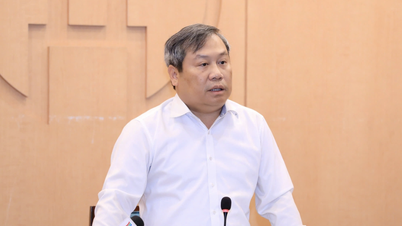
Speaking to the press at the conference, Ms. Nguyen Thi Huong, Director General of the General Statistics Office ( Ministry of Planning and Investment ), stated that a developed country needs highly reliable and transparent data, and especially data that is widely connected and shared with citizens, businesses, and managers.
| Ms. Nguyen Thi Huong, Director General of the General Statistics Office: "A developed country needs highly reliable, transparent data, and especially data that is widely connected and shared with citizens, businesses, and managers." |
According to Ms. Nguyen Thi Huong, the exploitation and use of administrative data in the production of statistical information has become a trend in statistical work in many countries around the world in general and Vietnam in particular.
However, the use of administrative data in current statistics in Vietnam still faces some difficulties and challenges. The administrative data sources were initially established primarily to serve the management and operation of ministries and agencies, rather than for statistical purposes.
"Therefore, exploiting and utilizing administrative data in statistical work requires time for research, understanding, and further refinement to serve multi-purpose use. Many ministries and sectors have not yet implemented synchronized databases and are not ready to connect information with statistical agencies," said Ms. Nguyen Thi Huong.
In light of this situation, Ms. Nguyen Thi Huong emphasized the need to build a reliable and transparent data system. She argued that, in addition to policy tools, technological infrastructure needs to be implemented. This infrastructure is crucial for creating, integrating, connecting, and sharing data securely and efficiently.
In parallel, Ms. Nguyen Thi Huong also highlighted the importance of a good workforce in creating, using, sharing, and applying data knowledge to generate information, thereby enabling accurate and effective decision-making, contributing to the country's development.
Ms. Nguyen Thi Huong expressed her desire to receive more effective sharing and cooperation from ministries, national statistical agencies, and international organizations in building and operating the ecosystem management system, and governing and safeguarding statistical data in the future.
Vietnam is striving to implement the Socio-Economic Development Strategy for the period 2021-2030, the Socio-Economic Development Plan for the period 2021-2025, and the National Action Plan for the implementation of the 2030 Agenda for Sustainable Development. To achieve these goals, Vietnam needs high-quality, reliable statistical data to serve as a basis for policy planning and as a fundamental element in building, implementing, monitoring, and evaluating progress towards achieving socio-economic and sustainable development goals.
"Better data, better life"
Within the framework of the Conference, Mr. Rémi Nono Womdim, Head of the United Nations Food and Agriculture Organization (FAO) and Head of the United Nations Population Fund (UNFPA) office in Vietnam, emphasized the importance of having high-quality population data.
“Our commitment is to leave no one behind, which means taking everyone into account to ensure access for everyone, including the most disadvantaged. High-quality, reliable, consistent, and comparable data is crucial to making this a reality. UNFPA often says that countries with high-quality data achieve impressive socio-economic growth. Better data, better lives,” said Rémi Nono Womdim.
| Mr. Rémi Nono Womdim, FAO Representative in Vietnam: "Countries with quality data are the countries that achieve impressive socio-economic growth. Better data, better lives." |
Regarding the importance of data, Professor Paul Cheung, former Director of the United Nations Statistics Division (UNSD), former Director-General of the National Statistics Office of Singapore (DOS), and currently Director of the Asian Competitiveness Institute, National University of Singapore, shared three key messages. Firstly , the world is changing rapidly, and data now plays a crucial role in government governance; therefore, governments must play a more effective role in data management. Consequently, national statistical agencies need to have a greater role in data management.
Secondly , once a data ecosystem is established, it is necessary to understand the importance of this system and develop appropriate methods and programs to fully exploit and utilize the value that the data ecosystem provides.
| Professor Paul Cheung: "For Singapore, the top priority in the data sector is that the policy system must be clear, easy to understand, and implementable. While easy to share, it must always ensure a high level of security." |
Thirdly , regarding data guardianship. The current problem for many countries is that they cannot continue the situation where each agency manages its own data system independently; instead, they need to find a way to connect these data systems; transforming data into a service that the public can access and exploit the value of.
According to Rémi Nono Womdim, data today comes from not just one source but from many different sources, therefore, data management and integration are extremely important.
Sharing lessons learned from Singapore, Mr. Rémi Nono Womdim stated that Singapore has established a national agency to issue policies, requirements, and regulations regarding data. With an integrated data source, data can be used conveniently for various purposes. For Singapore, the top priority in the data sector is a clear, understandable, and easy-to-implement policy system. While data is easily shared, high security is always ensured.
Singapore has now developed a My Information portal that aggregates personal data, allowing for quick and secure retrieval and use for various purposes such as opening credit card accounts.
Mr. Rémi Nono Womdim also shared Singapore's philosophy on digitalization for national governance. Singapore believes that digitalization is the key to smart national governance. The requirement for digitalization is always given top priority.
Source



![[Photo] General Secretary and President visit the China-ASEAN AI Application Cooperation Center](https://vphoto.vietnam.vn/thumb/1200x675/vietnam/resource/IMAGE/2026/04/17/1776404277677_vna-potal-tong-bi-thu-chu-tich-nuoc-tham-trung-tam-hop-tac-ung-dung-ai-trung-quoc-asean-8706616-2286-jpg.webp)


























![[Photo] National Assembly Chairman Tran Thanh Man attends the policy seminar to promote Vietnam-Türkiye cooperation.](https://vphoto.vietnam.vn/thumb/1200x675/vietnam/resource/IMAGE/2026/04/16/1776351415367_vna-potal-chu-tich-quoc-hoi-tran-thanh-man-du-toa-dam-chinh-sach-thuc-day-hop-tac-viet-nam-tho-nhi-ky-8705791-jpg.webp)
























































Comment (0)