 |
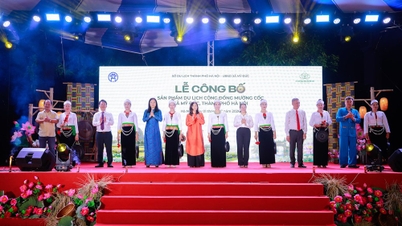
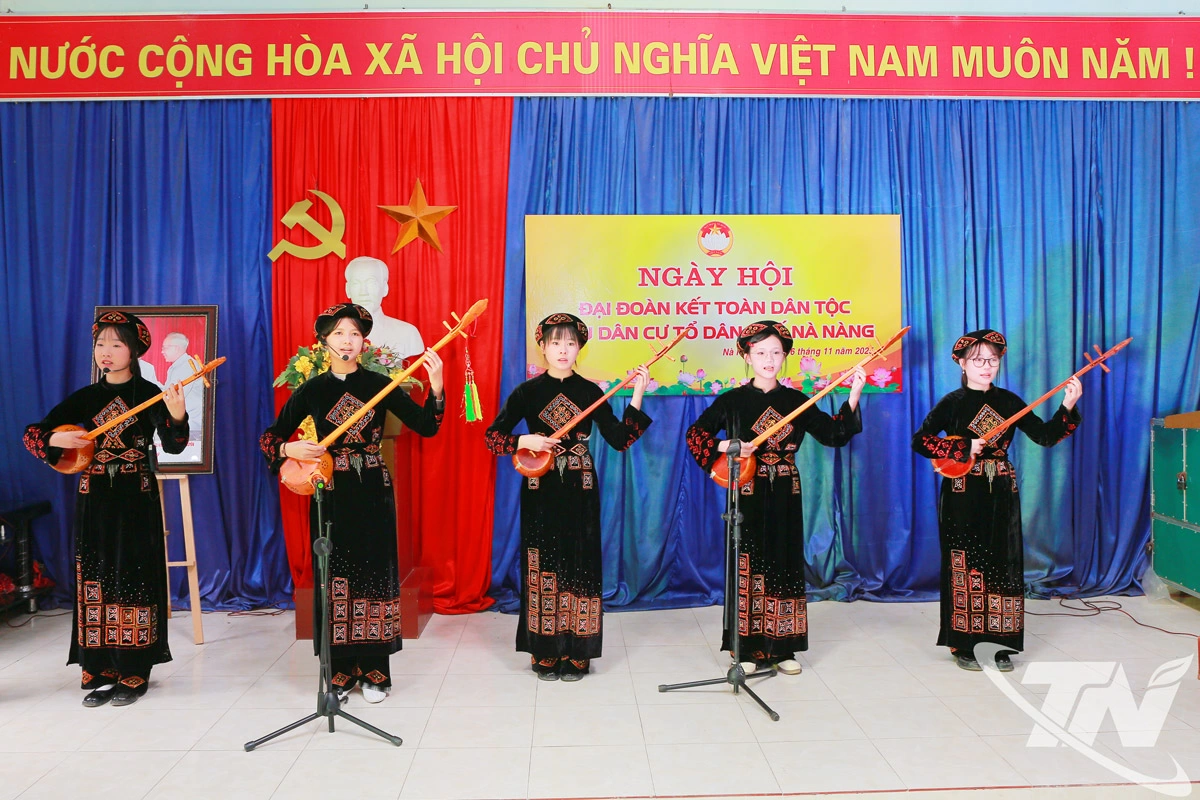
| Residents of Na Nang neighborhood, Bac Kan ward, perform the Tinh lute and Then singing at the National Unity Day celebration. (Photo courtesy of the organizers) |
Observing daily life in villages and hamlets, we can easily see that cultural traditions are being maintained through familiar and accessible forms. As evening falls, the courtyard of the cultural center resounds with the sounds of volleyball, dance practice music, and the chants of health and fitness groups.
In the rural setting, folk songs and traditional musical instruments are sung naturally, without any script or display, but stemming from the legitimate spiritual needs of the people.
From these simple daily activities, intangible cultural heritage is nurtured through the natural participation of the people, creating a vitality that no form of display can replace.
Thanks to regular practice, heritage preservation at the grassroots level is more substantial, demonstrating that traditional art survives not through grand programs, but through the memories, voices, rhythms, and attachment of ordinary people. This is also the most reliable measure that heritage is still alive in daily life, not just existing during seasonal festivals.



However, in reality, many clubs still face numerous difficulties such as a lack of equipment, insufficient funds to purchase musical instruments and costumes; a shortage of qualified instructors; and irregular or interrupted activity schedules. This is a fairly common situation in many localities.
Nevertheless, most clubs still strive to maintain their activities, creating spaces for people to interact, keeping the rhythm of cultural life alive, and passing on folk art forms to the younger generation. Of course, with more appropriate support resources, the quality of activities will be improved, and cultural values will spread more widely.
A vibrant grassroots cultural life helps communities maintain cohesion and provides spiritual support in a rapidly changing social context. Villages and hamlets are not only places of residence but also spaces for connecting people, preserving memories, and shaping ways of life.
The development of arts and sports clubs therefore goes beyond mere entertainment activities, becoming a way for communities to preserve their identity and nurture their spiritual lives.
The 744 arts and culture clubs in villages and hamlets represent 744 streams of culture present in daily life. Each place has its own unique character and organization, but all contribute to keeping traditional identity strong within the community, preventing it from fading amidst the changing times.



Preserving heritage doesn't require grand projects. Heritage thrives when communities cherish, maintain, and practice it every day. A community with a strong cultural foundation always creates a solid groundwork for long-term development.
Source: https://baothainguyen.vn/van-hoa/202511/suc-song-tu-thon-xom-9f97822/