

|
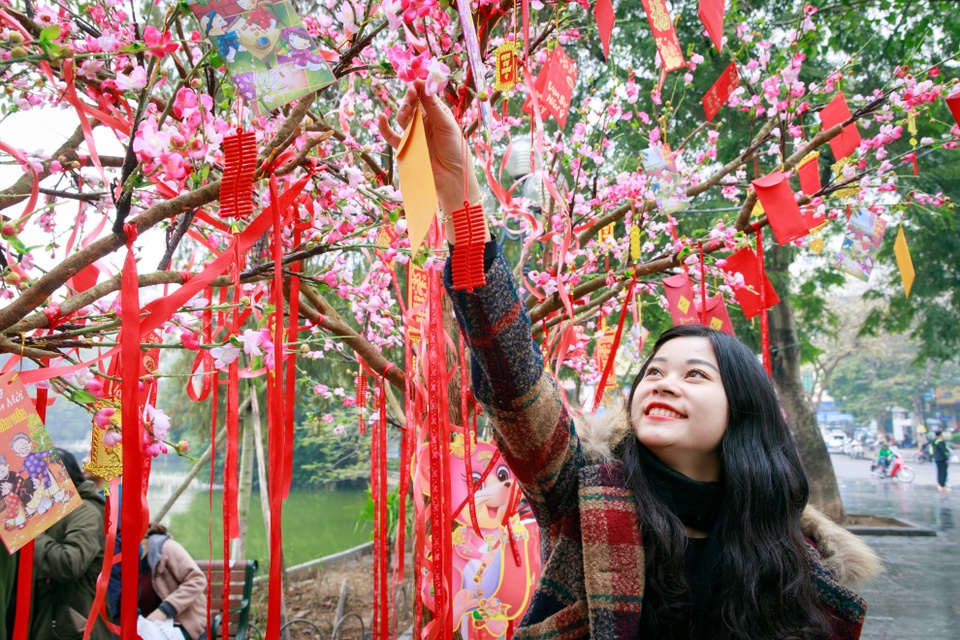
Village festivals, folk singing, first-footing, picking lucky branches... these were once indispensable customs in the Tet (Lunar New Year) traditions of the Vietnamese people in the past. Photo: Times Studio . |
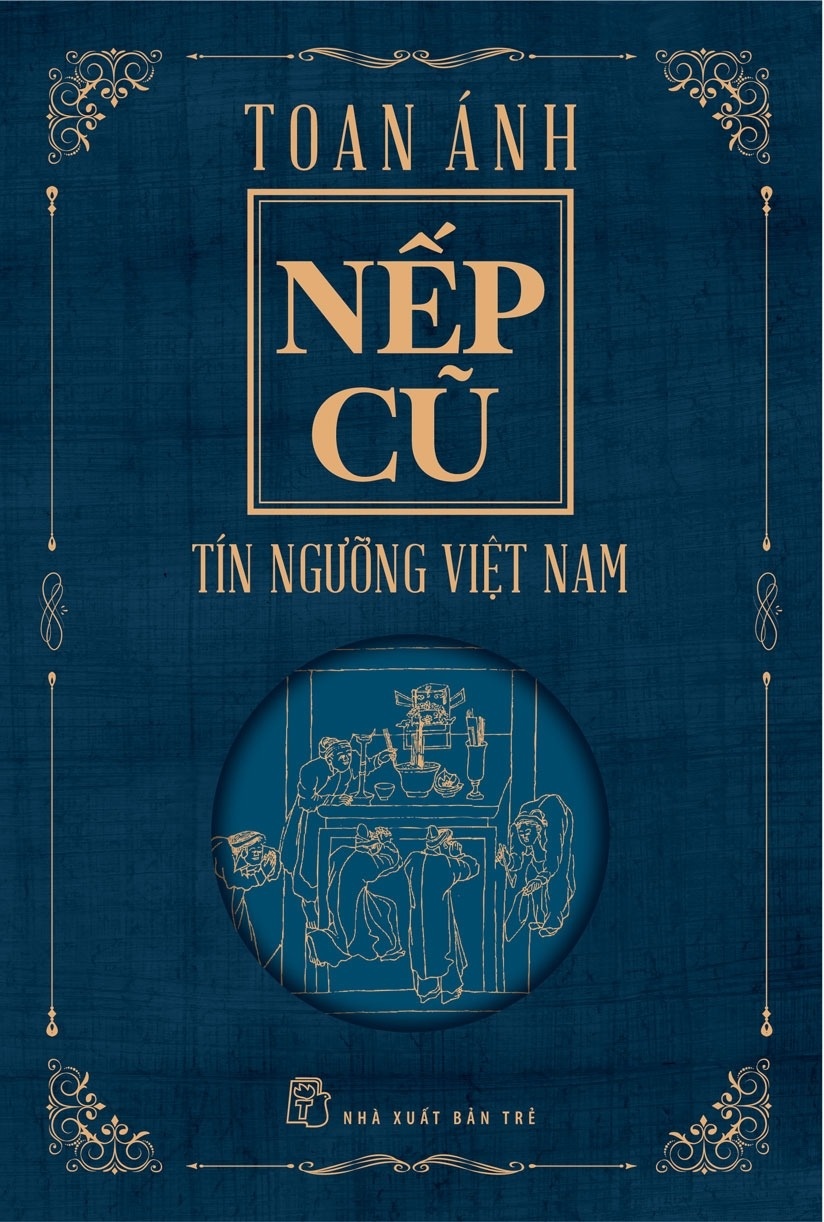
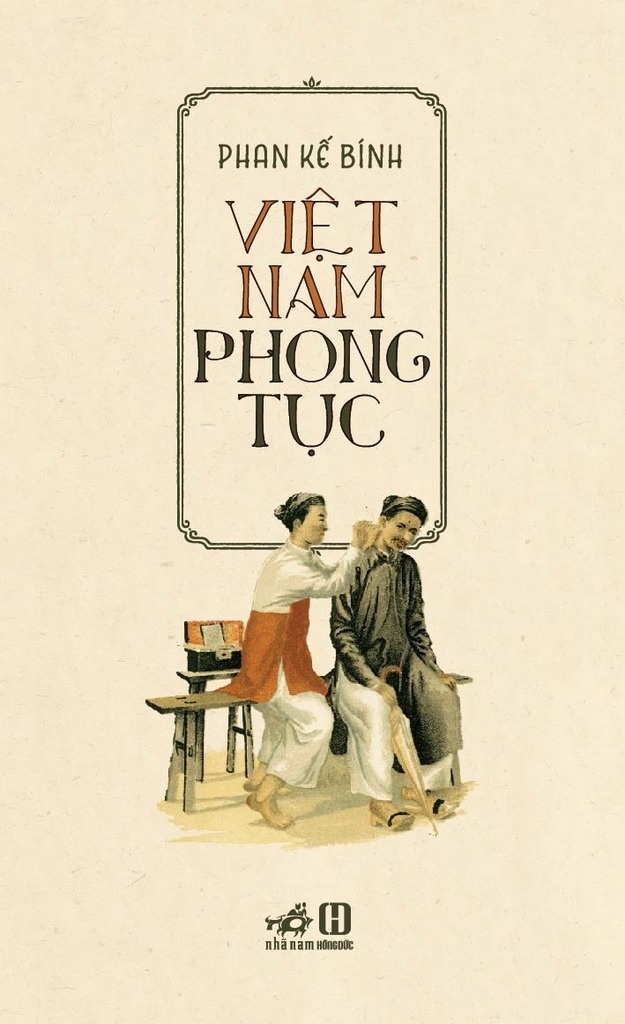
In "Vietnamese Customs ," Phan Kế Bính records images of villages celebrating the full moon festival, from the village communal house to each individual household. Toan Ánh's " Old Customs" meticulously describes the atmosphere of the full moon festival in daily life. These records show that the Vietnamese viewed the last full moon of the year as a milestone. Tet (Vietnamese New Year) began today, with small things like cleaning the altar, setting up the sugarcane field, drying sticky rice, writing red couplets...
The first day of the Lunar New Year atmosphere.
In *Old Customs*, Toan Ánh wrote that preparations for Tet (Lunar New Year) usually begin in early December, "around the 15th of December, they have to buy banana leaves in advance, fearing that prices will rise and they might not be available closer to Tet." From that time on, every household begins pickling onions and cucumbers, preparing mung beans and sticky rice, raising chickens, and slaughtering pigs.
From the 15th day of the 12th lunar month onwards, every family begins preparing for the Kitchen God ceremony.
He recounted that after the full moon, "every household cleaned and decorated their houses to be worthy of the new year. Children cleaned the ancestral altars. Bronze items were polished... New Year's paintings were pasted on the walls and outside the gates." During these days, the Tet atmosphere began to spread throughout the alleys and neighborhoods. Some families had already made banh chung (traditional rice cakes), while others had slaughtered chickens to try their pickled onions and cucumbers. Children began to wear new clothes. Needless to say, everyone understood that Tet was very near.
|
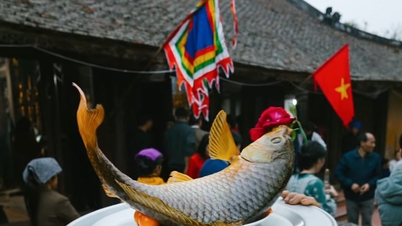
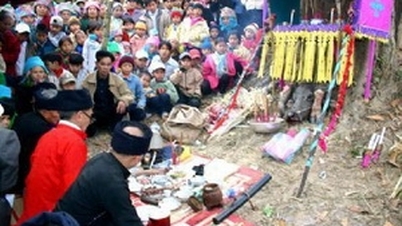
On the full moon day of the lunar month, Vietnamese people traditionally expressed their wishes for peace and well-being through the incense smoke from offerings at home and the rituals at the village temple. Photo: AFML |

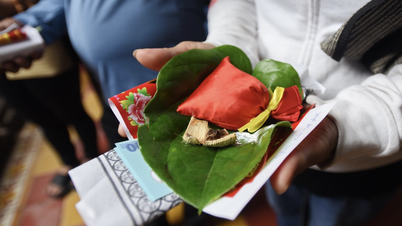
According to Phan Kế Bính's Vietnamese customs , in each lunar month, on the first day of the lunar month and the fifteenth day of the lunar month, the villagers would hold ceremonies at the communal house or temple. The offerings usually consisted of rice cakes, bananas, betel leaves, and wine. A group of five, seven, or fifteen elders wearing robes would present the offerings.
After the ceremony, the offerings are divided in two. One half is arranged on a tray for the elders to share with each other, known as the "ancestor feast." The other half is divided equally among everyone. "Even a single piece of betel nut, a piece of rice cake, or a banana must be distributed fairly."
He said that if the person in charge of distributing the offerings fails to give someone their share, "it can lead to resentment, and sometimes even lawsuits." Besides the offerings to the God of Fortune at the village temple, if there are other shrines in the commune, offerings of fruit and cakes must also be made on the correct days of the new moon and full moon.
Tet (Vietnamese New Year) in general - Tet in particular.
The 15th day of the 12th lunar month marks the beginning of a series of rituals and customs for Tet (Lunar New Year). These traditional customs and rituals are documented in research works.
Among these, the New Year's Eve celebration features important rituals. Toan Ánh explains that Vietnamese people offer sacrifices on New Year's Eve with offerings placed outdoors to bid farewell to the old deity and welcome the new one. He writes: "Our custom is to believe that each year there is a deity in charge of human affairs, and at the end of the year, one deity hands over the work to another." The offerings usually include a pig's head or a chicken, sticky rice cakes, fruits, candies, wine, and betel nuts.
Immediately after the ceremony, many people go to pick lucky branches for the spring. They break off a small branch and bring it home with the belief that they are "receiving blessings from heaven and earth, bestowed by gods and Buddhas." Others ask for incense sticks at the temple and place them on the altar. According to Toan Anh, the flame from the incense stick symbolizes prosperity.
He also mentioned the custom of "first-footing." Families usually ask someone with "good luck" to be the first to enter their house in the new year. This person is believed to bring good fortune throughout the year. Toan Ánh recounted: "The person who comes to 'first-foot' the house wishes the homeowner good luck all year round."
|
Phan Kế Bính's * Vietnamese Customs * and Toan Ánh's *Old Traditions * contain much content about the life, beliefs, and festivals of ancient Vietnamese people. |
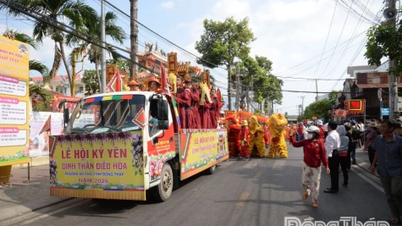
Phan Kế Bính focused on community activities after Tet (Lunar New Year). He recounted the initiation ceremony, which usually took place in January or February, marking the beginning of the village festival. “The ritual bathing took place the day before; villagers used sandalwood water to clean the ancestral tablets, then adorned them with robes and hats, and offered sacrifices for a week.” Afterward, everyone dipped their hands in the water used to clean the ancestral tablets to “contemplate the divine essence,” and each person received a small piece of cloth called a “red blob,” which they took home and tied to their children's wrists for good luck.
During the festival days, the villagers sang devotional songs, beat drums, and shouted three times at night. He described it as follows: "One person shouted 'hi… ha ha ha…', the whole village echoed 'hi…', then firecrackers and horns blared loudly for a while." This scene repeated three times before the drinking party ended, while the singing continued until dawn.
He also recounted the custom of friendly relations between villages that worshipped the same deity. Villages would invite each other to attend ceremonies, share vegetarian meals, and listen to songs. If there was any negligence in hospitality, it could easily lead to conflict. "Sometimes, one village or another would become jealous of each other and start fighting until heads were broken and ears were torn."
However, Phan Kế Bính also noted that this was a true "Tet" celebration for the villagers, who had toiled hard all year and now had time to relax and enjoy themselves. "Our people are thrifty; they don't spend much on food and expenses, and they have plenty of fields, rice, and grain, but there's no way to celebrate together. So, they take advantage of the custom of worshipping spirits and deities, inventing various games and activities, but ultimately, it's all just for the sake of fun," he wrote.
Source: https://znews.vn/tet-bat-dau-tu-ram-thang-chap-post1624618.html






![[Photo] Procession of a giant "pig" weighing over 200kg at the La Phu Village Festival](https://vphoto.vietnam.vn/thumb/402x226/vietnam/resource/IMAGE/2026/03/02/1772444501339_anh-man-hinh-2026-03-02-luc-16-40-20.png)




















































Comment (0)