

In 2024, the number of Tien Yen chickens ready for slaughter is estimated at 1.36 million, a 6.3% increase compared to the same period. While the number of commercial chickens increases annually, this also comes with challenges: how to consume this increased quantity? If we only focus on developing chicken farming, will consumers remain interested in it indefinitely, especially when many other localities are also developing their own chicken farms and supplying them to Quang Ninh for consumption, creating competition in every aspect?
Raising chickens under the mangrove forest canopy.
Recently, I visited Tien Yen district to learn about bringing Tien Yen chickens to the Tet market. A leader recounted a story: once, when he went to Hanoi to market Tien Yen chickens, a partner said: "Tien Yen chickens are more expensive than chickens from other localities, so when we import them, we have to sell them at a higher price." So, what reason would customers have to pay more for Tien Yen chickens when they could buy chickens of the same weight from other localities at a lower price? If we explained that Tien Yen chickens taste better, would that convince everyone, since everyone has different tastes?
The partner's feedback left the leader of Tien Yen district deep in thought. If they simply chased after the cheapest market prices, people would raise chickens carelessly, focusing only on faster growth, which would reduce meat quality and affect food safety. However, to compete fairly, they couldn't simply follow the old ways; they needed to innovate in both chicken farming and processing methods.
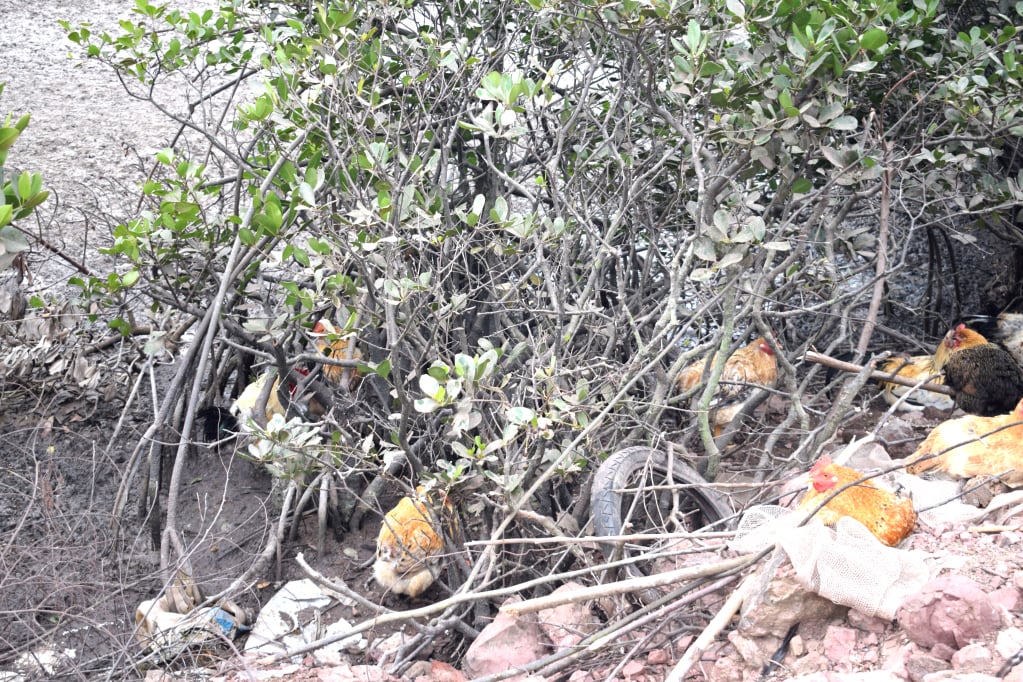
One of the innovative approaches to chicken farming is in Hai Lang commune, which boasts numerous mangrove forests where chickens are raised under the mangrove canopy. We learned that Hai Lang has 11 households raising chickens along the beach. Notably, these households don't even need to enclose their chicken coops with netting, as the chickens live almost in isolation on the beach, with the natural forest and hills above, allowing them to freely climb and forage for food. Accompanied by Hai Lang commune officials, we visited the poultry farm of Mr. Ly Viet Phuc in Binh Minh village. Mr. Phuc owns a vast area of land comprising 8 hectares of beach and 7.8 hectares of hills. What's remarkable is that, despite the large area of hills, Mr. Phuc hasn't cut down the natural trees to plant acacia trees like other households who were allocated forest land; instead, he has preserved the natural forest and hills to raise chickens.
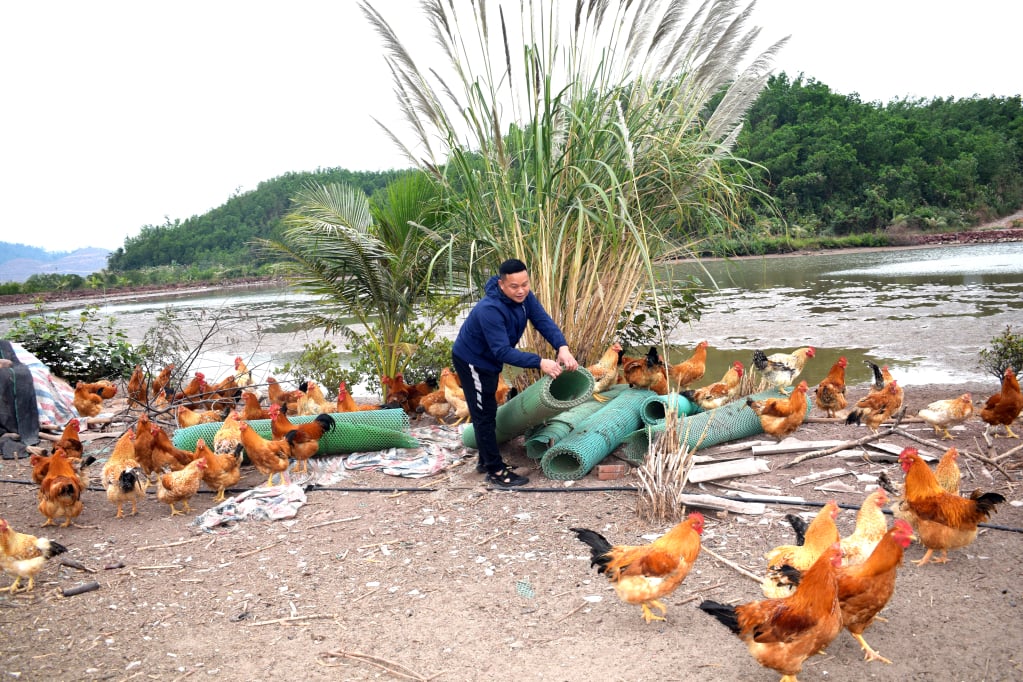
Mr. Phuc raises nearly 20,000 chickens a year. Despite this enormous number, he still can't meet the demand from restaurants during Tet (Lunar New Year). Even on regular days, large supermarkets in Hanoi place large orders of up to 1,500 chickens per month. Although his farm is located far from residential areas, selling his chickens doesn't seem to worry him. During Tet, not only supermarkets but also coal mining companies come to him to buy chickens as Tet gifts for their employees.
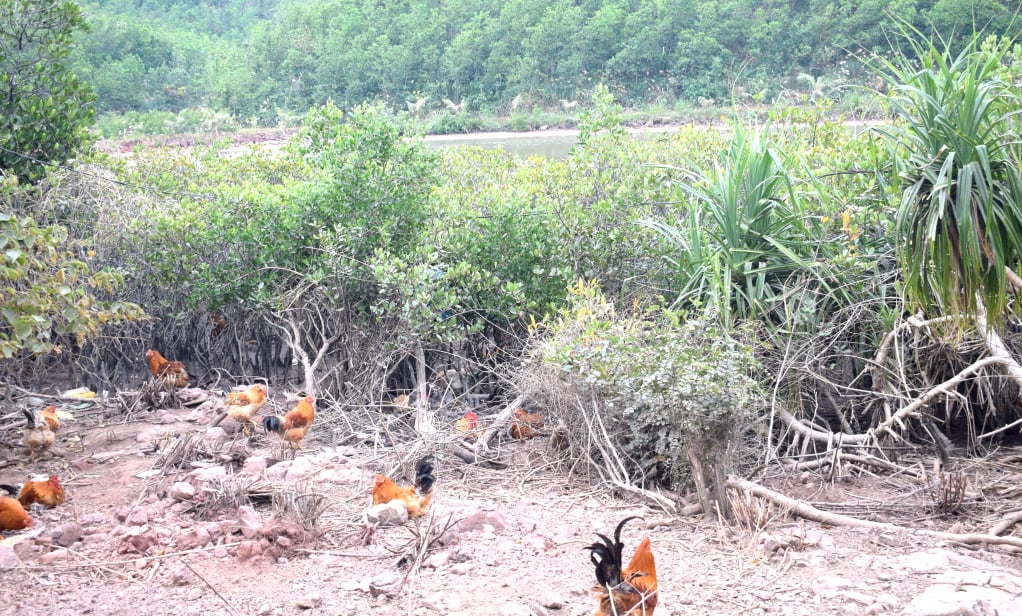
Mr. Phuc raises dozens of times more chickens than other households in the area, yet he remains unfazed because he raises them both on the hills and foraging under the mangrove forest canopy. Below the natural forest hills are beaches with mangrove forests, home to many types of crabs, shrimp, prawns, and small fish. When the tide recedes, it leaves behind many natural products brought in by the sea, which become food for the chickens. Mr. Phuc says: Chickens raised on the beach are very healthy, less prone to disease, and grow faster than chickens raised only on land. Because each time the tide rises and falls, the beach is cleaned, and the seawater has high disinfectant properties, killing many harmful bacteria, helping the flock stay healthy.
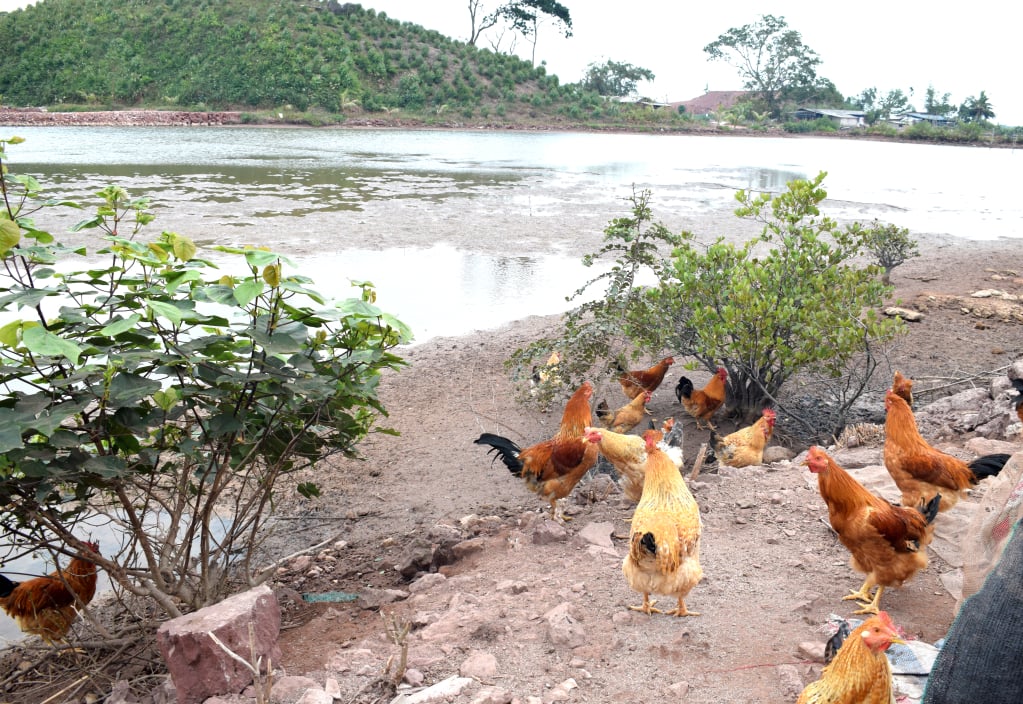
When chickens forage for food daily, their bodies become more toned and their meat becomes more flavorful. Furthermore, when chickens are free-range, they forage for food themselves, significantly reducing Mr. Phuc's annual feed costs compared to other households that raise chickens in confinement. His chickens also sell at a more competitive price, attracting more customers.
Developing a herd of herbal-fed chickens.
In poultry farming, many farmers overuse antibiotics to prevent diseases in chickens, causing concern among consumers. This raises the question: how can we ensure chickens remain healthy without antibiotics, thereby improving meat quality and consumer safety?
Tien Yen has a very large forest area, including cinnamon plantations. Throughout the district, seven communes cultivate cinnamon with a total area of 857.31 hectares, mostly in Dai Duc, Ha Lau, and Phong Du communes. Of these, Dai Duc commune has the largest cinnamon plantation area at 400.99 hectares, accounting for 46.8% of the total cinnamon plantation area in the district. Cinnamon bark has long been considered a natural medicine. Tien Yen also has many wild plants such as the wild-growing *Dendrobium nobile* (also known as *Dendrobium nobile*), which is a significant source of medicinal herbs to supplement chicken feed.
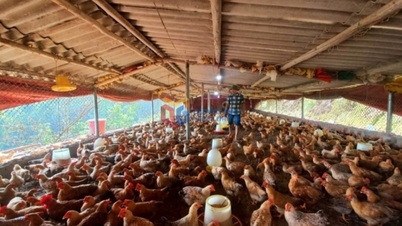
From October 2023 to December 2024, Tien Yen district implemented a project on applying herbal-supplemented feed rations to improve meat quality and the efficiency of commercial Tien Yen chicken farming. The project was carried out jointly by Tien Yen district and representatives of the research team from the Vietnam Academy of Agriculture , with the Tien Yen District People's Committee as the investor. Through this, 100 poultry farms in the district were selected from those with large farming areas (over 3,000m2 - 8,000m2) and raising thousands of chickens per farm to participate in the initial trial. The project involved grinding cinnamon into powder and mixing it into chicken feed at a rate of 2%, applied to chickens 13 weeks of age and older. According to the District Department of Agriculture and Rural Development, after a year of testing, chickens raised using this method have better disease resistance, fewer respiratory and digestive diseases, grow faster, have reduced fat content while still retaining the characteristic aroma of Tien Yen chicken, and require less antibiotics, giving consumers more peace of mind when consuming chicken meat.
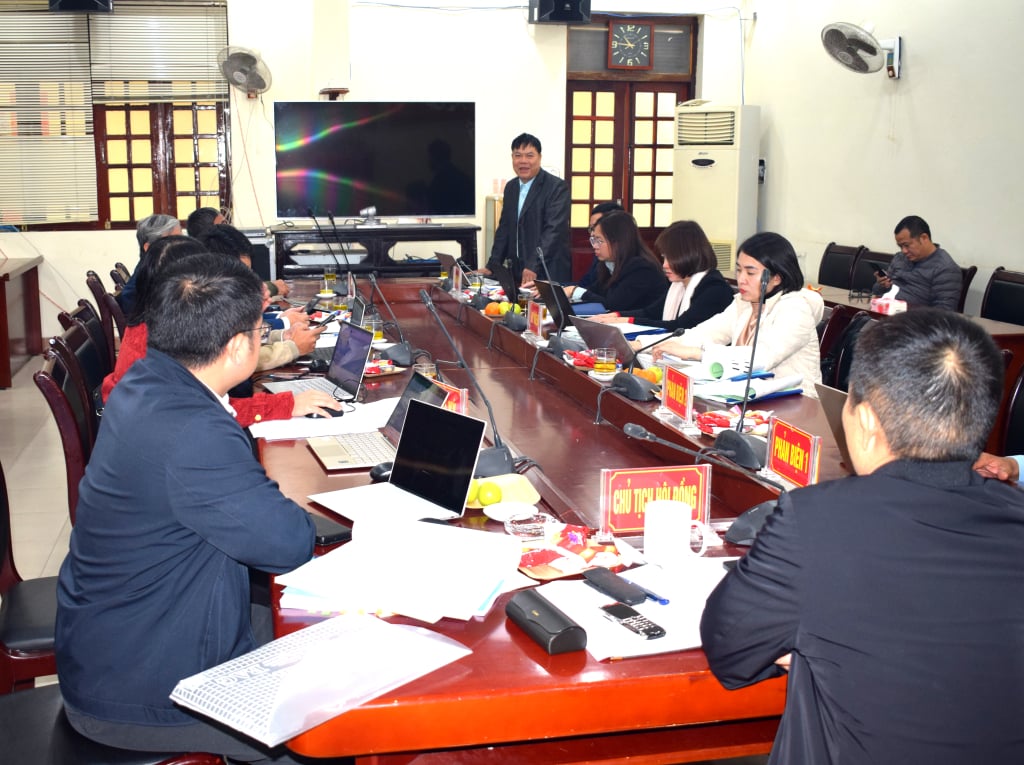
In late December 2024, the "Project on Applying Herbal Supplements to Feed Rations to Improve Meat Quality and Efficiency in Commercial Chicken Farming in Tien Yen" was evaluated by the Tien Yen District People's Committee and representatives of the research team from the Vietnam Academy of Agriculture. At the evaluation, the project was highly praised for its feasibility and concluded that it could be piloted and scaled up. The members of the evaluation council voted unanimously, with 100% agreeing that the project met its objectives.
Speaking at the conference, Mr. Vi Quoc Phuong, Vice Chairman of the District People's Committee and Chairman of the Appraisal Council, requested the lead unit to quickly finalize the project based on consultations with the review representatives so that the project can be applied, implemented, and replicated throughout the district. He also requested relevant units to register the research results with the Quang Ninh Provincial Department of Science and Technology for early issuance of scientific certification. Based on this, the lead unit will hand over the research results to the investor for implementation and replication. In the coming time, communes need to strengthen propaganda and mobilization to apply the project in practice to improve the quality of meat and the efficiency of raising commercial Tien Yen chickens in the district, thereby increasing people's income.
Thus, from the Lunar New Year of the Snake in 2025 onwards, on the feast tables of loyal Tien Yen chicken lovers, the chicken dish has undergone a transformation while retaining the original Tien Yen chicken flavor, becoming even richer and, most importantly, using naturally healthy chickens that are not over-treated with antibiotics.
Source

![[Photo] General Secretary and President To Lam receives Amazon's Senior Vice President David Zapolsky](https://vphoto.vietnam.vn/thumb/1200x675/vietnam/resource/IMAGE/2026/05/22/1779466547770_a1-bnd-3513-6601-jpg.webp)














![[Infographic] 8 key tasks to implement Resolution No. 2 of the 14th Central Committee on preventing and combating corruption, waste, and negative phenomena in the new period.](https://vphoto.vietnam.vn/thumb/402x226/vietnam/resource/IMAGE/2026/05/23/1779494812705_2_sua_ae609sss_1.jpeg)



























































Comment (0)