

Microsoft has spent billions of dollars getting people like Tyson Jominy to use Copilot, an AI personal assistant designed to help consumers navigate things more easily. But the moments when Copilot appears on Jominy’s computer screen are often an accident, the result of accidentally pressing an old control key.
According to Bloomberg , Jominy often uses ChatGPT on his smartphone, or Grok, a chatbot that helps him quickly grasp posts on X. At work, Jominy, who manages data and analytics teams, still uses Copilot, but he says he has no interest in using it outside of work hours.
Microsoft is being left far behind.
Bloomberg , citing sources, reported that at a company-wide meeting in May, CEO Satya Nadella told employees that the goal was to have hundreds of millions of people using Microsoft's AI suite of applications.
However, according to research firm Sensor Tower, while Copilot has only been downloaded 79 million times, ChatGPT – a pioneering chatbot created by Microsoft's OpenAI partner – recently surpassed 900 million downloads.
Despite spending heavily on artificial intelligence and related infrastructure in recent years, the world's largest software producer is still struggling to surpass ChatGPT and a host of other AI assistants.
Microsoft's stock has risen about 20% in 2025, largely based on Wall Street's expectation that the company's AI bet will secure its future. However, some investors are beginning to lose patience.
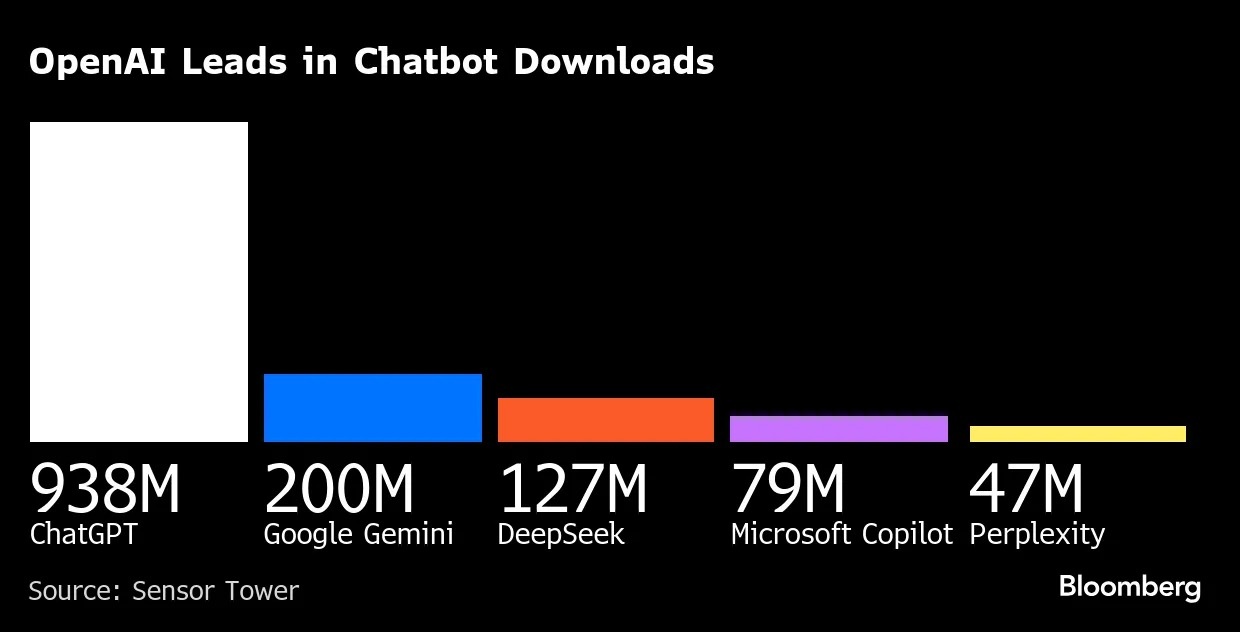 |
Copilot has only been downloaded 79 million times, while ChatGPT – a pioneering chatbot created by Microsoft's OpenAI partner – recently surpassed 900 million downloads. Photo: Bloomberg. |
“They have to win this fight. If they don’t, someone else will,” said Gil Luria, an analyst with DA Davidson.
To date, Microsoft is betting its future on three Copilot-branded products: a programming assistant for developers, a work assistant embedded in Outlook and Word, and a personal assistant built to help people like Jominy in their daily lives.
In fact, Microsoft has been integrating AI into its products for the past two years. Its Bing search engine has been reimagined as an AI web-surfing assistant, and Windows users have been promised a chatbot that can “personalize and navigate for you.”
Behind the scenes, however, the software giant’s engineers were struggling to meet the demands its executives were pushing, and whatever advantage Microsoft gained from its close relationship with OpenAI didn’t translate into the expected market share gains in products like Bing.
Far-fetched ambition
Nadella expressed dissatisfaction with the slow progress and hired Mustafa Suleyman 15 months ago to run Microsoft's consumer AI operations. Suleyman is also the founder of two highly-rated AI startups, DeepMind and Inflection, and is known for his ability to recruit and motivate outstanding engineers.
Just as when managing large teams at Alphabet's Google, Suleyman openly admits to making mistakes in setting "quite unreasonable expectations."
In addition to leading the user-centric Copilot teams, Suleyman is also responsible for a number of existing products like the Edge browser, MSN news site, and Bing search engine—products that have millions of users but little pop culture value.
According to Bloomberg, shortly after joining Microsoft, Suleyman separated Copilot's consumer software from its workplace version. This reflected an ambition to allow users to utilize separate AI tools depending on whether they are at work or at home.
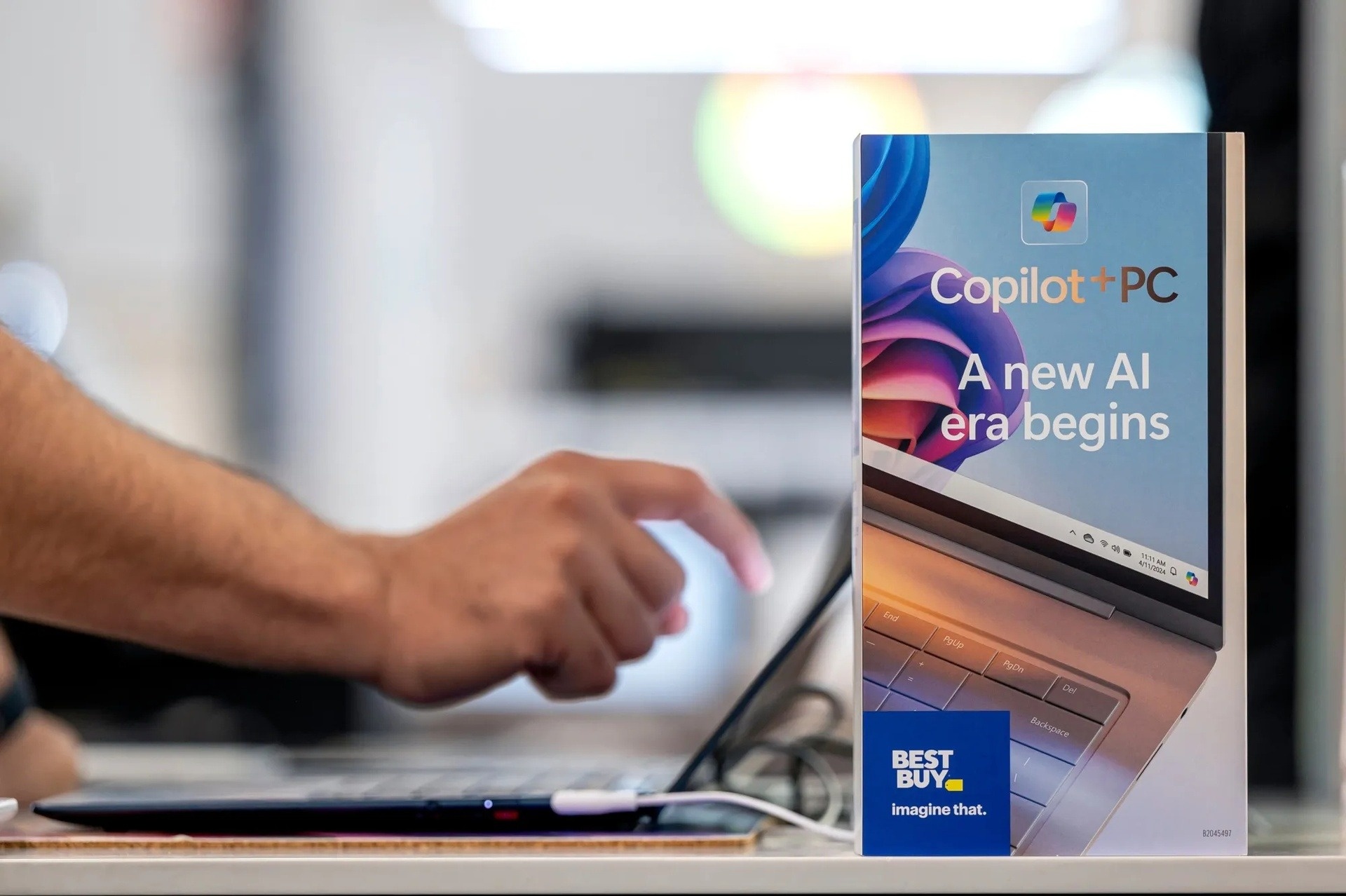 |
Despite receiving billions of dollars in investment, Copilot is still struggling to find a foothold in the chatbot market. Photo: Bloomberg. |
However, this ambition also meant that the consumer version of Copilot, which had been developed on the same AI models as the enterprise version, had to be rebuilt from scratch. It was a difficult transition.
Users who are used to simply tapping a button to invoke Copilot on Android devices will now have to get used to using an app to interact with the software. While Microsoft has tried to reintroduce some features, complaints of bugs like conversations ending unexpectedly, or cases of Copilot deleting conversations that it should have remembered, continue without a solution.
Looking at Microsoft's Copilot ads, it's easy to imagine a range of basic things an AI assistant could do, from scheduling appointments to identifying which programs are draining your battery. After all, Microsoft charted a similar path a decade ago with its Cortana voice assistant.
By comparison, in 2015, Cortana could access a user's calendar to schedule an appointment, compose an email, or set a reminder for when the user arrived at a certain location. However, the Copilot app installed on Windows today can't even turn up the volume or open Outlook.
Source: https://znews.vn/the-kho-cua-microsoft-post1569539.html








































































![[Podcast] National Assembly approves personal allowance deduction of VND 15.5 million/month](https://vphoto.vietnam.vn/thumb/402x226/vietnam/resource/IMAGE/2025/12/10/1765340032834_hnm-1cdn-vn-thumbs-540x360-2025-11-04-_hnm-1cdn-vn-thumbs-540x360-2025-06-27-a7b22b8722-_thu.jpeg)


















Comment (0)