

Effective from mid-February 2025, after more than a month of implementation, the new regulations of Circular 29 of the Ministry of Education and Training have had a clear impact on schools, teachers, and parents. Public opinion expects that tightening the regulations on extracurricular tutoring in schools will eliminate the paradoxes in education. Starting with this issue, Dai Doan Ket Newspaper will publish a three-part series: Restoring the True Value of Formal Teaching.
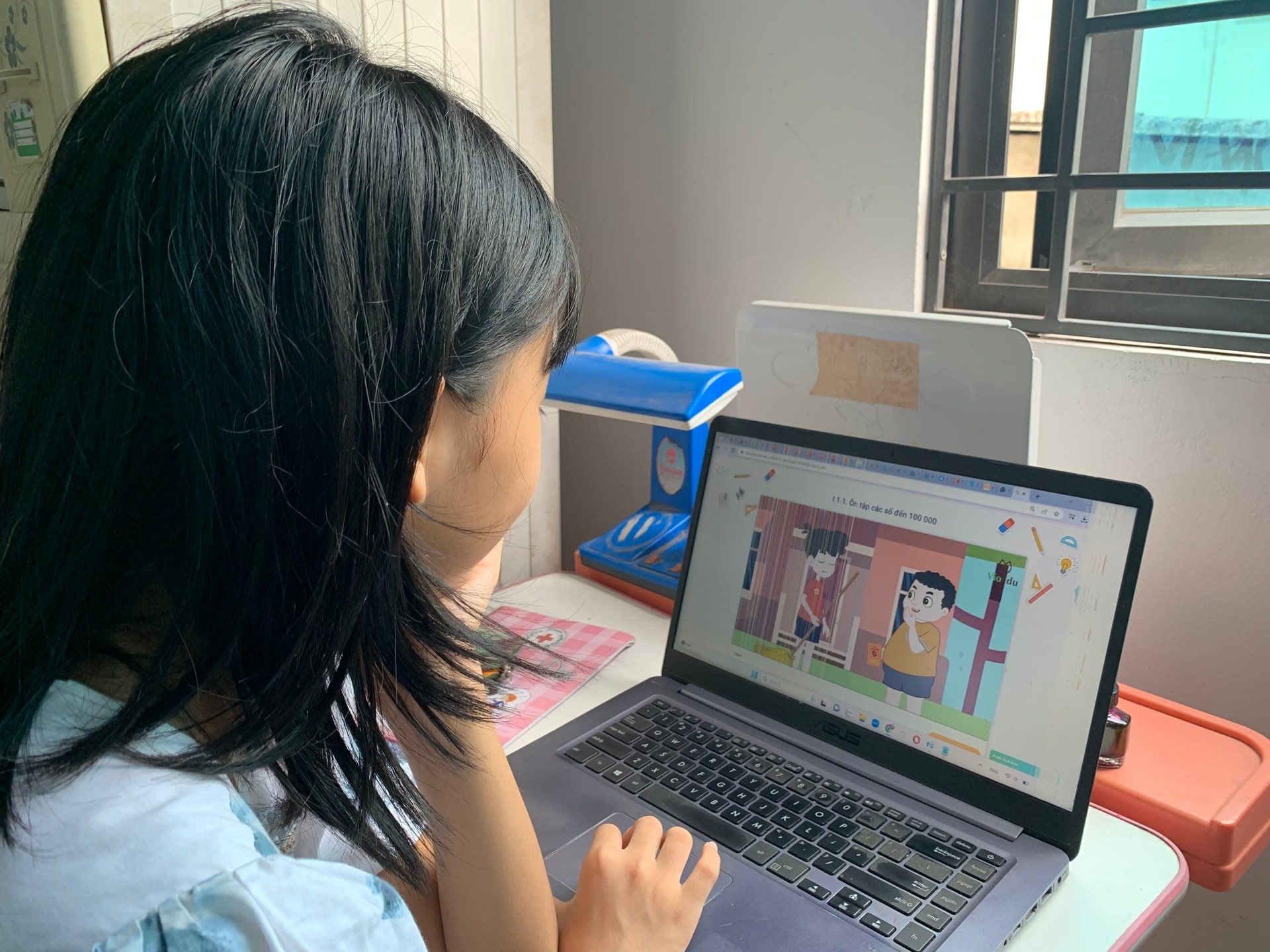
Circular 29 was implemented as important final exams were approaching, and it was also the first exam under the new curriculum, so it was inevitable that schools, teachers, parents, and students would feel anxious. Initially, however, there have been gradual changes in mindset, habits, and teaching methods, helping to enhance students' self-learning abilities.
A catalyst for change in schools and among students.
With the intensity of extra classes at school decreasing from 5 afternoons a week with a total of 15 lessons to only 6 lessons a week for the 3 subjects in the high school entrance exam, Nguyen Lan Chi (a 9th-grade student in Thanh Xuan district, Hanoi ) expressed her worry about not being able to meet the requirements of the upcoming exam. “My mother is even more worried than me. She asked many friends and even went to tutoring centers, but it’s not easy to find a class that suits my level,” Lan Chi said, adding that she is not too worried about English because she has consistently taken two extra classes in grammar and communication for many years without interruption.
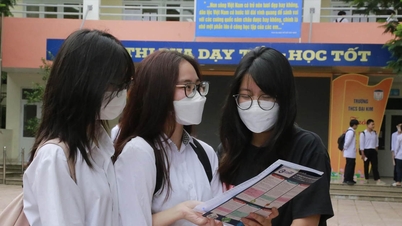
This is also a concern for many other students and parents when Circular 29 came into effect, significantly reducing the amount of time schools dedicate to exam preparation for 9th and 12th graders. Despite being a high-achieving student, Vo Ta Le Cuong, a 12th-grade student in class 12A1 at Anh Son 1 High School ( Nghe An province ), and his classmates still felt anxious and disrupted when the school temporarily suspended extra classes during the first week of implementing Circular 29. After about two weeks of suspension, the school has resumed exam preparation classes for 12th-grade students, but due to the limit of 2 lessons per subject per week, Cuong has determined that he needs to make an effort to self-study and review according to the teachers' guidance. In class, he focuses on listening to lectures and immediately asks questions about anything he doesn't understand. At home, he reviews different types of problems, does practice tests, and regularly connects with his teachers if he has any questions to get clarification…
Mr. Nguyen Tran Duc, Vice Principal of Anh Son 1 High School, said that 514 out of 517 students registered to participate in the graduation exam preparation course at the school. To effectively utilize classroom teaching time and free review sessions, the school has instructed teachers to closely follow the curriculum and teaching plan while simultaneously reviewing with students. The school has also rearranged the teaching schedule so that teachers teaching exam subjects, in addition to the 19 prescribed lessons, have some extra time in the afternoons to prepare students for the exam.
With years of experience in preparing students for final exams, Ms. Dang Thi Ngoc Ha, a math teacher at Anh Son Secondary School (Nghe An), said that although the review time at school has been reduced, students are not being neglected. She communicates with students and parents to encourage them to proactively self-study at home, and has created a Zalo group to support students who need help outside of class. The school also introduces students to several review and mock exam websites from the Nghe An Department of Education and Training to provide them with an additional effective learning channel. “With the solutions implemented, the efforts of both teachers and students, and the encouragement and close supervision of parents, I believe that students will still acquire the basic knowledge needed to pass the important final exam and achieve the best possible results,” Ms. Ha shared.
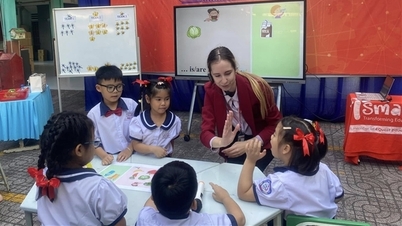
Following the implementation of Circular 29, regular class time, as the most important period for teachers to impart knowledge and guide students' learning, has received special attention from schools and teachers. Many teachers have reported proactively adjusting their regular class and exam preparation plans. In addition to thoroughly teaching fundamental and core knowledge, teachers dedicate time to guiding students on self-study methods. After each lesson, teachers assign exercises categorized by student abilities for students to complete at home with parental support and discussions with teachers whenever they have questions. The focus is on ensuring students understand each topic thoroughly and supplementing it with review topics to ensure students firmly grasp the knowledge.
Teacher Le Thi Thuy Nga (Son Tay High School for the Gifted, Hanoi) said that in addition to providing detailed guidance to help students understand the lessons in class, each teacher is also instructed by the school to provide maximum support when students are self-studying. “On their journey to acquire knowledge, besides the guidance of their teachers, students have many supporting tools and online learning programs to refer to… Online resources and video lectures are also readily available on free platforms that teachers recommend to diversify learning methods and stimulate students' interest for the best learning results,” Ms. Nga said.
The school and the family work together.
According to the 2018 General Education Program, self-learning ability is one of the core competencies that need to be formed and developed in students. Supporting the principle that guiding students to self-learn should be prioritized, Associate Professor Dr. Chu Cam Tho (Vietnam Institute of Educational Sciences) frankly pointed out a reality: students' self-learning ability is currently limited. “The most effective learning is self-learning. Attending too many extra classes will negatively impact students' self-learning ability. General schools have the responsibility to train students in the curriculum and the mission to create learning opportunities for them. From there, they can help students adapt to different admission models,” said Associate Professor Dr. Chu Cam Tho.
In the digital age, self-learning is becoming an essential skill as students are no longer dependent on traditional extra classes. Dr. Hoang Ngoc Vinh, former Director of the Department of Professional Education (Ministry of Education and Training), emphasized that the greatest benefit of self-learning is empowering students to be proactive. They not only acquire knowledge but also develop important skills such as time management, independent thinking, and problem-solving abilities.
To help students develop self-learning abilities, Dr. Hoang Ngoc Vinh pointed out that schools need to create a learning environment that encourages self-learning by developing open learning spaces such as libraries, research rooms, and group study areas so that students can proactively explore knowledge. Teachers need to innovate teaching methods to encourage students to discover knowledge independently, guide them through projects, and participate in competitions to increase opportunities to hone their self-learning skills. Teachers should teach students how to create study plans, take effective notes, read scientific books, and search for materials online.
In the context of tightly controlled tutoring, this is an opportunity for society as a whole to re-evaluate the true value of learning at school and at home, and to find practical solutions to support students. This includes helping students build daily self-study habits by establishing fixed study times, independently searching for materials, and expanding their knowledge beyond textbooks. Parents need to support and encourage their children to self-study using reference materials, supplementary books, and exam preparation software.
Eliminate inconsistencies in teaching and learning.
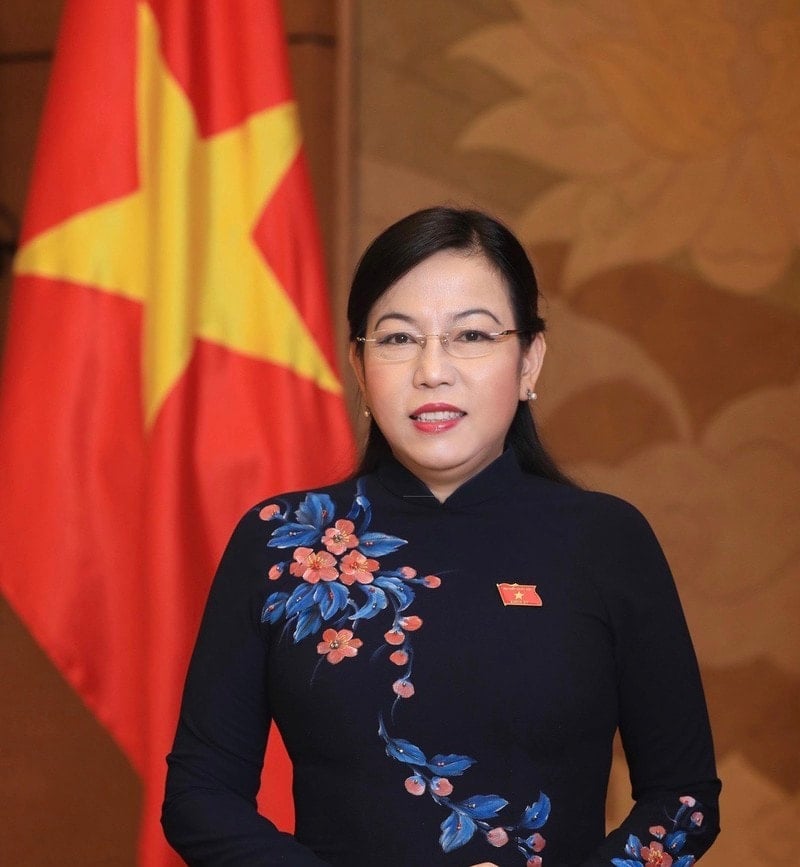
At the 43rd session of the National Assembly Standing Committee, Chairman of the Committee on Delegate Affairs Nguyen Thanh Hai assessed that in the past period, the Ministry of Education and Training, as well as localities, have quickly, decisively, and strongly intervened to rectify shortcomings and limitations in the implementation of extracurricular tutoring.
According to Ms. Nguyen Thanh Hai, the regulations on supplementary teaching and learning in Circular 29 have restored the true value of imparting and teaching core classroom knowledge. Teachers are responsible for teaching in a way that ensures the majority of students achieve at least a good result in exams. High-achieving students or those with weaker abilities can attend supplementary classes and tutoring as prescribed. This is the responsibility of teachers to train students to meet the standards and to create exam questions that are not too difficult or tricky, requiring students to attend supplementary classes to answer them.
(To be continued)
Source: https://daidoanket.vn/tra-lai-gia-tri-dich-thuc-cho-giang-day-chinh-khoa-bai-1-thuc-day-tinh-than-tu-hoc-cua-hoc-sinh-10301680.html


![[Image] Central Party Office summarizes work in 2025](/_next/image?url=https%3A%2F%2Fvphoto.vietnam.vn%2Fthumb%2F1200x675%2Fvietnam%2Fresource%2FIMAGE%2F2025%2F12%2F18%2F1766065572073_vptw-hoi-nghi-tong-ket-89-1204-jpg.webp&w=3840&q=75)


































































Comment (0)