


Hanoi, with its status as the thousand-year-old capital and also the political , economic, and cultural center of Vietnam, has long identified culture as "central to its development policy." This reflects the general trend of many major cities in Southeast Asia, where cultural identity is increasingly integrated into urban development strategies.
1. The concept of cultural identity is understood as the sum total of values, beliefs, customs, and symbols that help a community affirm its distinctiveness and historical continuity. At the urban level, cultural identity reflects not only architectural forms or tangible heritage but also encompasses the lifestyle, social practices, and collective memory of its inhabitants, thereby creating a unique character for a city.
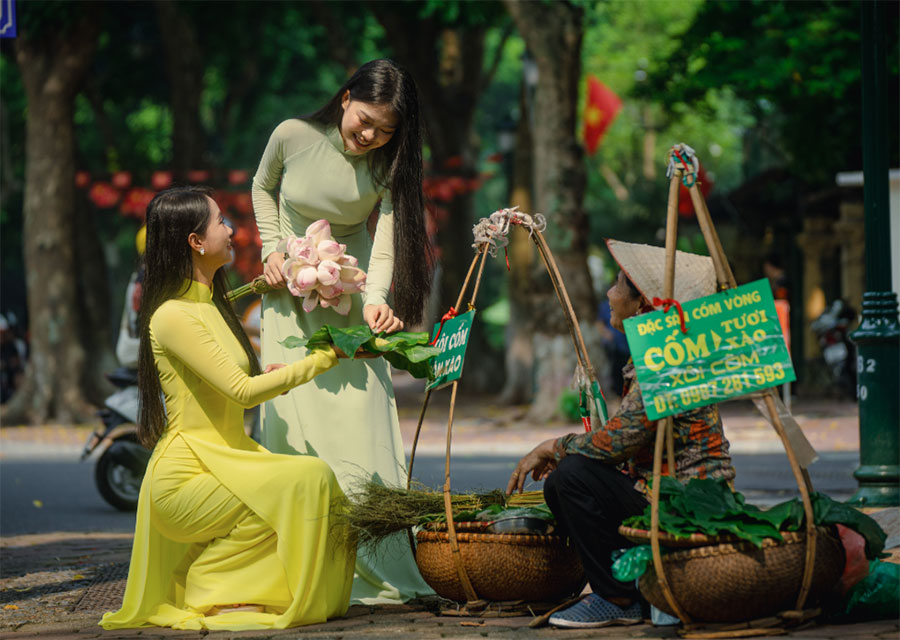 |
Young women in Hanoi stroll through the streets in autumn. Photo: KHANH HOA |
Hanoi possesses significant opportunities to leverage its cultural identity as a development resource. Firstly, as the capital city, Hanoi enjoys a special political and administrative status, allowing it to become a hub for national and international resources. Secondly, its rich and diverse heritage, encompassing both tangible and intangible assets, provides a valuable foundation for developing the cultural industry and building urban branding. Thirdly, the rise of young artists, cultural entrepreneurs, and creative startups is redefining the "Hanoi spirit" in the context of globalization. Finally, expanding international cooperation, particularly through participation in the UNESCO Creative Cities Network and the World Cities Forum, allows Hanoi to access more experience, resources, and opportunities to enhance its position on the regional map.
Hanoi reflects a complex process where cultural identity is both maintained and recreated within the flow of modernization and globalization. The city faces crucial choices: either allow its identity to erode during development, or proactively transform it into a strategic resource, contributing to positioning Hanoi as a cultural and creative hub in Southeast Asia.
2. When placing Hanoi within the context of Southeast Asia, similarities in the rapid urbanization process are evident, but differences in how cultural identity is utilized to serve development are also clear.
Singapore is a prime example of using culture as a holistic development strategy. Singapore has successfully synchronized three elements: preservation, innovation, and branding.
Bangkok, however, has pursued a different path. In recent years, the Thai capital has placed particular emphasis on revitalizing public spaces. Street art, night markets, and outdoor performance spaces have become attractions for both residents and tourists. The lesson from Bangkok shows that cultural identity is not only preserved in historical heritage but is also continuously recreated in contemporary life.
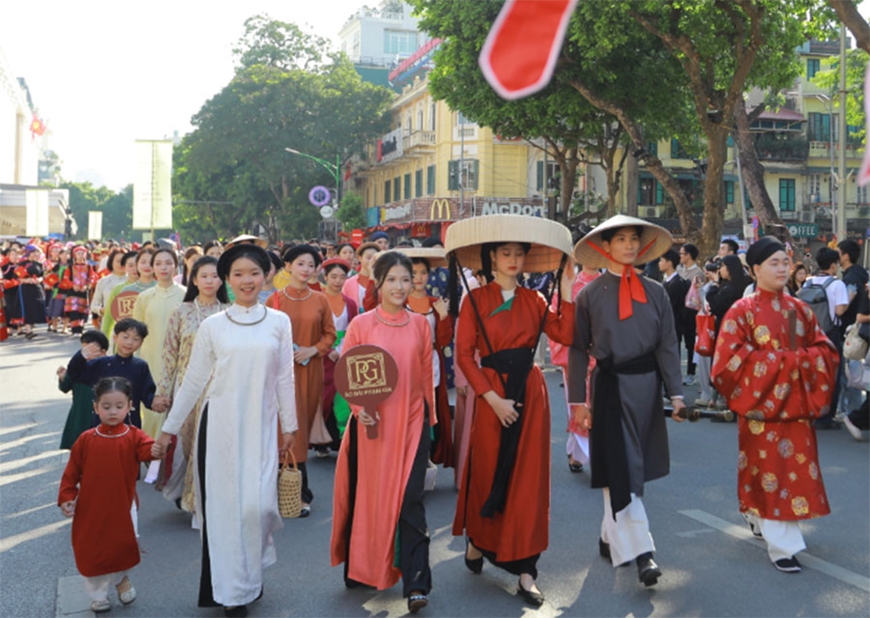 |
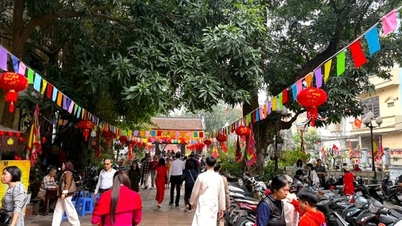
A parade of Vietnamese costumes during the "Hundred Flowers Walking" Vietnamese Traditional Clothing Festival will be held around Hoan Kiem Lake (Hanoi) in November 2025. Photo: KHANH HOA |
Jakarta, Indonesia, offers a different approach. The city boasts a significant urban heritage: the Kota Tua district (the old city). Instead of simply preserving it, Jakarta has integrated this area into its cultural industry development strategy, combining architectural heritage with modern creative activities such as art exhibitions, street festivals, and community events. This case offers Hanoi a lesson in flexibility: Preservation and development should not be viewed as two separate processes, but rather as ways to integrate them to both preserve memory and meet development needs.
Comparing Hanoi with other Southeast Asian cities reveals the following: Singapore represents a comprehensive, integrated strategic model encompassing conservation and creative industries; Bangkok emphasizes the role of community innovation and the reuse of public spaces; and Jakarta demonstrates flexibility in combining heritage with contemporary creativity. Hanoi currently occupies an intermediate position: it possesses rich heritage like Singapore, potential spaces like Bangkok, and a young creative community similar to Jakarta; however, it has yet to build a sufficiently strong mechanism to connect these elements into a cohesive strategy. Therefore, learning from international experience is essential for Hanoi to leverage its cultural identity as a strategic resource for development.
3. Based on our extensive research, we propose several guiding recommendations:
First, a comprehensive strategy for culture as a development resource needs to be developed. Hanoi needs an integrated plan in which culture is not only considered a supporting sector but also a pillar running parallel to the economy and society. This strategy must be linked to urban planning, the development of cultural industries, sustainable tourism, and heritage preservation. A specific action plan with clearly measurable objectives is necessary.
Lessons from Bangkok and Jakarta show that communities, artists, cultural entrepreneurs, and civil society play a central role in recreating identity. Hanoi needs to encourage community initiatives, expand people's participation in heritage management and preservation, and create a favorable environment for the development of cultural and creative businesses. Cultural institutions should not only operate under a state-managed model but should also become open spaces connecting diverse social groups.
Integrating heritage preservation with innovation is crucial. Tangible heritage sites such as old towns, French quarters, or traditional craft villages can serve as a foundation for contemporary creative activities, ranging from art and design to tourism and service industries. This requires the government to develop specific support mechanisms, for example, incentives for creative projects in heritage spaces, and encouragement of collaboration between artists, businesses, and the community.
Expanding international cooperation also needs to be promoted in the coming period. International cooperation should not be limited to academic exchanges or cultural events, but should be linked to attracting investment for creative projects, building urban brands in the global market, and creating a sustainable cultural and creative value chain.
A creative city cannot be formed without a high-quality cultural workforce. Hanoi needs to focus on training the younger generation in the fields of art, cultural management, and creative design, while also creating mechanisms to ensure their long-term commitment to the city. Universities, research institutes, and businesses need to be connected to form a creative ecosystem where knowledge, ideas, and technology are continuously exchanged.
Leveraging cultural identity as a resource for development is only meaningful in the long term if it is accompanied by sustainable environmental and social management. Air pollution, overloaded infrastructure, and excessive commercialization of heritage are all factors that directly threaten the quality of life and the value of cultural identity. The Hanoi government needs to link cultural policies with the goals of environmental protection, social equity, and improving the quality of life for urban residents.
Clearly, by leveraging its cultural identity, Hanoi can not only consolidate its position as the thousand-year-old capital of Vietnam but also position itself as a leading creative city in Southeast Asia, where the past and present combine to create a sustainable future.
Source: https://www.qdnd.vn/van-hoa/doi-song/thuc-day-van-hoa-ha-noi-phat-trien-1025444

















































Comment (0)