

From the beginning of the year to the end of June, Musk's SpaceX company launched more than 1,000 Starlink satellites into Earth orbit. With this number, SpaceX accounts for more than 60% of all satellites launched worldwide in the first half of 2023, according to data from astrophysicist Jonathan McDowell at the Harvard-Smithsonian Center for Astrophysics (USA), as reported by Nikkei Asia.
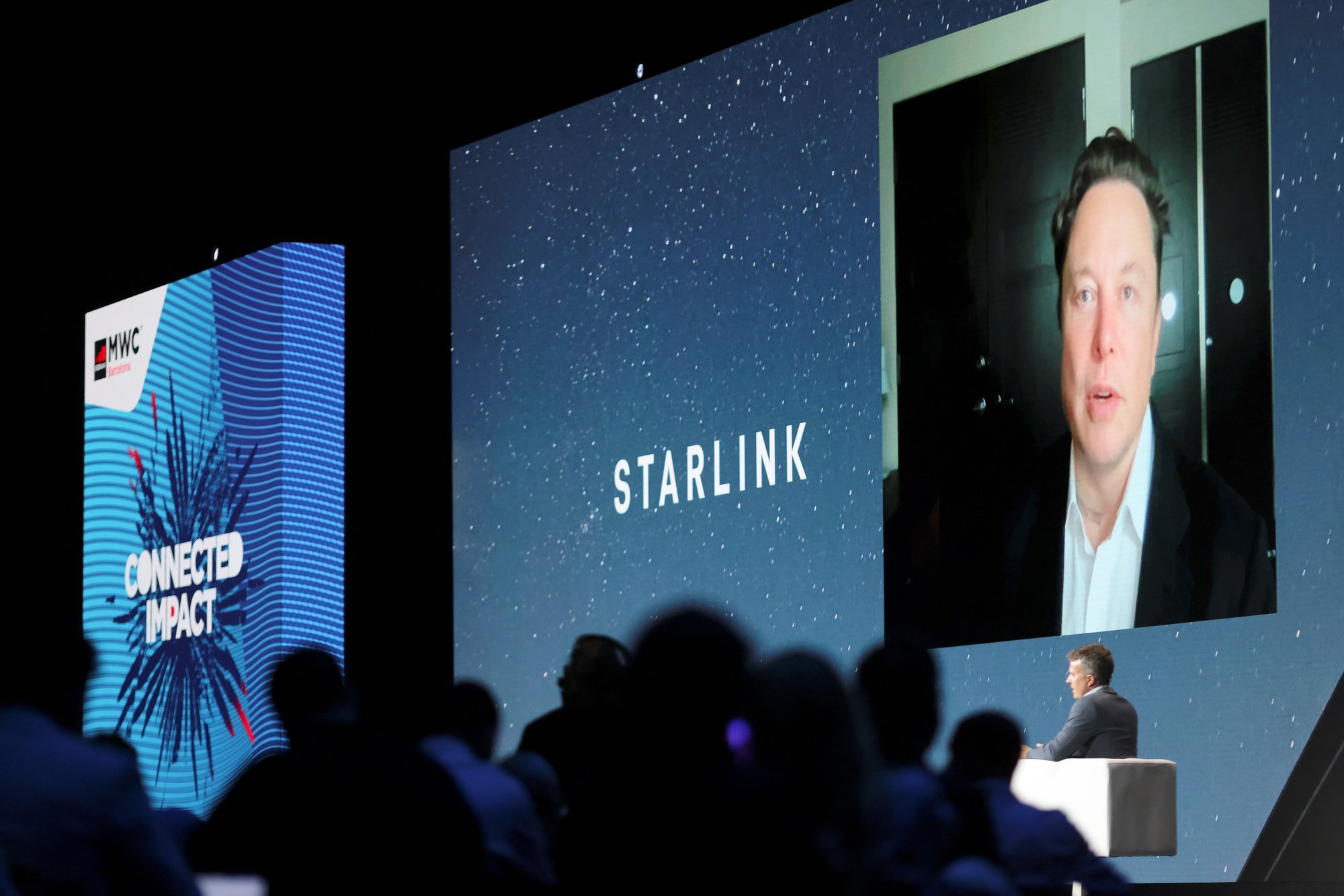
Elon Musk spoke online at the Mobile World Congress (MWC) conference in Barcelona, Spain, about Starlink.
The "empire" is expanding.
Satellite clusters in low Earth orbit enable faster internet connections compared to ground-based fixed broadband services, and Musk has invested heavily in this burgeoning market.
According to Nikkei Asia, SpaceX has launched nearly 5,000 Starlink satellites into space since 2019 and has applied for licenses to operate a total of 42,000 satellites. The company currently has very few competitors, and Amazon, one of its rivals, plans to launch a satellite prototype by the end of this year.
Starlink has so far focused primarily on the B2B (business-to-business) segment. Royal Caribbean Group, the American cruise line, and Zipair Tokyo, the Japanese low-cost airline, are among its corporate clients. Starlink has also played a significant role in Ukraine, where many ground communication facilities have been destroyed in the conflict with Russia.
Following a meeting with Indian Prime Minister Narendra Modi in the US on June 20, Musk expressed his desire to provide satellite telecommunications services in India, saying that improving internet access "could be extremely helpful" in remote villages. India has a population of 1.4 billion, but only 2% of households have access to high-speed fixed internet.
SpaceX's Starlink satellites can provide high-speed internet access while orbiting just 300-600 km above the Earth's surface—much lower than meteorological satellites and other satellites that typically operate around 36,000 km above the Earth. According to Ookla, a US internet speed testing provider, Starlink's speeds are at least comparable to terrestrial services, up to 40% faster than typical broadband in the UK and twice as fast in Australia.
Opportunities and risks
Because satellite broadcasts don't require cables, they offer a significant advantage in rural and remote areas where telecommunications infrastructure is underdeveloped. The number of satellite telecommunications users is projected to more than double worldwide, from 71 million in 2022 to 153 million in 2031, according to Euroconsult, a space consulting firm.
Morgan Stanley forecasts the global satellite telecommunications market will grow 13-fold between 2020 and 2040, reaching $95 billion, with demand from autonomous vehicles being the main driver. The Starlink network is a powerful tool for self-driving cars because they can continuously update their software from anywhere. Billionaire Elon Musk is the owner of Tesla, the world's leading manufacturer of electric and self-driving vehicles.
However, satellite telecommunications is a relatively new field and not without risks. OneWeb, a UK-based satellite operator, collapsed in 2020 after experiencing financial difficulties and being bailed out by the government.
Even SpaceX isn't entirely on a solid foundation. The company is simultaneously trying to expand its market while also receiving substantial subsidies from the U.S. government and project orders from NASA. SpaceX President Gwynne Shotwell says Starlink "will be making money" in 2023.
Source link

![[Photo] Prime Minister Pham Minh Chinh receives the Governor of Tochigi Province (Japan)](/_next/image?url=https%3A%2F%2Fvphoto.vietnam.vn%2Fthumb%2F1200x675%2Fvietnam%2Fresource%2FIMAGE%2F2025%2F12%2F16%2F1765892133176_dsc-8082-6425-jpg.webp&w=3840&q=75)
![[Photo] Prime Minister Pham Minh Chinh receives Lao Minister of Education and Sports Thongsalith Mangnormek](/_next/image?url=https%3A%2F%2Fvphoto.vietnam.vn%2Fthumb%2F1200x675%2Fvietnam%2Fresource%2FIMAGE%2F2025%2F12%2F16%2F1765876834721_dsc-7519-jpg.webp&w=3840&q=75)
![[Image] The tenacious fighting spirit of Vietnamese women's football](/_next/image?url=https%3A%2F%2Fvphoto.vietnam.vn%2Fthumb%2F1200x675%2Fvietnam%2Fresource%2FIMAGE%2F2025%2F12%2F17%2F1765990260956_ndo_br_4224760955870434771-copy-jpg.webp&w=3840&q=75)
![[Image] Leaked images ahead of the 2025 Community Action Awards gala.](/_next/image?url=https%3A%2F%2Fvphoto.vietnam.vn%2Fthumb%2F1200x675%2Fvietnam%2Fresource%2FIMAGE%2F2025%2F12%2F16%2F1765882828720_ndo_br_thiet-ke-chua-co-ten-45-png.webp&w=3840&q=75)
![[Live] 2025 Community Action Awards Gala](/_next/image?url=https%3A%2F%2Fvphoto.vietnam.vn%2Fthumb%2F1200x675%2Fvietnam%2Fresource%2FIMAGE%2F2025%2F12%2F16%2F1765899631650_ndo_tr_z7334013144784-9f9fe10a6d63584c85aff40f2957c250-jpg.webp&w=3840&q=75)


















































![[Live] Closing Ceremony and Award Presentation for the "Impressive Vietnam Tourism" Video/Clip Creation Contest 2025](https://vphoto.vietnam.vn/thumb/402x226/vietnam/resource/IMAGE/2025/12/17/1765974650260_z7273498850699-00d2fd6b0972cb39494cfa2559bf85ac-1765959338756946072104-627-0-1338-1138-crop-1765959347256801551121.jpeg)


















Comment (0)