

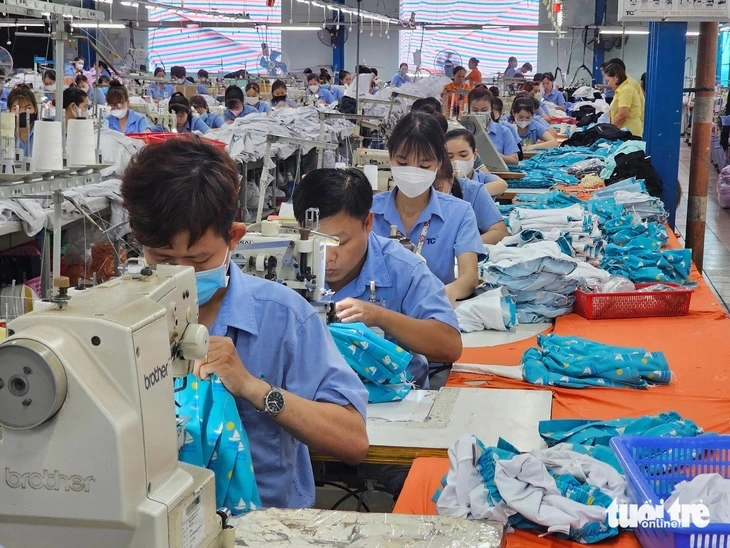
Ho Chi Minh City is currently experiencing a demographic dividend, with the proportion of the population in the working age group accounting for 74.2% - Photo: TTO
On April 28, the Ho Chi Minh City Department of Health announced that 50 years after the Liberation of Southern Vietnam and the reunification of the country, the city's population work, with the efforts of the entire political system and the support of the people, has basically achieved the set goals.
Ho Chi Minh City is currently in a period of favorable demographic structure.
According to the Ho Chi Minh City Department of Health , the city's population in July 1976 was 3,498,120 people, and by the end of 2024 it had increased to 9,521,886 people. The proportion of the population in the working age group was high at 74.2%, while the proportion of the population under 15 years old and those aged 65 and over accounted for 18.2% and 7.6%, respectively.
Currently, the city has a stable population size and is in a period of favorable demographic structure. The sex ratio at birth in 2024 was recorded at 106.1 boys per 100 girls.
With its dynamic economy and job opportunities, the city's population is significantly boosted by migrant workers from neighboring provinces and cities.
This period presents both opportunities and challenges, contributing to economic development, increasing the labor force's contribution to development, and achieving high economic growth rates.
In addition, the annual prenatal screening rate consistently remains above 85%.
The average life expectancy of people in Ho Chi Minh City increased from 66 years in 1979 to 76.6 years in 2024, higher than the national average of 74.7 years.
In 2024, through the health check-up program for the elderly, the city recorded that 61.6% of the elderly had hypertension, and 25.68% had or were suspected of having diabetes…
Concerns about low birth rates
According to the Ho Chi Minh City Department of Health, in addition to the achievements made, the city's population work still faces many challenges.
Notably, the city's total fertility rate is currently very low compared to the national replacement level, placing it among the 21 provinces and cities with the lowest fertility rates.
A persistently low birth rate will significantly impact the city's future population structure, with a decreasing proportion of young people and those of working age, while the proportion of the elderly continues to increase, further accelerating the aging of the population.
The city has been preparing specific policies on social security, support for education, healthcare, living conditions, housing, personal income tax, recreation, etc., all linked together to address the issue so that young couples can feel secure in having children and have two children.
What will Ho Chi Minh City's health sector do in 2025?
In 2025, the health sector will focus on advising the People's Committee of Ho Chi Minh City on effectively implementing the action plan for Vietnam's population strategy until 2030, aiming to address low birth rates; control gender imbalance at birth; effectively utilize the demographic dividend; and adapt to population aging...
In addition, the Department advises the People's Committee of Ho Chi Minh City on a comprehensive healthcare plan for the people and some solutions to contribute to increasing the total fertility rate in the period 2025-2030, ensuring that all citizens have access to comprehensive, continuous and quality healthcare services, live in a safe environment, and develop comprehensively in terms of physical and mental health.
This contributes to improving the health of pregnant women, fetuses, newborns, children, workers, and the elderly...
Source: https://tuoitre.vn/ti-trong-dan-so-trong-do-tuoi-lao-dong-tai-tp-hcm-chiem-74-2-20250428142427487.htm

![[Photo] Prime Minister Pham Minh Chinh presides over a meeting on private sector economic development.](/_next/image?url=https%3A%2F%2Fvphoto.vietnam.vn%2Fthumb%2F1200x675%2Fvietnam%2Fresource%2FIMAGE%2F2025%2F12%2F20%2F1766237501876_thiet-ke-chua-co-ten-40-png.webp&w=3840&q=75)

























































































Comment (0)