

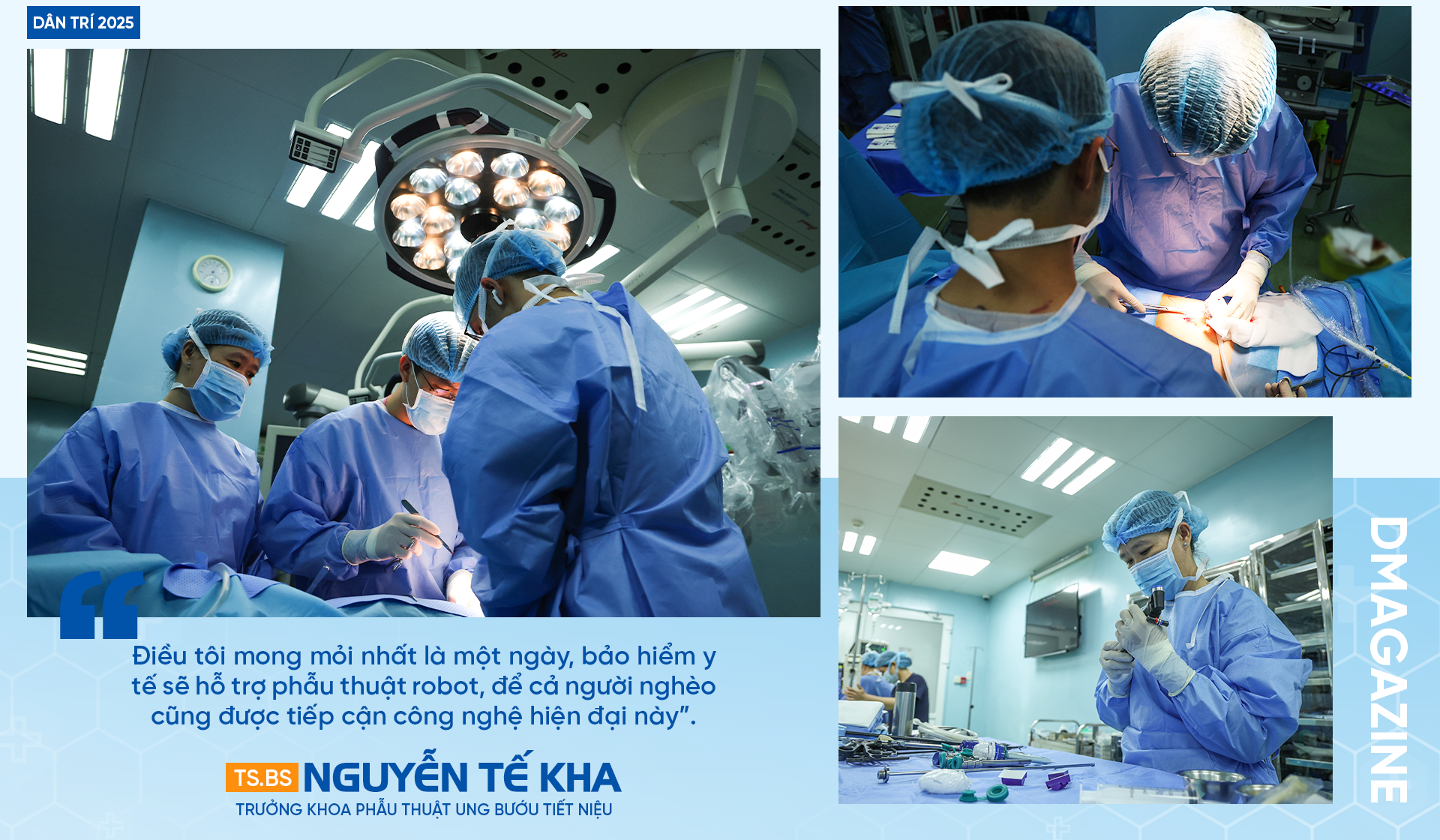
A close-up view of the four-armed robot assisting oncologists at Binh Dan Hospital.
Outside the robotic operating room at Binh Dan Hospital, a patient lies stretched out on a bed, waiting for their turn for surgery, their haggard face reflecting anxiety.
Two months ago, he unexpectedly discovered he had early-stage prostate cancer during a medical check-up in his hometown of Bac Lieu . At Binh Dan Hospital, he was scheduled for surgery to remove the tumor as part of his treatment.
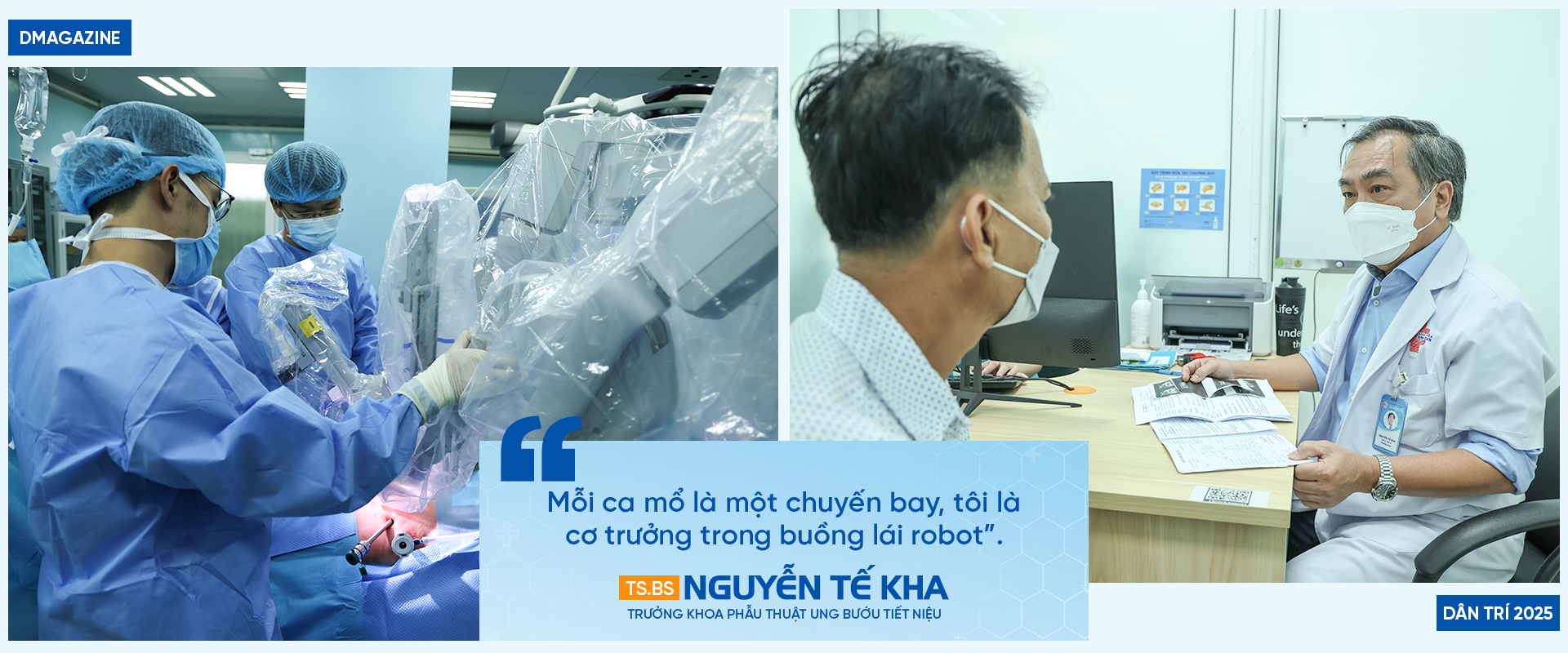
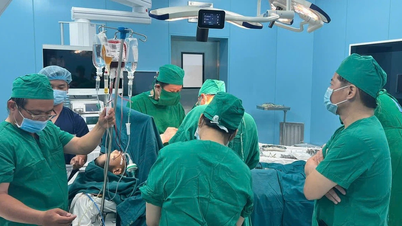
After a period of waiting, he was finally wheeled into the operating room. There, the man was gently reassured and then anesthetized. Afterward, the doctors quickly and busily set up four trocar holes in the patient's body to insert four robotic arms. Each arm was fitted with a tool such as a camera, forceps, etc., to help the doctors perform the surgery smoothly.

Across the room, Dr. Nguyen Te Kha, Head of the Urology and Oncology Surgery Department at Binh Dan Hospital, was reviewing the patient's pre-operative X-ray images.
"The patient is a 69-year-old male who was diagnosed with an early-stage malignant prostate tumor, without lymph node involvement or metastasis, and in good health. We recommended radical prostatectomy with robotic-assisted erectile nerve preservation to provide complete treatment and ensure the best possible quality of life for the patient," Dr. Kha said.
Robotic surgery for adults was first performed in Vietnam at Binh Dan Hospital in 2016. As a pioneer in robotic surgery in Vietnam, Dr. Kha has overcome a long journey to be recognized as a "super surgeon." This title, awarded by the Da Vinci robotic system to doctors who perform more than 30 hours of surgery per week, is also the highest number of robotic surgery hours in Southeast Asia.

In 1999, Dr. Kha, then a young and enthusiastic physician, went to France to do his residency in urology at Bichat Hospital, District 18, Paris.
During his studies, he happened to learn about the surgical robot system at Henri Mondor Hospital - one of the first medical facilities in the world to apply this technology.
Led by French professor Abou El Fettouh, a leading expert on surgical robots, he was fascinated by the revolutionary possibilities of this technology: flexible robotic arms, magnified 3D images and precision that surpasses traditional surgery.
“I dreamed of learning, even if it was just observing in the operating room. However, that dream was shattered when the hospital announced that the internship slots were fully booked until 2005, while my visa only allowed me to stay until the end of 2000,” he recalled.
In 2000, Dr. Kha returned to work at Binh Dan Hospital, carrying with him the dream of robotic surgery. He often wondered if he would ever have the opportunity to experience this technology, given that surgical robots had developed rapidly worldwide , especially in the United States, while Vietnam was still far behind in such advancements.
It was not until 2016 that the dream was rekindled thanks to the determination of Associate Professor, Dr. Tran Vinh Hung, Director of Binh Dan Hospital. From the stimulus loan from Ho Chi Minh City, the hospital brought in the first surgical robot for adults in Vietnam worth tens of billions of VND.
In 2019, Dr. Kha was sent to South Korea to study robotic surgery for a mere four days. Throughout that short period, he utilized every hour to observe, take notes, and learn from the experience of his international colleagues.
At the end of 2019, he performed his first robotic surgery. Since then, the number of surgeries has increased year by year. As of August 2025, Dr. Kha has performed a total of 686 surgeries, becoming the person with the most robotic surgeries in Southeast Asia.
In 2024, Dr. Kha performed 195 surgeries. Meanwhile, the second-ranked surgery institute performed 150 surgeries. According to statistics from the global da Vinci robotic surgery system, he is considered a “captain with many flight hours” in this field.

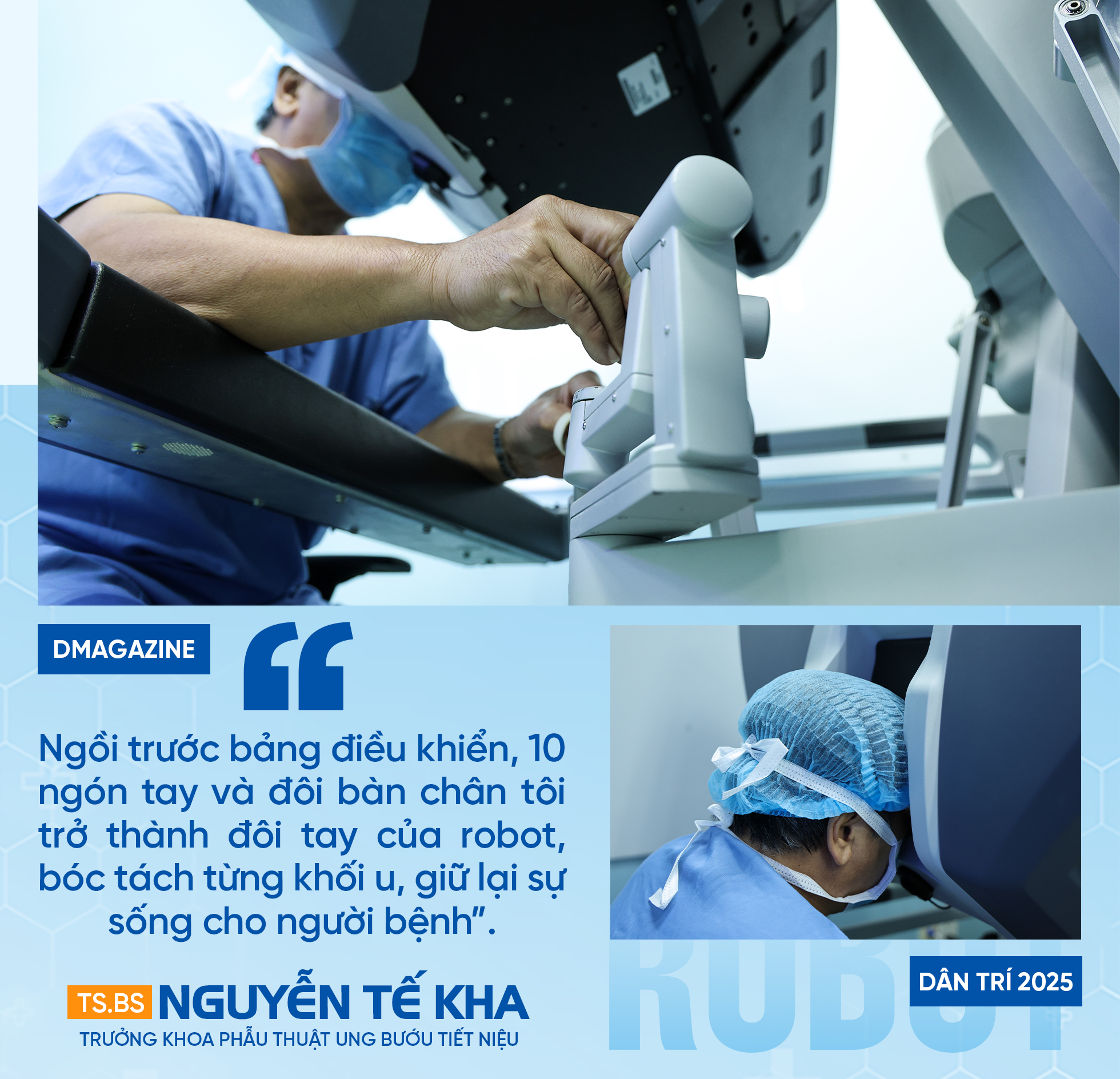
For Dr. Kha, each surgery is a journey on a private jet, piloted by himself. Instead of standing for hours directly holding the scalpel, the doctor sits in a chair in the control room, just a few steps from the operating table. He skillfully uses all ten fingers, his feet moving steadily, occasionally giving instructions to the surgical assistant through a microphone in front of him.
The cockpit display is linked to a camera, which magnifies the image 10-16 times and rotates 540 degrees, almost like what you would see with the naked eye.
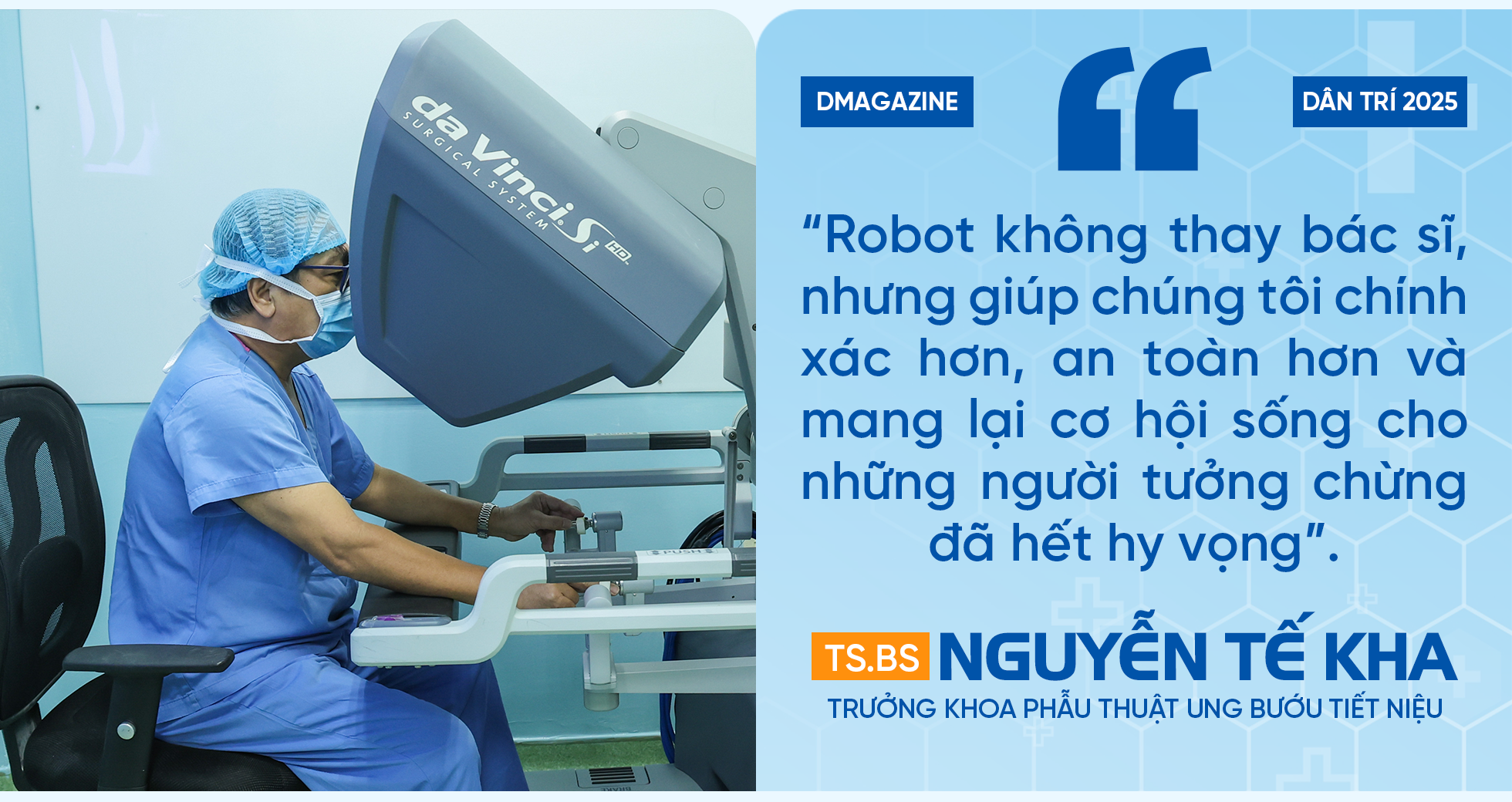
Robots help to precisely remove tumors, preserve nerves, reduce cancer recurrence, and maintain genitourinary and physiological functions, especially effective for tumors in difficult locations such as the adrenal glands, renal hilum, low rectum, prostate, and bladder.
Therefore, robotic surgery offers superior precision, reduces complications, and is safer than laparoscopic or open surgery. Patients can recover and walk normally after one day and be discharged after a few days.
However, not every journey achieves complete success from the very beginning.
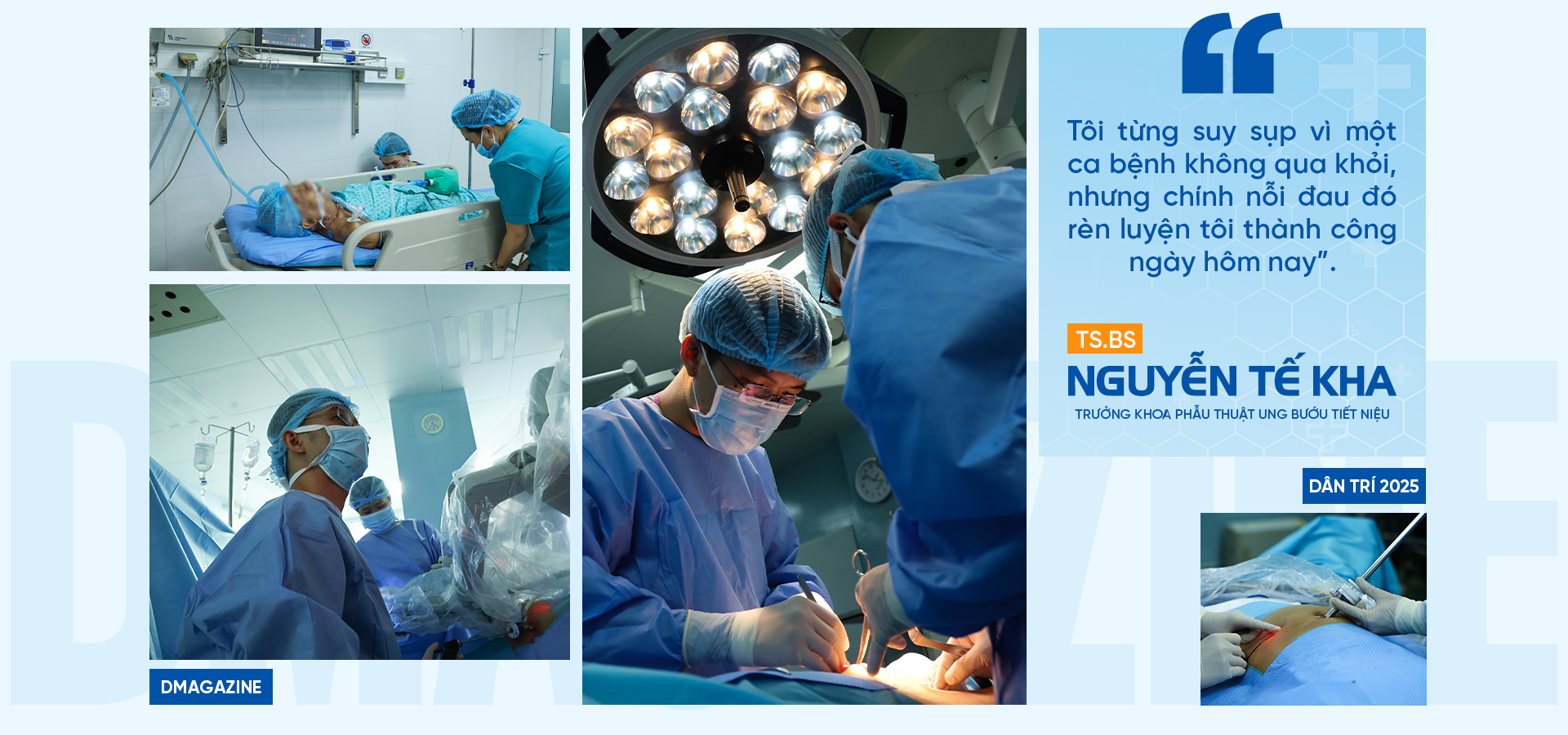
In 2020, among the first robotic surgeries, there was one case that had serious post-operative complications despite the surgery going smoothly. The entire hospital team tried to fix it but the patient still did not survive.
That shock left Dr. Kha deeply troubled. He doubted his own abilities, lost his appetite and sleep, lost 5kg, and even considered giving up.
"I was devastated for days because I had tried my best, but the patient still passed away due to a cause beyond my control," he recalled.
Gradually, the young doctor regained his balance. That sadness became a profound lesson, fueling his determination to diligently train, accumulate experience, and successfully perform hundreds of surgeries afterward. "If it weren't for that patient's experience, I might not have achieved the good results I have today," Dr. Kha shared.
Along with haunting sad memories, his career journey is also marked by countless joys: from the moment of saving a patient's life, to his increasingly strong belief in the value of robotic technology and his love for the profession.
He vividly remembers the surgery he performed on a New Zealand patient born in 1976 who had recurrent ureteral stenosis leading to stage 3 kidney failure and had previously been advised to have a kidney removed.
During a visit to his wife's hometown in Vietnam, this foreigner sought treatment at Binh Dan Hospital, where Dr. Kha decided to perform robotic ureteral reconstruction surgery while preserving the kidney. The surgery was successful, and after only two months, kidney function recovered significantly, saving the patient from the risk of kidney failure.
Not only saving difficult cases, Dr. Kha also made his mark with many surgeries for elderly patients. He told the story of an 88-year-old man with bladder cancer and severe heart disease, who was initially advised to undergo palliative treatment. However, the family resolutely chose robotic surgery despite the high risks.
During the surgery, two defibrillators were placed beside the patient's bed, but fortunately, the operation went smoothly. More than two years later, the patient remains healthy, becoming a living testament to the effectiveness of robotic surgery.
For Dr. Kha, it was a great reward, further motivating him to stay committed and persevere in his profession.

Binh Dan Hospital was established in 1954, initially as a surgical practice facility of the Saigon Medical University. Over more than 70 years of operation, the hospital has implemented many techniques ranging from open surgery and endoscopy to robotic surgery and new treatment methods.
Currently, this is a specialized surgical hospital, focusing on gastroenterology, urology, andrology, anesthesia and resuscitation, and several related specialties. In 2014, the hospital began adopting robotic surgery techniques, and by the end of 2016, it was the first hospital in Vietnam to apply robotic surgery to an adult patient.
To date, the hospital has performed more than 3,500 robotic surgeries for more than 15 different pathologies, mainly cancer and complex diseases.
In 2024 alone, 757 patients benefited from this advanced technology. This number also makes Binh Dan Hospital the unit with the most robotic surgeries in Southeast Asia. Since 2022, Vietnam has officially appeared on the world map of robotic surgery – a milestone that is both proud and moving.
However, challenges remain. Vietnam has a limited number of robots, and patients have to wait 1-2 weeks even though hospitals are increasing the number of robotic surgeries to 3 per day. The cost of a robotic surgery is not cheap, approximately 140-170 million VND per case.
“Compared to other countries, the cost of surgery in Vietnam is almost the cheapest in the world. But that number is still too high for many patients in Vietnam, especially when health insurance does not have a support policy,” Dr. Nguyen Te Kha worried.
At the age of 61, Dr. Nguyen Te Kha still maintains his passion for his profession. Controlling robots to bring perfect surgical results is a source of great happiness for him.
He dreams of helping patients for as long as he can, and of educating the next generation so that surgical robots can develop further and spread throughout Vietnamese hospitals. Above all, he hopes that health insurance will cover the costs, so that even the poor can access modern technology, bringing joy and hope to the country's healthcare system.
Content: Dieu Linh
Photo: Trinh Nguyen
Video: Cao Bach
Design: Tuan Nghia
10/09/2025 - 08:14
Source: https://dantri.com.vn/suc-khoe/phia-sau-buong-lai-cua-vi-bac-si-tien-phong-phau-thuat-bang-robot-20250908202149136.htm
































![[Video] The craft of making Dong Ho folk paintings has been inscribed by UNESCO on the List of Crafts in Need of Urgent Safeguarding.](https://vphoto.vietnam.vn/thumb/402x226/vietnam/resource/IMAGE/2025/12/10/1765350246533_tranh-dong-ho-734-jpg.webp)































































Comment (0)