

Over the course of its implementation, the Project has achieved many important results. Specifically, since the Project was launched, the entire region has implemented crop rotation annually ranging from 1,379 hectares to 17,975 hectares (the year with the least crop rotation was 2018 and the most was 2019), depending on the annual drought and saltwater intrusion. From 2021 to the present, the area of annual autumn-winter crop rotation in the eastern production region has remained fairly stable (over 8,500 hectares).
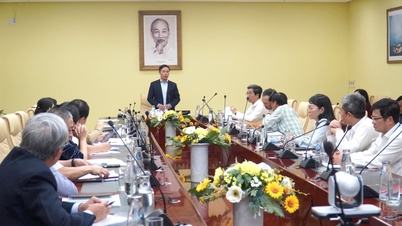
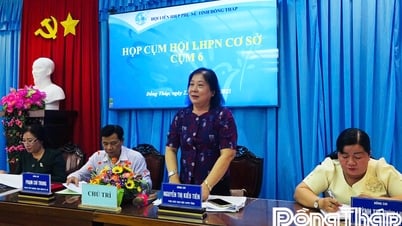
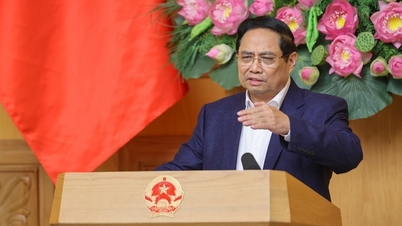
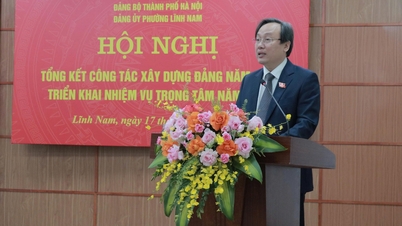
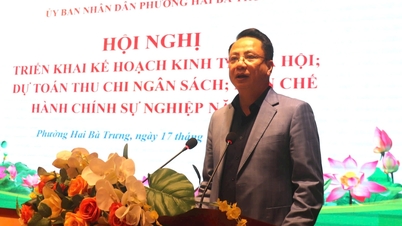
Comrade Pham Van Trong delivered a speech at the conference. |
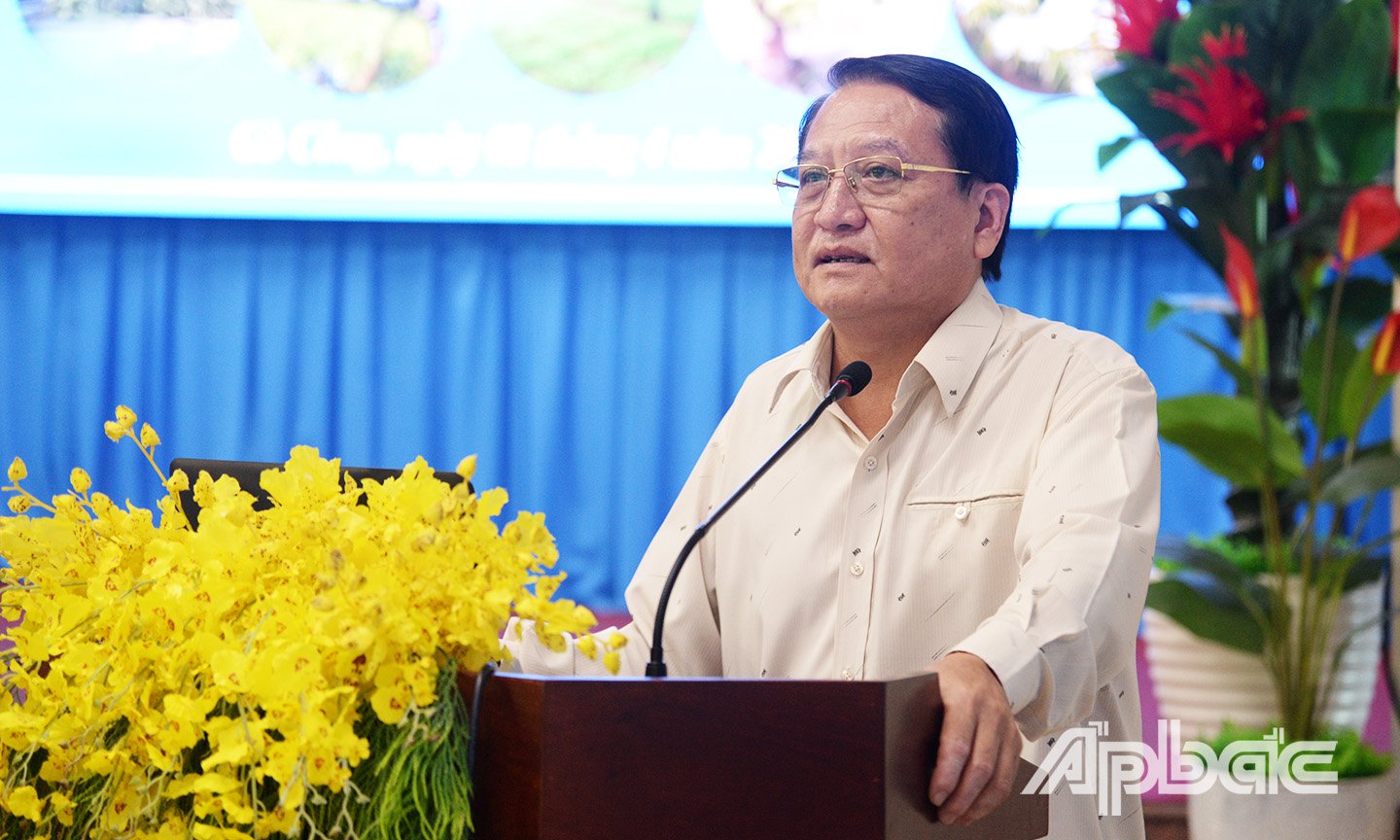
To date, the eastern region of the province has established a 2-crop/year rice production area of 10,663 hectares (including 9,981 hectares of abandoned rice fields and 682 hectares of crop rotation), achieving 129.3% of the target for 2025 as per Document 467/UBND-KT dated January 21, 2025, of the Provincial People's Committee on crop rotation, crop conversion, and crop structure in the eastern districts (approving the policy of flexible crop rotation with an annual crop rotation area of approximately 8,250 hectares in Go Cong Dong district and Go Cong city).
From 2016 to the present, the entire region has converted 7,468 hectares of rice land to other crops, exceeding the 2025 target by 29.3% (the 2025 target was 5,775 hectares). Thanks to the positive impact of crop restructuring from rice land, the current rice land area in the Project area is only 20,888 hectares, a decrease of 10,568 hectares compared to before the implementation of the Project (the rice land area in the Project area in 2015 was 31,456 hectares).
|
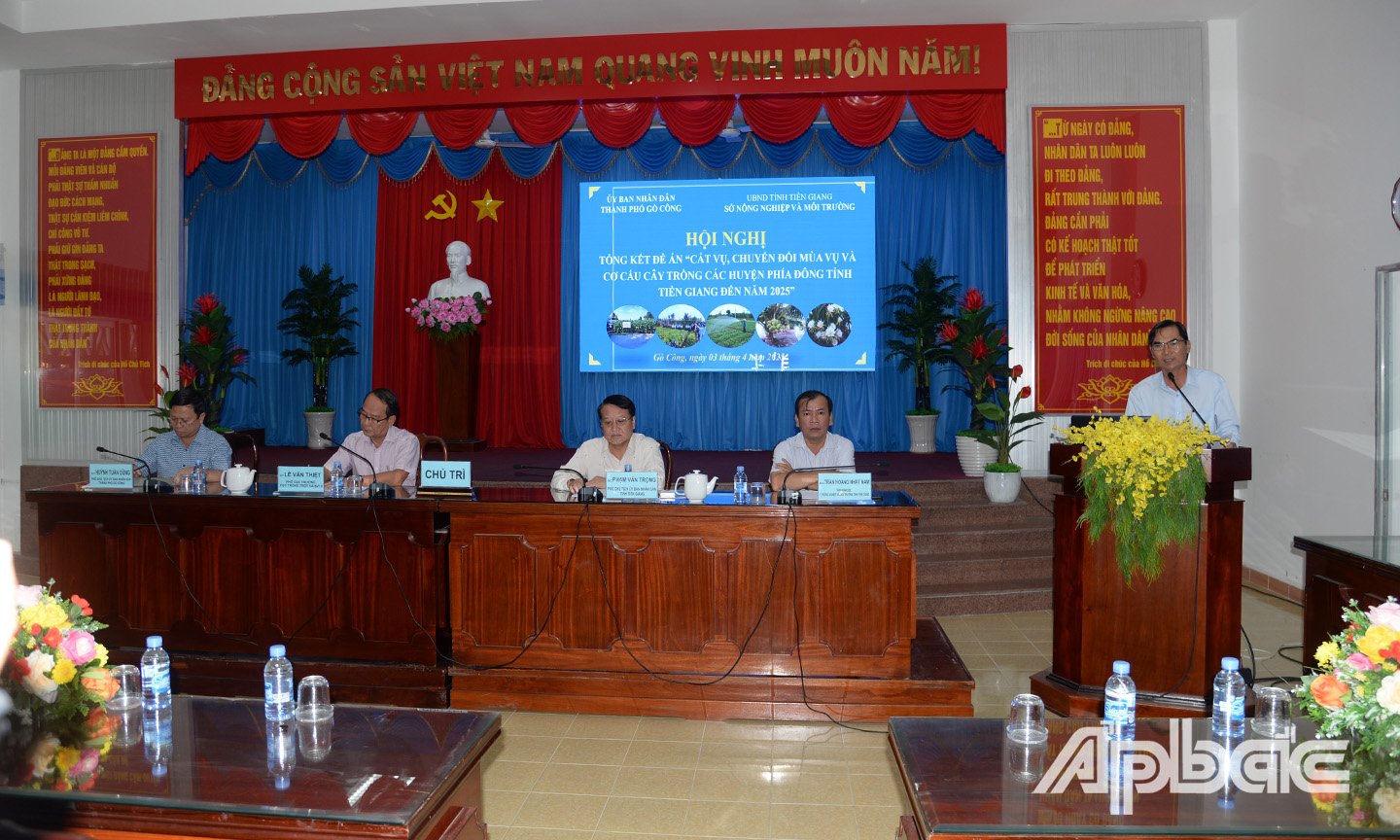
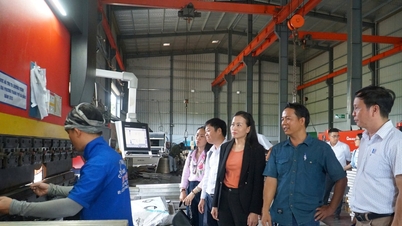
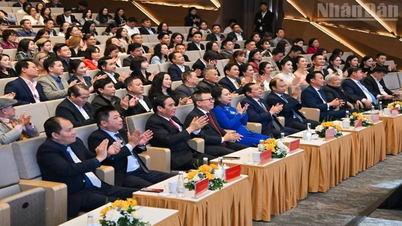
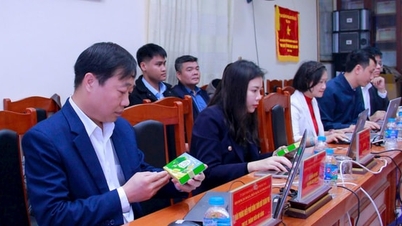
Delegates working at the conference. |

On average, during the period 2016-2024, converting rice land to fruit trees or vegetables yielded higher economic returns than rice cultivation, ranging from 1.7 to 7.3 times. The highest returns were seen in leafy vegetables (7.3 times), green pomelo (4.4 times), chili peppers (4 times), jackfruit (3.8 times), red-fleshed dragon fruit (3.5 times), and coconut (3.3 times).
This shows that the policy of converting the crop structure on inefficient rice land is a correct policy, in line with climate change, and brings higher economic efficiency compared to growing rice three times a year, thus receiving the support and approval of the people.
Overall, from an economic perspective, the project helped avoid losses of 3,000 billion VND due to drought and salinity, and increased income compared to rice cultivation by 1.7 to 7.3 times (in some years, the efficiency was as high as 10.3 times). This demonstrates the high economic effectiveness of the policy.
The project has brought a new context to the eastern districts, reducing rice cultivation by 10,000 hectares, increasing fruit tree cultivation by 4,000 hectares and adaptable vegetable crops by over 3,700 hectares, and significantly reducing the pressure on freshwater resources for production.
Speaking at the conference, Comrade Pham Van Trong raised several issues to ensure the project continues to be effective in the future. Specifically, he requested that agencies improve their meteorological and hydrological forecasting and prediction, as well as the selection of crop varieties. He also urged relevant agencies and localities to continue maintaining, upgrading, and effectively operating irrigation works in the region. Local authorities must proactively implement solutions for maintaining irrigation systems within their jurisdiction.
For those directly involved in production and business, relevant agencies should continue to promote the effectiveness and practicality of the Project. Simultaneously, agencies must acknowledge and address the difficulties and obstacles faced by the people. Furthermore, to ensure the sustainable maintenance of the Project, agencies must demonstrate to the people in the region the benefits it brings. Relevant agencies and local authorities consider this a crucial task. The Department of Agriculture and Environment needs to continue developing solutions and building closer relationships with those directly involved in labor and production so that people better understand policies on agricultural and rural development and environmental protection.
C. THANG
Source: https://baoapbac.vn/kinh-te/202504/tien-giang-de-an-cat-vu-giup-nguoi-dan-khu-vuc-phia-dong-tang-thu-nhap-cao-hon-trong-lua-1038681/

![[Live] 2025 Community Action Awards Gala](/_next/image?url=https%3A%2F%2Fvphoto.vietnam.vn%2Fthumb%2F1200x675%2Fvietnam%2Fresource%2FIMAGE%2F2025%2F12%2F16%2F1765899631650_ndo_tr_z7334013144784-9f9fe10a6d63584c85aff40f2957c250-jpg.webp&w=3840&q=75)
![[Photo] Prime Minister Pham Minh Chinh receives the Governor of Tochigi Province (Japan)](/_next/image?url=https%3A%2F%2Fvphoto.vietnam.vn%2Fthumb%2F1200x675%2Fvietnam%2Fresource%2FIMAGE%2F2025%2F12%2F16%2F1765892133176_dsc-8082-6425-jpg.webp&w=3840&q=75)
![[Photo] Prime Minister Pham Minh Chinh receives Lao Minister of Education and Sports Thongsalith Mangnormek](/_next/image?url=https%3A%2F%2Fvphoto.vietnam.vn%2Fthumb%2F1200x675%2Fvietnam%2Fresource%2FIMAGE%2F2025%2F12%2F16%2F1765876834721_dsc-7519-jpg.webp&w=3840&q=75)
![[Image] The tenacious fighting spirit of Vietnamese women's football](/_next/image?url=https%3A%2F%2Fvphoto.vietnam.vn%2Fthumb%2F1200x675%2Fvietnam%2Fresource%2FIMAGE%2F2025%2F12%2F17%2F1765990260956_ndo_br_4224760955870434771-copy-jpg.webp&w=3840&q=75)
![[Image] Leaked images ahead of the 2025 Community Action Awards gala.](/_next/image?url=https%3A%2F%2Fvphoto.vietnam.vn%2Fthumb%2F1200x675%2Fvietnam%2Fresource%2FIMAGE%2F2025%2F12%2F16%2F1765882828720_ndo_br_thiet-ke-chua-co-ten-45-png.webp&w=3840&q=75)

































![[Live] Closing Ceremony and Award Presentation for the "Impressive Vietnam Tourism" Video/Clip Creation Contest 2025](https://vphoto.vietnam.vn/thumb/402x226/vietnam/resource/IMAGE/2025/12/17/1765974650260_z7273498850699-00d2fd6b0972cb39494cfa2559bf85ac-1765959338756946072104-627-0-1338-1138-crop-1765959347256801551121.jpeg)












Comment (0)