

Credit outstanding at the end of October is estimated to have grown by over 10%, higher than the rate in the same period last year.
This information was presented by the Governor of the State Bank of Vietnam, Nguyen Thi Hong, in a report submitted to National Assembly deputies. According to Ms. Hong, credit growth as of October 31st reached 10.08% compared to the end of 2023. Compared to the same period last year, credit increased by 16.65%.
This year, the State Bank of Vietnam aims for credit growth of around 15%. According to the Governor, the current growth rate is in line with this target, meeting capital needs, supporting macroeconomic stability, and controlling inflation.
However, banking industry leaders acknowledge that the absorption of credit by businesses and individuals remains low. This is because, after Covid-19, many businesses have scaled back or ceased production due to a lack of orders, dissolved, or closed down, leading to a decline in their financial health. Meanwhile, people tend to tighten their belts and reduce spending, resulting in low credit demand.
Amidst continued low credit growth across the entire system, Governor Nguyen Thi Hong stated that the regulatory body is proactively adjusting targets for each bank without requiring them to submit requests for additional allocations.
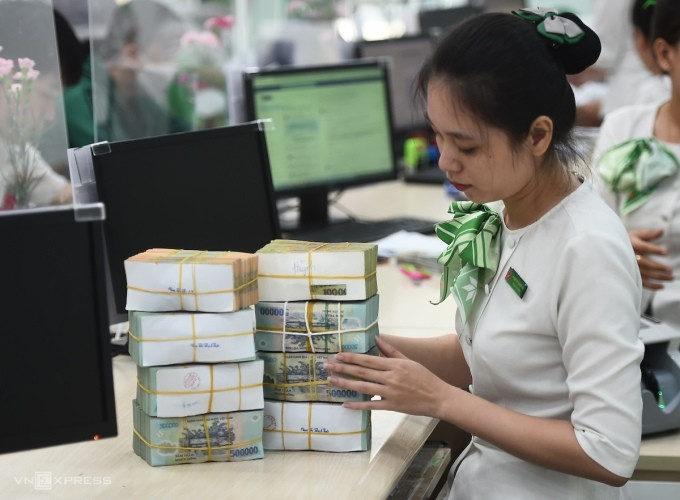
In fact, in the early part of this year, credit growth among banks was uneven, with some experiencing low growth or even negative growth, while others were close to meeting their assigned targets. At the end of August, the regulatory authority granted additional credit growth limits to banks, reaching 80% of their initial credit targets for the year.
In addition, the State Bank of Vietnam also requires banks to direct credit towards priority sectors and drivers of economic growth. This aims to limit the increase and 발생 of bad debts and ensure the safety of the system's operations.
According to the State Bank of Vietnam's report, the policy interest rate remained unchanged during the first 10 months of the year. Authorities continue to require banks to reduce costs in order to lower lending interest rates. Banks are also required to publicly disclose the average lending interest rate and the spread between deposit and lending interest rates to help customers access capital more easily.
As of October 20th, lending interest rates have decreased by 0.76% compared to the end of 2023. However, according to the agency, further interest rate reductions in the near future are "very difficult." This is because lending interest rates have been trending downwards significantly recently. The continued increase in demand for credit will put pressure on interest rates. Meanwhile, reducing domestic Vietnamese Dong interest rates would increase pressure on the exchange rate and the foreign exchange market.
Furthermore, the State Bank of Vietnam believes that the pressure on the system's capital supply to the economy remains significant, given the difficulties in raising funds through corporate bonds and securities. This poses substantial maturity and liquidity risks for the banking system due to the need to raise short-term funds for medium- and long-term lending.
Source
![[Photo] General Secretary and President To Lam presides over a working session with the Central Policy and Strategy Committee on the development of the materials industry.](https://vphoto.vietnam.vn/thumb/1200x675/vietnam/resource/IMAGE/2026/05/21/1779359935432_a3-bnd-3129-1412-jpg.webp)

![[Photo] National Assembly Chairman Tran Thanh Man working with the Standing Committee of the Law and Justice Committee](https://vphoto.vietnam.vn/thumb/1200x675/vietnam/resource/IMAGE/2026/05/21/1779378929214_ndo_br_1-4610-jpg.webp)































































































Comment (0)