

Ho Chi Minh City expands free health check-ups for people aged 60 and over.
According to a plan recently issued by the Ho Chi Minh City People's Committee, from now until the end of 2025 and in subsequent years, all citizens aged 60 and above will receive a regular annual health check-up. The funding for this program will be allocated from the city's budget.
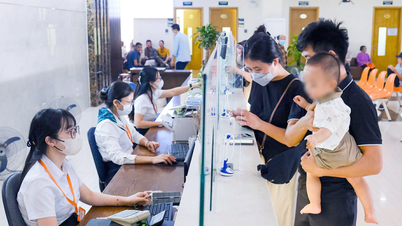
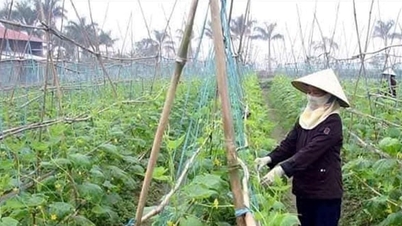
Illustrative image. |

The program aims to detect non-communicable diseases early, especially those common in the elderly such as hypertension, diabetes, and cardiovascular diseases. At the same time, the city aims to have at least 80% of the elderly receive annual health check-ups and have their health records managed and monitored long-term.
Previously, starting in early 2024, Ho Chi Minh City implemented free health check-ups for all elderly people, regardless of whether they were permanent or temporary residents, following a pilot phase in some communes and wards at the end of 2023.
After two years of implementation, the city's health sector has examined more than 526,000 people, of whom more than 49,000 were found to have hypertension that had never been previously diagnosed, accounting for about 15%. This is an important warning because hypertension is considered a "silent killer," which can lead to dangerous complications such as stroke, myocardial infarction, heart failure, or kidney failure if left uncontrolled.
Ho Chi Minh City currently has the fastest aging population in the country, with the proportion of people over 60 years old accounting for approximately 10.5% of the population.
Furthermore, the birth rate is only 1.43, the lowest in the country. The low birth rate and rapidly aging population are putting increasing pressure on the city's healthcare system, social security, and welfare policies.
Expanding the free health check-up program not only helps improve the quality of life for the elderly, but also serves as an important preparatory step in Ho Chi Minh City's long-term strategy to address the challenges posed by an aging population and the increasing demand for healthcare.
Earlier, at the launch ceremony of the program "Comprehensive Healthcare Access - For a Healthier Vietnam by 2025" held on August 2nd in Bac Ninh, Deputy Minister of Health Tran Van Thuan emphasized that one of the three major orientations of the health sector today is to make universal health check-ups a national health goal.
When people are able to detect disease risks early, receive health advice and monitoring right in their local area, the healthcare system can truly reduce the burden on higher-level hospitals, lower treatment costs, and simultaneously improve the quality of life for the entire society.
Ho Chi Minh City records 15 deaths due to dengue fever.
From the beginning of 2025 to the present, Ho Chi Minh City has recorded more than 26,000 cases of dengue fever, an increase of over 220% compared to the same period last year. Notably, there have been 15 deaths, nearly eight times higher than in the same period of 2024, when only 2 deaths were recorded.
At the recent launch ceremony for the mosquito and larva eradication campaign to prevent dengue fever and Chikungunya, Deputy Director of the Ho Chi Minh City Department of Health, Huynh Minh Chin, noted that the situation is becoming increasingly complex, with dengue fever cases surging to alarming numbers.
According to the Ho Chi Minh City Center for Disease Control (HCDC), in the past week alone, the city recorded more than 2,500 new cases, a 38% increase compared to the average of the previous four weeks. The health sector predicts that the number of cases will continue to rise as the city enters the peak of the rainy season, a time when outbreaks often occur strongly.
Dengue fever is caused by the Dengue virus and is primarily transmitted through Aedes mosquitoes. In addition, Chikungunya, also transmitted by Aedes mosquitoes, has not yet been reported in Ho Chi Minh City, but it has previously circulated in Vietnam and there is no vaccine available, so the risk of its reappearance is entirely possible.
Doctors advise people to prevent the disease by avoiding mosquito bites and actively eliminating mosquito breeding grounds. Specifically, people should sleep under mosquito nets, even during the day, wear long-sleeved clothing, and use mosquito repellent. They should also remove items that hold stagnant water such as bottles, old tires, gutters, and water containers; change the water in flower vases and potted plants at least once a week, and keep water containers tightly covered.
The health sector is also coordinating with local authorities to implement campaigns to eliminate mosquito larvae, conduct large-scale mosquito spraying, and call on people to actively participate.
Specifically for dengue fever, Vietnam has licensed the use of vaccines to prevent all four strains of the Dengue virus, applicable to people aged 4 and above, and no blood test is required before vaccination.
When experiencing symptoms such as high fever, muscle and joint pain, and a rash, especially after returning from an epidemic area, people should quickly go to a medical facility for examination and timely treatment to avoid dangerous complications.
Hanoi intensifies disease prevention and control measures in preparation for the A80 anniversary celebration.
To ensure health safety for activities commemorating the 80th anniversary of the August Revolution and National Day on September 2nd, abbreviated as A80, the Hanoi Center for Disease Control (CDC) is implementing a comprehensive range of disease prevention and control measures throughout the city.
On August 25th, the Hanoi CDC announced the establishment of a Steering Committee for epidemic prevention and control, along with mobile epidemic control teams to support the A80 operation. Simultaneously, inspection and monitoring teams were organized to oversee environmental sanitation, clean water quality, and insecticide spraying in key areas serving the anniversary celebrations, parades, and marches.
One of the key activities is closely monitoring the health of arriving passengers at Noi Bai International Airport through thermal scanners and other operational measures, in order to promptly detect suspected cases of infectious diseases, especially those from areas experiencing outbreaks.
The CDC also collaborates with local health centers to conduct proactive surveillance at public and private hospitals and healthcare facilities to detect and control outbreaks early in the area.
Currently, eight mobile epidemic control teams from the Hanoi CDC are assigned to oversee 126 newly merged communes and wards under a two-tiered government model. As of August 24th, these teams have monitored and supported epidemic prevention and control efforts in 107 out of 126 units and conducted 50 inspections at dengue fever outbreak sites to guide the implementation of treatment measures.
Specifically, the Hanoi CDC, in coordination with relevant units, organized the first round of insecticide spraying at 10 important locations such as the Vietnam Exhibition Center, Hoa Binh Park, August Revolution Square, and the headquarters at 61 Tran Phu Street... The second round of spraying is scheduled to take place on August 26th and 27th, as directed by the Hanoi Department of Health.
In addition, measures to ensure the safety of drinking water and environmental sanitation have been implemented seriously.
The Hanoi CDC monitored water quality at 20 water supply facilities in the area, noting that all units fully complied with internal inspection regulations according to QCVN 01-1:2024/BYT. Simultaneously, the unit monitored environmental sanitation at 11 bus and train stations, 13 event venues, and hotels and accommodations for delegates.
According to Bui Van Hao, Director of the Hanoi CDC, the establishment of the Steering Committee and specialized task forces has helped to ensure unified and timely direction in epidemic prevention and control. Currently, the Center has deployed three permanent mobile epidemic control teams, each with six members, ready to conduct epidemiological investigations, collect samples, and handle emergency epidemic situations.
In addition, the Hanoi CDC also assigned specific tasks to departments such as the Department of Parasitology and Entomology and the Department of Infectious Disease Prevention and Control to implement monitoring activities, environmental treatment, and comprehensive statistical reporting as required for the A80 anniversary celebration.
Source: https://baodautu.vn/tin-moi-y-te-ngay-278-tphcm-mo-rong-kham-suc-khoe-mien-phi-cho-nguoi-tu-60-tuoi-d372119.html






















![[Photo] Prime Minister Pham Minh Chinh holds a phone call with the CEO of Russia's Rosatom Corporation.](/_next/image?url=https%3A%2F%2Fvphoto.vietnam.vn%2Fthumb%2F1200x675%2Fvietnam%2Fresource%2FIMAGE%2F2025%2F12%2F11%2F1765464552365_dsc-5295-jpg.webp&w=3840&q=75)

















































Comment (0)