

When asked about his past as a "forest poacher," Ho Van Cu Ta (born in 1983) recalled that about 23 years ago, the lives of many Bru-Van Kieu and Pa Ko ethnic minority people like himself in Huong Hiep commune depended entirely on the forest. Year-round, Ho Van Cu Ta and his fellow villagers went into the forest to dig up wild yams, cut down trees, rattan, bamboo, etc., to sell at the market.
Ho Van Cu Ta naively thought that the forest belonged to nature, so everyone was free to cut it down for timber and to clear land for farming... Moreover, some villagers who were familiar with the paths deep in the forest were also lured and hired by "forest bandits" to cut down trees.
At that time, no one in the village thought they were contributing to the destruction and depletion of forest resources. Only when the authorities discovered the problem, explained it to them, and publicized the harmful effects of deforestation and the severe consequences of felling trees did they begin to reconsider and embark on a journey to "repay" the green forest.
Ho Van Cu Ta's journey of "repaying his debt" to the forest began with 1 hectare of land used for growing rice and corn. On that very plot of land, from dawn till dusk, Ho Van Cu Ta tirelessly cleared weeds to plant golden wattle and acacia trees. After 5 years, the planted forest developed well and yielded high economic returns, motivating Ho Van Cu Ta to expand his forest planting area in Luoi village to 10 hectares. On his forest land, Ho Van Cu Ta alternately harvests and sells the timber to traders, then replants, earning an average income of 100-150 million VND per year.
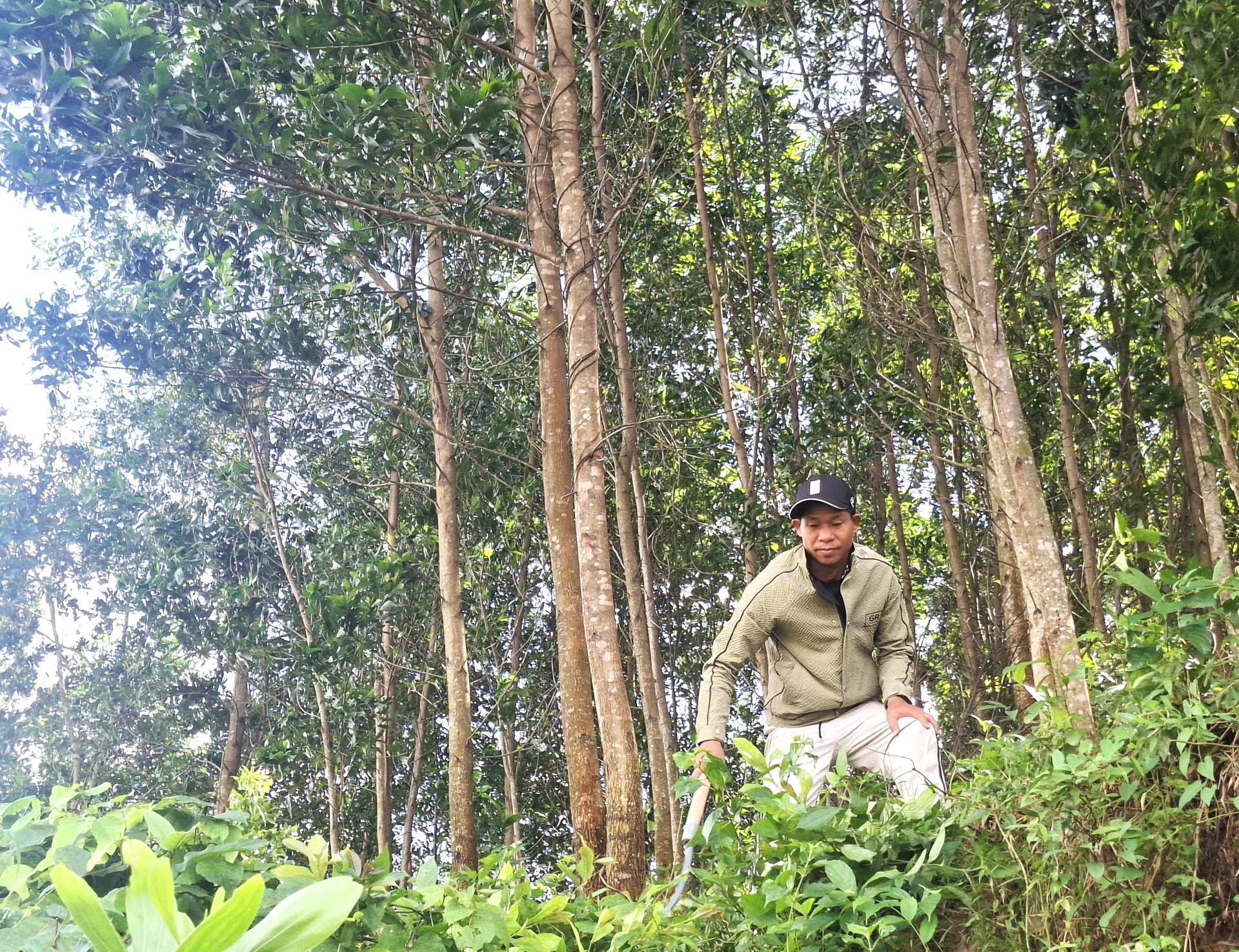 |
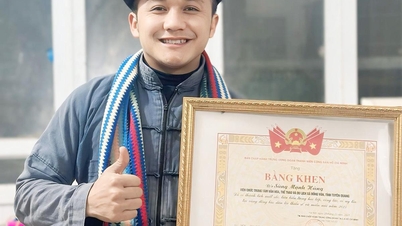
| Mr. Ho Van Cu Ta owns more than 10 hectares of planted forest that generates high income - Photo: SH |
Recalling the early days of digging holes to plant golden wattle and acacia trees on barren hillsides and cultivated land, Ho Van Cu Ta always encountered suspicious and apprehensive glances from the people of Luoi village. This was understandable, because from ancient times until that time, the lives of the people of Luoi village depended almost entirely on the natural forest. When they lacked food, they went into the forest to dig up wild yams; when they needed to build houses, they went into the forest to cut down trees for wood; and when they cleared the forest to cultivate fields for rice and corn.
Besides planting trees on barren hillsides and cultivated land, Ho Van Cu Ta also braved hardships and difficult roads to persuade villagers to resolutely refuse the incitement and enticement of illegal loggers. Initially, the villagers were skeptical, but through Ho Van Cu Ta's concrete actions, they gained his trust and began learning how to plant trees. Furthermore, with his enthusiasm, dedication, and unwavering commitment to "repaying his debt" to the forest, Ho Van Cu Ta was elected as the head of Luoi village from 2010 to the present.
"I will continue to reforest and encourage the people of Luoi village to plant trees and preserve the greenness of the forest, so that we no longer feel indebted to the green forest," shared Mr. Ho Van Cu Ta.
Sy Hoang
Source: https://baoquangtri.vn/kinh-te/202511/trong-rung-de-tra-no-rung-f5f19fb/

![[Photo] Conference on the transfer and reception of Party organizations and Party members between the Party Committee of the Government and the Party Committees of the Central Party Agencies](https://vphoto.vietnam.vn/thumb/1200x675/vietnam/resource/IMAGE/2026/04/01/1775036784472_ndo_br_bnd-2620-jpg.webp)
![[Photo] Conference announcing the Politburo's Decision on organizational and personnel matters](https://vphoto.vietnam.vn/thumb/1200x675/vietnam/resource/IMAGE/2026/04/01/1775017881825_bnd-2410-1472-jpg.webp)









































































Comment (0)